
 English
 Español
 русский
 عربى


- Cotton Kinesiology Tape
- Synthetic Kinesiology Tape
- Nylon Kinesiology Tape
- 4-Way Stretch Elastic Kinesiology Tape
- Standard Kinesiology Tape Roll
- Pre-Cut Kinesiology Tape Strips
- Printed / Pattern Kinesiology Tape
- Perforated Kinesiology Tape (Ventilated)
- Special Shape Kinesiology Tape
- Water-Resistant Kinesiology Tape
- Pregnancy Support Tape
- Face Lift Kinesiology Tape
- Gentle / Beauty Kinesiology Tape
- Veterinary Kinesiology Tape
- Breast Lift Tape
- Customized Kinesiology Tape
- Pre-cut I Strip Kinesiology Tape
- Pre-cut Y Strip Kinesiology Tape
- Pre-cut X Strip Kinesiology Tape
- Knee Kinesiology Tape
- Leg Kinesiology Tape
- Shoulder Kinesiology Tape
- Back Kinesiology Tape
- Waist Kinesiology Tape
- Ankle Kinesiology Tape
- Pregnancy Belly Tape
- Beauty Face Tape
- Solid Color Cohesive Bandage Roll
- Printed & Pattern Cohesive Bandage
- Non-Woven Self-Adhesive Bandage
- Cotton Self-Adhesive Bandage
- PBT Gauze Cohesive Bandage Rolls
- Pet Vet Wrap
- Horse and Cattle Self-Adhesive Bandage
- Veterinary Cohesive Bandage
- Camo Cohesive Wrap Tape
- Military and Tactical Cohesive Bandage
- Tattoo Grip Tape
- Latex Cohesive Bandage
- Latex-Free Cohesive Bandage
- Pet Laminated Self-Adhesive Bandage
- High-Tensile Cohesive Bandage
- Football Sock Wrap Self-Adhesive Bandage
- Sterile Cohesive Bandage
- Special Function Cohesive Bandage
- OEM / Bulk Cohesive Bandage Roll
- Rigid Strapping Tape
- Athletic Tape
- Zinc Oxide Sports Tape
- Rayon Rigid Sports Tape
- Sports Strapping Tape
- Finger Bob Bandages
- Boxing Tape
- Heavyweight Elastic Adhesive Bandage (EAB)
- 93 Cotton Heavyweight Elastic Adhesive Bandages(EAB)
- Athletic Heavyweight Elastic Adhesive Bandage (EAB)
- Lightweight Elastic Adhesive Bandage (EAB)
- Athletic Lightweight Elastic Adhesive Bandage (EAB)
- American Style Elastic Adhesive Bandage (EAB)
- Japanese Style Elastic Adhesive Bandage (EAB)
- Elastic Adhesive Compression Bandage
- Veterinary Elastic Adhesive Bandage (EAB)

Breathable Bandages: Materials, Airflow Ratings, and B2B Sourcing Guide
Content
Clinics, sports suppliers and private label brands ask for a breathable bandage every week, but the useful question is not whether it breathes. It is how much, measured how, and at what cost to hold.
What Makes a Bandage Breathable
A bandage is breathable when air and water vapor can leave the skin through the material while the wrap still holds position and does not shed adhesive.
Three structures create that path. Open woven or nonwoven fibers leave gaps between filaments. Mechanical perforation punches holes through a film or tape. Pattern coated adhesive leaves channels unsealed between adhesive lines. A solid film with a full-surface adhesive coat closes all three routes at once, which is why an inexpensive tape can feel airtight within minutes of application.
The comparison below is indicative rather than a test report. Values taken from different standards should not be mixed in one specification, because airflow and vapor transmission describe different behavior.
| Construction | Relative airflow | Best suited to | Risk to watch |
| Cotton woven EAB | High | Compression and sports strapping | Heavier roll, less conformable over joints |
| PP nonwoven cohesive | High | Self-adherent wraps, first aid, veterinary | Lower shear strength under sustained load |
| Perforated nonwoven tape | Medium to high | Fixation on fragile or elderly skin | Adhesive can migrate through the holes |
| PU foam underwrap | Low to medium | Pre-wrap beneath rigid strapping tape | Adds bulk under close fitting equipment |
| PE film dressing | Very low | Waterproof fixation and shower protection | Traps moisture, so wear time must be limited |
Read the risk column before the airflow column. Most breathability failures in the field are moisture management failures, and they surface as maceration, itching or adhesive residue rather than as a wrap that visibly fails.
Breathable Bandage Types and Where Each Fits
Four constructions cover most of the demand: cohesive self-adherent wraps, elastic adhesive bandages, perforated nonwoven medical tapes and perforated kinesiology tapes.
 High-Stretch Breathable Elastic Adhesive Support BandageOffered in four widths, this porous cotton elastic adhesive bandage supports joints and self-adheres without clips, useful when comparing wrap width and overlap.View Product →
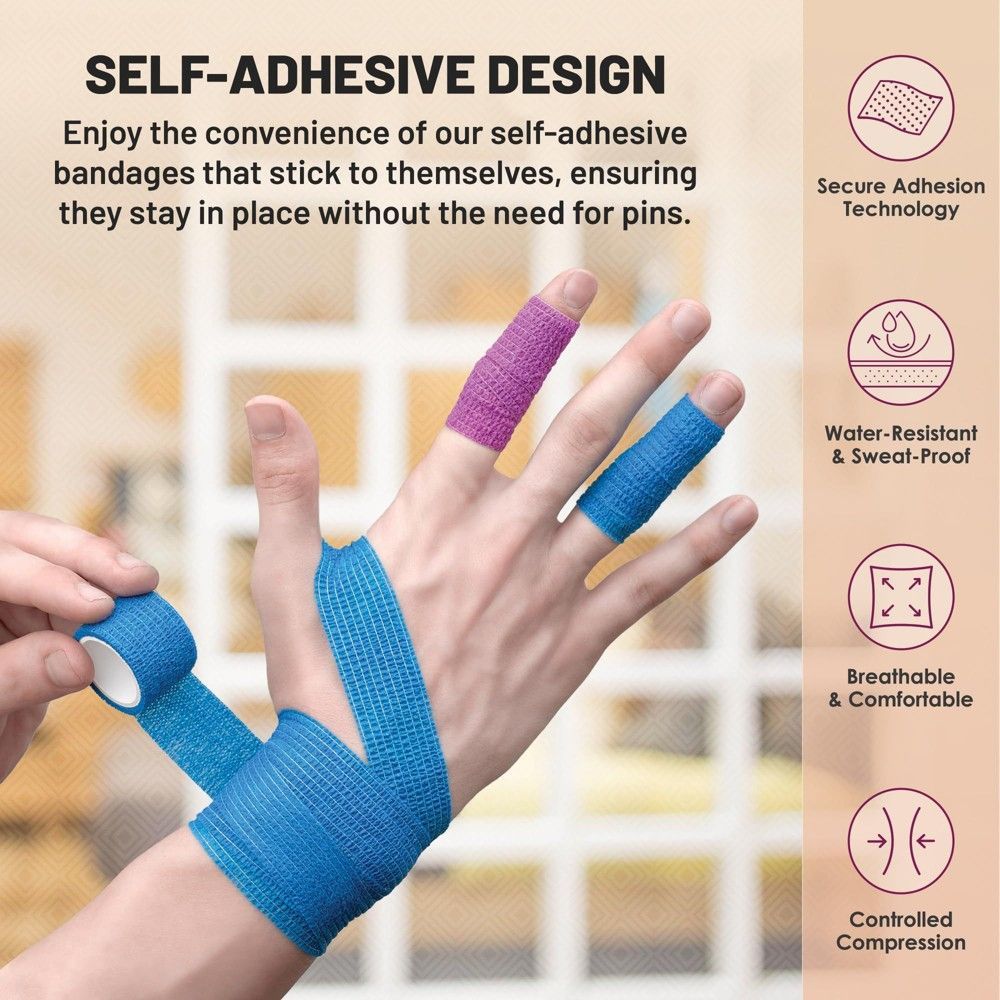
Width changes the result as much as material does. A 5 cm cohesive wrap on a wrist and a 10 cm wrap on a thigh overlap differently, and every extra layer reduces the effective breathability of the finished wrap. When a clinician reports that a wrap sweats, the first thing worth checking is the number of overlaps rather than the backing.
The Trade-Off Between Airflow, Adhesion and Water Resistance
Every gain in airflow usually costs adhesion, water resistance or cost per roll, so a brief has to name the property that is allowed to move.
- Pattern coated adhesive with open channels
- Lower adhesive coat weight
- Perforated film or open nonwoven backing
- Earlier edge lift after heavy sweating
- Better tolerance for long wear and sensitive skin
- Full-surface adhesive coat
- Higher coat weight and firmer backing
- Solid film that keeps liquid water out
- Stronger shear resistance under load
- Higher risk of trapped moisture and residue
Wear time usually settles the argument. A wrap changed once per shift can be nearly occlusive and still work. A wrap worn for three days in rehabilitation needs an open structure, even if it means re-taping once more per week.
Specifying Breathable Bandages for a Product Line
A workable specification fixes five things: backing, adhesive chemistry, a breathability target with a named method, the elongation window and the dimensional tolerances.
- Fix the backing and its weight per square meter. Cotton, PP nonwoven, spunlace and perforated film behave differently at the same coat weight, so the backing decision comes first.
- Choose the adhesive family: natural rubber, synthetic, latex free, zinc oxide or hot melt. Latex free options carry a small cost premium and remove a whole class of complaint.
- Set the breathability target with a method attached, for example vapor transmission in g/m2/24h at 38 C and 90 percent relative humidity, or air permeability under a named standard.
- Define elongation and recovery. Elastic adhesive bandages typically sit around 160 to 180 percent elongation; above that the wrap becomes hard to control on a joint.
- Agree tolerances and packing: length and width within plus or minus 2 to 3 percent, core diameter, roll direction, label position and carton count per shipper.
 Latex-Free Self-Adherent Cohesive Compression Bandage WrapLatex-free cohesive wrap sticks to itself for adjustable compression and non-slip support; breathable nonwoven construction and hand-tear convenience suit sports, first aid, and veterinary use.View Product →
Two supplier questions save most of the cost later. Can the same line hold the breathability target if the coat weight moves by 5 percent, and what happens to adhesion after 24 hours at 40 C in a shipping container. A material that passes in the lab and fails in transit is a problem paid for twice.
When a standard construction cannot hit both airflow and hold, material performance customization is usually cheaper than switching backings, because adhesive pattern and coat weight can be adjusted on an existing coating line.
Matching Breathable Bandages to Wound Care, Sport and Veterinary Use
The same breathable backing behaves differently across wound care, sport and veterinary use, so skin condition and wear time should rule out options before price does.
Wound care and fixation
Fixation tape on fragile or elderly skin needs high airflow and low peel force, and perforated nonwoven is usually the safer starting point. Breathability matters less here than the adhesive's behavior on removal, because repeat taping over the same area damages skin faster than trapped moisture does. The wound care applications overview covers dressing retention and secondary fixation in more detail.
 Spunlace Hypoallergenic Breathable Medical Fixation TapeBreathable spunlace nonwoven tape with latex-free acrylic adhesive offers gentle fixation and clean removal for sensitive, fragile, or elderly skin and dressing retention.View Product →
Sport, rehabilitation and taping
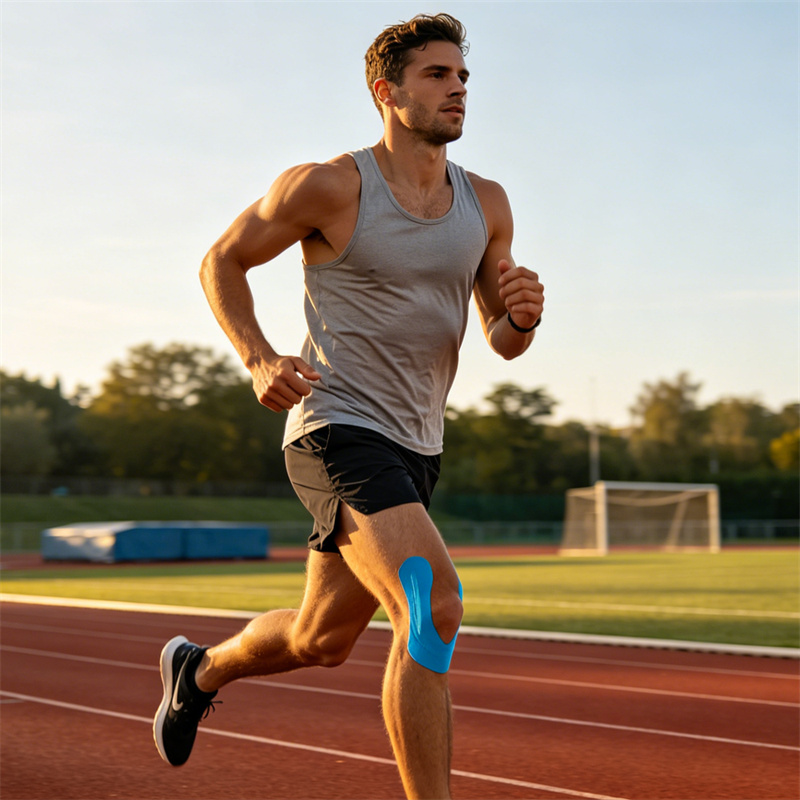
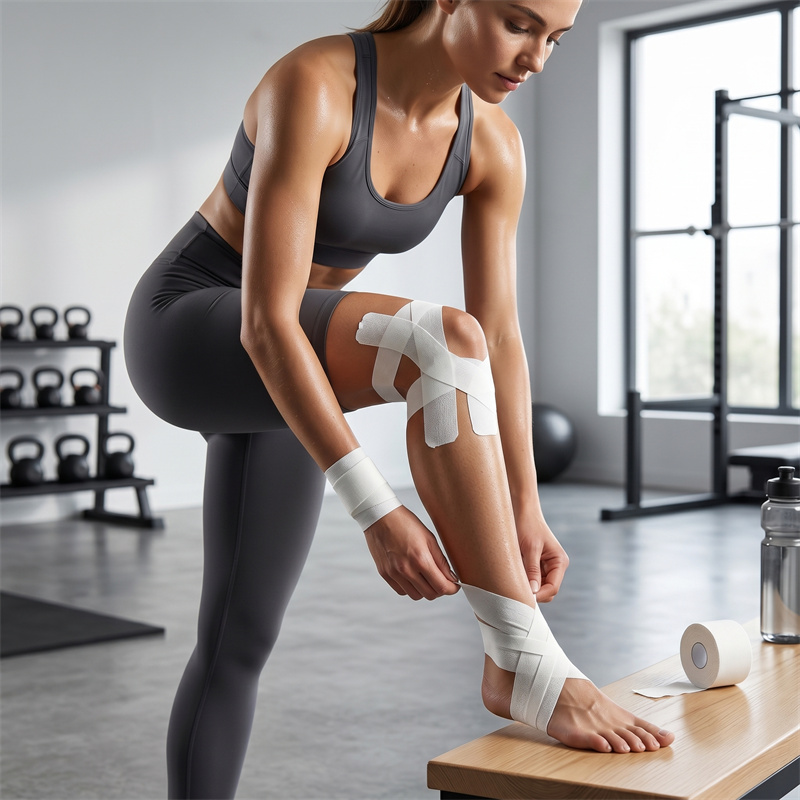
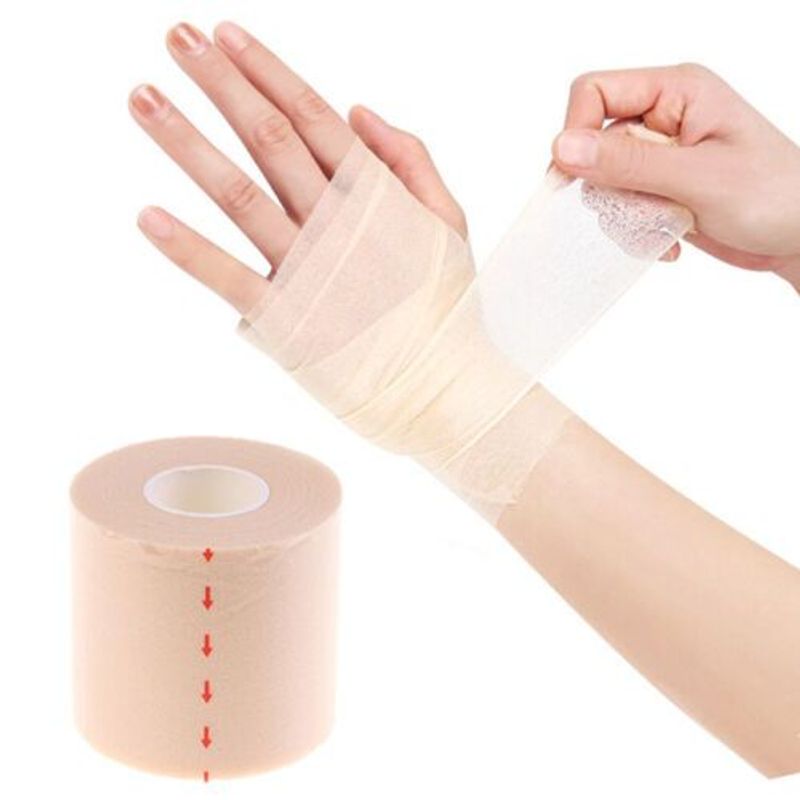
Sports use splits into two habits. Rigid strapping tape is applied over a foam underwrap, where breathability comes from the underwrap rather than the tape itself. Kinesiology tape stays on for several days, so perforated versions with ventilation holes make a visible difference to itch and edge lift.
Veterinary and equine wraps
Animal wraps rarely stay clean and dry, so cohesive constructions with open nonwoven backings dominate. Breathability serves two purposes here: it reduces moisture under bandages that cannot be changed daily, and it lets the wrap dry after contact with water.
Frequently Asked Questions
What is the difference between a breathable and a waterproof bandage?
A breathable bandage lets water vapor escape through the backing, adhesive pattern or perforation. A waterproof bandage blocks liquid water from outside, and most low-cost waterproof films also block vapor, so they trap sweat. Constructions that do both exist, but they cost more and should be verified with a test report rather than a product claim.
What breathability value should a bandage have?
There is no universal number. Vapor transmission between roughly 800 and 3500 g/m2/24h covers most breathable medical and sports backings, and the right figure depends on wear time, activity level and climate. Set the target from a use case, then fix the method, temperature and humidity in the specification.
Are breathable bandages suitable for sensitive skin?
Breathability helps, but adhesive chemistry matters more. A latex free, low peel adhesive on an open backing is usually better tolerated than a highly breathable tape with an aggressive rubber adhesive, especially when the same patch of skin is taped repeatedly.
Can breathable bandages be customized for private label?
Yes, and customization should start at the backing rather than the print. Cohesive wraps, elastic adhesive bandages, perforated tapes and kinesiology tapes can all be adjusted in width, length, adhesive type, perforation pattern, color and packaging before artwork is approved.
Share:
RECOMMENDED PRODUCTS

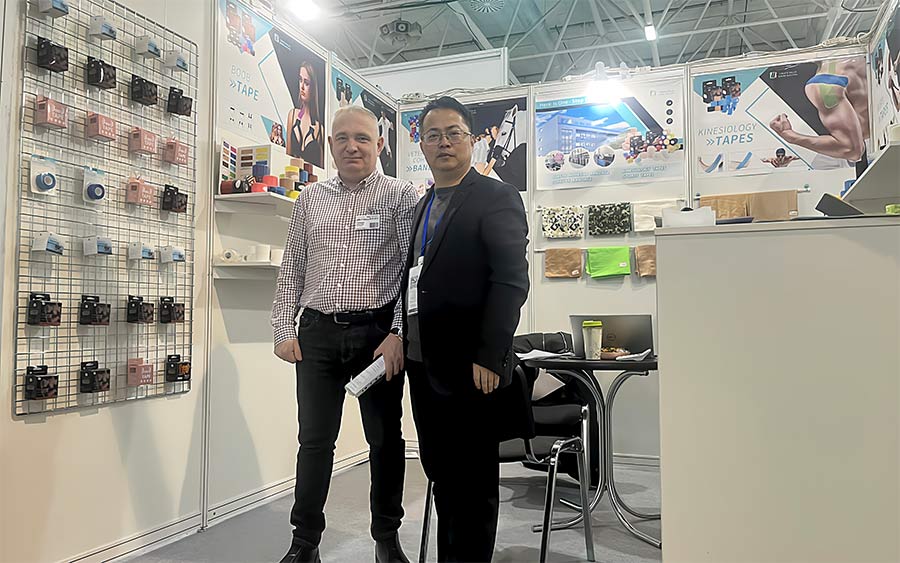
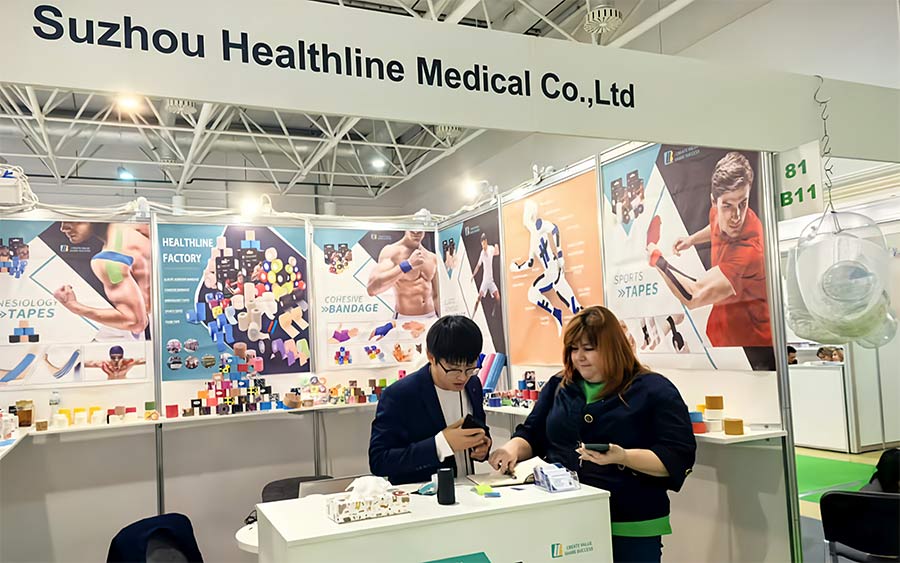
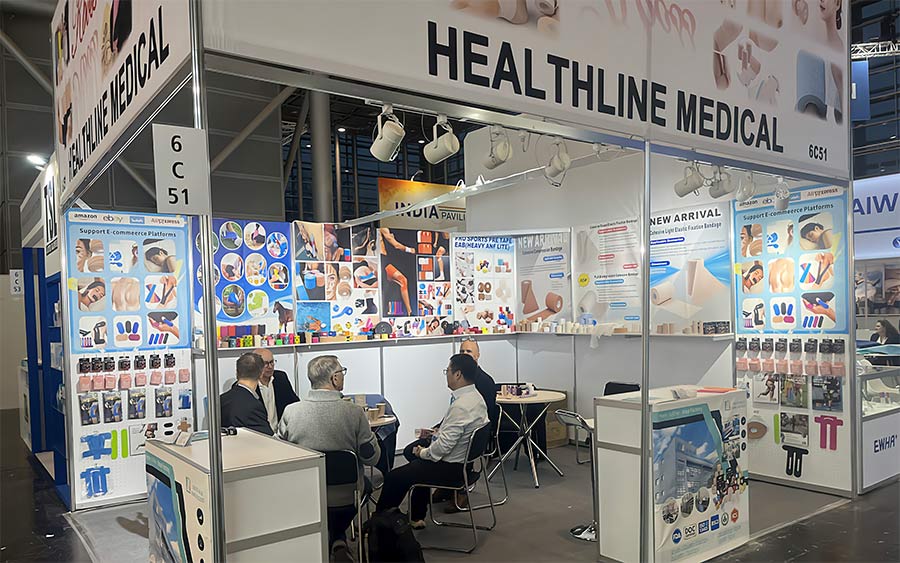
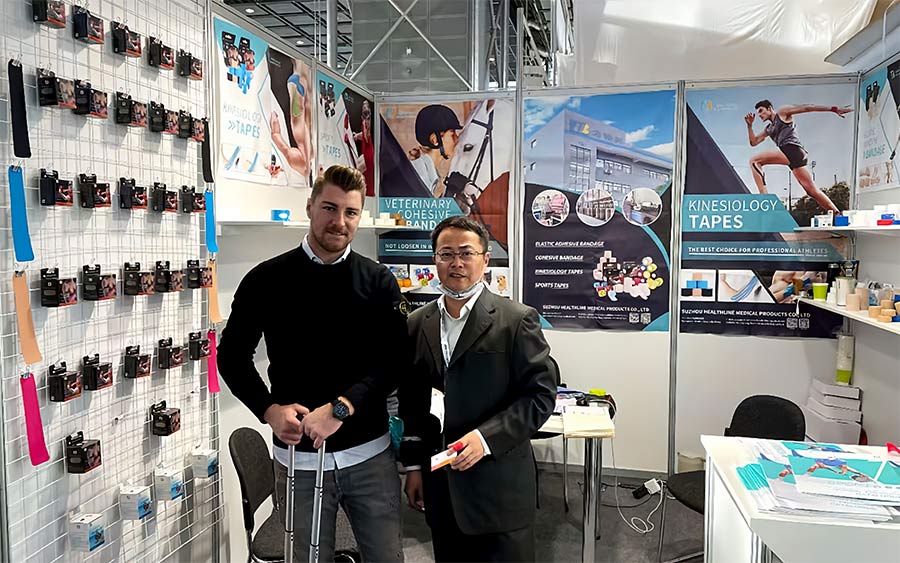
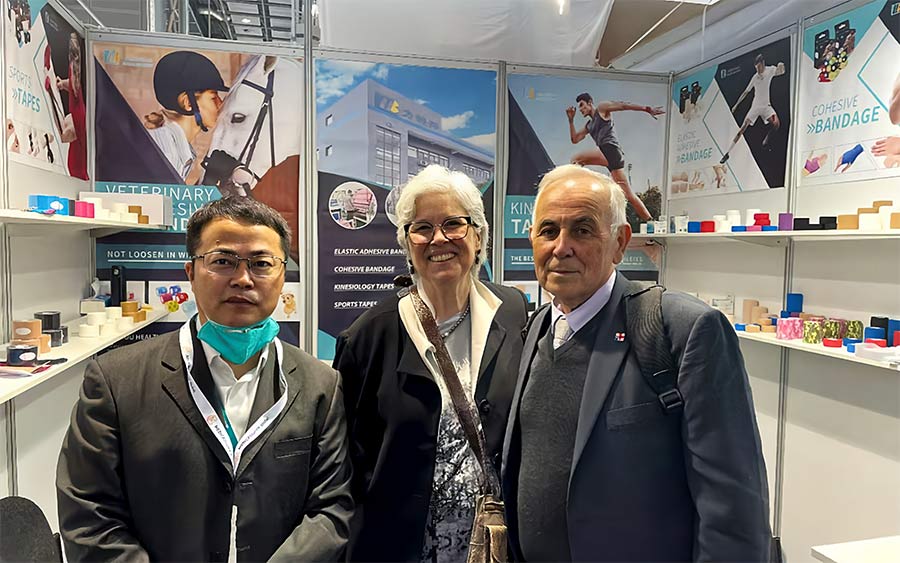
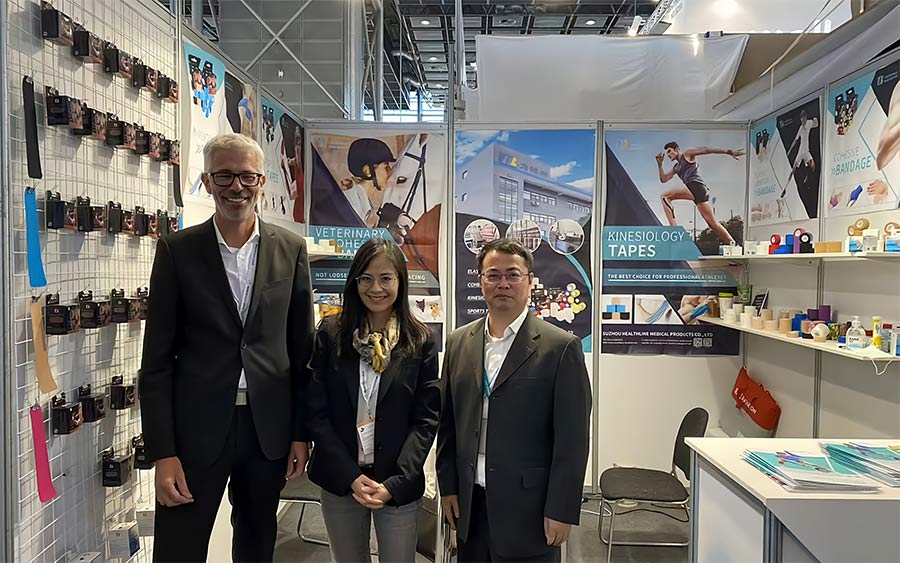
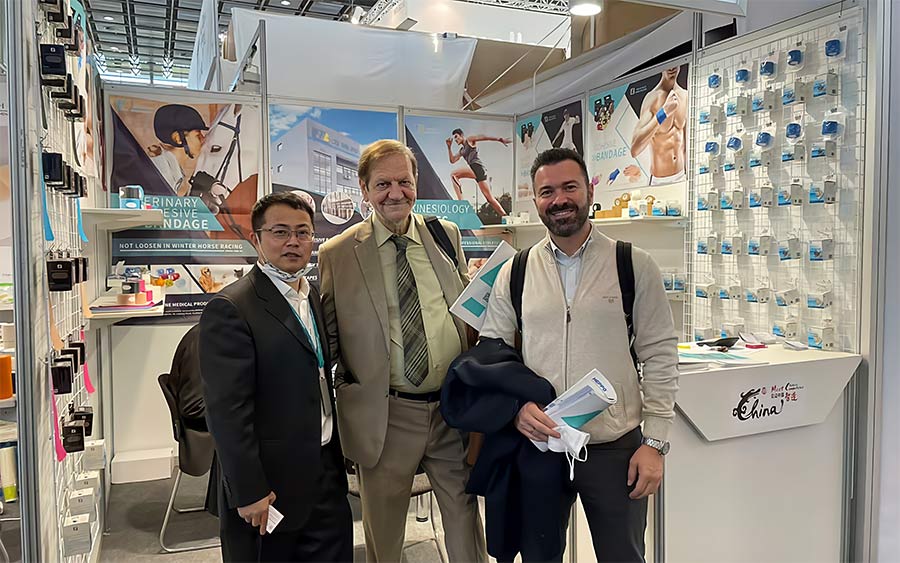
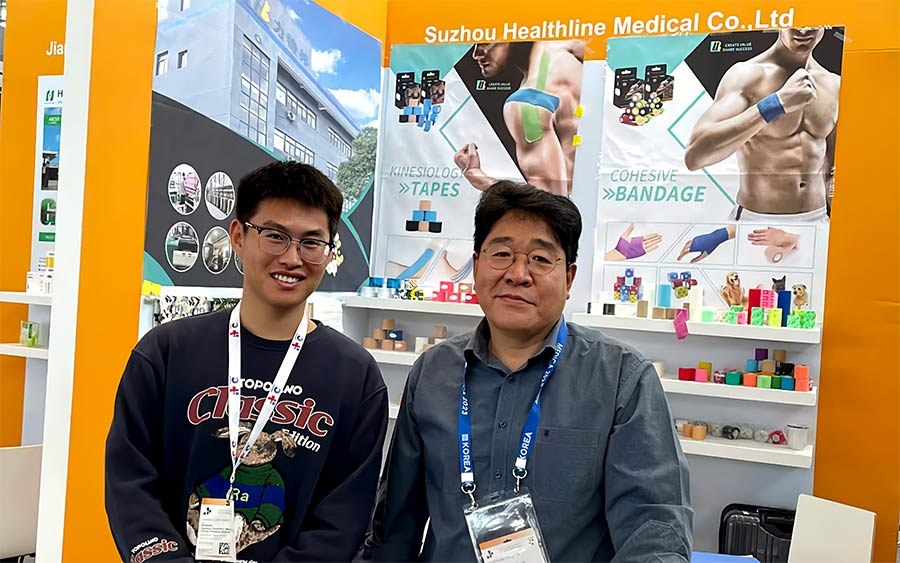
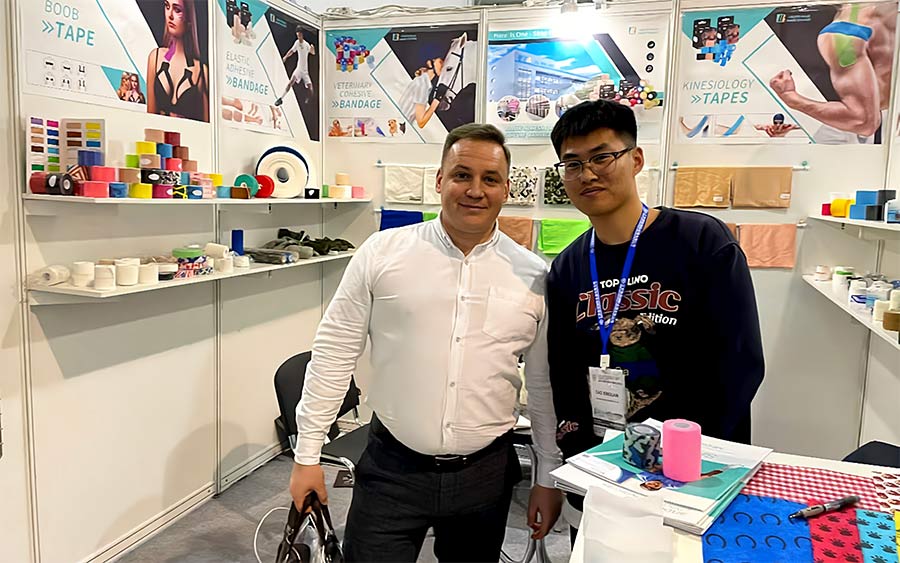
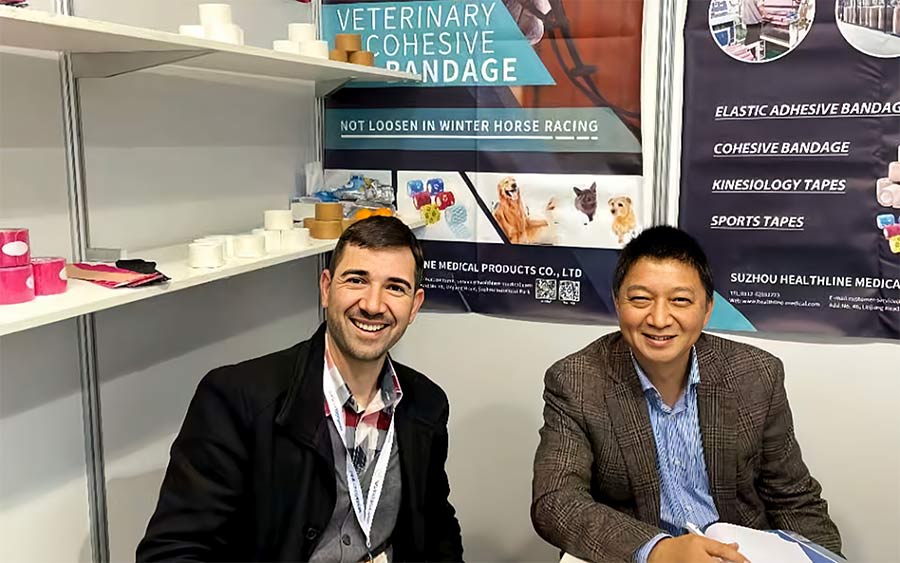
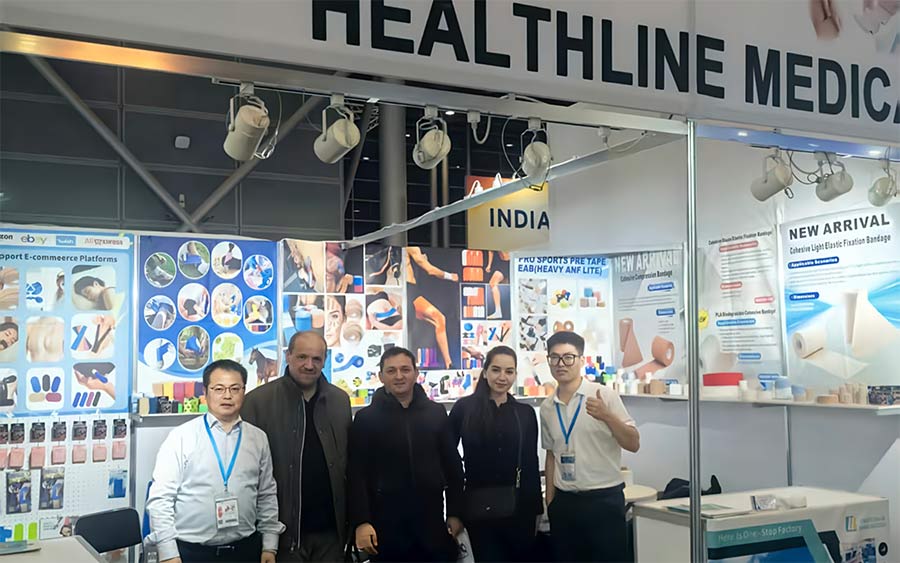
Driven by uncompromising quality, competitive value, and customer-centric service, Healthline’s products are now present in over 50 countries and regions across the globe. As a dedicated OEM/ODM manufacturer of medical cohesive bandages and sports tape, we serve a diverse client portfolio—including hospitals and clinics,veterinary,authorized distributors, government procurement agencies, national pharmacy chains, and retail supermarkets,on-line Amazon,Lotte & Tiktok e-commerce industry .
We are proud to be the long-term OEM/ODM partner for globally recognized names such as Target, CVS, Aldi, Lidl, Carrefour,Tesco, Alliance Boots,Deathlon,Covetrus and Kruuse. Our annual sales volume has maintained a steady year-over-year growth of 15% for consecutive years—a testament to the trust our partners place in us.
In today’s competitive global market, we believe sustainable success comes from continuously delivering superior products and responsive service at a fair price. This philosophy has guided Healthline for three decades, and we are committed to repaying your trust with solutions that help your business grow.











- Ethan Zhang
- Tel:+86-512-6289 3223
- Mob:+86-19822909189
- Email:ethanzhang@healthline-medical.com
- Whatsapp / Wechat:+86-19822909189
- Skype:+86-19822909189
- Asher.cao
- Tel:+86-512-6289 3223
- Mob:+86-17625487782
-
Email:ethanzhang@healthline-medical.com
Asher.cao@healthline-medical.com
- Whatsapp / Wechat:+86-17625487782
- Skype:+86-176 2548 7782
- Jason Zhang
- Tel:+86-512-6289 3223
- Mob:+86-13152123359
- Email:jason@healthline-medical.com
- Whatsapp / Wechat:+86-13152123359
Copyright © 2025 SUZHOU HEALTHLINE MEDICAL PRODUCTS CO., LTD
All Rights Reserved.
 Sports Tape Manufacturers Cohesive Bandages Suppliers
The information provided on this website is intended for use only in countries and jurisdictions outside of the People's Republic of China.


