
 English
 Español
 русский
 عربى
عربى

Products
View more
- Cotton Kinesiology Tape
- Synthetic Kinesiology Tape
- Nylon Kinesiology Tape
- 4-Way Stretch Elastic Kinesiology Tape
- Standard Kinesiology Tape Roll
- Pre-Cut Kinesiology Tape Strips
- Printed / Pattern Kinesiology Tape
- Perforated Kinesiology Tape (Ventilated)
- Special Shape Kinesiology Tape
- Water-Resistant Kinesiology Tape
- Pregnancy Support Tape
- Face Lift Kinesiology Tape
- Gentle / Beauty Kinesiology Tape
- Veterinary Kinesiology Tape
- Breast Lift Tape
- Customized Kinesiology Tape
- Pre-cut I Strip Kinesiology Tape
- Pre-cut Y Strip Kinesiology Tape
- Pre-cut X Strip Kinesiology Tape
- Knee Kinesiology Tape
- Leg Kinesiology Tape
- Shoulder Kinesiology Tape
- Back Kinesiology Tape
- Waist Kinesiology Tape
- Ankle Kinesiology Tape
- Pregnancy Belly Tape
- Beauty Face Tape
- Solid Color Cohesive Bandage Roll
- Printed & Pattern Cohesive Bandage
- Non-Woven Self-Adhesive Bandage
- Cotton Self-Adhesive Bandage
- PBT Gauze Cohesive Bandage Rolls
- Pet Vet Wrap
- Horse and Cattle Self-Adhesive Bandage
- Veterinary Cohesive Bandage
- Camo Cohesive Wrap Tape
- Military and Tactical Cohesive Bandage
- Tattoo Grip Tape
- Latex Cohesive Bandage
- Latex-Free Cohesive Bandage
- Pet Laminated Self-Adhesive Bandage
- High-Tensile Cohesive Bandage
- Football Sock Wrap Self-Adhesive Bandage
- Sterile Cohesive Bandage
- Special Function Cohesive Bandage
- OEM / Bulk Cohesive Bandage Roll
- Rigid Strapping Tape
- Athletic Tape
- Zinc Oxide Sports Tape
- Rayon Rigid Sports Tape
- Sports Strapping Tape
- Finger Bob Bandages
- Boxing Tape
- Heavyweight Elastic Adhesive Bandage (EAB)
- 93 Cotton Heavyweight Elastic Adhesive Bandages(EAB)
- Athletic Heavyweight Elastic Adhesive Bandage (EAB)
- Lightweight Elastic Adhesive Bandage (EAB)
- Athletic Lightweight Elastic Adhesive Bandage (EAB)
- American Style Elastic Adhesive Bandage (EAB)
- Japanese Style Elastic Adhesive Bandage (EAB)
- Elastic Adhesive Compression Bandage
- Veterinary Elastic Adhesive Bandage (EAB)

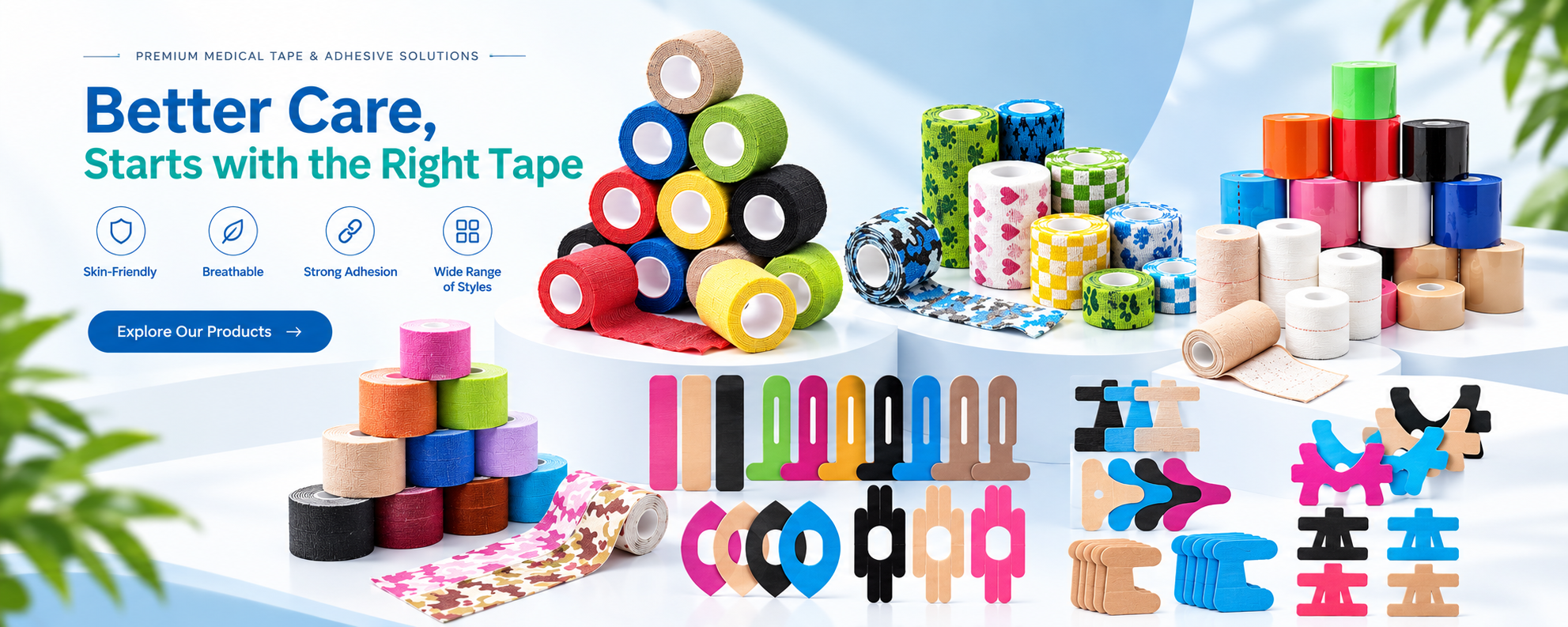

Excellent Product Series
VIEW MORE
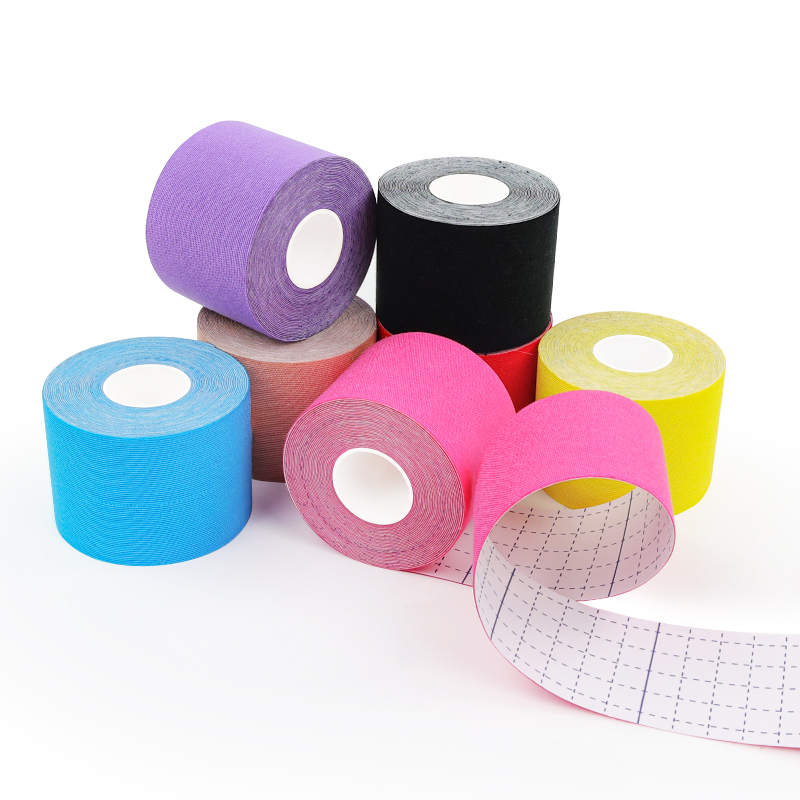
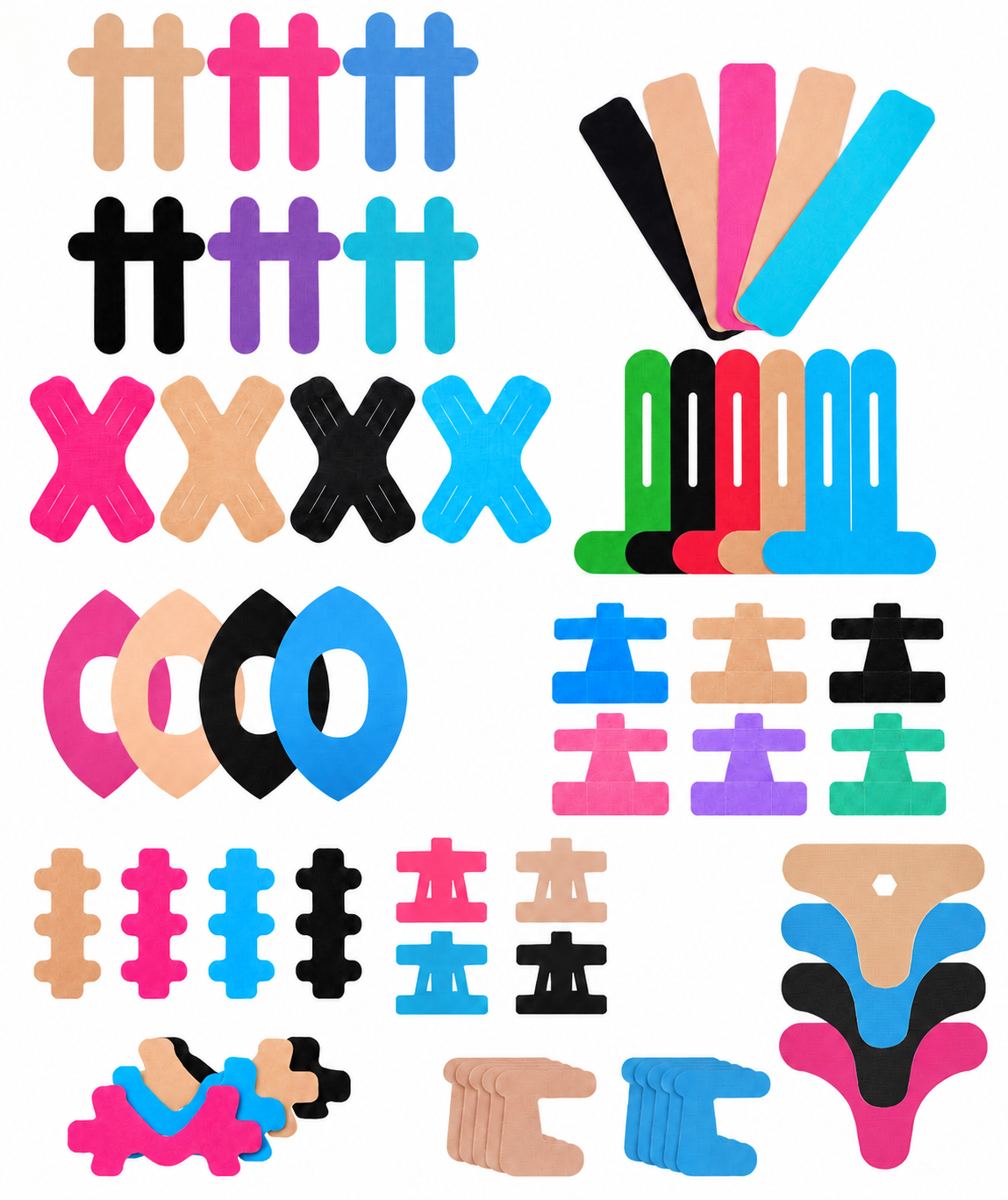
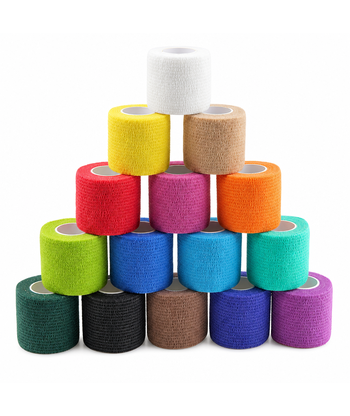
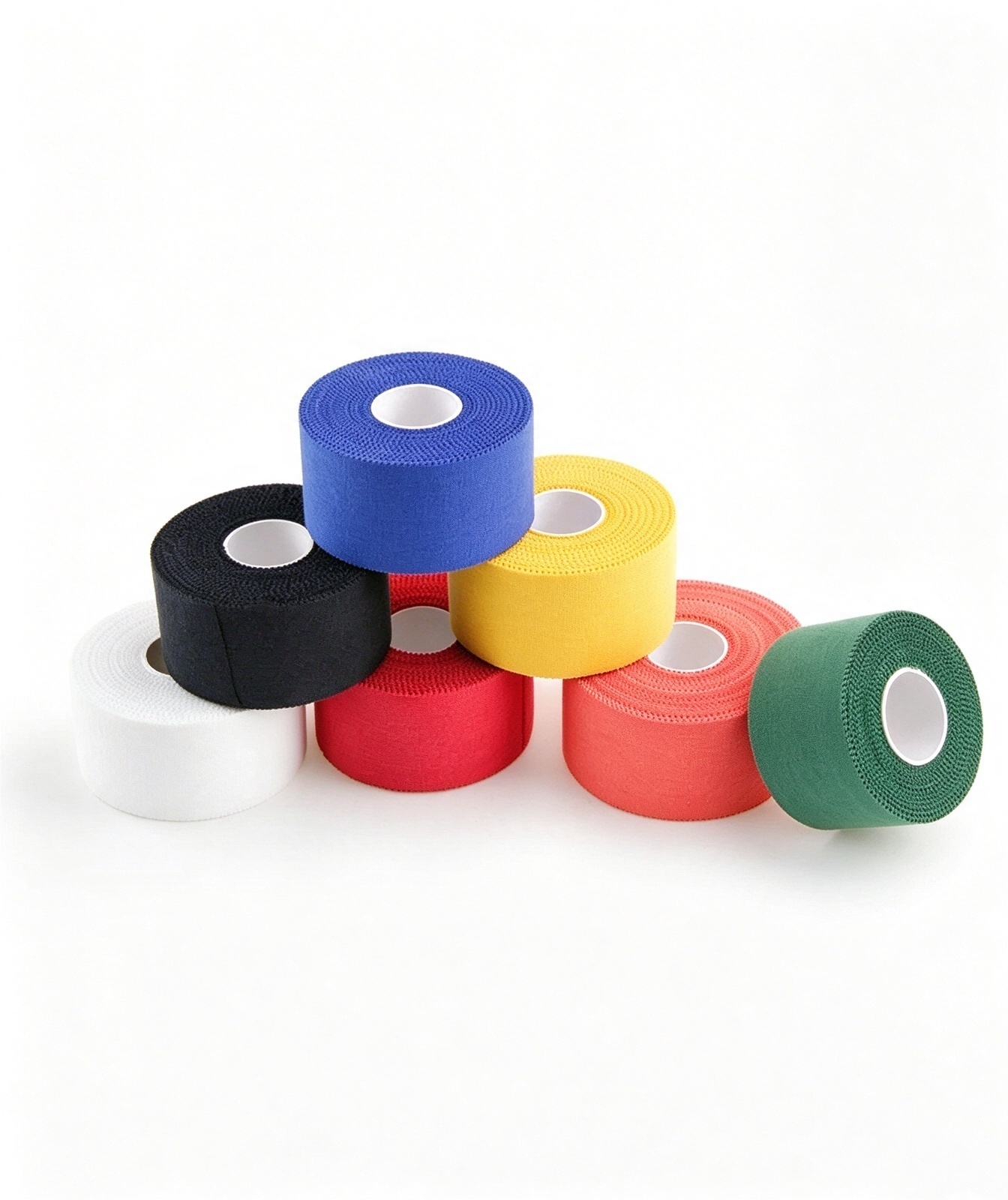
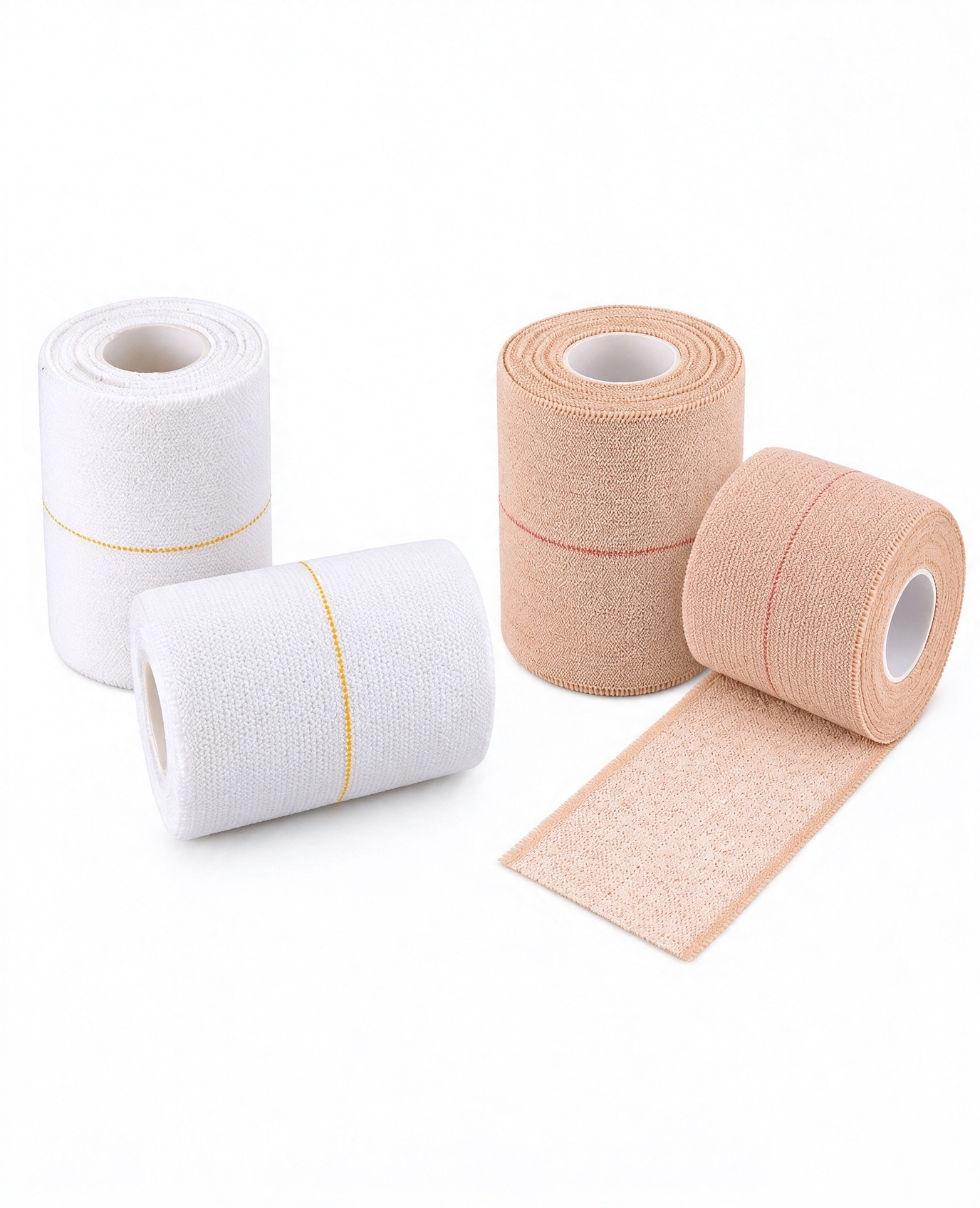
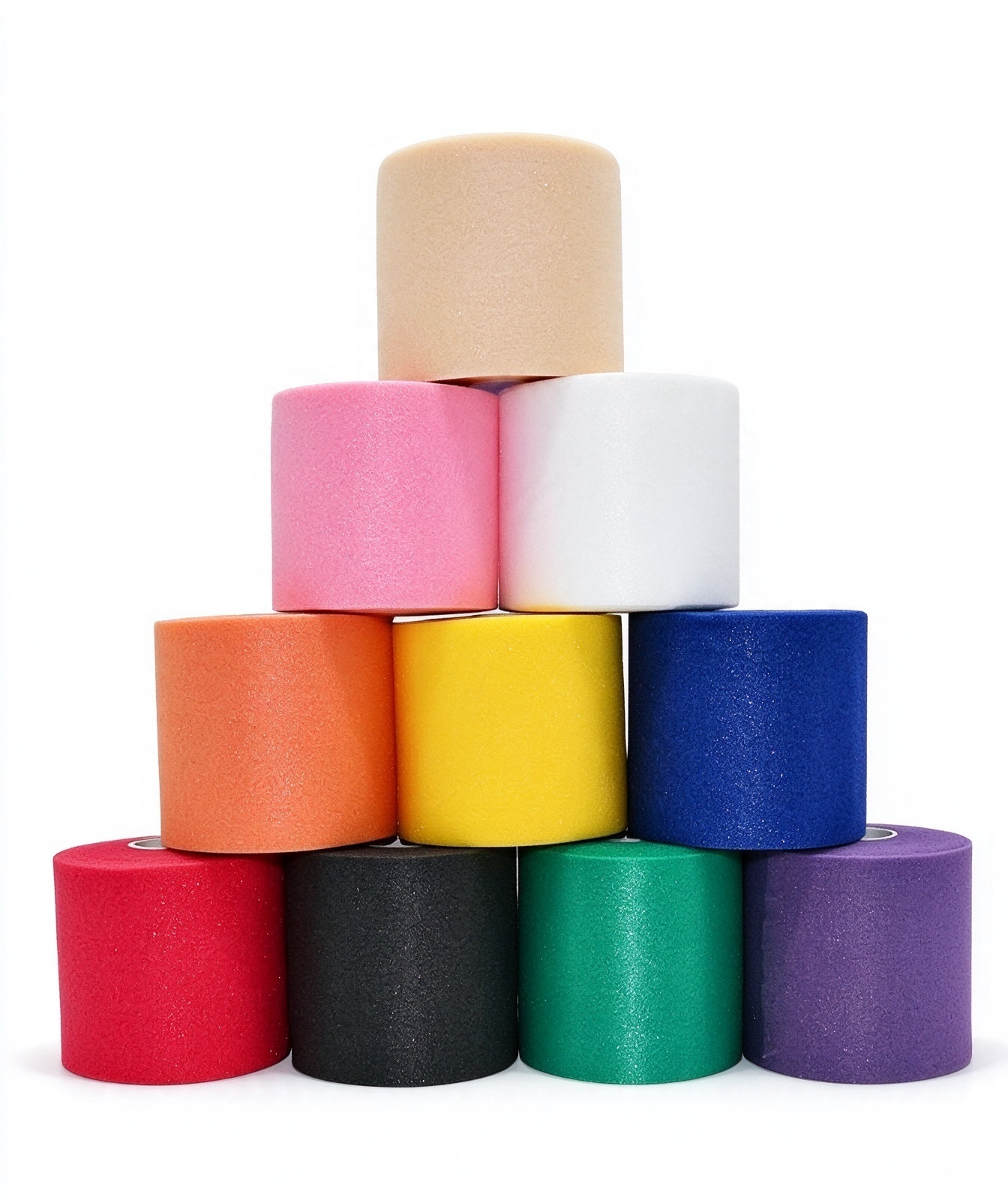
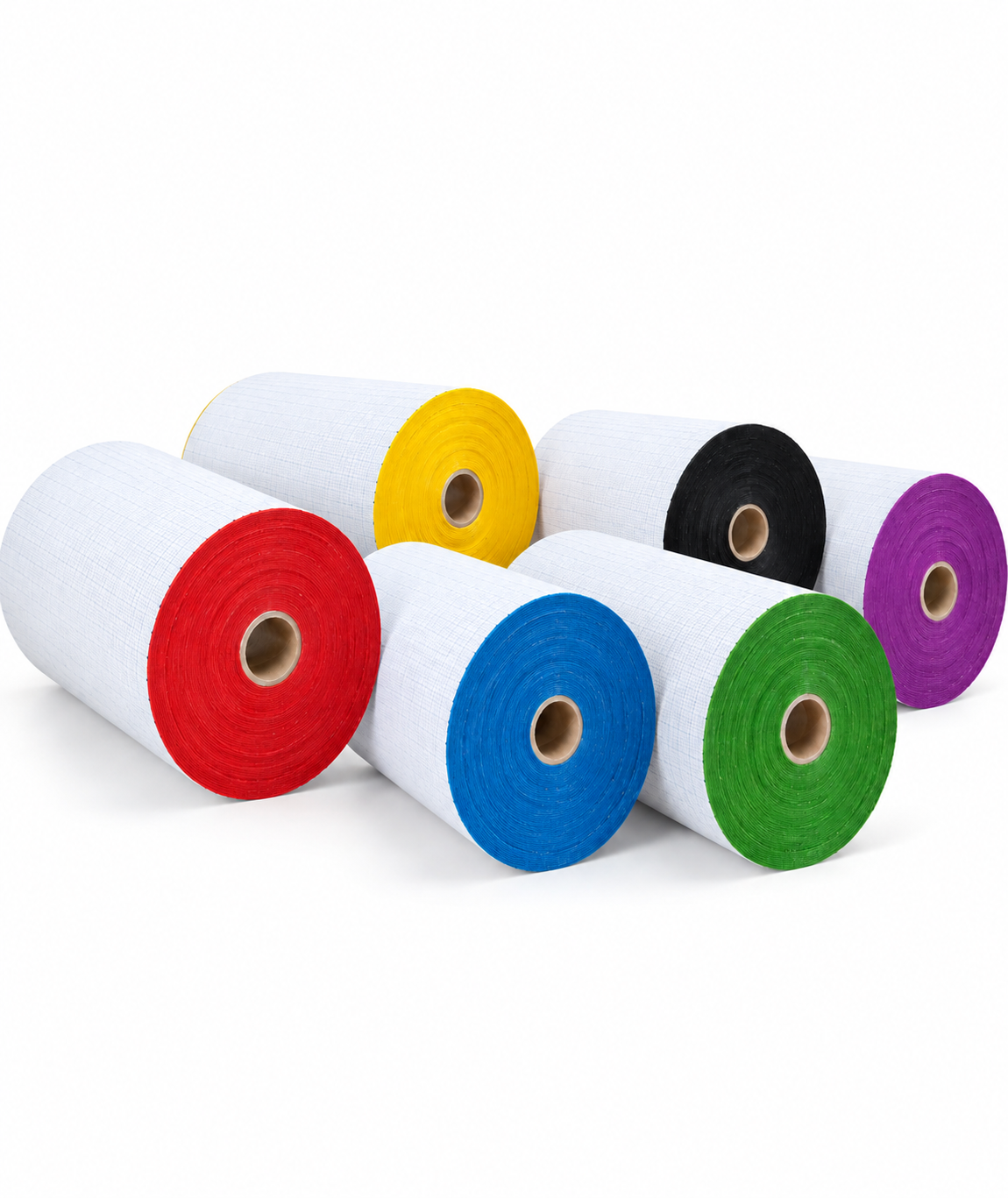


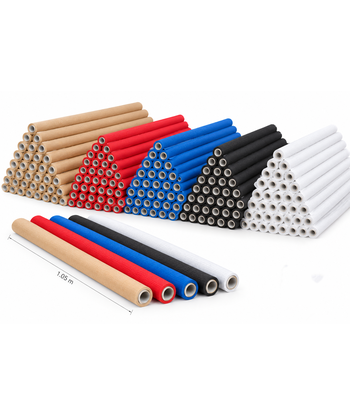
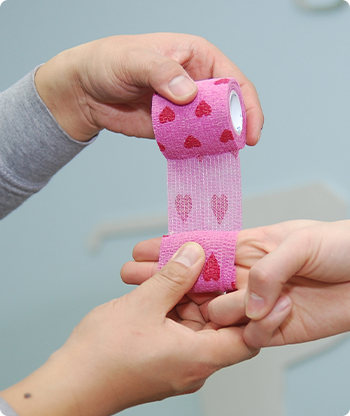
Welcome to Suzhou Healthline Medical: Engineering Excellence in Every Roll.
Your Premier Partner for Medical Bandages & Sports Medicine.
With a legacy dating back to 1993, Healthline has established itself as a world-class manufacturer of medical bandages and sports tapes. Our three-decade journey is built upon a foundation of precision engineering and material science innovation.
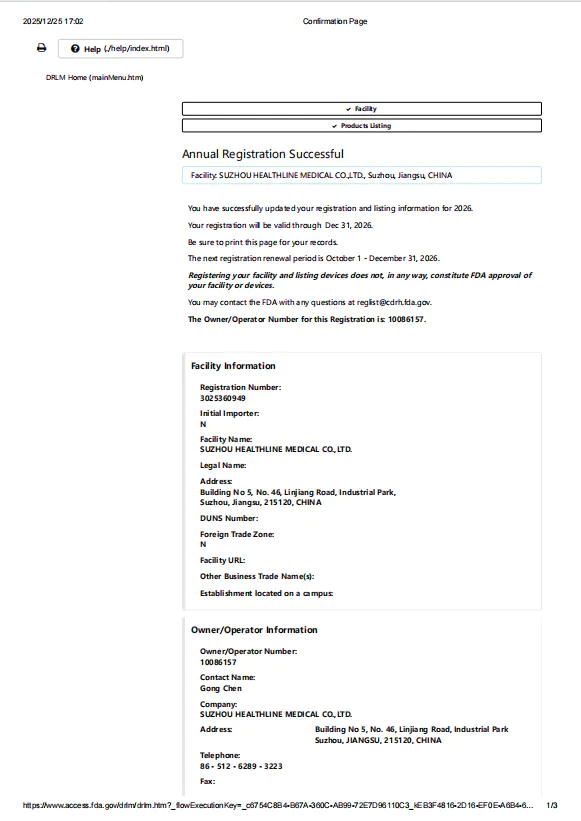
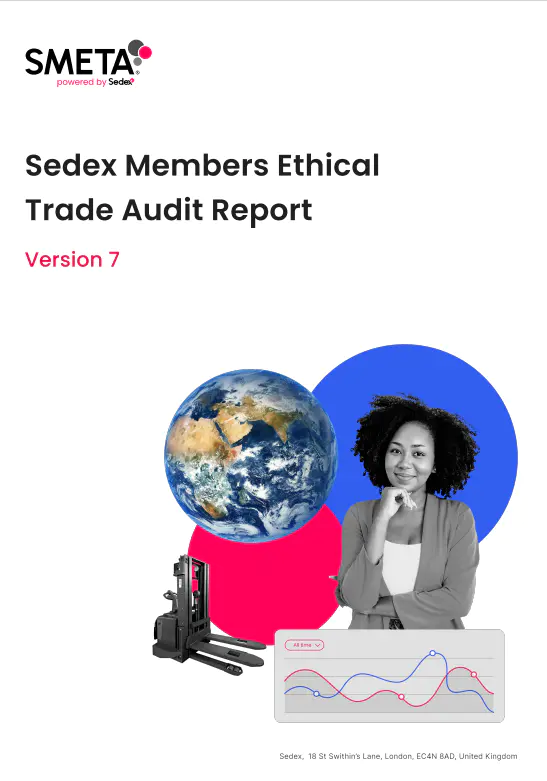
Headquartered in Suzhou, our state-of-the-art facility—restructured in 2021—integrates cutting-edge coating and finishing technologies. We specialize in high-barrier, latex-free synthetic adhesives and advanced PSA (Pressure Sensitive Adhesive) formulations, combined with sophisticated textile constructions. This ensures our products consistently meet stringent international standards, including ISO13485, FDA, CE, REACH, SMETA, BSCI, and ICS.
From standard cohesive bandages to highly customized kinesiology tape solutions, we empower global partners with products offering exceptional conformability, breathability, and adhesion. Discover the Healthline difference—where 30 years of expertise converges with tomorrow’s technology.


VIDEO PLAY
Company Strength
-
Be established in0
-
Subsidiary0+
-
Global patent0+
-
Coverage country0+
Application Scenario
VIEW MORE
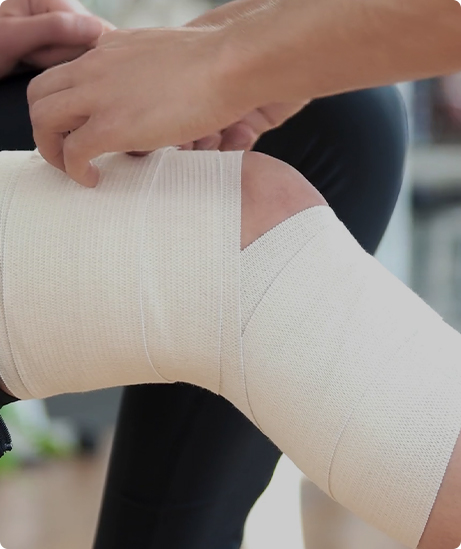
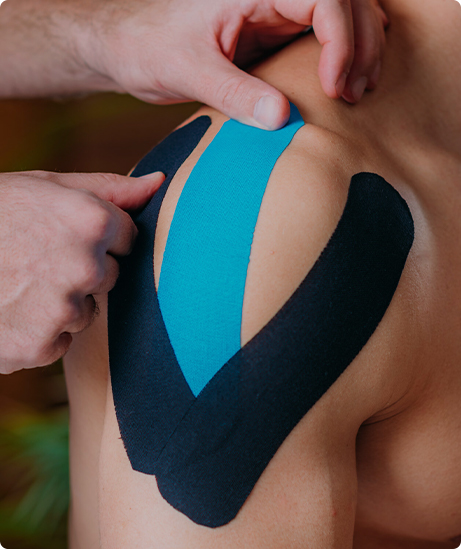
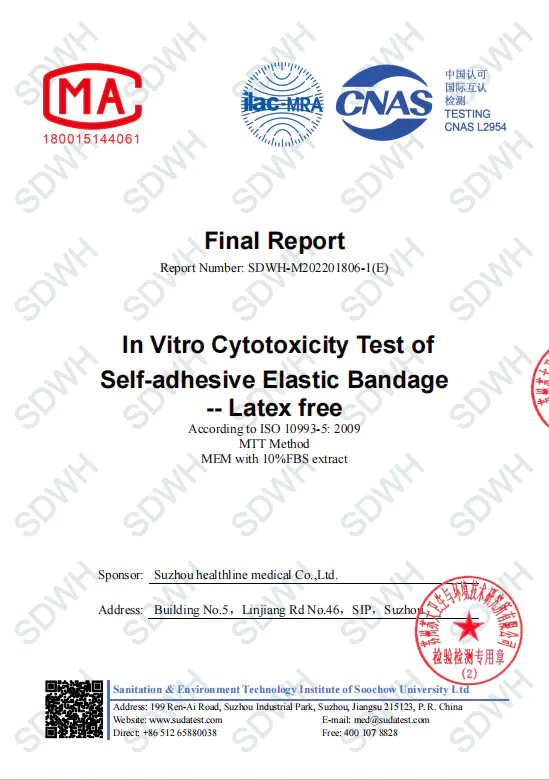
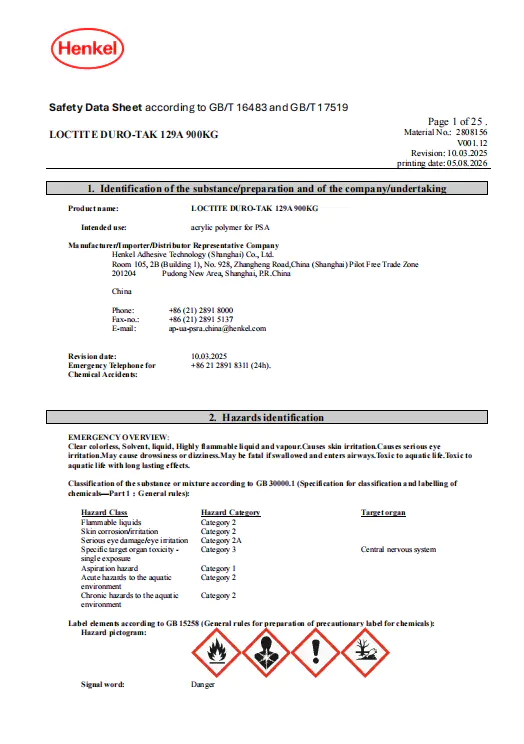
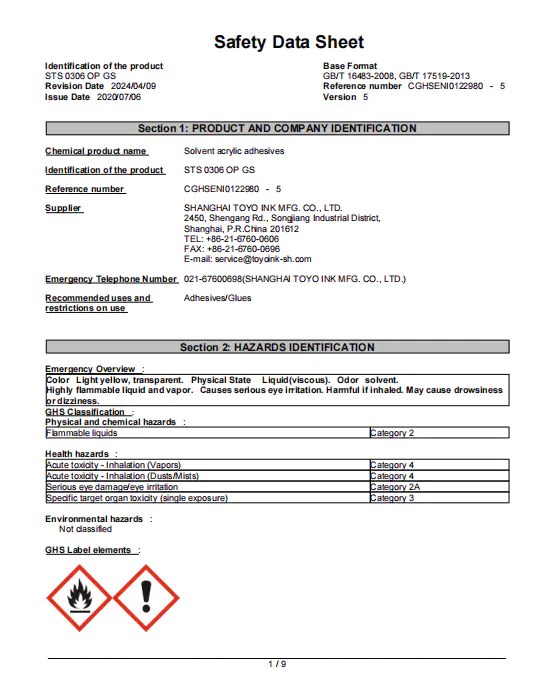
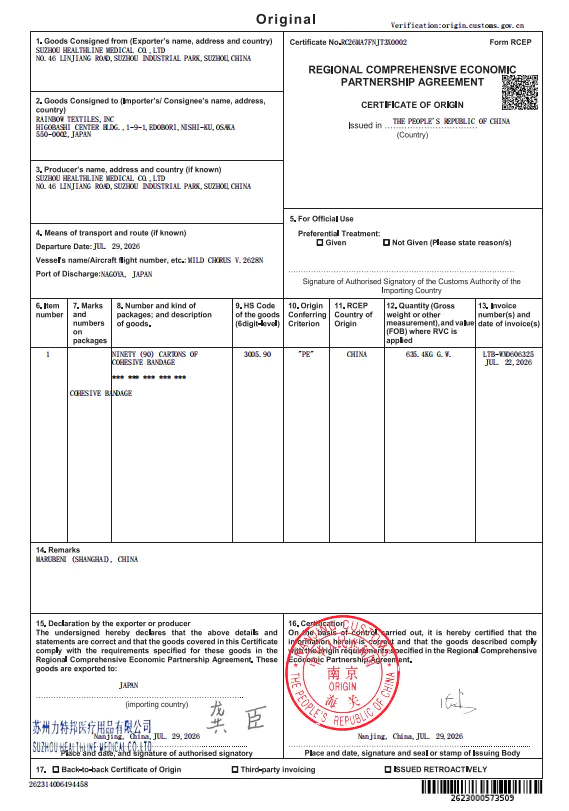
Certificate Of Honor
VIEW MORE


Recently News And
Events Share With You
Enterprise Dynamics
Medical information
10-26-2026
Baseball Wrist Tape: Applications, Selection Criteria, and Practical Guidance
A high school shortstop retapes his wrist before every at-bat, not because anything hurts, but because the bat knob has worn a callus into the base of his thumb. By the fifth inning the strip has rolled into a thin rope at the joint line and the skin underneath is raw. The tape was rarely the problem. Width, tension, and anchoring were, and all three are fixable in about ninety seconds.
Wrist taping in baseball sits in a narrow technical corner: too slim to behave like ankle strapping, too rigid to work as a wrap, and exposed to sweat and friction for three hours at a time. What follows covers how the material behaves on a hitter's wrist, which roll suits which job, and what clubhouse managers and buyers should check before ordering by the case.
1.5 inStandard rigid roll width for an adult wrist lock
2 to 3Overlapping strips usually enough to steady the hand
9 inningsTypical target wear window before a rewrap
What Baseball Wrist Tape Actually Does
Baseball wrist tape is a narrow strip of non-elastic adhesive tape wrapped around the wrist to limit extension and side-to-side play, protect the skin from bat knobs and glove seams, and give the hitter the same hand reference on every load.
Definition: wrist tape is rigid strapping tape. It restricts joint motion. Kinesiology tape is elastic and permits motion. The two products solve opposite problems and are not interchangeable on a baseball wrist.
Four jobs the tape performs during a swing
Limits extension. Two or three overlapping strips reduce how far the hand breaks back at contact, which helps the barrel arrive on time.
Protects skin. The knob, the glove seam, and the batting glove strap all press on the same small patch of skin for a full season.
Adds feedback. A firm tape edge gives the hitter a tactile cue for hand position when he loads.
Holds the grip layer. Tape under a batting glove stops the glove from twisting against the palm.
What it will not do is stabilise a sprained wrist or correct a swing path. Joint support under load belongs to a different taping system, matched to the ligament rather than to the bat. The sports protection applications section of our site shows how rigid, elastic, and pre-wrap layers combine for that job.
Rigid, Cohesive, or Grip Tape: Which Roll Belongs on the Wrist
Three tape families land on a baseball wrist, and they are not interchangeable: rigid zinc oxide strapping limits motion, cohesive self-adherent wrap compresses and holds without adhesive on the skin, and grip tape belongs on the handle, never on skin.
Rigid strapping
Zinc oxide or hot-melt coated cotton with almost no stretch. This is the tape that produces a hitting lock and the one most teams buy in bulk.
Cohesive wrap
Self-adherent elastic bandage that bonds to itself. Used as a base layer, for light compression, or to hold a dressing in place.
Grip tape
Textured adhesive strip for the bat handle. It changes feel and tack, and it should never be applied directly to the wrist.
Wrist taping materials compared by stretch, adhesion, and typical game use.
Tape type
Stretch
Adhesion to skin
Typical wrist job
Removal
Zinc oxide rigid strapping
Almost none
High, holds through sweat
Hitting lock, thumb spica base
Scissors or cutters, slow peel
Cotton hot-melt rigid tape
Almost none
Moderate
Same jobs where zinc oxide irritates
Hand peel, light residue
Cohesive self-adherent wrap
High
None, bonds to itself
Base layer and light compression
Unwinds, no residue
Bat grip tape
Low
Handle only
Bat handle, not skin
Peels from the handle
The adhesive system decides more purchases than price does. Zinc oxide holds through a full game but needs a cutter to remove, which is a real issue for youth programmes. Hot-melt cotton peels by hand and suits players who retape between innings, though it leaves more residue on the skin.
Baseball Grip Adhesive Sports Tape for Bat HandlesTextured adhesive strip for bat-handle feel and tack, using breathable cotton-elastane sports tape construction for flexible support.View Product →
For a closer look at how these materials behave under load, our note on rigid versus elastic sports tape walks through the same trade-offs on other joints.
How to Wrap a Wrist for Hitting, Step by Step
A wrist wrap that survives nine innings follows the same five steps at every level, and the first one happens before any tape comes off the roll.
Dry the skin. Clean, dry skin without lotion or sunscreen holds adhesive far better than a fresh coat of either.
Build a base if the skin is thin or sensitive. One layer of foam pre-wrap under the tape prevents blistering at the joint line.
Anchor with one full circle at roughly half tension, sitting just above the wrist bone.
Lay two or three overlapping strips across the back of the wrist with the hand slightly extended, stopping short of the wrist crease so the hand can still flex.
Test the grip, check the fingertips for colour and warmth, and retape rather than tighten if it feels wrong.
Tension rule: pull only in the direction you want support. Strips laid across the back of the wrist should be snug, while the circle around the wrist itself should be the loosest layer on the hand.
Wrist Tape for Soccer and Football SupportBreathable cotton-elastane wrist tape offering targeted compression and secure, skin-friendly adhesion for high-impact soccer and football play.View Product →
Taping a Throwing Wrist: Pitchers and Catchers
Pitchers and catchers need opposite things from wrist tape: the pitcher needs protection that will not disturb wrist snap, while the catcher needs a firm base that survives repeated blocking.
Pitcher
Keep the wrap below the wrist crease and skip the full lock. A light anchor strip at the thumb base protects the skin during follow-through without changing release timing. Anything that restricts snap gets felt on the first pitch.
Catcher
Use a firmer base: two anchor circles plus a thumb-spica style strip running from the wrist along the base of the thumb. Catchers take foul tips on the same spot repeatedly, and a built-up base absorbs that impact better than a single thin layer.
If a player describes the tape as tight, it is already too tight. Tape should feel present, not restrictive, and any numbness or tingling in the fingers means it comes off immediately.
Six Mistakes That Make Wrist Tape Fail Early
Almost every tape failure seen in a dugout traces back to one of six habits, and five of them happen before the player steps into the box.
Taping over wet skin or sunscreen, which drops adhesion within a few swings.
Over-tensioning the first circle, which bunches the tape at the joint line.
Wrapping across the wrist crease, which limits flex instead of extension.
Skipping a base layer on thin or sensitive skin, then blaming the adhesive for a blister.
Reusing a peeled strip, which never re-sticks at full strength.
Leaving tape on for hours after play, when sweat softens the adhesive and the edges lift.
Pre-wrap is the cheapest insurance in the kit. One foam layer costs a fraction of a strip of rigid tape and prevents the raw, circular abrasions that make players stop taping altogether.
Athletic Pre Wrap and Foam UnderwrapLightweight foam pre-wrap for skin protection under athletic tape, offered in solid, mixed, and multi-color formats for taping preparation.View Product →
Sizing Up an Order for a Team, Clinic, or Retail Shelf
Wrist tape purchasing comes down to four numbers: width, roll length, case pack, and adhesive type, and the width choice alone explains most of the difference between a roll that sells and one that sits on the shelf.
0.5 in
12.7 mm
1 in
25 mm
1.5 in
38 mm
2 in
50 mm
Where those widths land in practice:
0.5 in suits finger and thumb strips and quick touch-ups between innings.
1 in is the usual pick for youth wrists and light hitting locks.
1.5 in is the volume seller for adult wrist work and team orders.
2 in covers thumb spicas, forearm anchors, and clubhouse stock.
For wholesale orders, confirm three things in writing: the latex declaration, the case pack count, and whether the roll is hand-tearable. Clubs reorder on the first and third; distributors reorder on the second.
Frequently Asked Questions
The answers below assume adult skin, dry conditions, and a single game of use. Youth programmes and hot climates should shorten every wear window.
How tight should baseball wrist tape be?
Firm enough to stay in place for a full game, loose enough that you can slide a fingertip under the circle. If the hand swells, the fingers tingle, or the tape leaves deep marks after removal, it was wrapped too tight.
Can you reuse a strip of wrist tape?
No. Once a zinc oxide or hot-melt strip lifts, the adhesive layer is contaminated and will not hold at full strength. Cutting a fresh strip costs far less than a lost at-bat.
Is kinesiology tape better than rigid tape for a sore wrist?
They answer different questions. Kinesiology tape suits a wrist that needs to keep moving with mild support, while rigid strapping is better for limiting extension during a swing. Many players wear a light pre-cut patch between games and rigid tape only in the box.
How long can wrist tape stay on?
One game, then off. Adhesive softens with sweat, edges lift, and trapped moisture softens the skin underneath. Remove it within an hour of finishing and clean the area before retaping.
.baseball-wrist-tape-guide{--accent:#57b660;--text-color:#16241b;--bg-color:#fbfdf9;--tint:#eef6ef;--line:#d9e7db;background:var(--bg-color);color:var(--text-color);font-size:16px;line-height:1.8;padding:4px 0;}
.baseball-wrist-tape-guide .article-section{padding:0;}
.baseball-wrist-tape-guide .article-section h2{font-size:22px;font-weight:bold;text-align:left;margin-bottom:12px !important;line-height:1.4;color:var(--text-color);}
.baseball-wrist-tape-guide .article-section h3{font-size:16px;font-weight:bold;text-align:left;margin-bottom:12px;color:var(--accent);letter-spacing:.3px;line-height:1.8;}
.baseball-wrist-tape-guide .article-section p{font-size:16px !important;margin-bottom:12px;}
.baseball-wrist-tape-guide .article-section ol{margin-bottom:12px;list-style-type:decimal;list-style-position:inside;padding-left:0;}
.baseball-wrist-tape-guide .article-section ul{margin-bottom:12px;list-style-type:disc;list-style-position:inside;}
.baseball-wrist-tape-guide .article-section li{list-style:inherit;font-size:16px;margin-bottom:6px;}
.baseball-wrist-tape-guide .article-section th{font-weight:bold;border:1px solid #cccccc;padding:8px;}
.baseball-wrist-tape-guide .article-section td{border:1px solid #cccccc;padding:8px;}
.baseball-wrist-tape-guide .article-section caption{caption-side:bottom;font-size:16px;margin-bottom:12px;font-style:italic;color:#808080;}
.baseball-wrist-tape-guide .article-section table{display:table!important;width:100%;border-collapse:collapse;margin:22px 0;font-size:15px;line-height:2;}
.baseball-wrist-tape-guide .article-section thead{display:table-header-group!important;}
.baseball-wrist-tape-guide .article-section tbody{display:table-row-group!important;}
.baseball-wrist-tape-guide .article-section tr{display:table-row!important;}
.baseball-wrist-tape-guide .article-section th{display:table-cell!important;}
.baseball-wrist-tape-guide .article-section td{display:table-cell!important;}
.baseball-wrist-tape-guide .article-section table th{padding:12px 14px;text-align:left;background:var(--accent);color:var(--bg-color);}
.baseball-wrist-tape-guide .article-section table td{padding:12px 14px;vertical-align:top;}
.baseball-wrist-tape-guide .article-section table tr:first-child td{background:var(--accent);color:var(--bg-color);font-weight:bold;letter-spacing:.3px;}
.baseball-wrist-tape-guide .article-section table tr:nth-child(even) td{background:var(--tint);}
.baseball-wrist-tape-guide .article-section table tr td:first-child{font-weight:600;border-left:3px solid var(--accent);}
.baseball-wrist-tape-guide .article-section table tr{transition:background .2s ease;}
.baseball-wrist-tape-guide a{color:var(--accent);text-decoration:underline;text-underline-offset:3px;transition:opacity .2s ease;}
.baseball-wrist-tape-guide a:hover{opacity:.75;}
.baseball-wrist-tape-guide a[data-product-card]{display:block;margin:10px 0;}
.baseball-wrist-tape-guide .tape-intro .lead{font-weight:600;letter-spacing:.2px;border-left:5px solid var(--accent);padding-left:16px;}
.baseball-wrist-tape-guide .metric-row{display:flex;flex-wrap:wrap;gap:14px;margin:24px 0 8px;}
.baseball-wrist-tape-guide .metric-row .metric{flex:1 1 150px;background:var(--bg-color);border:1px solid var(--line);border-top:4px solid var(--accent);padding:14px 16px;box-shadow:0 8px 18px rgba(20,40,25,.07);}
.baseball-wrist-tape-guide .metric-row .metric b{display:block;font-size:24px;line-height:1.4;color:var(--accent);font-variant-numeric:tabular-nums;}
.baseball-wrist-tape-guide .metric-row .metric span{font-size:14px;line-height:2;color:var(--text-color);}
.baseball-wrist-tape-guide .tape-what h2{text-transform:uppercase;letter-spacing:2px;border-bottom:2px dashed var(--accent);padding-bottom:10px;margin-top:58px;}
.baseball-wrist-tape-guide .tape-what h3{text-transform:uppercase;letter-spacing:1.4px;color:var(--text-color);font-size:16px;}
.baseball-wrist-tape-guide .callout-def{border-left:5px solid var(--accent);background:var(--tint);padding:16px 20px;margin:20px 0;font-size:18px;line-height:1.7;border-radius:0 6px 6px 0;}
.baseball-wrist-tape-guide .tape-choose h2{border-left:7px solid var(--accent);background:var(--tint);padding:8px 0 8px 16px;margin-top:68px;}
.baseball-wrist-tape-guide .tape-grid{display:grid;grid-template-columns:repeat(3,1fr);gap:16px;margin:22px 0;}
.baseball-wrist-tape-guide .tape-grid .tape-card{background:var(--bg-color);border:1px solid var(--line);padding:16px;border-radius:4px;}
.baseball-wrist-tape-guide .tape-grid .tape-card h3{color:var(--text-color);border-bottom:2px solid var(--accent);padding-bottom:6px;margin-bottom:10px;}
.baseball-wrist-tape-guide .callout-card{background:var(--bg-color);border:1px solid var(--line);border-top:5px solid var(--accent);box-shadow:0 12px 24px rgba(20,40,25,.08);padding:18px 20px;margin:24px 0;font-size:16px;line-height:1.8;}
.baseball-wrist-tape-guide .tape-how h2{background:var(--accent);color:var(--bg-color);padding:12px 18px;margin-top:52px;clip-path:polygon(0 0,100% 0,100% 100%,20px 100%,0 calc(100% - 20px));line-height:1.4;}
.baseball-wrist-tape-guide .tape-how .steps{margin:18px 0 20px;}
.baseball-wrist-tape-guide .tape-how .steps li{border-left:2px solid var(--line);padding:4px 0 10px 14px;margin-left:2px;}
.baseball-wrist-tape-guide .tape-how .steps li::marker{color:var(--accent);font-weight:bold;font-size:16px;}
.baseball-wrist-tape-guide .callout-dash{border:2px dashed var(--accent);border-radius:10px;padding:16px 18px;margin:20px 0;font-size:16px;line-height:1.8;}
.baseball-wrist-tape-guide .tape-pitchers h2{border-top:4px solid var(--accent);padding-top:16px;margin-top:74px;letter-spacing:.6px;}
.baseball-wrist-tape-guide .split-grid{display:grid;grid-template-columns:1fr 1fr;gap:18px;margin:24px 0;}
.baseball-wrist-tape-guide .split-grid .split{background:var(--bg-color);border:1px solid var(--line);padding:16px 18px;}
.baseball-wrist-tape-guide .split-grid .split:first-child{border-top:4px solid var(--accent);}
.baseball-wrist-tape-guide .split-grid .split:last-child{border-bottom:4px solid var(--accent);}
.baseball-wrist-tape-guide .split-grid .split h3{color:var(--text-color);letter-spacing:1px;text-transform:uppercase;font-size:16px;}
.baseball-wrist-tape-guide .callout-solid{background:var(--accent);color:var(--bg-color);padding:20px 22px;margin:22px 0;border-radius:6px;font-weight:600;font-size:16px;line-height:1.8;}
.baseball-wrist-tape-guide .tape-mistakes{counter-reset:mistake;}
.baseball-wrist-tape-guide .tape-mistakes h2{counter-increment:mistake;position:relative;padding-left:54px;margin-top:62px;}
.baseball-wrist-tape-guide .tape-mistakes h2::before{content:counter(mistake);position:absolute;left:0;top:2px;width:38px;height:38px;border-radius:50%;background:var(--accent);color:var(--bg-color);font-size:18px;line-height:1.2;font-weight:bold;display:flex;align-items:center;justify-content:center;}
.baseball-wrist-tape-guide .callout-inset{background:var(--bg-color);box-shadow:inset 0 4px 0 var(--accent),0 0 0 1px var(--line);padding:18px 20px;margin:22px 0;font-size:16px;line-height:1.8;}
.baseball-wrist-tape-guide .tape-buying h2{border-right:6px solid var(--accent);padding:4px 18px 4px 0;margin-top:66px;letter-spacing:.4px;}
.baseball-wrist-tape-guide .chart{display:grid;gap:14px;margin:24px 0;}
.baseball-wrist-tape-guide .chart .bar-row{display:grid;grid-template-columns:110px 1fr 76px;align-items:center;gap:12px;font-size:14px;line-height:2;}
.baseball-wrist-tape-guide .chart .bar-track{height:14px;background:var(--tint);border-radius:7px;overflow:hidden;border:1px solid var(--line);}
.baseball-wrist-tape-guide .chart .bar-fill{height:100%;background:var(--accent);border-radius:7px;}
.baseball-wrist-tape-guide .chart .bar-fill.fill-a{width:26%;}
.baseball-wrist-tape-guide .chart .bar-fill.fill-b{width:52%;}
.baseball-wrist-tape-guide .chart .bar-fill.fill-c{width:78%;}
.baseball-wrist-tape-guide .chart .bar-fill.fill-d{width:100%;}
.baseball-wrist-tape-guide .chart .bar-value{font-variant-numeric:tabular-nums;font-weight:600;color:var(--accent);text-align:right;font-size:14px;line-height:2;}
.baseball-wrist-tape-guide .callout-corner{background:var(--tint);border-left:4px solid var(--accent);clip-path:polygon(0 0,calc(100% - 24px) 0,100% 24px,100% 100%,0 100%);padding:18px 22px;margin:24px 0;font-size:16px;line-height:1.8;}
.baseball-wrist-tape-guide .tape-faq h2{background:var(--tint);border-bottom:3px solid var(--accent);padding:10px 16px;margin-top:58px;letter-spacing:1px;}
.baseball-wrist-tape-guide .tape-faq h3{color:var(--text-color);border-left:4px solid var(--accent);padding-left:14px;}
.baseball-wrist-tape-guide .callout-note{background:var(--bg-color);border:1px solid var(--line);border-left:4px solid var(--accent);padding:14px 16px;margin:20px 0;font-size:14px;line-height:2;font-style:italic;}
@media (max-width:768px){
.baseball-wrist-tape-guide .metric-row{flex-direction:column;}
.baseball-wrist-tape-guide .tape-grid{grid-template-columns:1fr;}
.baseball-wrist-tape-guide .split-grid{grid-template-columns:1fr;}
.baseball-wrist-tape-guide .chart .bar-row{grid-template-columns:84px 1fr 64px;gap:8px;}
.baseball-wrist-tape-guide .article-section h2{font-size:20px;line-height:1.4;}
.baseball-wrist-tape-guide .tape-mistakes h2{padding-left:46px;}
.baseball-wrist-tape-guide .tape-mistakes h2::before{width:32px;height:32px;font-size:16px;}
.baseball-wrist-tape-guide .tape-how h2{padding:10px 14px;}
.baseball-wrist-tape-guide .callout-def{font-size:18px;line-height:1.7;padding:14px 16px;}
.baseball-wrist-tape-guide .article-section table{font-size:14px;line-height:2;}
}
.product-card{display:block;margin:20px 0;border:1px solid #e5e7eb;border-radius:10px;overflow:hidden;font-style:normal;background:#fff;box-shadow:0 0 5px rgba(31,41,55,.08)}
.pc-inner{display:flex;text-decoration:none;color:inherit;align-items:center;min-height:148px}
.product-card .pc-img{width:auto!important;min-width:0!important;max-width:min(36%,240px)!important;height:auto!important;min-height:0!important;max-height:148px!important;aspect-ratio:auto!important;object-fit:contain!important;flex:0 0 auto;display:block;align-self:center}
.pc-body{padding:12px 16px;flex:1;min-width:0;display:flex;flex-direction:column;align-self:stretch;justify-content:center}
.pc-title{display:block;font-size:15px;font-weight:600;color:#111;margin:0 0 6px;line-height:1.4}
.pc-desc{display:-webkit-box;font-size:13px;color:#6b7280;margin:0 0 8px;line-height:1.5;overflow:hidden;-webkit-line-clamp:2;line-clamp:2;-webkit-box-orient:vertical}
.pc-cta{display:block;font-size:13px;font-weight:600;color:inherit;margin-top:auto}
.pc-inner:hover .pc-title{text-decoration:underline}
.article-section a:not(.pc-inner),article a:not(.pc-inner){color:inherit}.pc-cta{color:inherit!important}
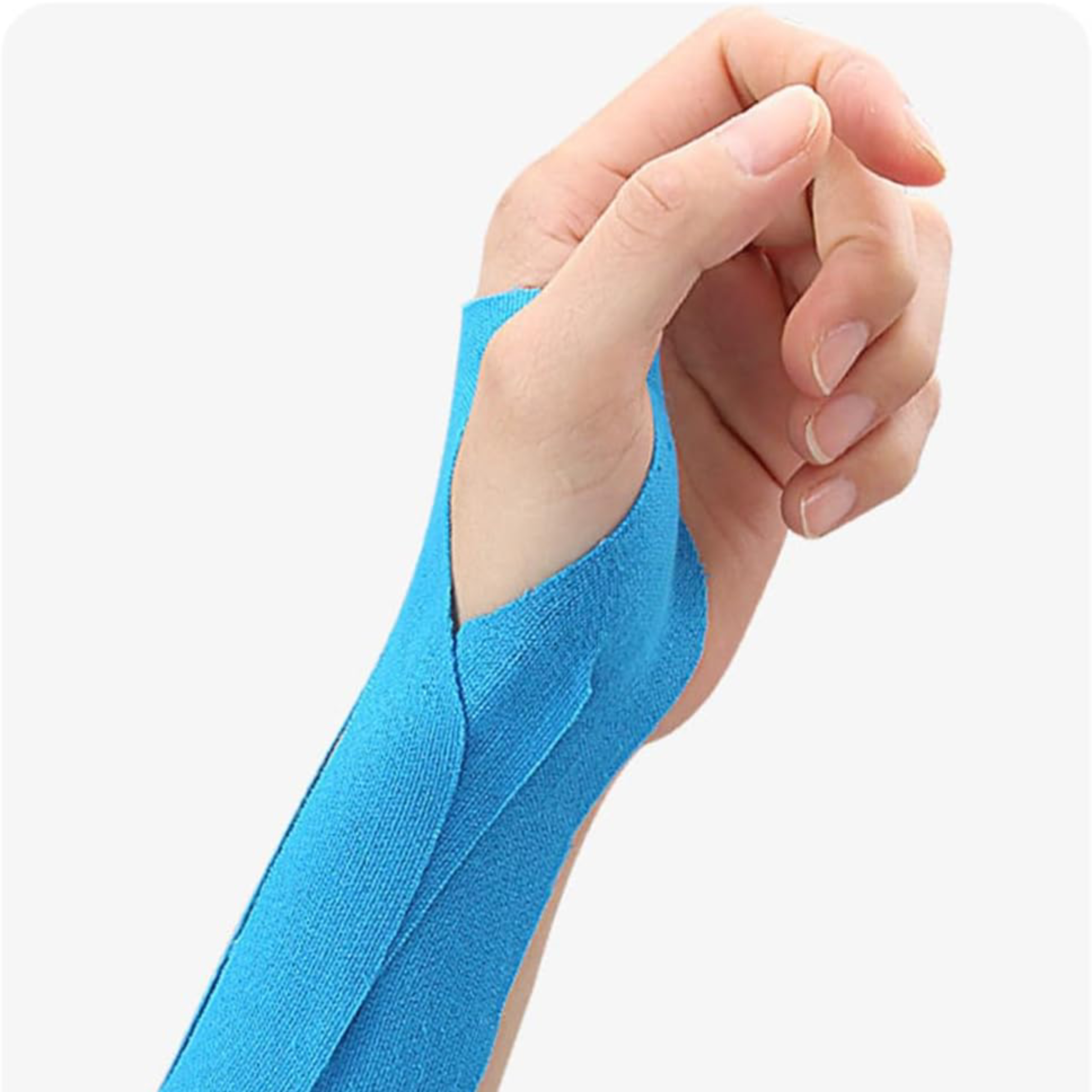
10-23-2026
Baseball Tape for Wrists: Applications, Selection Criteria, and Practical Guidance
Three innings into a district final, a catcher pulls off his glove and finds the skin under his wrist strap shiny and raw. The fix is rarely more tape pulled tighter: it is the right tape, at the right width, wrapped in the right direction.
Wrist taping follows players from 12U travel ball into the professional bullpen, and it is one of the easiest habits to get wrong. An over-wrapped wrist loses feel on the bat; an under-wrapped wrist gives way at contact, which is exactly when the load peaks.
25-50 mmWidths used for wrist taping
0-180%Stretch range across families
1-5 daysTypical wear window
What Wrist Tape Actually Does on a Baseball Field
Wrist tape in baseball does three jobs: it limits unwanted end-range motion, it protects skin from glove and bat friction, and it gives the player a repeatable feel at contact.
Support. A pitcher's wrist snaps through release, and a rigid strip across the crease reduces how far the joint travels into extension, which lowers the load on the extensor tendons.
Skin protection. Batting gloves rub the same spot for nine innings, and one thin turn under the glove cuff stops the blister that would otherwise cost a week.
Feel and grip. Some hitters tape to steady the handle angle, while others use colored cohesive wrap so the wrist and glove read as one unit.
Definition: baseball wrist tape is a narrow adhesive strip, usually 25 mm to 50 mm wide, applied in overlapping turns around the wrist to limit end-range motion, cushion friction, or anchor a glove and grip.
Tape is not treatment. It does not repair a ligament or shorten healing time; it buys control over a joint for the length of a game, and then it comes off.
Three Tape Families and Where Each One Fits
Most wrist taping in baseball uses one of three families: rigid strapping tape, elastic kinesiology tape, or self-adherent cohesive wrap.
Rigid strapping
Non-stretch cotton or rayon
Zinc oxide or synthetic hot-melt adhesive
25 mm to 38 mm on the wrist
Removed after the game
Best for hard stops at the crease
Elastic kinesiology
140% to 180% stretch
Acrylic adhesive in a wave pattern
50 mm rolls and pre-cut wrist shapes
Worn three to five days
Best for soreness with full range
The practical difference is stretch. Rigid tape stops motion; elastic tape follows it. A hitter who needs to feel the barrel through the swing will fight a rigid wrap, while a pitcher who hyperextends on every slider gets very little from an elastic one. Our comparison of rigid versus elastic sports tape walks through the joint-by-joint logic.
Elastic Wrist Tape for Soccer and FootballFlexible cotton-elastane wrist tape for high-impact soccer and football, offering breathable compression and secure adhesion without limiting mobility.View Product →
Pre-cut shapes changed the wrist category. Instead of trimming a 50 mm roll on the bench, a player peels a patch sized for the joint and applies it in one motion, which matters when the inning is moving and nobody has scissors.
Pre-Cut Kinesiology Tape Patch for the WristReady-to-apply, anatomically contoured wrist patch that stabilizes tendon groups while preserving range of motion during active use.View Product →
Rule of thumb: stop a joint with rigid tape, keep a joint moving comfortably with elastic tape, and reach for cohesive wrap when the job is holding a glove, pad, or grip in place without residue.
How to Wrap a Wrist in Four Steps
Four turns is usually enough for game-day support; extra layers add bulk without adding much stability.
Prep the skin. Clean and dry the wrist, clip hair at the crease, and add a foam underwrap when the tape will stay on for a full game or the player has reacted to adhesive before.
Anchor once. Start at the crease with a single turn at roughly 50% overlap, keeping the strip flat rather than twisted. It should feel snug, never tight enough to leave a mark.
Build support. Add two or three overlapping turns angled slightly toward the hand, then a figure-eight that crosses the back of the wrist. Use 25 mm for youth wrists and 38 mm for adults.
Finish and check. Rub the tape warm to activate the adhesive, then confirm the hand is warm, pink, and free of tingling. Cold or numb fingers mean the wrap comes off immediately.
A good wrist wrap feels supportive at rest and invisible mid-swing. If the player notices the tape during a swing, it is either too thick or too tight.
Widths, Stretch and Adhesive: The Specification Table
Width, stretch, and adhesive system decide how a wrist tape performs far more than the label on the carton.
Typical wrist tape specifications by family, with common widths, stretch ranges, and wear windows.
Tape family
Common width
Stretch
Adhesive
Typical wear
Rigid zinc oxide strapping
25 mm, 38 mm
0%
Zinc oxide, high tack
One game or session
Rigid hot-melt, latex-free
25 mm, 38 mm, 50 mm
0-5%
Synthetic hot melt
One game, easier removal
Kinesiology tape
50 mm and pre-cut wrist shapes
140-180%
Acrylic wave pattern
Three to five days
Cohesive self-adherent wrap
50 mm, 75 mm
50-80%
None, self-adherent
One to two days, no residue
Bat grip tape
25 mm
Low
Pressure-sensitive
Weeks on the handle
Quote the tolerance, not just the number. A 38 mm roll held to plus or minus 2 mm cuts cleanly and dispenses evenly; a roll that drifts 5 mm across the batch causes jams on automated lines and complaints at retail.
Skin Care, Removal and Avoidable Mistakes
Almost every wrist taping problem in a clubhouse traces back to pressure or skin damage rather than the tape itself.
Taping over lotion, sunscreen, or sweat: the adhesive lifts within an inning and the player retapes tighter, which is how compression problems begin.
Wrapping the crease too hard: the radial artery runs close to the surface, so a wrap that leaves fingers cold should be removed rather than adjusted.
Leaving rigid tape on all day: zinc oxide adhesive sets harder as it dries and takes skin with it on removal.
Skipping underwrap on sensitive skin: a thin foam underwrap prevents the friction burns that show up under wrist straps and heavy gloves.
Ripping tape off dry: warm water or an alcohol wipe softens the adhesive and keeps the skin intact.
Skin check every time: warm fingers, normal color, no ridges at the tape edge. Ridges mean the wrap is bunching and will dig into the crease during the next inning.
Buying Baseball Wrist Tape at Volume
For buyers, wrist tape is a small item with a wide specification surface: width, stretch, adhesive type, edge cut, and packaging all decide whether the product sells or sits.
Widths25 mm and 38 mm cover most wrist orders; 50 mm serves kinesiology and cohesive programs.
Edge finishFlat edge for clinics and dispensers, zigzag or serrated edge for hand-tear on the field.
AdhesiveZinc oxide for maximum tack, hot melt and latex-free systems for sensitive skin and EU retail.
Custom orders usually start with three questions: how the tape will be dispensed, who removes it, and what the retail carton has to say. After that, sample rounds settle width, adhesive coat, and packaging. Our OEM and ODM service runs that sequence from sketch to real sample, including printed cartons and private-label rolls.
Teams that also specify bat handle grip usually add a 25 mm pressure-sensitive grip tape to the same order sheet.
Baseball Adhesive Sports Tape for Flexible Joint SupportThin cotton-elastane adhesive tape for baseball, providing flexible joint support and secure adhesion while fitting under a batting glove.View Product →
A wrist tape that tears by hand on the field and leaves no residue on removal will be reordered. A roll that needs scissors and takes skin with it will not.
Questions Coaches and Buyers Ask Most
The short version: rigid for game-day support, elastic for multi-day comfort, cohesive when residue is the problem.
Why do baseball players tape their wrists instead of wearing a brace?
Braces are bulky under a batting glove and shift during the swing. Tape sits at one or two millimeters thick, follows the joint contour, and can be built up or cut back between innings while keeping the glove feel a player has used all season.
What width of tape is used for wrists?
25 mm suits youth wrists and narrow anchoring turns, 38 mm fits most adult wrists for rigid support, and 50 mm is the standard when the product is kinesiology tape or cohesive wrap covering the whole wrist.
Can wrist tape stay on overnight?
Rigid strapping tape should come off after the game, because zinc oxide adhesive dries harder and strips skin on removal. Kinesiology tape can stay on for three to five days when the edges lift cleanly and the skin underneath stays dry and unbroken.
Is latex-free wrist tape necessary?
It is necessary for players with known adhesive sensitivity and for retail programs sold into markets that request latex-free documentation. Modern latex-free hot-melt and acrylic systems now match natural rubber on tack for short wear windows.
.baseball-tape-wrists-article{--accent:#57b660;--text-color:#1f2b24;--bg-color:#fbfdfa;counter-reset:stephead;background-color:var(--bg-color);color:var(--text-color);padding:26px 18px 34px;border-radius:18px;font-family:Arial,Helvetica,sans-serif;}
.baseball-tape-wrists-article .article-section{margin:0 0 26px;}
.baseball-tape-wrists-article h2{font-size:22px;font-weight:bold;text-align:left;margin-bottom:12px !important;color:var(--text-color);line-height:1.4;margin-top:56px;}
.baseball-tape-wrists-article h3{font-size:16px;font-weight:bold;text-align:left;margin-bottom:12px;color:var(--accent);line-height:1.8;margin-top:22px;}
.baseball-tape-wrists-article p{font-size:16px !important;margin-bottom:12px;line-height:1.8;color:var(--text-color);}
.baseball-tape-wrists-article p.lead{font-size:20px !important;line-height:1.4;font-weight:bold;color:var(--text-color);}
.baseball-tape-wrists-article ul{margin-bottom:12px;list-style-type:disc;list-style-position:inside;padding-left:0;}
.baseball-tape-wrists-article ol{margin-bottom:12px;list-style-type:decimal;list-style-position:inside;padding-left:0;}
.baseball-tape-wrists-article li{list-style:inherit;font-size:16px;margin-bottom:6px;line-height:1.8;color:var(--text-color);}
.baseball-tape-wrists-article caption{caption-side:bottom;font-size:16px;margin-bottom:12px;font-style:italic;color:#808080;line-height:1.8;}
.baseball-tape-wrists-article th{font-weight:bold;border:1px solid #cccccc;padding:8px;}
.baseball-tape-wrists-article td{border:1px solid #cccccc;padding:8px;}
.baseball-tape-wrists-article .article-section table{display:table!important;width:100%;border-collapse:collapse;margin:18px 0 24px;}
.baseball-tape-wrists-article .article-section thead{display:table-header-group!important;}
.baseball-tape-wrists-article .article-section tbody{display:table-row-group!important;}
.baseball-tape-wrists-article .article-section tr{display:table-row!important;}
.baseball-tape-wrists-article .article-section th{display:table-cell!important;}
.baseball-tape-wrists-article .article-section td{display:table-cell!important;}
.baseball-tape-wrists-article .article-section th{font-weight:bold;border:1px solid #cccccc;padding:12px 14px;background:color-mix(in srgb,var(--accent) 20%,var(--bg-color));color:var(--text-color);text-align:left;font-size:14px;line-height:2;}
.baseball-tape-wrists-article .article-section td{border:1px solid #cccccc;padding:12px 14px;font-size:14px;line-height:2;color:var(--text-color);vertical-align:top;}
.baseball-tape-wrists-article .article-section tr:first-child td{background:color-mix(in srgb,var(--accent) 24%,var(--bg-color));font-weight:bold;}
.baseball-tape-wrists-article .article-section tr:nth-child(even) td{background:color-mix(in srgb,var(--accent) 7%,var(--bg-color));}
.baseball-tape-wrists-article .article-section td:first-child{font-weight:bold;color:var(--accent);}
.baseball-tape-wrists-article h2.h-bar{border-left:6px solid var(--accent);padding:4px 0 4px 14px;margin-top:52px;letter-spacing:0.01em;}
.baseball-tape-wrists-article h2.h-band{background:color-mix(in srgb,var(--accent) 14%,var(--bg-color));padding:12px 16px;border-radius:6px;border-bottom:2px solid var(--accent);margin-top:62px;}
.baseball-tape-wrists-article h2.h-count{border-top:6px solid var(--accent);padding-top:12px;margin-top:72px;counter-increment:stephead;}
.baseball-tape-wrists-article h2.h-count::before{content:counter(stephead);display:inline-block;font-size:14px;line-height:2;color:var(--bg-color);background:var(--accent);padding:2px 10px;border-radius:3px;margin-right:10px;vertical-align:middle;}
.baseball-tape-wrists-article h2.h-shadow{background:color-mix(in srgb,var(--accent) 9%,var(--bg-color));padding:12px 16px;border-radius:3px;box-shadow:8px 8px 0 color-mix(in srgb,var(--accent) 26%,var(--bg-color));margin-top:58px;}
.baseball-tape-wrists-article h2.h-dash{border-bottom:2px dashed var(--accent);padding-bottom:8px;text-transform:uppercase;letter-spacing:0.08em;margin-top:54px;}
.baseball-tape-wrists-article h2.h-solid{background:var(--accent);color:#ffffff;padding:14px 18px;clip-path:polygon(0 0,100% 0,100% 74%,95% 100%,0 100%);margin-top:66px;}
.baseball-tape-wrists-article h2.h-stripe{background:repeating-linear-gradient(135deg,color-mix(in srgb,var(--accent) 18%,var(--bg-color)) 0 10px,var(--bg-color) 10px 20px);border:1px solid var(--accent);padding:12px 16px;margin-top:78px;}
.baseball-tape-wrists-article .hl-quote{border-left:6px solid var(--accent);padding:6px 0 6px 16px;font-size:18px;line-height:1.7;font-style:italic;color:var(--text-color);margin:18px 0 20px;}
.baseball-tape-wrists-article .hl-card{background:var(--bg-color);border:1px solid color-mix(in srgb,var(--accent) 30%,var(--bg-color));box-shadow:0 12px 26px color-mix(in srgb,var(--accent) 18%,transparent);padding:18px 20px;border-radius:14px;font-size:16px;line-height:1.8;color:var(--text-color);margin:18px 0 20px;}
.baseball-tape-wrists-article .hl-gradient{background:linear-gradient(135deg,var(--accent),color-mix(in srgb,var(--accent) 55%,#12281a));color:#ffffff;padding:18px 22px;border-radius:12px;font-size:18px;line-height:1.7;font-weight:bold;margin:20px 0 22px;}
.baseball-tape-wrists-article .hl-dash{border:2px dashed var(--accent);padding:16px 18px;border-radius:4px;font-size:16px;line-height:1.8;color:var(--text-color);margin:18px 0 20px;}
.baseball-tape-wrists-article .hl-inset{background:color-mix(in srgb,var(--accent) 8%,var(--bg-color));box-shadow:inset 0 0 0 2px color-mix(in srgb,var(--accent) 45%,var(--bg-color)),inset 0 6px 18px rgba(0,0,0,0.07);border-radius:16px;padding:18px 22px;font-size:16px;line-height:1.8;color:var(--text-color);margin:18px 0 20px;}
.baseball-tape-wrists-article .hl-top{border-top:5px solid var(--accent);background:color-mix(in srgb,var(--accent) 6%,var(--bg-color));padding:16px 20px;font-size:16px;line-height:1.8;color:var(--text-color);margin:20px 0 22px;}
.baseball-tape-wrists-article .hl-frame{box-shadow:0 0 0 2px var(--bg-color),0 0 0 4px var(--accent);padding:16px 20px;margin:8px 4px 22px;font-size:16px;line-height:1.8;color:var(--text-color);}
.baseball-tape-wrists-article .metric-row{display:flex;gap:12px;flex-wrap:wrap;margin:20px 0 24px;}
.baseball-tape-wrists-article .metric{flex:1 1 140px;border-top:4px solid var(--accent);background:color-mix(in srgb,var(--accent) 9%,var(--bg-color));padding:12px 14px;border-radius:0 0 8px 8px;}
.baseball-tape-wrists-article .metric-num{display:block;font-size:20px;line-height:1.4;font-weight:bold;color:var(--accent);font-variant-numeric:tabular-nums;}
.baseball-tape-wrists-article .metric-label{display:block;font-size:14px;line-height:2;color:var(--text-color);letter-spacing:0.02em;}
.baseball-tape-wrists-article .compare{display:grid;grid-template-columns:1fr 1fr;gap:16px;margin:18px 0 22px;}
.baseball-tape-wrists-article .compare-col{border:1px solid color-mix(in srgb,var(--accent) 35%,var(--bg-color));border-radius:10px;padding:16px;background:color-mix(in srgb,var(--accent) 5%,var(--bg-color));}
.baseball-tape-wrists-article .compare-col.alt{background:var(--bg-color);border-style:solid;border-color:color-mix(in srgb,var(--accent) 55%,var(--bg-color));}
.baseball-tape-wrists-article .compare-head{font-size:16px;line-height:1.8;font-weight:bold;text-transform:uppercase;letter-spacing:0.08em;color:var(--accent);margin-bottom:8px;}
.baseball-tape-wrists-article ol.steps{list-style-type:none;list-style-position:outside;counter-reset:stepline;margin:18px 0 22px;padding-left:26px;border-left:2px solid color-mix(in srgb,var(--accent) 45%,var(--bg-color));}
.baseball-tape-wrists-article ol.steps li{counter-increment:stepline;position:relative;padding-left:22px;margin-bottom:16px;font-size:16px;line-height:1.8;}
.baseball-tape-wrists-article ol.steps li::before{content:counter(stepline);position:absolute;left:-40px;top:2px;width:28px;height:28px;border-radius:50%;background:var(--accent);color:#ffffff;font-size:14px;line-height:28px;text-align:center;font-weight:bold;}
.baseball-tape-wrists-article ul.checks{list-style-type:none;margin:16px 0 20px;padding-left:0;}
.baseball-tape-wrists-article ul.checks li{position:relative;padding-left:22px;margin-bottom:10px;}
.baseball-tape-wrists-article ul.checks li::before{content:"";position:absolute;left:0;top:9px;width:9px;height:9px;background:var(--accent);border-radius:2px;}
.baseball-tape-wrists-article .spec-grid{display:grid;grid-template-columns:repeat(3,1fr);gap:14px;margin:18px 0 22px;}
.baseball-tape-wrists-article .spec{background:var(--bg-color);border:1px solid color-mix(in srgb,var(--accent) 35%,var(--bg-color));border-radius:10px;padding:14px 16px;box-shadow:0 6px 14px rgba(0,0,0,0.05);}
.baseball-tape-wrists-article .spec-tag{display:block;font-size:14px;line-height:2;text-transform:uppercase;letter-spacing:0.1em;color:var(--accent);font-weight:bold;margin-bottom:6px;}
.baseball-tape-wrists-article .spec-text{display:block;font-size:15px;line-height:2;color:var(--text-color);}
.baseball-tape-wrists-article .article-section a[data-product-card="true"]{display:block;margin:18px 0 22px;padding:14px 18px;border:1px solid color-mix(in srgb,var(--accent) 40%,var(--bg-color));border-left:6px solid var(--accent);border-radius:6px 12px 12px 6px;background:color-mix(in srgb,var(--accent) 6%,var(--bg-color));text-decoration:none;font-size:14px;line-height:2;color:var(--text-color);transition:background 0.2s ease,box-shadow 0.2s ease;}
.baseball-tape-wrists-article .article-section a[data-product-card="true"]::before{content:"Related product";display:block;font-size:12px;line-height:2;letter-spacing:0.14em;text-transform:uppercase;color:var(--accent);font-weight:bold;}
.baseball-tape-wrists-article .article-section a[data-product-card="true"]::after{content:"View product details";display:block;font-size:14px;line-height:2;font-weight:bold;color:var(--text-color);}
.baseball-tape-wrists-article .article-section a[data-product-card="true"]:hover{background:color-mix(in srgb,var(--accent) 15%,var(--bg-color));box-shadow:0 8px 18px color-mix(in srgb,var(--accent) 22%,transparent);}
.baseball-tape-wrists-article .article-section a:not([data-product-card="true"]){color:var(--accent);font-weight:bold;text-decoration:underline;text-underline-offset:2px;transition:color 0.2s ease;}
.baseball-tape-wrists-article .article-section a:not([data-product-card="true"]):hover{color:color-mix(in srgb,var(--accent) 70%,#000000);}
@media (max-width:768px){
.baseball-tape-wrists-article{padding:18px 12px 24px;}
.baseball-tape-wrists-article .metric-row{display:block;}
.baseball-tape-wrists-article .metric{margin-bottom:10px;}
.baseball-tape-wrists-article .compare{display:block;}
.baseball-tape-wrists-article .compare-col{margin-bottom:12px;}
.baseball-tape-wrists-article .spec-grid{display:block;}
.baseball-tape-wrists-article .spec{margin-bottom:10px;}
.baseball-tape-wrists-article h2{font-size:22px;}
.baseball-tape-wrists-article .hl-gradient{font-size:18px;}
}
.product-card{display:block;margin:20px 0;border:1px solid #e5e7eb;border-radius:10px;overflow:hidden;font-style:normal;background:#fff;box-shadow:0 0 5px rgba(31,41,55,.08)}
.pc-inner{display:flex;text-decoration:none;color:inherit;align-items:center;min-height:148px}
.product-card .pc-img{width:auto!important;min-width:0!important;max-width:min(36%,240px)!important;height:auto!important;min-height:0!important;max-height:148px!important;aspect-ratio:auto!important;object-fit:contain!important;flex:0 0 auto;display:block;align-self:center}
.pc-body{padding:12px 16px;flex:1;min-width:0;display:flex;flex-direction:column;align-self:stretch;justify-content:center}
.pc-title{display:block;font-size:15px;font-weight:600;color:#111;margin:0 0 6px;line-height:1.4}
.pc-desc{display:-webkit-box;font-size:13px;color:#6b7280;margin:0 0 8px;line-height:1.5;overflow:hidden;-webkit-line-clamp:2;line-clamp:2;-webkit-box-orient:vertical}
.pc-cta{display:block;font-size:13px;font-weight:600;color:inherit;margin-top:auto}
.pc-inner:hover .pc-title{text-decoration:underline}
.article-section a:not(.pc-inner),article a:not(.pc-inner){color:inherit}.pc-cta{color:inherit!important}
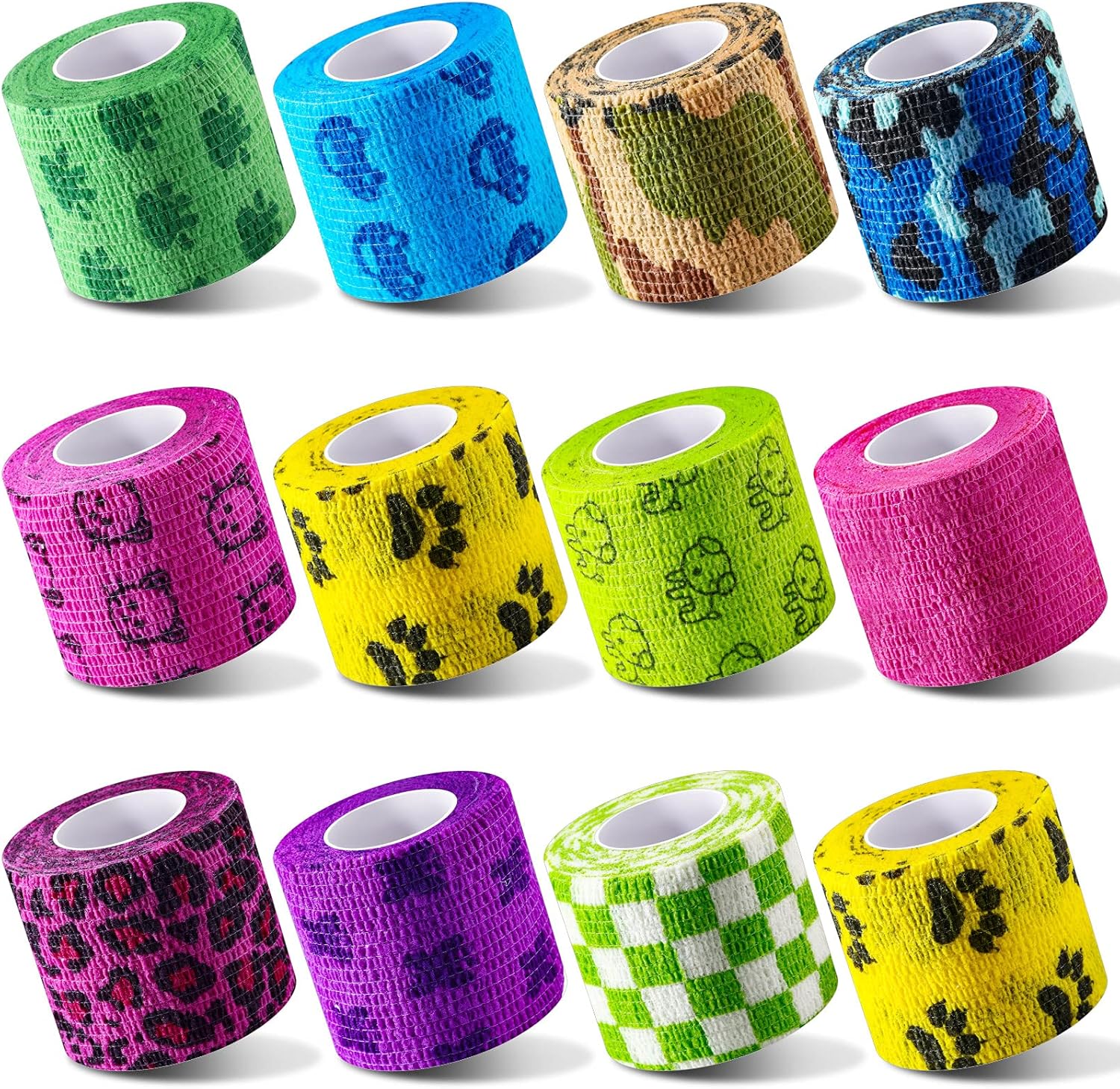
10-15-2026
Bandages for cats: Applications, Selection Criteria, and Practical Guidance
A cat comes home from the clinic with a wrapped foreleg and starts working at the bandage within about thirty seconds. That single fact shapes how cat bandages are built: the wrap has to stay on a moving animal, come off fur without tearing skin, and survive a determined tongue. Owners meet this problem once. Veterinary clinics, pet pharmacies and private-label buyers meet it every week, in widths, fabric weights and adhesive systems that either fit a four-kilogram patient or do not.
This guide covers what a bandage for cats is actually made of, which sizes fit which body part, what goes wrong in daily use, and what to specify when sourcing feline wraps in volume.
What Makes a Bandage Safe for a Cat's Skin and Fur
A bandage that is safe for a cat is a self-adherent cohesive wrap applied over a contact layer and a padding layer, never an adhesive dressing pressed onto fur.
Cats have thin, mobile skin and a dense coat, and they groom constantly. A human-style adhesive strip pulls hair on removal, leaves tacky residue in the coat, and if the cat chews a loose corner free and swallows it, the backing and the adhesive become a foreign-body risk. Cohesive wraps change where the stickiness lives: the fabric grips the layer underneath it, not the animal.
Cohesive bandage: a stretch fabric, usually non-woven polypropylene, cotton or a laminated non-woven, coated with a self-adhering compound that bonds to itself rather than to skin or fur. It holds a dressing without clips or tape and unwinds cleanly when the wrap is changed.
That difference shows up in practice as a short list of trade-offs.
Human adhesive dressing
Bonds to skin and hair
Removal pulls fur and leaves residue
Little or no stretch
Bridges gaps instead of following a tapered limb
Veterinary cohesive wrap
Bonds only to the layer beneath it
Unwinds without stripping hair
Typically extends to 1.6 to 1.8 times its relaxed length
Conforms to a limb, tail or torso without gaps
The Three-Layer Principle: Contact, Padding, Outer Wrap
Almost every bandage a veterinarian puts on a cat is built from three layers, and each layer does one job.
Contact layer
A non-adherent pad or plain gauze sits directly over the wound, incision or catheter site. Its only job is to keep the padding from sticking to healing tissue. The cohesive wrap never goes straight onto an open wound.
Padding layer
Cast padding or a foam underwrap goes over the contact layer. Feline limbs are thin and bony, so a wrap applied directly to skin concentrates pressure over the bone. Padding spreads that load, absorbs a little fluid and gives the outer layer something to compress.
Outer cohesive layer
The self-adherent wrap locks the first two layers together. Stretch it to roughly half of what it can take, smooth it flat, and overlap each turn by about half the roll width. Overlap stops the wrap from slipping; tension stops the cat from pulling it off. New users confuse the two, and a wrap tight enough to stay on without overlap is too tight.
Two fingers should slide under a finished feline wrap. If they do not, it is too tight, and a wrap that leaves a dent in the padding after removal was applied too firmly in the first place.
Where Bandages Go on a Cat, and Which Width Fits
Most feline applications call for a 2.5 cm or 5 cm roll; anything wider is usually reserved for a torso wrap.
Cohesive wrap width by application site on a cat
Site
Typical roll width
What matters most
Paw or toe, wrapped as a boot
2.5 cm
Leave the toes visible so swelling can be checked
Forelimb or hindlimb, over a dressing or catheter site
2.5 cm to 5 cm
Pad the site before the wrap goes on
Tail
2.5 cm
Short overlaps only; watch the base of the tail for swelling
Ear, after surgery
2.5 cm to 5 cm
Holds the ear against the head; check daily that it has not slipped
Torso, over an incision
5 cm to 7.5 cm
Must not ride up toward the ribs or slip down over the hips
Typical cohesive wrap width by site, in cm
Paw
2.5
Forelimb
5
Tail
2.5
Ear
5
Torso
7.5
A roll width that covers the site in two or three turns is the right size. A narrow roll forces extra overlap and extra bulk, while a wide roll makes a short paw wrap almost impossible to keep flat.
Fabrics and Adhesives That Matter for Feline Use
Three variables decide whether a wrap works on a cat: fabric weight, the adhesive system, and how cleanly the roll tears by hand.
Non-woven polypropylene
Light, breathable and hand-tearable, this is the default fabric for veterinary cohesive wraps. It takes latex-free coatings easily and holds colour and print well.
Cotton and cotton blends
Softer against the coat and slightly more absorbent, with a heavier feel and a higher cost. Usually reserved for sensitive-skin lines and longer wear.
Laminated non-woven
A gauze or film layer bonded to the non-woven adds tensile strength and a little cushioning, which helps when the wrap has to hold a dressing on its own.
Adhesive choice matters just as much. Natural rubber latex gives the strongest tack at the lowest cost, but clinics in Europe and North America increasingly specify latex-free wraps for patients and staff alike. Synthetic latex-free systems give up a little grab in exchange for cleaner removal, which matters on a cat that will be wrapped more than once.
Format is the third variable. A hand-tearable roll saves a step when the scissors are across the room. Edges behave differently too: a straight edge cuts cleanly, while a zigzag or serrated edge tears fast and leaves a tidy end.
Pet Cohesive Bandage and Self-Adherent Veterinary Animal WrapSelf-adhering, latex-free veterinary wrap for dogs, cats, horses, and small animals; hand-tearable, breathable, water-resistant, and suitable for wounds, joints, and post-surgery care.View Product →
Ask for the stretch rating rather than the width alone. Two 5 cm rolls can behave nothing alike, because one extends by 100 percent at full stretch and the other by 180 percent. Pulled with the same hand tension, the tighter roll wraps a feline limb far too firmly.
Keeping the Wrap On: Self-Trauma and Daily Checks
The most common reason a cat bandage fails is the cat, not the wrap.
A cat that licks or chews at a bandage will loosen the edge, then unravel the whole structure. That self-trauma also delays healing and raises the risk of infection at the site. Three measures address it: enough overlap in the outer layer that one loose end does not undo the wrap, an Elizabethan collar where the clinician recommends one, and a bitter coating on the outer layer.
Bitter Vet Wrap Elastic Self-Adhesive Veterinary Cohesive BandageBitter-tasting self-adherent wrap that discourages chewing; breathable, water-resistant, available latex-free, hand-tearable, and suited to wound care on dogs and other pets.View Product →
A daily check takes under a minute and catches nearly every problem early.
Compare the toes or the skin below the wrap with the other side and look for swelling.
Make sure the wrap has not slipped, twisted, or opened a gap at a joint.
Smell the wrap and check for discharge or staining.
Watch how the cat walks, eats and uses the litter tray.
Replace a wet, soiled or chewed wrap instead of patching it.
Veterinary practices generally ask owners to call rather than wait if the toes feel cold or look pale, if swelling appears above or below the wrap, or if the cat stops eating and hides. Those signs point to a wrap that is too tight, or to a problem that needs clinical attention.
Sourcing Cat Bandages for Clinics, Pharmacies and Private Label
Buyers in the veterinary channel settle four specifications before anything else: material, adhesive, edge and packaging.
Material
Non-woven polypropylene for the standard veterinary wrap, cotton for sensitive-skin lines, laminated non-woven where the wrap has to carry a dressing on its own.
Adhesive
Latex-free synthetic systems dominate clinic tenders in Europe and North America; natural rubber still wins on tack and price in other markets.
Edge and format
Hand-tear zigzag edges for fast clinic use, straight edges for clean machine wrapping, and jumbo rolls for buyers who convert their own.
Brand and pack
Single-roll bags, dispenser boxes, clinic cartons and printed outer wraps; pet-facing lines usually add colour or a printed pattern.
The core feline SKUs stay narrow and long: 2.5 cm and 5 cm widths on 4.5 m rolls, in single colours, with a latex-free formulation and a printed core. Everything else is optional. A custom OEM or ODM bandage program handles material, size, adhesive, coating and packaging in one place, which is usually cheaper than assembling the same range from several suppliers. Narrow rolls also travel well across categories: the same wrap that pads a feline limb reappears in taping materials for veterinary rehabilitation, so one set of tooling and packaging covers several product lines.
Animal Patterned Non-Woven Self-Adhering Cohesive Elastic Pet BandageSelf-adhering elastic pet wrap with animal-inspired patterns; breathable non-woven fabric provides gentle compression, no sticky residue, and suits narrow feline limb or veterinary taping use.View Product →
Questions Buyers and Owners Ask
Can I use a human adhesive bandage on a cat?
Generally no. Adhesive strips bond to fur, do not follow a tapered feline limb, and a fragment chewed free and swallowed becomes a foreign-body risk. The usual alternative is a cohesive wrap over a padded dressing, sized for the site.
What width of bandage does a cat need?
2.5 cm for paws, tails and small limbs, and 5 cm for limb, ear and torso wraps. Anything wider than 5 cm is rarely useful on a four-kilogram patient; 7.5 cm is used mainly for large torso wraps.
How often should a cat's bandage be changed?
The schedule is a clinical decision, set by the veterinarian who placed the bandage. In practice the wrap is checked at least once a day and replaced on that schedule, while a wet, soiled or chewed wrap is replaced straight away rather than patched.
Are self-adhesive bandages safe for cats?
A cohesive wrap is designed to adhere to itself rather than to skin, and latex-free versions reduce the chance of a sensitivity reaction. It still needs a contact layer over any open wound, and it should never be applied tightly enough to leave a mark in the padding.
.cat-bandage-guide {
--accent: #57b660;
--text-color: #1c2b22;
--bg-color: #fbfdfb;
background: var(--bg-color);
color: var(--text-color);
font-family: "Helvetica Neue", Helvetica, Arial, sans-serif;
font-size: 16px;
padding: 6px 0 44px;
}
.cat-bandage-guide .article-section {
margin-bottom: 30px;
}
.cat-bandage-guide .lead {
font-size: 18px;
line-height: 1.7;
padding-bottom: 16px;
border-bottom: 1px solid color-mix(in srgb, var(--accent) 35%, transparent);
margin-bottom: 18px;
}
.cat-bandage-guide h2 {
font-size: 22px;
font-weight: bold;
text-align: left;
margin-bottom: 12px !important;
color: var(--text-color);
line-height: 1.4;
}
.cat-bandage-guide h3 {
font-size: 16px;
font-weight: bold;
text-align: left;
margin-bottom: 12px;
color: var(--text-color);
line-height: 1.8;
}
.cat-bandage-guide p {
font-size: 16px !important;
margin-bottom: 12px;
line-height: 1.8;
color: var(--text-color);
}
.cat-bandage-guide ol {
margin-bottom: 12px;
list-style-type: decimal;
list-style-position: inside;
padding-left: 0;
}
.cat-bandage-guide ul {
margin-bottom: 12px;
list-style-type: disc;
list-style-position: inside;
}
.cat-bandage-guide li {
list-style: inherit;
font-size: 16px;
margin-bottom: 6px;
}
.cat-bandage-guide li {
line-height: 1.8;
}
.cat-bandage-guide th {
font-weight: bold;
border: 1px solid #cccccc;
padding: 8px;
}
.cat-bandage-guide td {
border: 1px solid #cccccc;
padding: 8px;
}
.cat-bandage-guide caption {
caption-side: bottom;
font-size: 16px;
margin-bottom: 12px;
font-style: italic;
color: #808080;
}
.cat-bandage-guide .article-section table {
display: table !important;
}
.cat-bandage-guide .article-section thead {
display: table-header-group !important;
}
.cat-bandage-guide .article-section tbody {
display: table-row-group !important;
}
.cat-bandage-guide .article-section tr {
display: table-row !important;
}
.cat-bandage-guide .article-section th {
display: table-cell !important;
}
.cat-bandage-guide .article-section td {
display: table-cell !important;
}
.cat-bandage-guide table {
border-collapse: collapse;
width: 100%;
margin: 18px 0 14px;
}
.cat-bandage-guide td {
padding: 12px;
vertical-align: top;
}
.cat-bandage-guide td:first-child {
font-weight: bold;
border-left: 3px solid var(--accent);
}
.cat-bandage-guide tr:nth-child(even) td {
background: color-mix(in srgb, var(--text-color) 4%, transparent);
}
.cat-bandage-guide tr:first-child td {
background: color-mix(in srgb, var(--accent) 20%, var(--bg-color));
font-weight: bold;
letter-spacing: 0.4px;
}
.cat-bandage-guide section:nth-of-type(2) h2 {
margin-top: 62px;
padding: 4px 0 4px 18px;
border-left: 6px solid var(--accent);
background: linear-gradient(90deg, color-mix(in srgb, var(--accent) 14%, transparent), transparent 70%);
}
.cat-bandage-guide section:nth-of-type(3) h2 {
margin-top: 54px;
border-top: 4px solid var(--accent);
padding-top: 12px;
letter-spacing: 0.6px;
}
.cat-bandage-guide section:nth-of-type(4) h2 {
margin-top: 72px;
padding-bottom: 10px;
border-bottom: 2px dotted var(--accent);
}
.cat-bandage-guide section:nth-of-type(4) h2::before {
content: "";
display: inline-block;
width: 12px;
height: 12px;
margin-right: 10px;
background: var(--accent);
vertical-align: middle;
}
.cat-bandage-guide section:nth-of-type(5) h2 {
margin-top: 58px;
padding: 12px 18px;
border-radius: 6px;
background: linear-gradient(100deg, color-mix(in srgb, var(--accent) 72%, var(--text-color)), color-mix(in srgb, var(--accent) 38%, var(--text-color)));
color: var(--bg-color);
}
.cat-bandage-guide section:nth-of-type(6) h2 {
margin-top: 66px;
padding: 12px 20px 12px 18px;
background: color-mix(in srgb, var(--accent) 15%, var(--bg-color));
clip-path: polygon(0 0, 100% 0, 100% 68%, 93% 100%, 0 100%);
}
.cat-bandage-guide section:nth-of-type(7) h2 {
margin-top: 54px;
text-transform: uppercase;
letter-spacing: 1.6px;
padding-bottom: 14px;
position: relative;
}
.cat-bandage-guide section:nth-of-type(7) h2::after {
content: "";
position: absolute;
left: 0;
bottom: 0;
width: 58px;
height: 4px
;
background: var(--accent);
}
.cat-bandage-guide section:nth-of-type(8) h2 {
margin-top: 78px;
border-top: 2px solid var(--accent);
border-bottom: 2px solid var(--accent);
padding: 10px 0 10px 14px;
background: color-mix(in srgb, var(--accent) 7%, transparent);
}
.cat-bandage-guide .callout-def {
margin: 18px 0 20px;
padding: 16px 18px;
border-left: 6px solid var(--accent);
background: color-mix(in srgb, var(--accent) 8%, var(--bg-color));
font-size: 18px;
line-height: 1.7;
}
.cat-bandage-guide .callout-note {
margin: 18px 0 16px;
padding: 14px 18px;
box-shadow: inset 0 0 0 1px color-mix(in srgb, var(--accent) 45%, transparent), inset 0 6px 0 -3px var(--accent);
font-size: 15px;
line-height: 2;
}
.cat-bandage-guide .callout-caption {
margin: 14px 0 18px;
padding: 14px 16px;
border: 1px dashed color-mix(in srgb, var(--accent) 50%, transparent);
border-radius: 12px;
font-size: 14px;
line-height: 2;
color: color-mix(in srgb, var(--text-color) 78%, var(--bg-color));
}
.cat-bandage-guide .callout-shadow {
position: relative;
margin: 20px 0 16px;
padding: 18px 20px;
background: var(--bg-color);
border-radius: 10px;
box-shadow: 0 8px 22px color-mix(in srgb, var(--accent) 20%, transparent);
font-size: 15px;
line-height: 2;
overflow: hidden;
}
.cat-bandage-guide .callout-shadow::after {
content: "";
position: absolute;
top: 0;
right: 0;
width: 44px;
height: 44px;
background: var(--accent);
clip-path: polygon(100% 0, 100% 100%, 0 0);
}
.cat-bandage-guide .callout-warn {
margin: 18px 0 14px;
padding: 16px 18px;
border-top: 3px solid var(--accent);
border-bottom: 3px solid var(--accent);
background: color-mix(in srgb, var(--accent) 6%, transparent);
font-size: 15px;
line-height: 2;
font-weight: bold;
}
.cat-bandage-guide .compare-grid {
display: grid;
grid-template-columns: 1fr 1fr;
margin: 20px 0 16px;
border: 1px solid color-mix(in srgb, var(--text-color) 14%, transparent);
border-radius: 8px;
overflow: hidden;
}
.cat-bandage-guide .compare-col {
padding: 16px 18px;
}
.cat-bandage-guide .compare-col:first-child {
background: color-mix(in srgb, var(--text-color) 5%, transparent);
}
.cat-bandage-guide .compare-col:last-child {
background: color-mix(in srgb, var(--accent) 10%, transparent);
}
.cat-bandage-guide .compare-title {
font-size: 14px;
font-weight: bold;
letter-spacing: 0.6px;
text-transform: uppercase;
margin-bottom: 10px;
line-height: 2;
}
.cat-bandage-guide .compare-col ul {
margin-bottom: 0;
}
.cat-bandage-guide .compare-col li {
font-size: 15px;
line-height: 2;
}
.cat-bandage-guide .layer-steps {
counter-reset: layer;
list-style-type: none;
margin: 20px 0 16px;
padding-left: 0;
}
.cat-bandage-guide .layer-steps li {
counter-increment: layer;
position: relative;
padding-left: 58px;
margin-bottom: 22px;
}
.cat-bandage-guide .layer-steps li::before {
content: counter(layer);
position: absolute;
left: 0;
top: 0;
width: 34px;
height: 34px;
border: 2px solid var(--accent);
border-radius: 50%;
background: color-mix(in srgb, var(--accent) 12%, var(--bg-color));
text-align: center;
line-height: 30px;
font-size: 15px;
font-weight: bold;
}
.cat-bandage-guide .layer-steps li::after {
content: "";
position: absolute;
left: 17px;
top: 40px;
bottom: -22px;
width: 2px;
background: color-mix(in srgb, var(--accent) 35%, transparent);
}
.cat-bandage-guide .layer-steps li:last-child::after {
content: none;
}
.cat-bandage-guide .fabric-grid {
display: grid;
grid-template-columns: repeat(3, 1fr);
gap: 14px;
margin: 20px 0 16px;
}
.cat-bandage-guide .fabric-card {
border-top: 3px solid var(--accent);
background: color-mix(in srgb, var(--accent) 6%, transparent);
padding: 14px 16px;
}
.cat-bandage-guide .fabric-card p {
margin-bottom: 0;
}
.cat-bandage-guide .spec-grid {
display: flex;
flex-wrap: wrap;
gap: 12px;
margin: 20px 0 16px;
}
.cat-bandage-guide .spec-card {
flex: 1 1 180px;
border: 1px solid color-mix(in srgb, var(--accent) 35%, transparent);
border-radius: 6px;
padding: 14px;
background: var(--bg-color);
box-shadow: 0 4px 10px color-mix(in srgb, var(--accent) 12%, transparent);
}
.cat-bandage-guide .spec-label {
display: block;
font-size: 14px;
font-weight: bold;
letter-spacing: 0.5px;
text-transform: uppercase;
line-height: 2;
margin-bottom: 6px;
color: color-mix(in srgb, var(--accent) 72%, var(--text-color));
}
.cat-bandage-guide .spec-card p {
margin-bottom: 0;
font-size: 15px !important;
line-height: 2;
}
.cat-bandage-guide .bar-chart {
margin: 22px 0 16px;
padding: 18px 20px;
border: 1px dashed color-mix(in srgb, var(--accent) 45%, transparent);
border-radius: 10px;
}
.cat-bandage-guide .bar-title {
font-size: 14px;
line-height: 2;
letter-spacing: 0.6px;
text-transform: uppercase;
margin-bottom: 12px;
color: color-mix(in srgb, var(--text-color) 70%, var(--bg-color));
}
.cat-bandage-guide .bar-row {
display: flex;
align-items: center;
gap: 12px;
margin-bottom: 10px;
}
.cat-bandage-guide .bar-label {
flex: 0 0 96px;
font-size: 14px;
line-height: 2;
}
.cat-bandage-guide .bar-track {
flex: 1 1 auto;
height: 14px;
border-radius: 7px;
background: color-mix(in srgb, var(--text-color) 8%, transparent);
overflow: hidden;
}
.cat-bandage-guide .bar-fill {
height: 100%;
border-radius: 7px;
background: var(--accent);
}
.cat-bandage-guide .bar-chart .bar-row:nth-child(2) .bar-fill {
width: 33%;
}
.cat-bandage-guide .bar-chart .bar-row:nth-child(3) .bar-fill {
width: 67%;
}
.cat-bandage-guide .bar-chart .bar-row:nth-child(4) .bar-fill {
width: 33%;
}
.cat-bandage-guide .bar-chart .bar-row:nth-child(5) .bar-fill {
width: 67%;
}
.cat-bandage-guide .bar-chart .bar-row:nth-child(6) .bar-fill {
width: 100%;
}
.cat-bandage-guide .bar-value {
flex: 0 0 52px;
font-size: 14px;
line-height: 2;
font-weight: bold;
text-align: right;
}
.cat-bandage-guide .check-list li::marker {
color: var(--accent);
}
.cat-bandage-guide .faq-item {
padding: 4px 0 10px;
margin-bottom: 6px;
border-bottom: 1px dotted color-mix(in srgb, var(--text-color) 25%, transparent);
}
.cat-bandage-guide .faq-item:last-child {
border-bottom: none;
}
.cat-bandage-guide .faq-item h3 {
position: relative;
padding-left: 20px;
}
.cat-bandage-guide .faq-item h3::before {
content: "";
position: absolute;
left: 0;
top: 5px;
width: 10px;
height: 10px;
background: var(--accent);
border-radius: 2px;
}
.cat-bandage-guide a[data-product-card="true"] {
display: block;
position: relative;
margin: 16px 0 20px;
padding: 16px 18px 16px 54px;
border: 1px solid color-mix(in srgb, var(--accent) 45%, transparent);
border-radius: 8px;
background: color-mix(in srgb, var(--accent) 8%, var(--bg-color));
color: var(--text-color);
text-decoration: none;
font-size: 15px;
line-height: 2;
transition: box-shadow 0.2s ease, transform 0.2s ease;
}
.cat-bandage-guide a[data-product-card="true"]::before {
content: "";
position: absolute;
left: 18px;
top: 21px;
width: 14px;
height: 14px;
background: var(--accent);
transform: rotate(45deg);
}
.cat-bandage-guide a[data-product-card="true"]:hover {
box-shadow: 0 8px 20px color-mix(in srgb, var(--accent) 22%, transparent);
transform: translateY(-2px);
}
.cat-bandage-guide a[href*="bitter-vet-wrap"]::after {
content: "Veterinary bitter wrap self-adhesive bandage for cats and small animals";
}
.cat-bandage-guide a[href*="pet-cohesive-bandage-vet-self-adherent"]::after {
content: "Pet cohesive bandage self-adherent wrap for animals";
}
.cat-bandage-guide a[href*="animal-patterned-non-woven"]::after {
content: "Animal-print veterinary cohesive bandage for private label";
}
.cat-bandage-guide a {
color: color-mix(in srgb, var(--accent) 72%, var(--text-color));
text-decoration: underline;
transition: color 0.2s ease;
}
.cat-bandage-guide a:hover {
color: color-mix(in srgb, var(--accent) 55%, var(--text-color));
}
@media (max-width: 768px) {
.cat-bandage-guide {
padding: 4px 14px 30px;
}
.cat-bandage-guide .compare-grid {
grid-template-columns: 1fr;
}
.cat-bandage-guide .fabric-grid {
grid-template-columns: 1fr;
}
.cat-bandage-guide .spec-card {
flex: 1 1 100%;
}
.cat-bandage-guide .bar-label {
flex: 0 0 70px;
}
.cat-bandage-guide .bar-value {
flex: 0 0 44px;
}
.cat-bandage-guide section:nth-of-type(2) h2,
.cat-bandage-guide section:nth-of-type(3) h2,
.cat-bandage-guide section:nth-of-type(4) h2,
.cat-bandage-guide section:nth-of-type(5) h2,
.cat-bandage-guide section:nth-of-type(6) h2,
.cat-bandage-guide section:nth-of-type(7) h2,
.cat-bandage-guide section:nth-of-type(8) h2 {
margin-top: 42px;
}
}
.product-card{display:block;margin:20px 0;border:1px solid #e5e7eb;border-radius:10px;overflow:hidden;font-style:normal;background:#fff;box-shadow:0 0 5px rgba(31,41,55,.08)}
.pc-inner{display:flex;text-decoration:none;color:inherit;align-items:center;min-height:148px}
.product-card .pc-img{width:auto!important;min-width:0!important;max-width:min(36%,240px)!important;height:auto!important;min-height:0!important;max-height:148px!important;aspect-ratio:auto!important;object-fit:contain!important;flex:0 0 auto;display:block;align-self:center}
.pc-body{padding:12px 16px;flex:1;min-width:0;display:flex;flex-direction:column;align-self:stretch;justify-content:center}
.pc-title{display:block;font-size:15px;font-weight:600;color:#111;margin:0 0 6px;line-height:1.4}
.pc-desc{display:-webkit-box;font-size:13px;color:#6b7280;margin:0 0 8px;line-height:1.5;overflow:hidden;-webkit-line-clamp:2;line-clamp:2;-webkit-box-orient:vertical}
.pc-cta{display:block;font-size:13px;font-weight:600;color:inherit;margin-top:auto}
.pc-inner:hover .pc-title{text-decoration:underline}
.article-section a:not(.pc-inner),article a:not(.pc-inner){color:inherit}.pc-cta{color:inherit!important}
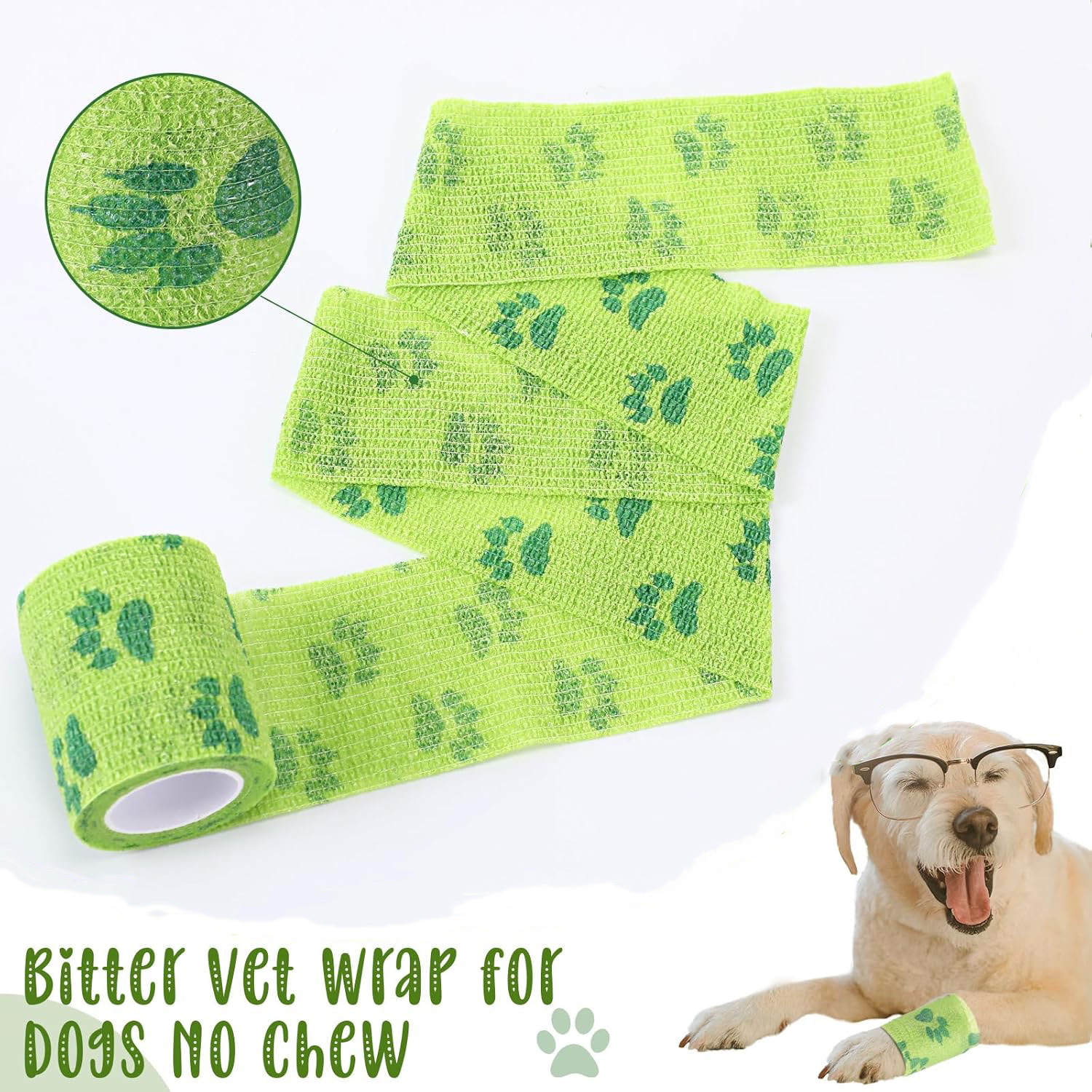
10-09-2026
Bandage Wrap for Dogs: How to Choose a Cohesive Vet Wrap That Stays On
A dog comes home from the clinic with a shaved foreleg, a line of sutures, and a printed sheet that says keep the bandage clean and dry. Three hours later the wrap is on the kitchen floor and the dog is licking the incision. The dressing did not fail. The material wrapped over it did.
A cohesive wrap holds because it sticks to itself, not to skin or fur. That one property is why it stays on a walking, scratching dog where adhesive tape will not.
What a Bandage Wrap for Dogs Has to Do
A bandage wrap for dogs has to hold a dressing on a moving, licking, fur-covered limb without sticking to the wound or the coat. Most wraps that end up on the floor miss that balance in one direction or the other.
Dogs make difficult patients for two mechanical reasons. Fur covers most of the leg, so anything that depends on skin contact loses most of its usable surface area. And the shapes a wrap has to follow, a tapered paw, a hock with almost no soft tissue over the bone, a tail base that never stops moving, leave very little margin for error.
Three jobs matter, in this order:
Containment: hold the contact layer, meaning a non-stick pad plus one or two gauze layers, exactly where it was placed, without shifting when the dog stands up.
Compression: apply even, light pressure that supports the limb and limits swelling, without narrowing into a tourniquet at the top edge.
Barrier: keep dirt, saliva, and direct licking away from the wound for the hours between changes.
Those three priorities are the same ones that govern human wound care and secondary fixation, where dressing retention is a materials question rather than a technique question.
The wrap is the outer layer, never the dressing itself. Whatever touches the wound should be sterile gauze or a non-stick pad; the cohesive wrap only holds it in place.
Cohesive Wrap vs. Adhesive Tape
A cohesive bandage, also called self-adherent wrap, vet wrap, or cohesive flexible bandage, is an elastic substrate coated with a patterned adhesive on one face that bonds only to itself when stretched and layered, so it needs no clips, pins, or tape to stay in place.
The difference shows up most clearly at removal. Zinc oxide tape and similar pressure-sensitive tapes grip fur, and pulling them off takes hair and sometimes superficial skin with it. A cohesive wrap separates from its own layers with a light pull, which is why veterinary clinics moved to it for anything that has to survive more than a few hours on an active dog.
How the three materials used on a dog's limb compare in practice.
Material
Bonds to
Removal from fur
Typical role
Cohesive self-adherent wrap
Its own backing only
Lifts away with little pull
Outer stabilizing layer
Zinc oxide or athletic tape
Skin, fur, and itself
Pulls hair and stings
Rigid anchoring at toes or splint
Rolled gauze
Nothing
Slides off easily
Contact and absorbent layer
Cohesive wrap over gauze
Itself, pressing the gauze down
Lifts as a single unit
Standard wound dressing build
Self-adherent does not mean sticky. Nothing is glued to the dog; the layers are pressed together and hold by friction.
Choosing the Roll: Width, Material, and Stretch
For most dogs, a 5 cm (2 inch) roll covers paws, hocks, and tails, while 7.5 cm and 10 cm rolls are reserved for chest, torso, and abdominal wraps where the wrap has to cover ground quickly.
Suggested cohesive wrap width by area for a medium-breed dog.
Body area
Roll width
Why this size
Paw and toes
2.5 to 5 cm
Narrow wraps follow the curve of the paw without bunching
Metacarpus and hock
5 cm
The most common size in veterinary practice
Lower leg and tail base
5 to 7.5 cm
Covers with fewer turns and less bulk
Chest and torso
7.5 to 10 cm
Wide rolls hold a figure-eight around the chest
Ear or small surgical site
2.5 cm
Cut to length and wrap with almost no tension
Widths assume a medium-breed dog between 15 and 30 kg. Toy breeds usually step down one size, giant breeds one size up.
160% Typical elongation at break for a nonwoven cohesive wrap
50% Overlap each turn by half the roll width
12-24 h Standard dressing change interval, sooner if wet
Substrate choice changes how the wrap behaves in the hand. Cotton cohesive wrap tears cleanly and finishes with a soft matte surface, PP nonwoven is lighter and is what most bulk vet wrap is made from, and PET-laminated nonwoven shrugs off water better and keeps its shape on a wet paw. Adhesive chemistry matters more than color: natural rubber gives the strongest grip but is not suitable for latex-sensitive handlers, while synthetic latex-free coatings trade a little tack for predictable unwind and a longer shelf life.
Veterinary Cohesive Bandage and Self-Adherent Wrap CollectionExplore a category of veterinary cohesive bandages and self-adherent wraps, including bitter, pet, sports, and first-aid options for varied wrapping needs.View Product →
How to Wrap a Dog's Paw Without Cutting Off Circulation
Wrap from the toes upward, overlap each turn by half the roll width, and finish above the next joint so the wrap cannot slide back down the leg.
Clean and dry the paw. Clip fur only where it is long enough to tangle under the wrap, and never clip over an open wound.
Place the contact layer: a non-stick pad over the wound, then one or two flat layers of gauze.
Anchor at the toes with one full turn at almost no tension, so the wrap sits flat instead of digging in.
Spiral upward, keeping the roll low and flat against the leg, with half the width overlapping the previous turn.
Stop above the joint. A wrap that ends mid-limb will bunch and slide the moment the dog stands.
Press the tail of the wrap onto the layer beneath it. No knot, no tape on fur, no staples.
Two fingers should slide under the top edge of the finished wrap. If they cannot, it is too tight. If the wrap drops off while the dog walks across the room, it is too loose.
When Wraps Fail: Loose, Tight, or Chewed
Almost every failed bandage on a dog fails for one of three reasons: it was too loose, it was too tight, or the dog chewed through it.
Too loose
The wrap slides down the leg within an hour
Gauze or pad becomes visible at the top edge
The dog hooks the loose end with a claw and pulls
You find the whole wrap intact on the floor
Too tight
Toes below the wrap look puffy or feel cool
Skin above the top edge stays indented after the wrap is removed
The dog chews at the top edge rather than the wound
The leg is held up or not fully weight-bearing
Chewing is the third failure mode, and it is behavioral rather than mechanical. A bitter coating applied to the wrap surface is the least invasive fix, followed by an Elizabethan collar for dogs that will not leave a wound alone. Bitter-coated cohesive wrap uses the same nonwoven substrate as standard vet wrap, with a food-grade bittering agent carried in the adhesive, so it still tears by hand and still bonds to itself.
Toes that swell above a bandage are a veterinary emergency, not a wait-and-see problem. Remove the wrap and call the clinic.
Bitter Vet Wrap Elastic Self-Adhesive Veterinary Cohesive BandageThis bitter-coated veterinary cohesive bandage discourages chewing while staying self-adherent, hand-tearable, and suitable for pet wound care and recovery bandaging.View Product →
Buying Vet Wrap in Bulk: What to Specify
Buyers ordering cohesive wrap for veterinary use should lock down six specifications before the first production run, because two rolls that look identical on a sample table can behave very differently at three in the morning in a clinic.
Substrate: cotton, PP nonwoven, or PET-laminated nonwoven, since each one tears and stretches differently.
Adhesive chemistry: natural rubber or synthetic latex-free, which decides who can handle the product and how long it stores.
Elongation: 150 to 180 percent is typical; too little stretch means the wrap will not lock onto itself.
Roll format: width, stretched length, core diameter, and whether rolls ship individually wrapped or bulk bagged.
Surface treatment: plain, bitter-coated, printed, or solid color, all of which affect minimum order quantities.
Private label artwork: roll print, poly bag, box, and carton, prepared before the packaging line is scheduled.
Ask for the stretched length, not the rolled length. A 4.5 m roll at 160 percent elongation delivers roughly 7 m of usable wrap once it is applied at working tension.
Small-batch flexibility counts as much as unit price when a clinic chain wants one width across forty locations. Manufacturers that consolidate raw material purchasing across orders can keep small runs close to bulk pricing, and custom size and shape programs let buyers standardize on 5 cm rolls, hand-tear edges, and color-coded lines instead of accepting whatever is in stock.
Frequently Asked Questions
Short answer: for a paw or leg wrap, use a 5 cm self-adherent cohesive bandage, apply two or three layers with 50 percent overlap from the toes upward, and leave the two middle toes visible so you can check for swelling.
Can I use a human cohesive bandage on my dog?
Yes, provided the material is the same self-adherent cohesive type and the wrap passes the two-finger tightness check. Human products are often sold in narrower widths, so a 2.5 cm roll is a reasonable substitute for a small paw, but check the label for natural rubber if the dog or the person handling the wrap has a known latex sensitivity.
How long can a bandage wrap stay on a dog?
A wound dressing is normally changed every 12 to 24 hours, and immediately if it becomes wet, soiled, or starts to smell. A support wrap over intact skin can stay on longer if it remains clean and dry, but check twice a day for swelling, slipping, or an indentation line at the top edge.
What happens if my dog eats the bandage wrap?
Cohesive wrap is not digestible. A short strand usually passes, but a swallowed roll or a large knotted section can cause an obstruction. Contact a veterinarian if the dog vomits repeatedly, refuses food, drools, or strains without producing stool.
Do I need tape to secure the end of the wrap?
No. Press the tail of the cohesive wrap against the layer below and it bonds on contact. Tape applied over fur adds nothing to security and is painful to remove, and it is the single most common reason owners report that bandage changes upset their dog.
.bandage-wrap-for-dogs{--accent:#57b660;--text-color:#1d2521;--bg-color:#fcfbf8;background:var(--bg-color);color:var(--text-color);font-family:Georgia,"Times New Roman",serif;padding:26px 22px 10px;border-top:4px solid var(--accent);}
.bandage-wrap-for-dogs .article-section{margin-bottom:34px;}
.bandage-wrap-for-dogs .article-section:first-of-type h2{margin-top:6px;}
.bandage-wrap-for-dogs .article-section:first-of-type{margin-bottom:14px;}
.bandage-wrap-for-dogs .lede{font-size:20px;line-height:1.4;font-weight:500;letter-spacing:0.1px;color:var(--text-color);border-left:3px solid var(--accent);padding:4px 0 4px 18px;margin-bottom:22px;}
.bandage-wrap-for-dogs h2{font-size:22px;font-weight:bold;text-align:left;margin-bottom:12px !important;position:relative;text-transform:uppercase;letter-spacing:0.8px;padding:10px 16px 10px 20px;margin-top:54px;border-left:6px solid var(--accent);background:linear-gradient(90deg,color-mix(in srgb,var(--accent) 16%,transparent),transparent 72%);color:var(--text-color);}
.bandage-wrap-for-dogs h2::after{content:"";position:absolute;left:20px;bottom:2px;width:58px;height:2px;background:var(--accent);}
.bandage-wrap-for-dogs .sec-tight h2{margin-top:50px;}
.bandage-wrap-for-dogs .sec-mid h2{margin-top:64px;}
.bandage-wrap-for-dogs .sec-wide h2{margin-top:76px;}
.bandage-wrap-for-dogs h3{font-size:16px;font-weight:bold;text-align:left;margin-bottom:12px;color:var(--accent);position:relative;padding-left:18px;letter-spacing:0.3px;margin-top:22px;}
.bandage-wrap-for-dogs h3::before{content:"";position:absolute;left:0;top:5px;width:9px;height:9px;background:var(--accent);transform:rotate(45deg);}
.bandage-wrap-for-dogs p{font-size:16px !important;margin-bottom:12px;line-height:1.8;color:var(--text-color);}
.bandage-wrap-for-dogs p.meta{font-size:14px;line-height:2;color:color-mix(in srgb,var(--text-color) 62%,var(--bg-color));letter-spacing:0.3px;margin-bottom:16px;}
.bandage-wrap-for-dogs a{color:var(--accent);text-decoration:underline;transition:color 0.25s ease;}
.bandage-wrap-for-dogs a:hover{color:color-mix(in srgb,var(--accent) 65%,var(--text-color));}
.bandage-wrap-for-dogs ul{margin-bottom:12px;list-style-type:disc;list-style-position:inside;}
.bandage-wrap-for-dogs ol{margin-bottom:12px;list-style-type:decimal;list-style-position:inside;padding-left:0;}
.bandage-wrap-for-dogs li{list-style:inherit;font-size:16px;margin-bottom:6px;line-height:1.8;}
.bandage-wrap-for-dogs .hl-strip{background:var(--accent);color:var(--bg-color);padding:16px 20px;border-radius:4px;font-size:16px;line-height:1.8;font-weight:bold;margin:6px 0 24px;}
.bandage-wrap-for-dogs .hl-frame{border:2px solid var(--accent);padding:16px 20px;margin:8px 0 22px;font-size:16px;line-height:1.8;}
.bandage-wrap-for-dogs .hl-quote{border-left:5px solid var(--accent);padding:6px 0 6px 22px;margin:10px 0 26px;font-size:21px;line-height:1.4;font-style:italic;color:var(--accent);}
.bandage-wrap-for-dogs .hl-inset{position:relative;padding:22px 22px 16px;margin:10px 0 24px;border-radius:10px;background:var(--bg-color);box-shadow:inset 0 0 0 1px color-mix(in srgb,var(--accent) 40%,transparent),inset 0 10px 20px -16px var(--accent);font-size:16px;line-height:1.8;}
.bandage-wrap-for-dogs .hl-inset::before{content:"";position:absolute;top:0;left:16px;right:16px;height:3px;border-radius:3px;background:var(--accent);}
.bandage-wrap-for-dogs .hl-dark{background:color-mix(in srgb,var(--text-color) 90%,#000);color:var(--bg-color);padding:18px 22px;border-radius:6px;margin:10px 0 24px;font-size:16px;line-height:1.8;font-weight:bold;}
.bandage-wrap-for-dogs .hl-note{border-left:8px double var(--accent);background:color-mix(in srgb,var(--accent) 10%,var(--bg-color));padding:14px 18px;margin:10px 0 22px;font-size:15px;line-height:2;}
.bandage-wrap-for-dogs .hl-def{border:1px solid transparent;border-radius:12px;background:linear-gradient(var(--bg-color),var(--bg-color)) padding-box,linear-gradient(120deg,var(--accent),color-mix(in srgb,var(--accent) 25%,var(--bg-color))) border-box;padding:14px 18px;margin:6px 0 22px;font-size:15px;line-height:2;}
.bandage-wrap-for-dogs .metric-row{display:flex;flex-wrap:wrap;gap:14px;margin:10px 0 26px;}
.bandage-wrap-for-dogs .metric{flex:1 1 170px;background:var(--bg-color);border-top:4px solid var(--accent);border-radius:2px;padding:14px 16px;box-shadow:0 3px 12px color-mix(in srgb,var(--text-color) 10%,transparent);}
.bandage-wrap-for-dogs .metric b{display:block;font-size:24px;line-height:1.4;color:var(--accent);font-variant-numeric:tabular-nums;}
.bandage-wrap-for-dogs .metric span{display:block;font-size:14px;line-height:2;color:color-mix(in srgb,var(--text-color) 68%,var(--bg-color));}
.bandage-wrap-for-dogs .metric .bar{height:6px;margin-top:10px;border-radius:3px;background:color-mix(in srgb,var(--accent) 20%,var(--bg-color));}
.bandage-wrap-for-dogs .metric .bar i{display:block;height:6px;border-radius:3px;background:var(--accent);}
.bandage-wrap-for-dogs .fill-80{width:80%;}
.bandage-wrap-for-dogs .fill-50{width:52%;}
.bandage-wrap-for-dogs .fill-30{width:32%;}
.bandage-wrap-for-dogs .compare{display:grid;grid-template-columns:1fr 1fr;margin:10px 0 24px;border:1px solid color-mix(in srgb,var(--accent) 30%,var(--bg-color));border-radius:6px;overflow:hidden;}
.bandage-wrap-for-dogs .compare > div{padding:16px 18px;font-size:15px;line-height:2;}
.bandage-wrap-for-dogs .compare > div:first-child{background:color-mix(in srgb,var(--accent) 6%,var(--bg-color));border-right:1px solid color-mix(in srgb,var(--accent) 25%,var(--bg-color));}
.bandage-wrap-for-dogs .compare h4{font-size:15px;line-height:2;margin:0 0 8px;text-transform:uppercase;letter-spacing:0.9px;color:var(--accent);}
.bandage-wrap-for-dogs .compare ul{margin-bottom:0;}
.bandage-wrap-for-dogs .steps{counter-reset:step;list-style:none;list-style-type:none;margin:12px 0 24px;padding-left:0;}
.bandage-wrap-for-dogs .steps li{position:relative;list-style:none;padding:0 0 18px 58px;margin-bottom:0;font-size:16px;line-height:1.8;}
.bandage-wrap-for-dogs .steps li::before{counter-increment:step;content:counter(step);position:absolute;left:0;top:0;width:34px;height:34px;line-height:34px;text-align:center;border-radius:50%;background:var(--accent);color:var(--bg-color);font-weight:bold;font-size:15px;}
.bandage-wrap-for-dogs .steps li::after{content:"";position:absolute;left:16px;top:38px;bottom:2px;width:2px;background:color-mix(in srgb,var(--accent) 35%,var(--bg-color));}
.bandage-wrap-for-dogs .steps li:last-child::after{display:none;}
.bandage-wrap-for-dogs .spec-list{margin:10px 0 22px;padding-left:0;list-style:none;list-style-type:none;}
.bandage-wrap-for-dogs .spec-list li{position:relative;list-style:none;padding-left:24px;margin-bottom:9px;font-size:16px;line-height:1.8;}
.bandage-wrap-for-dogs .spec-list li::before{content:"";position:absolute;left:0;top:9px;width:10px;height:10px;border-radius:2px;background:var(--accent);}
.bandage-wrap-for-dogs table{display:table!important;width:100%;border-collapse:collapse;margin:6px 0 18px;background:var(--bg-color);font-size:14px;line-height:2;}
.bandage-wrap-for-dogs thead{display:table-header-group!important;}
.bandage-wrap-for-dogs tbody{display:table-row-group!important;}
.bandage-wrap-for-dogs tr{display:table-row!important;}
.bandage-wrap-for-dogs th{display:table-cell!important;font-weight:bold;border:1px solid #cccccc;padding:8px;}
.bandage-wrap-for-dogs td{display:table-cell!important;border:1px solid #cccccc;padding:8px;}
.bandage-wrap-for-dogs caption{caption-side:bottom;font-size:16px;margin-bottom:12px;font-style:italic;color:#808080;}
.bandage-wrap-for-dogs tbody td{padding:12px 14px;}
.bandage-wrap-for-dogs tbody tr:nth-child(even) td{background:color-mix(in srgb,var(--accent) 8%,var(--bg-color));}
.bandage-wrap-for-dogs tbody td:first-child{font-weight:bold;color:var(--accent);}
.bandage-wrap-for-dogs tbody tr:first-child td{background:var(--accent);color:var(--bg-color);font-weight:bold;text-transform:uppercase;letter-spacing:0.5px;font-size:13px;}
.bandage-wrap-for-dogs tbody tr:nth-child(n+2):hover td{background:color-mix(in srgb,var(--accent) 16%,var(--bg-color));transition:background 0.2s ease;}
@media (max-width:768px){
.bandage-wrap-for-dogs{padding:16px 14px 6px;}
.bandage-wrap-for-dogs .lede{font-size:18px;line-height:1.7;padding-left:14px;}
.bandage-wrap-for-dogs h2{margin-top:42px;letter-spacing:0.4px;font-size:20px;line-height:1.4;}
.bandage-wrap-for-dogs .sec-tight h2,.bandage-wrap-for-dogs .sec-mid h2,.bandage-wrap-for-dogs .sec-wide h2{margin-top:40px;}
.bandage-wrap-for-dogs .hl-quote{font-size:18px;line-height:1.7;}
.bandage-wrap-for-dogs .metric-row{flex-direction:column;}
.bandage-wrap-for-dogs .compare{grid-template-columns:1fr;}
.bandage-wrap-for-dogs .compare > div:first-child{border-right:none;border-bottom:1px solid color-mix(in srgb,var(--accent) 25%,var(--bg-color));}
.bandage-wrap-for-dogs .steps li{padding-left:48px;}
.bandage-wrap-for-dogs table{font-size:13px;}
.bandage-wrap-for-dogs tbody td{padding:10px;}
}
.product-card{display:block;margin:20px 0;border:1px solid #e5e7eb;border-radius:10px;overflow:hidden;font-style:normal;background:#fff;box-shadow:0 0 5px rgba(31,41,55,.08)}
.pc-inner{display:flex;text-decoration:none;color:inherit;align-items:center;min-height:148px}
.product-card .pc-img{width:auto!important;min-width:0!important;max-width:min(36%,240px)!important;height:auto!important;min-height:0!important;max-height:148px!important;aspect-ratio:auto!important;object-fit:contain!important;flex:0 0 auto;display:block;align-self:center}
.pc-body{padding:12px 16px;flex:1;min-width:0;display:flex;flex-direction:column;align-self:stretch;justify-content:center}
.pc-title{display:block;font-size:15px;font-weight:600;color:#111;margin:0 0 6px;line-height:1.4}
.pc-desc{display:-webkit-box;font-size:13px;color:#6b7280;margin:0 0 8px;line-height:1.5;overflow:hidden;-webkit-line-clamp:2;line-clamp:2;-webkit-box-orient:vertical}
.pc-cta{display:block;font-size:13px;font-weight:600;color:inherit;margin-top:auto}
.pc-inner:hover .pc-title{text-decoration:underline}
.article-section a:not(.pc-inner),article a:not(.pc-inner){color:inherit}.pc-cta{color:inherit!important}
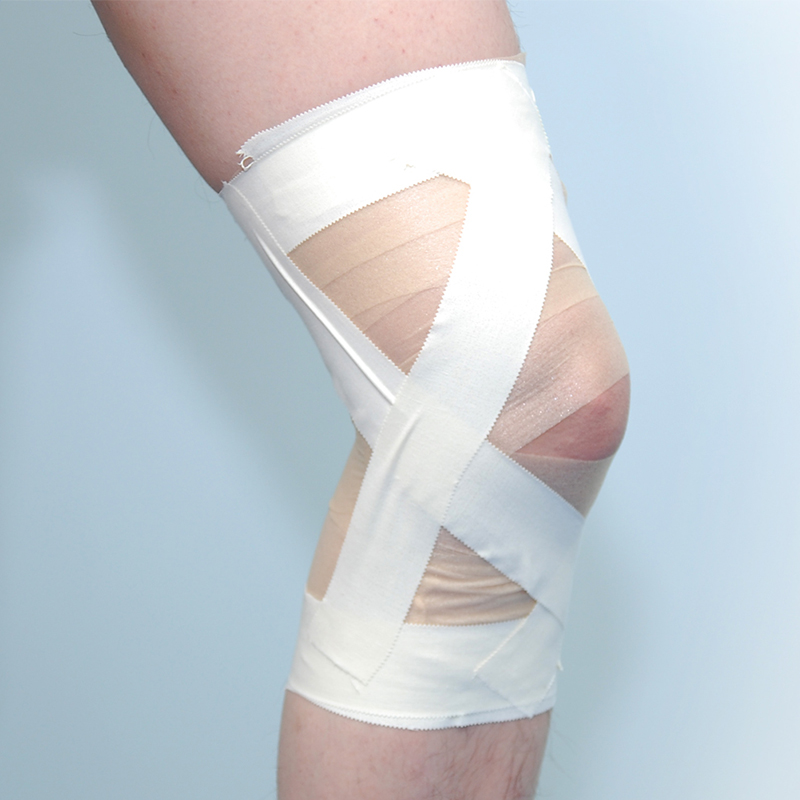
09-30-2026
Athletic Tape for a Jammed Finger: Support, Technique, and Safe Return to Play
A volleyball or basketball that lands on the tip of an outstretched finger drives the force straight into the middle joint, and the volar plate and collateral ligaments take the damage. That is what players call a jammed finger, and the tape job that follows often decides whether they are back in three days or stiff for six weeks. Athletic tape for a jammed finger has a narrow job: block sideways and hyperextension movement at one joint, keep the rest of the hand working, and stay stuck through sweat, grip tape and a full training session.
What Athletic Tape for a Jammed Finger Actually Does
Athletic tape for a jammed finger supports an injured finger joint by limiting lateral and hyperextension stress while leaving flexion and the rest of the hand free.
Tape is not a cast. A 12.5 mm strip of rigid zinc oxide tape will not put a displaced joint back in place, and it will not turn a ligament sprain into a one-day problem. What it can do is limit the two movements that re-injure the joint most often: forced sideways deviation and backward opening past neutral. Used well, the tape works as an external check rein, absorbing part of the load before it reaches a healing ligament, and it gives the player constant feedback so they stop catching and gripping the way that caused the injury.
Lateral support: two strips joining the injured finger to a neighbour resist sideways bending at the joint.
Hyperextension control: a strip across the back of the finger limits how far the joint opens backwards.
Proprioceptive cue: constant contact reminds the athlete to change how they catch, grip or post up.
Swelling management: elastic and cohesive wraps handle oedema, but they do not replace a rigid support.
Assessment first: an inability to straighten the finger, a visible deformity or numbness needs a professional check before tape goes on.
DefinitionBuddy taping is the practice of securing an injured finger to an adjacent healthy finger with tape so the healthy finger acts as a splint against sideways and hyperextension movement.
Once the acute phase passes, taping usually shifts from rigid support towards graded loading. Our sports protection applications outline how clinics and teams combine rigid tape, elastic wraps and protective foam at different stages of return to play.
Rigid, Elastic, or Kinesiology Tape: Which One Belongs on a Jammed Finger
A freshly jammed finger is normally taped with thin rigid zinc oxide tape between 12.5 mm and 25 mm wide, because it stretches less than 5 percent and resists sideways bending; elastic and kinesiology tapes suit swelling control, skin protection and mild cases where the joint still needs to move. If you are unsure whether a rigid strapping tape or a general medical tape belongs in the kit, the difference between athletic finger tape and regular medical tape comes down to backing stiffness and adhesive coat.
Comparison of tape types used around a jammed finger
Tape type
Typical width
Elongation
Main role
Watch out for
Rigid cotton zinc oxide tape
12.5 to 25 mm
Under 5 percent
Lateral and hyperextension control, buddy taping
Adhesive residue, skin sensitivity
Elastic adhesive bandage
50 to 75 mm
140 to 160 percent
Compression over swelling and dressings
Too bulky to fold around a finger joint
Cohesive self-adhesive bandage
25 to 50 mm
High stretch
Quick wraps, dressing retention, no adhesive residue
Not stiff enough to stop hyperextension
Kinesiology tape
50 mm cut down to 12.5 mm
140 to 180 percent
Feedback and mild support late in recovery
Does not limit end-range movement
Rigid cotton tape5%
Cohesive wrap100%
Elastic bandage150%
Kinesiology tape180%
Elongation figures are representative ranges for the material groups, not values for a single supplier specification.
Rule of thumb: if the joint has to be held still, use rigid tape. If the joint must keep moving and the goal is swelling control or feedback, use elastic, cohesive or kinesiology tape instead.
99.99% Rigid Cotton Sports Tape for Finger Knee Toe Ankle ProtectionElevate your performance and safeguard your body with the 99.99% Rigid Cotton Sports Tape, engineered for unparalleled protection and support across a variety of sport...View Product →
How to Buddy Tape a Jammed Finger, Step by Step
Buddy taping takes about two minutes: clean and dry the skin, place a gauze or foam spacer between the fingers, fix the injured finger to its neighbour with one strip above and one below the injured joint, then re-check circulation ten minutes later. The sequence below is the one we recommend to clinics that tape fingers every week.
Screen the finger first. If it cannot be straightened, looks deformed, or feels numb, keep the tape in the bag until the joint has been assessed.
Prepare the skin. Wash and dry the finger and wipe it with an alcohol prep if the skin is oily; moisture and hair are the fastest ways to lose adhesion.
Cut two strips. Each around 6 to 8 cm long from 12.5 mm rigid tape, with the corners trimmed if the edges are sharp.
Add a spacer. A small square of gauze or thin foam between the two fingers prevents skin maceration during a long session.
Tape above and below the joint. Place one strip just distal to the injured joint and one just proximal, leaving the joint line free of adhesive and the finger held in 15 to 20 degrees of flexion.
Check circulation. After ten minutes look at colour, warmth and capillary refill, and loosen the tape immediately if the finger turns pale, blue or numb.
Rigid tape should never be wrapped fully around a single finger on its own. A circumferential wrap on a digit gives very little warning before circulation is compromised.
Athletic Finger TapeAthletic Finger Tape is an essential tool for athletes, physical therapists, and anyone requiring reliable joint support during physical activity. Designed to provide ...View Product →
Material, Adhesive, and Specs That Decide Whether the Tape Stays On
On a finger, backing material and adhesive coat decide performance far more than the printed brand: a 100 percent cotton rigid tape with a zinc oxide adhesive at 12.5 mm wide holds through a full game, while thin nonwoven tapes with a light coat lift at the edges within minutes of sweating.
12.5 mmStandard finger width, with 25 mm used for buddy taping across two fingers
Under 5%Elongation that keeps a rigid tape from stretching out under load
0.2 mmWidth tolerance to expect from a controlled slitting line
Adhesive choice matters just as much. Zinc oxide gives the strongest grip on cotton but is the most likely to irritate sensitive skin, hot melt synthetic adhesive removes more cleanly and still holds well under shear, and acrylic adhesives are gentler on skin with lower initial tack.
Elongation at break, and elongation at working load
Peel adhesion expressed in newtons per 25 mm
Adhesive coat weight in grams per square metre
Backing thread count, weave and tensile strength
Core diameter and roll length tolerance
Edge type: flat, serrated or hand tear
A written latex statement for clinic and school tenders
Ask for numbers, not adjectives. Elongation, peel adhesion and adhesive coat weight are the three values that predict how a finger tape behaves after forty minutes of sweat.
Common Mistakes and Skin Risks
The most frequent error is taping too tight and too high: a rigid wrap that circles the whole finger can restrict blood flow within minutes, and taping a joint in full extension leaves it stiff for weeks after the ligament has settled.
Do
Tape with the joint in slight flexion
Keep the joint line free of adhesive
Use a spacer between the fingers
Re-check the finger during activity
Remove tape after training and clean the skin
Avoid
Full circumferential rigid wraps on one finger
Taping over blisters or broken skin
Leaving the same tape on for days
Reusing a strip after removal
Taping a finger that cannot be straightened
Remove the tape immediately if the fingertip turns pale or blue, feels cold, or starts to tingle or go numb. Circulation comes before any tape job.
Buying Athletic Finger Tape for Clinics, Teams, and Distributors
When you buy finger tape at volume, fix the specification before discussing price: width, elongation, backing, adhesive type and latex status decide whether a roll works at the sideline, and only after that do packaging and private label come into play.
Width and edge: 12.5 mm rolls with a hand tear or serrated edge save seconds on the field, which matters when a physio is taping six players in ten minutes.
Backing and adhesive: cotton rigid tape with zinc oxide for support work, latex free synthetic options for schools and clinics with a latex policy.
Roll format: core diameter, roll length tolerance and winding tension affect how the tape feeds from a kit bag under pressure.
Pre-cut formats: shaped finger and toe patches cut application time for high volume teams and rehab rooms.
Private label: logo printing, custom sizes and packaging design are usually the first requests from distributors building their own brand.
Pre-Cut Shape Kinesiology Tape Muscle Patch For Finger And ToeDigital Support Strips (50mm×20mm) - Precision Protection for Hands FeetView Product →
For private label programmes, ask for a virtual proof first and a physical sample before the bulk run. Small minimum order quantities are easier to accept when fabrics and adhesives are pooled across several orders.
Frequently Asked Questions
How long should a jammed finger stay taped?
Most mild jams are buddy taped during activity for five to ten days and left untaped at rest, with the tape removed for sleep and washing. If pain, swelling or stiffness has not improved after a week, the finger should be reassessed before taping continues.
Can kinesiology tape replace rigid tape on a jammed finger?
No. Kinesiology tape stretches 140 to 180 percent, which gives feedback and mild support but will not block hyperextension at the joint. Use rigid zinc oxide tape while the joint needs a hard limit and switch to kinesiology tape later in recovery.
How tight should finger tape be?
Snug enough to hold the two fingers together and no tighter. The fingertip should keep its normal colour and warmth, and there should be no tingling or numbness. If you are unsure, apply the strips, wait ten minutes and check the finger again before the athlete returns to play.
Does finger tape need to be latex free?
For clinics, schools and shared first aid kits, yes. Zinc oxide adhesive can also irritate sensitive skin, so hypoallergenic and latex free tapes are the safer default for long events and repeated daily taping.
A jammed finger is a small injury with a short taping window. Specifying width, backing and adhesive once removes most of the guesswork at the sideline.
.jammed-finger-tape-guide {
--accent: #57b660;
--text-color: #16241b;
--bg-color: #ffffff;
background: var(--bg-color);
color: var(--text-color);
font-family: "Helvetica Neue", Helvetica, Arial, sans-serif;
padding: 4px 0 48px;
}
.jammed-finger-tape-guide p {
font-size: 16px !important;
margin-bottom: 12px;
color: var(--text-color);
line-height: 1.8;
}
.jammed-finger-tape-guide .lead {
font-size: 18px !important;
line-height: 1.7;
color: var(--text-color);
padding-bottom: 16px;
margin-bottom: 20px;
border-bottom: 1px solid color-mix(in srgb, var(--accent) 35%, transparent);
letter-spacing: 0.2px;
}
.jammed-finger-tape-guide h2 {
font-size: 22px;
font-weight: bold;
text-align: left;
margin-bottom: 12px !important;
color: var(--accent);
line-height: 1.4;
margin-top: 56px;
}
.jammed-finger-tape-guide h3 {
font-size: 16px;
font-weight: bold;
text-align: left;
margin-bottom: 12px;
color: var(--text-color);
line-height: 1.8;
margin-top: 22px;
padding-left: 12px;
border-left: 3px solid var(--accent);
letter-spacing: 0.2px;
}
.jammed-finger-tape-guide ul {
margin-bottom: 12px;
list-style-type: disc;
list-style-position: inside;
padding-left: 0;
}
.jammed-finger-tape-guide ol {
margin-bottom: 12px;
list-style-type: decimal;
list-style-position: inside;
padding-left: 0;
}
.jammed-finger-tape-guide li {
list-style: inherit;
font-size: 16px;
margin-bottom: 6px;
line-height: 1.8;
color: var(--text-color);
}
.jammed-finger-tape-guide th {
font-weight: bold;
border: 1px solid #cccccc;
padding: 8px;
}
.jammed-finger-tape-guide td {
border: 1px solid #cccccc;
padding: 8px;
}
.jammed-finger-tape-guide caption {
caption-side: bottom;
font-size: 16px;
margin-bottom: 12px;
font-style: italic;
color: #808080;
}
.jammed-finger-tape-guide .article-section table {
display: table !important;
width: 100%;
border-collapse: collapse;
margin: 6px 0 18px;
}
.jammed-finger-tape-guide .article-section thead {
display: table-header-group !important;
}
.jammed-finger-tape-guide .article-section tbody {
display: table-row-group !important;
}
.jammed-finger-tape-guide .article-section tr {
display: table-row !important;
}
.jammed-finger-tape-guide .article-section th {
display: table-cell !important;
}
.jammed-finger-tape-guide .article-section td {
display: table-cell !important;
padding: 12px 14px;
font-size: 14px;
line-height: 2;
vertical-align: top;
color: var(--text-color);
}
.jammed-finger-tape-guide .article-section tr:first-child td {
background: var(--accent);
color: var(--bg-color);
font-weight: bold;
letter-spacing: 0.3px;
}
.jammed-finger-tape-guide .article-section tr:nth-child(even) td {
background: color-mix(in srgb, var(--accent) 8%, var(--bg-color));
}
.jammed-finger-tape-guide .article-section td:first-child {
font-weight: bold;
}
.jammed-finger-tape-guide .article-section tr:hover td {
background: color-mix(in srgb, var(--accent) 16%, var(--bg-color));
transition: background 0.25s ease;
}
.jammed-finger-tape-guide .table-scroll {
overflow-x: auto;
margin-bottom: 8px;
}
.jammed-finger-tape-guide a {
color: var(--accent);
text-decoration: underline;
text-decoration-thickness: 1px;
}
.jammed-finger-tape-guide a:hover {
color: var(--text-color);
}
.jammed-finger-tape-guide .meta-note {
font-size: 14px !important;
line-height: 2;
color: var(--text-color);
opacity: 0.72;
font-style: italic;
}
.jammed-finger-tape-guide .section-role h2 {
border-left: 5px solid var(--accent);
padding-left: 14px;
text-transform: uppercase;
letter-spacing: 1.4px;
}
.jammed-finger-tape-guide .section-types h2 {
background: var(--accent);
color: var(--bg-color);
padding: 10px 16px;
border-radius: 4px 18px 4px 18px;
letter-spacing: 0.4px;
margin-top: 64px;
}
.jammed-finger-tape-guide .section-steps h2 {
border-top: 4px solid var(--accent);
border-bottom: 1px dashed color-mix(in srgb, var(--accent) 60%, transparent);
padding: 12px 0 10px;
margin-top: 72px;
}
.jammed-finger-tape-guide .section-specs h2 {
position: relative;
padding-left: 30px;
margin-top: 60px;
}
.jammed-finger-tape-guide .section-specs h2::before {
content: "";
position: absolute;
left: 2px;
top: 50%;
width: 14px;
height: 14px;
background: var(--accent);
transform: translateY(-50%) rotate(45deg);
}
.jammed-finger-tape-guide .section-mistakes h2 {
background: linear-gradient(90deg, color-mix(in srgb, var(--accent) 30%, transparent), transparent 80%);
padding: 10px 24px 10px 16px;
clip-path: polygon(0 0, 100% 0, calc(100% - 20px) 100%, 0 100%);
margin-top: 68px;
}
.jammed-finger-tape-guide .section-sourcing h2 {
border: 1px solid var(--accent);
padding: 12px 16px;
box-shadow: 6px 6px 0 color-mix(in srgb, var(--accent) 28%, transparent);
margin-top: 76px;
}
.jammed-finger-tape-guide .section-faq h2 {
border-bottom: 3px double var(--accent);
padding-bottom: 8px;
margin-top: 80px;
}
.jammed-finger-tape-guide .hl-quote {
border-left: 6px solid var(--accent);
background: linear-gradient(90deg, color-mix(in srgb, var(--accent) 12%, transparent), transparent);
padding: 16px 18px;
margin: 18px 0;
font-size: 18px;
line-height: 1.7;
color: var(--text-color);
}
.jammed-finger-tape-guide .hl-label {
display: block;
font-size: 14px;
line-height: 2;
font-weight: bold;
text-transform: uppercase;
letter-spacing: 1.2px;
color: var(--accent);
margin-bottom: 4px;
}
.jammed-finger-tape-guide .hl-dashed {
border: 2px dashed var(--accent);
border-radius: 10px;
padding: 16px 18px;
margin: 18px 0;
font-size: 16px;
line-height: 1.8;
background: color-mix(in srgb, var(--accent) 5%, var(--bg-color));
color: var(--text-color);
}
.jammed-finger-tape-guide .hl-inset {
box-shadow: inset 0 0 0 2px color-mix(in srgb, var(--accent) 55%, transparent), inset 0 16px 28px -22px color-mix(in srgb, var(--accent) 80%, transparent);
padding: 18px;
margin: 18px 0;
border-radius: 4px;
font-size: 16px;
line-height: 1.8;
color: var(--text-color);
}
.jammed-finger-tape-guide .hl-solid {
background: var(--accent);
color: var(--bg-color);
padding: 16px 18px;
margin: 18px 0;
border-radius: 14px;
font-size: 16px;
line-height: 1.8;
}
.jammed-finger-tape-guide .hl-topbar {
border-top: 6px solid var(--accent);
background: var(--bg-color);
box-shadow: 0 12px 26px -20px color-mix(in srgb, var(--text-color) 80%, transparent);
padding: 16px 18px;
margin: 18px 0;
border-radius: 0 0 8px 8px;
font-size: 16px;
line-height: 1.8;
color: var(--text-color);
}
.jammed-finger-tape-guide .hl-double {
border: 2px solid var(--accent);
box-shadow: inset 0 0 0 3px var(--bg-color), inset 0 0 0 4px color-mix(in srgb, var(--accent) 45%, transparent);
padding: 18px 20px;
margin: 18px 0;
font-size: 16px;
line-height: 1.8;
color: var(--text-color);
}
.jammed-finger-tape-guide .hl-rightbar {
border-right: 5px solid var(--accent);
background: color-mix(in srgb, var(--accent) 6%, var(--bg-color));
padding: 14px 18px;
margin: 18px 0;
font-size: 16px;
line-height: 1.8;
color: var(--text-color);
}
.jammed-finger-tape-guide .steps-list li {
border-left: 4px solid var(--accent);
background: color-mix(in srgb, var(--accent) 6%, var(--bg-color));
padding: 10px 14px;
border-radius: 0 8px 8px 0;
margin-bottom: 10px;
}
.jammed-finger-tape-guide .steps-list li::marker {
color: var(--accent);
font-weight: bold;
}
.jammed-finger-tape-guide .metric-row {
display: flex;
flex-wrap: wrap;
gap: 14px;
margin: 18px 0;
}
.jammed-finger-tape-guide .metric-card {
flex: 1 1 170px;
border-top: 4px solid var(--accent);
background: color-mix(in srgb, var(--accent) 7%, var(--bg-color));
padding: 14px 16px;
border-radius: 0 0 10px 10px;
}
.jammed-finger-tape-guide .metric-value {
display: block;
font-size: 24px;
line-height: 1.4;
font-weight: bold;
color: var(--accent);
font-variant-numeric: tabular-nums;
}
.jammed-finger-tape-guide .metric-label {
display: block;
font-size: 14px;
line-height: 2;
color: var(--text-color);
}
.jammed-finger-tape-guide .compare-grid {
display: grid;
grid-template-columns: 1fr 1fr;
gap: 16px;
margin: 18px 0;
}
.jammed-finger-tape-guide .compare-col {
border: 1px solid color-mix(in srgb, var(--accent) 45%, transparent);
border-radius: 8px;
padding: 14px 16px;
}
.jammed-finger-tape-guide .compare-title {
display: block;
font-size: 16px;
font-weight: bold;
text-transform: uppercase;
letter-spacing: 0.8px;
color: var(--accent);
margin-bottom: 8px;
}
.jammed-finger-tape-guide .chart {
margin: 20px 0;
}
.jammed-finger-tape-guide .chart-row {
display: flex;
align-items: center;
gap: 10px;
margin-bottom: 10px;
}
.jammed-finger-tape-guide .chart-name {
flex: 0 0 140px;
font-size: 14px;
line-height: 2;
color: var(--text-color);
}
.jammed-finger-tape-guide .chart-track {
flex: 1 1 auto;
background: color-mix(in srgb, var(--accent) 12%, var(--bg-color));
border-radius: 3px;
height: 14px;
}
.jammed-finger-tape-guide .chart-bar {
display: block;
height: 14px;
background: var(--accent);
border-radius: 3px;
}
.jammed-finger-tape-guide .bar-05 {
width: 5%;
}
.jammed-finger-tape-guide .bar-55 {
width: 55%;
}
.jammed-finger-tape-guide .bar-83 {
width: 83%;
}
.jammed-finger-tape-guide .bar-100 {
width: 100%;
}
.jammed-finger-tape-guide .chart-value {
flex: 0 0 54px;
font-size: 14px;
line-height: 2;
text-align: right;
font-weight: bold;
color: var(--accent);
font-variant-numeric: tabular-nums;
}
.jammed-finger-tape-guide a[data-product-card="true"] {
display: block;
position: relative;
margin: 18px 0;
padding: 14px 18px 14px 46px;
border: 1px solid var(--accent);
border-left: 6px solid var(--accent);
border-radius: 6px;
background: color-mix(in srgb, var(--accent) 7%, var(--bg-color));
color: var(--text-color);
font-size: 16px;
line-height: 1.8;
font-weight: bold;
text-decoration: none;
letter-spacing: 0.3px;
transition: background 0.25s ease, box-shadow 0.25s ease;
}
.jammed-finger-tape-guide a[data-product-card="true"]::before {
content: "View product details";
display: block;
font-size: 14px;
line-height: 2;
font-weight: bold;
text-transform: uppercase;
letter-spacing: 1.1px;
color: var(--accent);
}
.jammed-finger-tape-guide a[data-product-card="true"]::after {
content: "";
position: absolute;
left: 20px;
top: 50%;
width: 10px;
height: 10px;
border-right: 3px solid var(--accent);
border-top: 3px solid var(--accent);
transform: translateY(-50%) rotate(45deg);
}
.jammed-finger-tape-guide a[data-product-card="true"]:hover {
background: color-mix(in srgb, var(--accent) 15%, var(--bg-color));
box-shadow: 0 10px 22px -16px color-mix(in srgb, var(--text-color) 80%, transparent);
}
@media (max-width: 768px) {
.jammed-finger-tape-guide .compare-grid {
grid-template-columns: 1fr;
}
.jammed-finger-tape-guide .metric-row {
flex-direction: column;
}
.jammed-finger-tape-guide .chart-name {
flex: 0 0 96px;
}
.jammed-finger-tape-guide h2 {
margin-top: 50px;
}
.jammed-finger-tape-guide .section-sourcing h2 {
box-shadow: 4px 4px 0 color-mix(in srgb, var(--accent) 28%, transparent);
}
}
.product-card{display:block;margin:20px 0;border:1px solid #e5e7eb;border-radius:10px;overflow:hidden;font-style:normal;background:#fff}
.pc-inner{display:flex;text-decoration:none;color:inherit;align-items:center;min-height:120px}
.pc-img{width:160px;min-width:160px;aspect-ratio:4/3;height:auto;min-height:120px;object-fit:cover;flex-shrink:0;display:block;align-self:stretch}
.pc-body{padding:12px 16px;flex:1;min-width:0;display:flex;flex-direction:column;align-self:stretch;justify-content:center}
.pc-title{display:block;font-size:15px;font-weight:600;color:#111;margin:0 0 6px;line-height:1.4}
.pc-desc{display:-webkit-box;font-size:13px;color:#6b7280;margin:0 0 8px;line-height:1.5;overflow:hidden;-webkit-line-clamp:2;line-clamp:2;-webkit-box-orient:vertical}
.pc-cta{display:block;font-size:13px;font-weight:600;color:inherit;margin-top:auto}
.pc-inner:hover .pc-title{text-decoration:underline}
.article-section a:not(.pc-inner),article a:not(.pc-inner){color:inherit}.pc-cta{color:inherit!important}
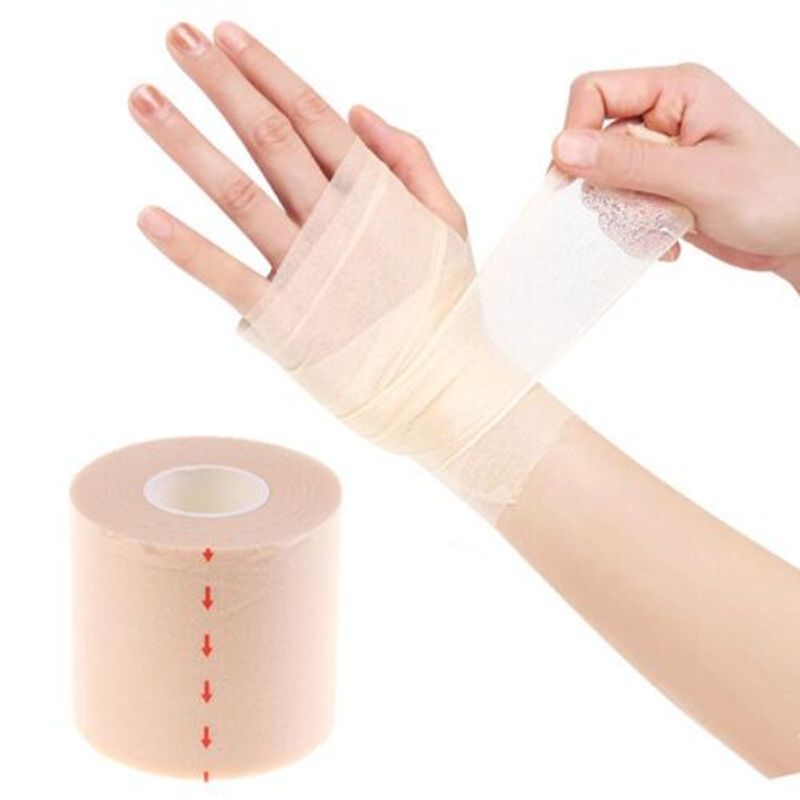
09-25-2026
Ankle Tape for Football: Rigid, Cohesive and Kinesiology Options Compared
Football asks more of the ankle than nearly any other joint: repeated hard cuts, side-on tackles, studs catching in soft ground, and landings that load the joint at angles its ligaments were never designed to tolerate. Lateral ankle sprains remain among the most frequently reported injuries in the sport at every level. The fix most trainers reach for is tape, but the choice matters more than players assume. Rigid zinc oxide strapping tape is the standard for locking an unstable ankle on match day; cohesive self-adhesive wrap wins on speed and comfort for quick pre-match jobs; kinesiology tape and pre-cut ankle patches suit light support and recovery days. Which one you pick, and how well you apply it, decides whether the tape protects the joint or merely decorates it.
Why Football Players Tape Their Ankles
A dependable tape job does two things at once. First, it works as an external ligament: non-stretch strips laid across the joint limit excessive inversion, where the ankle rolls so the sole turns inward, and eversion, the two movement patterns behind most football sprains. Second, it feeds information back to the player. Athletes consistently report earlier reactions and greater confidence when cutting and landing on a taped ankle, which matters most for anyone returning after a previous sprain.
Neither effect makes the joint invulnerable. Taping lowers the risk and reduces the severity of a roll; it does not cancel it. Sound programs treat tape as one layer within wider sports protection measures, alongside conditioning, balance work and, for some players, bracing, rather than a substitute for any of them.
Choosing the Right Ankle Tape for Football
Rigid zinc oxide tape: the structural lock
When the goal is to restrict movement, whether that means returning to play after a sprain, protecting a chronically loose ankle, or strapping a goalkeeper who lands awkwardly on every cross, rigid tape is the tool. Zinc oxide strapping tape has virtually no stretch and high tensile strength, so stirrup and heel-lock strips genuinely hold the joint when it is loaded. Its aggressive adhesive is also the most sweat-tolerant of the common options, which a full 90 minutes demands. The trade-offs are real: it bonds directly to skin, takes practice to apply at speed, and careless removal takes hair and surface skin with it.
Rigid Zinc Oxide Athletic Tape for Ankle, Wrist and Finger SupportNon-elastic cotton tape with a strong zinc oxide adhesive that restricts joint motion and holds through sweat, making it the right choice for stabilizing sprained or loose ankles during play.View Product →
Cohesive self-adhesive wrap: speed and comfort
Cohesive bandage sticks only to itself, never to skin or socks. That single property changes the daily routine: it tears by hand with no scissors needed pitchside, applies in under a minute, allows adjustable compression, and peels off without the soak-and-wait removal ritual of rigid tape. A lighter-stretch version designed as football sock cohesive tape wraps neatly around the ankle over the sock line and stays put through sweat without chewing into skin. The compromise is structural: because the wrap is elastic, it supports and compresses but cannot truly stop the joint from rolling. It is the right call for mild support, securing padding, and layering over rigid strips, and the wrong call as the sole restraint for a recently sprained ankle.
Kinesiology tape and pre-cut ankle patches
Kinesiology tape stretches, typically to around 140-180% of its resting length, and that elasticity defines its role. It lightly lifts the skin, which many players find eases post-match swelling and soreness, and it offers a sensory cue rather than a hard mechanical stop. For footballers training most days of the week, pre-cut ankle patches remove measuring and cutting entirely: one shaped piece, applied in seconds. Be clear about what it is not, though. Kinesiology tape will not structurally stabilize an acutely sprained joint; rigid tape owns that job.
Underwrap foam: the comfort layer
Underwrap is a thin polyurethane foam applied beneath rigid tape. It shields skin from adhesive trauma and makes removal far less painful, which matters over a season of two or three taping sessions a week. Every experienced trainer learns the trade-off: a full foam layer slightly reduces grip, so heavily strapped players often lay anchor strips directly on skin and use foam everywhere else.
Latex-Free Foam Underwrap Pre-Tape for Sports TapingA thin, non-adhesive foam barrier worn under rigid tape to protect skin from adhesive irritation and ease removal, ideal for athletes who tape frequently while keeping anchor strips on skin.View Product →
Between the rigid and fully elastic extremes sits elastic adhesive bandage (EAB): a moderately stretchy cotton tape with a strong adhesive coat, traditionally used as the compression and finishing layer over rigid strips. The table below sums up how the four options divide the work.
Comparison of the four tape types commonly used on football ankles, ordered from most to least structural support.
Tape type
Stretch
Best football use
Main limitation
Rigid zinc oxide strapping tape
None
Match-day restraint, post-sprain return to play, stirrups and heel locks
Painful removal without care; usually paired with underwrap
Elastic adhesive bandage (EAB)
Moderate
Compression and finishing layer over rigid strips
Adhesive softens when soaked in sweat
Cohesive self-adhesive wrap
Moderate to high
Fast pre-match wraps, sock-line coverage, pitchside re-taping
Elastic; cannot structurally restrain the joint
Kinesiology tape and pre-cut patches
High
Light support, swelling control, recovery days
No mechanical lock; unsuitable for acute sprains
How to Tape an Ankle for Football: Step by Step
Sequence matters more than speed. A dependable ankle job runs as follows:
Set the ankle at 90 degrees with the foot neutral; taping a pointed foot locks in the wrong resting angle for running.
Prepare the skin: wipe away sweat and old adhesive, shave if the player accepts it, and apply underwrap where comfort matters. The full layering method is set out in this underwrap and taping guide.
Lay two anchor strips around the lower shin, just above where the ankle bones widen.
Add stirrups: strips running from the inner anchor, under the heel, up to the outer anchor, pulling in the direction that resists inversion.
Build a figure-eight: a strip crossing the front of the ankle, looping under the arch and finishing back on the anchors.
Finish with two heel locks, alternating diagonal strips that pin the heel bone itself. These strips do most of the real work.
Close with two more horizontal anchors, then check: toes stay warm and pink, and the player feels firm support without tingling.
Apply tape 30-45 minutes before kickoff rather than in the final minutes in the changing room; adhesive bonds best on warm, dry skin. If the job is soaked at halftime, a fresh cohesive layer on top restores compression far faster than starting again.
How Long Ankle Tape Lasts and When Not to Rely on It
Tape has a working life inside a match. Expect measurable loosening after 45-60 minutes of hard play, which is exactly why professional staff re-tape at halftime. More importantly, tape never replaces assessment. A suspected fracture, a joint that balloons within minutes, numbness or any inability to bear weight calls for a clinician, not a tighter wrap. A sprain recent enough to still be swollen should be taped only under professional guidance. For squad members with sensitive skin, latex-free versions of both rigid and cohesive tape are widely available, worth confirming before committing to season-long use.
Buying Ankle Tape for a Squad or Program
Scale changes the calculation. One player might use a roll or two a month; a club taping several teams three times a week measures consumption in cases. At the professional extreme, an NFL team has been reported to go through more than 80 miles of athletic tape in a single year. Football at any level is a volume business for tape, so procurement details matter more than shelf appearance:
Consistency: unwind tension and adhesive coating should be uniform from roll to roll, or every taping job feels different.
Tearability: serrated or zigzag edges on rigid tape let a trainer rip strips one-handed at pitchside.
Width: 38 mm (1.5 in) is the workhorse size for ankles; narrower rolls cover fingers and toes.
Skin tolerance: latex-free and hypoallergenic adhesives keep contact dermatitis from thinning a squad over a long season.
Climate: adhesives formulated for hot, humid pitches hold noticeably better than generic ones.
For clubs, retailers and distributors buying at volume, working directly with a manufacturer also opens options retail packs cannot match: custom sizes, private-label branding and packaging built around a team's kit-room routine. Healthline Medical, a Suzhou-based manufacturer with three decades in adhesive bandage and sports tape production, supplies cohesive wraps, zinc oxide strapping tape, underwrap foam and pre-cut kinesiology patches to buyers across North America, Europe, Asia and Africa, with OEM programs running from virtual sampling through to finished, packed product. That breadth matters for clinic chains, gyms and first-aid distributors who prefer one supplier holding consistent across several product lines.
The right ankle tape for football is decided by the day's job: rigid zinc oxide tape when the joint has to be locked, cohesive wrap when speed and comfort lead, kinesiology patches for the lighter days in between, and underwrap to keep skin sane across a season. Learn the sequence of anchors, stirrups, figure-eights and heel locks on a healthy ankle long before you need it under pressure, and buy tape with the consistency a squad actually requires. The joint will tell you quickly whether you got it right.
.article-section table{display: table!important;}
.article-section thead{display: table-header-group!important;}
.article-section tbody{display: table-row-group!important;}
.article-section tr{display: table-row!important;}
.article-section th{display: table-cell!important;}
.article-section td{display: table-cell!important;}
.article-section caption{caption-side:bottom;font-size:16px;margin-bottom:12px;font-style:italic;color:#808080;}
.article-section th{font-weight:bold;border:1px solid #cccccc;padding:8px;}
.article-section td{border:1px solid #cccccc;padding:8px;}
.article-section ol{margin-bottom:12px;list-style-type:decimal;list-style-position:inside;padding-left:0;}
.article-section ul{margin-bottom:12px;list-style-type:disc;list-style-position:inside;}
.article-section li{list-style:inherit;font-size:16px;margin-bottom:6px;}
.article-section h2{font-size:22px;font-weight:bold;text-align:left;margin-bottom:12px!important;}
.article-section h3{font-size:16px;font-weight:bold;text-align:left;margin-bottom:12px;}
.article-section p{font-size:16px!important;margin-bottom:12px;}
.product-card{display:block;margin:20px 0;border:1px solid #e5e7eb;border-radius:10px;overflow:hidden;font-style:normal;background:#fff}
.pc-inner{display:flex;text-decoration:none;color:inherit;align-items:center;min-height:120px}
.pc-img{width:160px;min-width:160px;aspect-ratio:4/3;height:auto;min-height:120px;object-fit:cover;flex-shrink:0;display:block;align-self:stretch}
.pc-body{padding:12px 16px;flex:1;min-width:0;display:flex;flex-direction:column;align-self:stretch;justify-content:center}
.pc-title{display:block;font-size:15px;font-weight:600;color:#111;margin:0 0 6px;line-height:1.4}
.pc-desc{display:-webkit-box;font-size:13px;color:#6b7280;margin:0 0 8px;line-height:1.5;overflow:hidden;-webkit-line-clamp:2;line-clamp:2;-webkit-box-orient:vertical}
.pc-cta{display:block;font-size:13px;font-weight:600;color:inherit;margin-top:auto}
.pc-inner:hover .pc-title{text-decoration:underline}
.article-section a:not(.pc-inner),article a:not(.pc-inner){color:inherit}.pc-cta{color:inherit!important}
05-23-2025
What is kinesiology tape?
Is this a new fashion trend, a fad or the brightest new tool in physiology?
Any sports enthusiast will have spotted the new colored tape worn on areas of individuals bodies. So you're probably wondering what this is and why they are wearing it? Is it a fashion statement, an accessory or a new marketing technique? It is none of these actually, it is in fact Kinesiology tape.
Kinesiology, is the study of the mechanics of body movements. Developed in the 60's by a Dr George Goodheart, and combines his knowledge of Eastern medicine with modern western techniques. The study is a holistic therapy working on every aspect of an individual's health. Finding any factors that may affect the body and mind. Through muscle testing techniques, a kinesiologist practitioner can then identify any factors that may be causing disruptions to the body's natural movements and make corrections accordingly.
So Kinesiology makes sense and has in its practices many different methods, including massage, nutrition, and medicine. That is all well and good, but it doesn't however tell us exactly what the colored tape is. And why are so many high profile athletes from Cristiano Ronaldo to Novak Djokovic are wearing it?
Kinesiology or K-Tape is an elastic cotton tape with an acrylic adhesive. The tape gives additional stability and support to an individual's joints and muscles. Without hindering their natural range of movement or blood circulation.
The taping technique is placed across relevant areas of the body. The tape then lifts the skin and creates space between the dermis layer of skin and the muscle. This space then takes pressure off any swelling or injured muscles. This then allows for smooth movement of muscle and creates space for drainage and blood flow. This then aids rehabilitation and facilitates the body's natural healing process.

Our Partners: Trusted by Leading Brands Worldwide
Driven by uncompromising quality, competitive value, and customer-centric service, Healthline’s products are now present in over 50 countries and regions across the globe. As a dedicated OEM/ODM manufacturer of medical cohesive bandages and sports tape, we serve a diverse client portfolio—including hospitals and clinics,veterinary,authorized distributors, government procurement agencies, national pharmacy chains, and retail supermarkets,on-line Amazon,Lotte & Tiktok e-commerce industry .
We are proud to be the long-term OEM/ODM partner for globally recognized names such as Target, CVS, Aldi, Lidl, Carrefour,Tesco, Alliance Boots,Deathlon,Covetrus and Kruuse. Our annual sales volume has maintained a steady year-over-year growth of 15% for consecutive years—a testament to the trust our partners place in us.
In today’s competitive global market, we believe sustainable success comes from continuously delivering superior products and responsive service at a fair price. This philosophy has guided Healthline for three decades, and we are committed to repaying your trust with solutions that help your business grow.




















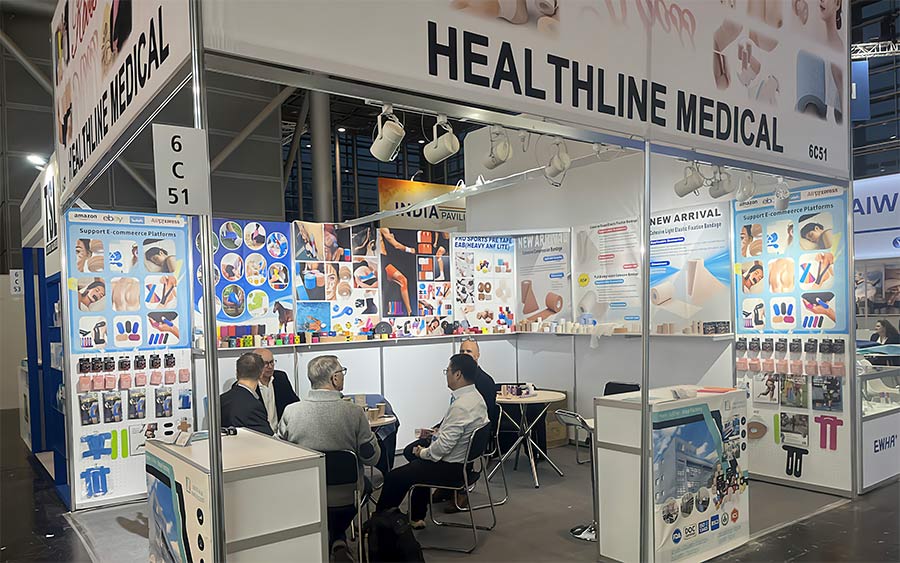
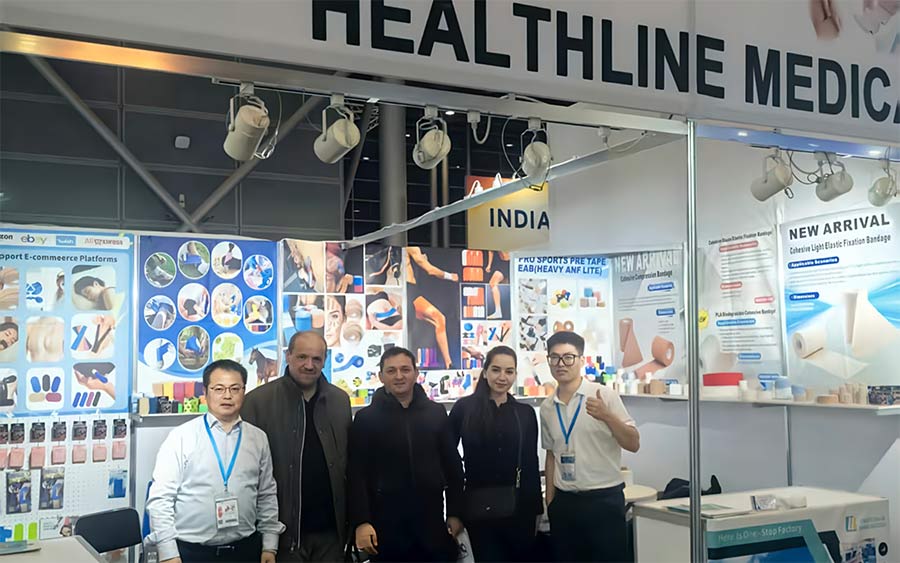

Contact
- Ethan Zhang
- Tel:+86-512-6289 3223
- Mob:+86-19822909189
- Email:ethanzhang@healthline-medical.com
- Whatsapp / Wechat:+86-19822909189
- Skype:+86-19822909189
- Asher.cao
- Tel:+86-512-6289 3223
- Mob:+86-17625487782
-
Email:ethanzhang@healthline-medical.com
Asher.cao@healthline-medical.com
- Whatsapp / Wechat:+86-17625487782
- Skype:+86-176 2548 7782
- Jason Zhang
- Tel:+86-512-6289 3223
- Mob:+86-13152123359
- Email:jason@healthline-medical.com
- Whatsapp / Wechat:+86-13152123359
Welcome To Healthline Medical
ADD: 46 Linjiang Road, Weiting street,Industrial Park District,Suzhou,Jiangsu,China
Copyright © 2025 SUZHOU HEALTHLINE MEDICAL PRODUCTS CO., LTD
All Rights Reserved.
 Sports Tape Manufacturers Cohesive Bandages Suppliers
The information provided on this website is intended for use only in countries and jurisdictions outside of the People's Republic of China.


