
 English
 Español
 русский
 عربى


- Cotton Kinesiology Tape
- Synthetic Kinesiology Tape
- Nylon Kinesiology Tape
- 4-Way Stretch Elastic Kinesiology Tape
- Standard Kinesiology Tape Roll
- Pre-Cut Kinesiology Tape Strips
- Printed / Pattern Kinesiology Tape
- Perforated Kinesiology Tape (Ventilated)
- Special Shape Kinesiology Tape
- Water-Resistant Kinesiology Tape
- Pregnancy Support Tape
- Face Lift Kinesiology Tape
- Gentle / Beauty Kinesiology Tape
- Veterinary Kinesiology Tape
- Breast Lift Tape
- Customized Kinesiology Tape
- Pre-cut I Strip Kinesiology Tape
- Pre-cut Y Strip Kinesiology Tape
- Pre-cut X Strip Kinesiology Tape
- Knee Kinesiology Tape
- Leg Kinesiology Tape
- Shoulder Kinesiology Tape
- Back Kinesiology Tape
- Waist Kinesiology Tape
- Ankle Kinesiology Tape
- Pregnancy Belly Tape
- Beauty Face Tape
- Solid Color Cohesive Bandage Roll
- Printed & Pattern Cohesive Bandage
- Non-Woven Self-Adhesive Bandage
- Cotton Self-Adhesive Bandage
- PBT Gauze Cohesive Bandage Rolls
- Pet Vet Wrap
- Horse and Cattle Self-Adhesive Bandage
- Veterinary Cohesive Bandage
- Camo Cohesive Wrap Tape
- Military and Tactical Cohesive Bandage
- Tattoo Grip Tape
- Latex Cohesive Bandage
- Latex-Free Cohesive Bandage
- Pet Laminated Self-Adhesive Bandage
- High-Tensile Cohesive Bandage
- Football Sock Wrap Self-Adhesive Bandage
- Sterile Cohesive Bandage
- Special Function Cohesive Bandage
- OEM / Bulk Cohesive Bandage Roll
- Rigid Strapping Tape
- Athletic Tape
- Zinc Oxide Sports Tape
- Rayon Rigid Sports Tape
- Sports Strapping Tape
- Finger Bob Bandages
- Boxing Tape
- Heavyweight Elastic Adhesive Bandage (EAB)
- 93 Cotton Heavyweight Elastic Adhesive Bandages(EAB)
- Athletic Heavyweight Elastic Adhesive Bandage (EAB)
- Lightweight Elastic Adhesive Bandage (EAB)
- Athletic Lightweight Elastic Adhesive Bandage (EAB)
- American Style Elastic Adhesive Bandage (EAB)
- Japanese Style Elastic Adhesive Bandage (EAB)
- Elastic Adhesive Compression Bandage
- Veterinary Elastic Adhesive Bandage (EAB)

Baseball Wrist Tape: Applications, Selection Criteria, and Practical Guidance
Content
- What Baseball Wrist Tape Actually Does
- Rigid, Cohesive, or Grip Tape: Which Roll Belongs on the Wrist
- How to Wrap a Wrist for Hitting, Step by Step
- Taping a Throwing Wrist: Pitchers and Catchers
- Six Mistakes That Make Wrist Tape Fail Early
- Sizing Up an Order for a Team, Clinic, or Retail Shelf
- Frequently Asked Questions
A high school shortstop retapes his wrist before every at-bat, not because anything hurts, but because the bat knob has worn a callus into the base of his thumb. By the fifth inning the strip has rolled into a thin rope at the joint line and the skin underneath is raw. The tape was rarely the problem. Width, tension, and anchoring were, and all three are fixable in about ninety seconds.
Wrist taping in baseball sits in a narrow technical corner: too slim to behave like ankle strapping, too rigid to work as a wrap, and exposed to sweat and friction for three hours at a time. What follows covers how the material behaves on a hitter's wrist, which roll suits which job, and what clubhouse managers and buyers should check before ordering by the case.
What Baseball Wrist Tape Actually Does
Baseball wrist tape is a narrow strip of non-elastic adhesive tape wrapped around the wrist to limit extension and side-to-side play, protect the skin from bat knobs and glove seams, and give the hitter the same hand reference on every load.
Four jobs the tape performs during a swing
- Limits extension. Two or three overlapping strips reduce how far the hand breaks back at contact, which helps the barrel arrive on time.
- Protects skin. The knob, the glove seam, and the batting glove strap all press on the same small patch of skin for a full season.
- Adds feedback. A firm tape edge gives the hitter a tactile cue for hand position when he loads.
- Holds the grip layer. Tape under a batting glove stops the glove from twisting against the palm.
What it will not do is stabilise a sprained wrist or correct a swing path. Joint support under load belongs to a different taping system, matched to the ligament rather than to the bat. The sports protection applications section of our site shows how rigid, elastic, and pre-wrap layers combine for that job.
Rigid, Cohesive, or Grip Tape: Which Roll Belongs on the Wrist
Three tape families land on a baseball wrist, and they are not interchangeable: rigid zinc oxide strapping limits motion, cohesive self-adherent wrap compresses and holds without adhesive on the skin, and grip tape belongs on the handle, never on skin.
Rigid strapping
Zinc oxide or hot-melt coated cotton with almost no stretch. This is the tape that produces a hitting lock and the one most teams buy in bulk.
Cohesive wrap
Self-adherent elastic bandage that bonds to itself. Used as a base layer, for light compression, or to hold a dressing in place.
Grip tape
Textured adhesive strip for the bat handle. It changes feel and tack, and it should never be applied directly to the wrist.
| Tape type | Stretch | Adhesion to skin | Typical wrist job | Removal |
| Zinc oxide rigid strapping | Almost none | High, holds through sweat | Hitting lock, thumb spica base | Scissors or cutters, slow peel |
| Cotton hot-melt rigid tape | Almost none | Moderate | Same jobs where zinc oxide irritates | Hand peel, light residue |
| Cohesive self-adherent wrap | High | None, bonds to itself | Base layer and light compression | Unwinds, no residue |
| Bat grip tape | Low | Handle only | Bat handle, not skin | Peels from the handle |
 Baseball Grip Adhesive Sports Tape for Bat HandlesTextured adhesive strip for bat-handle feel and tack, using breathable cotton-elastane sports tape construction for flexible support.View Product →
For a closer look at how these materials behave under load, our note on rigid versus elastic sports tape walks through the same trade-offs on other joints.
How to Wrap a Wrist for Hitting, Step by Step
A wrist wrap that survives nine innings follows the same five steps at every level, and the first one happens before any tape comes off the roll.
- Dry the skin. Clean, dry skin without lotion or sunscreen holds adhesive far better than a fresh coat of either.
- Build a base if the skin is thin or sensitive. One layer of foam pre-wrap under the tape prevents blistering at the joint line.
- Anchor with one full circle at roughly half tension, sitting just above the wrist bone.
- Lay two or three overlapping strips across the back of the wrist with the hand slightly extended, stopping short of the wrist crease so the hand can still flex.
- Test the grip, check the fingertips for colour and warmth, and retape rather than tighten if it feels wrong.
 Wrist Tape for Soccer and Football SupportBreathable cotton-elastane wrist tape offering targeted compression and secure, skin-friendly adhesion for high-impact soccer and football play.View Product →
Taping a Throwing Wrist: Pitchers and Catchers
Pitchers and catchers need opposite things from wrist tape: the pitcher needs protection that will not disturb wrist snap, while the catcher needs a firm base that survives repeated blocking.
Pitcher
Keep the wrap below the wrist crease and skip the full lock. A light anchor strip at the thumb base protects the skin during follow-through without changing release timing. Anything that restricts snap gets felt on the first pitch.
Catcher
Use a firmer base: two anchor circles plus a thumb-spica style strip running from the wrist along the base of the thumb. Catchers take foul tips on the same spot repeatedly, and a built-up base absorbs that impact better than a single thin layer.
Six Mistakes That Make Wrist Tape Fail Early
Almost every tape failure seen in a dugout traces back to one of six habits, and five of them happen before the player steps into the box.
- Taping over wet skin or sunscreen, which drops adhesion within a few swings.
- Over-tensioning the first circle, which bunches the tape at the joint line.
- Wrapping across the wrist crease, which limits flex instead of extension.
- Skipping a base layer on thin or sensitive skin, then blaming the adhesive for a blister.
- Reusing a peeled strip, which never re-sticks at full strength.
- Leaving tape on for hours after play, when sweat softens the adhesive and the edges lift.
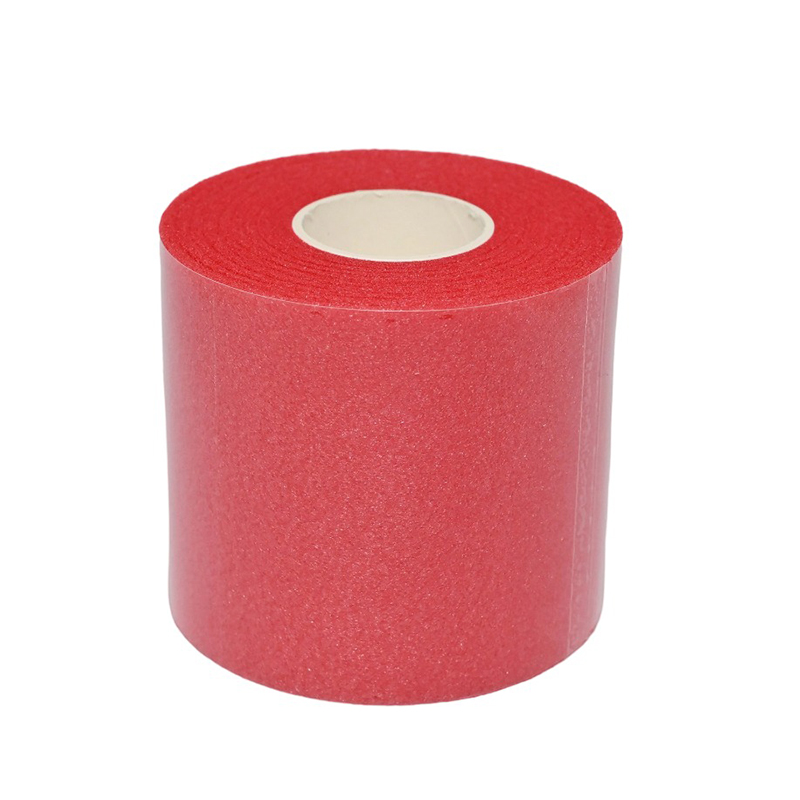 Athletic Pre Wrap and Foam UnderwrapLightweight foam pre-wrap for skin protection under athletic tape, offered in solid, mixed, and multi-color formats for taping preparation.View Product →
Frequently Asked Questions
How tight should baseball wrist tape be?
Firm enough to stay in place for a full game, loose enough that you can slide a fingertip under the circle. If the hand swells, the fingers tingle, or the tape leaves deep marks after removal, it was wrapped too tight.
Can you reuse a strip of wrist tape?
No. Once a zinc oxide or hot-melt strip lifts, the adhesive layer is contaminated and will not hold at full strength. Cutting a fresh strip costs far less than a lost at-bat.
Is kinesiology tape better than rigid tape for a sore wrist?
They answer different questions. Kinesiology tape suits a wrist that needs to keep moving with mild support, while rigid strapping is better for limiting extension during a swing. Many players wear a light pre-cut patch between games and rigid tape only in the box.
How long can wrist tape stay on?
One game, then off. Adhesive softens with sweat, edges lift, and trapped moisture softens the skin underneath. Remove it within an hour of finishing and clean the area before retaping.
Share:
RECOMMENDED PRODUCTS


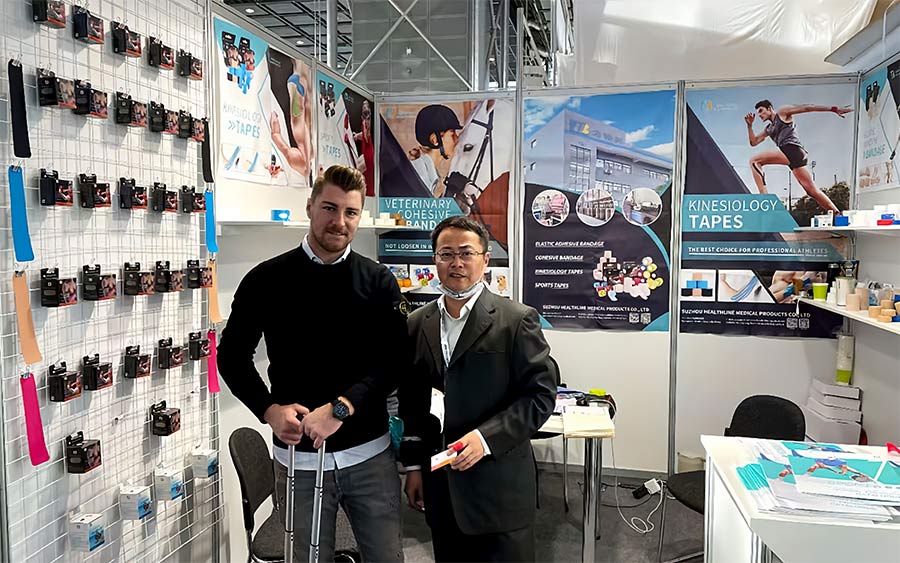
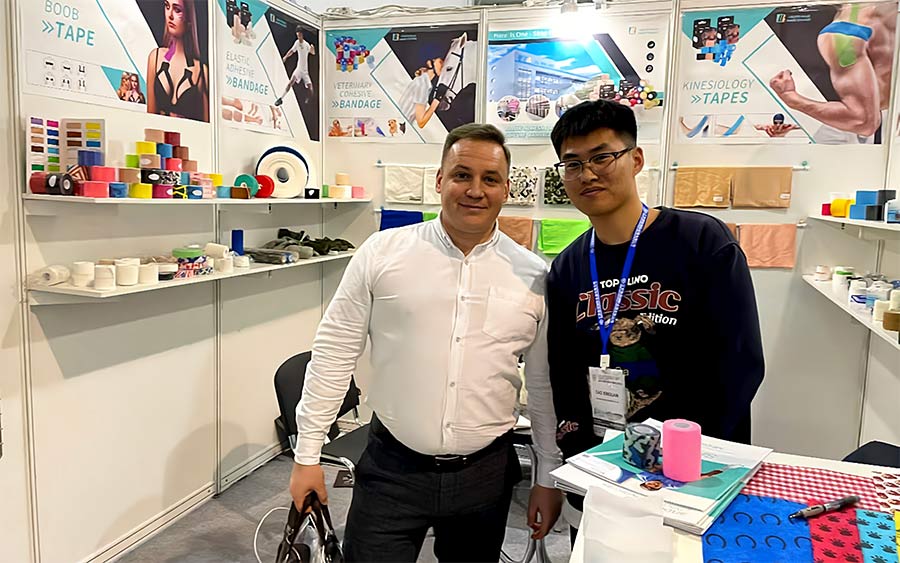
Driven by uncompromising quality, competitive value, and customer-centric service, Healthline’s products are now present in over 50 countries and regions across the globe. As a dedicated OEM/ODM manufacturer of medical cohesive bandages and sports tape, we serve a diverse client portfolio—including hospitals and clinics,veterinary,authorized distributors, government procurement agencies, national pharmacy chains, and retail supermarkets,on-line Amazon,Lotte & Tiktok e-commerce industry .
We are proud to be the long-term OEM/ODM partner for globally recognized names such as Target, CVS, Aldi, Lidl, Carrefour,Tesco, Alliance Boots,Deathlon,Covetrus and Kruuse. Our annual sales volume has maintained a steady year-over-year growth of 15% for consecutive years—a testament to the trust our partners place in us.
In today’s competitive global market, we believe sustainable success comes from continuously delivering superior products and responsive service at a fair price. This philosophy has guided Healthline for three decades, and we are committed to repaying your trust with solutions that help your business grow.






























- Ethan Zhang
- Tel:+86-512-6289 3223
- Mob:+86-19822909189
- Email:ethanzhang@healthline-medical.com
- Whatsapp / Wechat:+86-19822909189
- Skype:+86-19822909189
- Asher.cao
- Tel:+86-512-6289 3223
- Mob:+86-17625487782
-
Email:ethanzhang@healthline-medical.com
Asher.cao@healthline-medical.com
- Whatsapp / Wechat:+86-17625487782
- Skype:+86-176 2548 7782
- Jason Zhang
- Tel:+86-512-6289 3223
- Mob:+86-13152123359
- Email:jason@healthline-medical.com
- Whatsapp / Wechat:+86-13152123359
Copyright © 2025 SUZHOU HEALTHLINE MEDICAL PRODUCTS CO., LTD
All Rights Reserved.
 Sports Tape Manufacturers Cohesive Bandages Suppliers
The information provided on this website is intended for use only in countries and jurisdictions outside of the People's Republic of China.


