
 English
 Español
 русский
 عربى


- Cotton Kinesiology Tape
- Synthetic Kinesiology Tape
- Nylon Kinesiology Tape
- 4-Way Stretch Elastic Kinesiology Tape
- Standard Kinesiology Tape Roll
- Pre-Cut Kinesiology Tape Strips
- Printed / Pattern Kinesiology Tape
- Perforated Kinesiology Tape (Ventilated)
- Special Shape Kinesiology Tape
- Water-Resistant Kinesiology Tape
- Pregnancy Support Tape
- Face Lift Kinesiology Tape
- Gentle / Beauty Kinesiology Tape
- Veterinary Kinesiology Tape
- Breast Lift Tape
- Customized Kinesiology Tape
- Pre-cut I Strip Kinesiology Tape
- Pre-cut Y Strip Kinesiology Tape
- Pre-cut X Strip Kinesiology Tape
- Knee Kinesiology Tape
- Leg Kinesiology Tape
- Shoulder Kinesiology Tape
- Back Kinesiology Tape
- Waist Kinesiology Tape
- Ankle Kinesiology Tape
- Pregnancy Belly Tape
- Beauty Face Tape
- Solid Color Cohesive Bandage Roll
- Printed & Pattern Cohesive Bandage
- Non-Woven Self-Adhesive Bandage
- Cotton Self-Adhesive Bandage
- PBT Gauze Cohesive Bandage Rolls
- Pet Vet Wrap
- Horse and Cattle Self-Adhesive Bandage
- Veterinary Cohesive Bandage
- Camo Cohesive Wrap Tape
- Military and Tactical Cohesive Bandage
- Tattoo Grip Tape
- Latex Cohesive Bandage
- Latex-Free Cohesive Bandage
- Pet Laminated Self-Adhesive Bandage
- High-Tensile Cohesive Bandage
- Football Sock Wrap Self-Adhesive Bandage
- Sterile Cohesive Bandage
- Special Function Cohesive Bandage
- OEM / Bulk Cohesive Bandage Roll
- Rigid Strapping Tape
- Athletic Tape
- Zinc Oxide Sports Tape
- Rayon Rigid Sports Tape
- Sports Strapping Tape
- Finger Bob Bandages
- Boxing Tape
- Heavyweight Elastic Adhesive Bandage (EAB)
- 93 Cotton Heavyweight Elastic Adhesive Bandages(EAB)
- Athletic Heavyweight Elastic Adhesive Bandage (EAB)
- Lightweight Elastic Adhesive Bandage (EAB)
- Athletic Lightweight Elastic Adhesive Bandage (EAB)
- American Style Elastic Adhesive Bandage (EAB)
- Japanese Style Elastic Adhesive Bandage (EAB)
- Elastic Adhesive Compression Bandage
- Veterinary Elastic Adhesive Bandage (EAB)

Baseball Tape for Wrists: Applications, Selection Criteria, and Practical Guidance
Content
Three innings into a district final, a catcher pulls off his glove and finds the skin under his wrist strap shiny and raw. The fix is rarely more tape pulled tighter: it is the right tape, at the right width, wrapped in the right direction.
Wrist taping follows players from 12U travel ball into the professional bullpen, and it is one of the easiest habits to get wrong. An over-wrapped wrist loses feel on the bat; an under-wrapped wrist gives way at contact, which is exactly when the load peaks.
What Wrist Tape Actually Does on a Baseball Field
Wrist tape in baseball does three jobs: it limits unwanted end-range motion, it protects skin from glove and bat friction, and it gives the player a repeatable feel at contact.
- Support. A pitcher's wrist snaps through release, and a rigid strip across the crease reduces how far the joint travels into extension, which lowers the load on the extensor tendons.
- Skin protection. Batting gloves rub the same spot for nine innings, and one thin turn under the glove cuff stops the blister that would otherwise cost a week.
- Feel and grip. Some hitters tape to steady the handle angle, while others use colored cohesive wrap so the wrist and glove read as one unit.
Tape is not treatment. It does not repair a ligament or shorten healing time; it buys control over a joint for the length of a game, and then it comes off.
Three Tape Families and Where Each One Fits
Most wrist taping in baseball uses one of three families: rigid strapping tape, elastic kinesiology tape, or self-adherent cohesive wrap.
- Non-stretch cotton or rayon
- Zinc oxide or synthetic hot-melt adhesive
- 25 mm to 38 mm on the wrist
- Removed after the game
- Best for hard stops at the crease
- 140% to 180% stretch
- Acrylic adhesive in a wave pattern
- 50 mm rolls and pre-cut wrist shapes
- Worn three to five days
- Best for soreness with full range
The practical difference is stretch. Rigid tape stops motion; elastic tape follows it. A hitter who needs to feel the barrel through the swing will fight a rigid wrap, while a pitcher who hyperextends on every slider gets very little from an elastic one. Our comparison of rigid versus elastic sports tape walks through the joint-by-joint logic.
 Elastic Wrist Tape for Soccer and FootballFlexible cotton-elastane wrist tape for high-impact soccer and football, offering breathable compression and secure adhesion without limiting mobility.View Product →
Pre-cut shapes changed the wrist category. Instead of trimming a 50 mm roll on the bench, a player peels a patch sized for the joint and applies it in one motion, which matters when the inning is moving and nobody has scissors.
 Pre-Cut Kinesiology Tape Patch for the WristReady-to-apply, anatomically contoured wrist patch that stabilizes tendon groups while preserving range of motion during active use.View Product →
How to Wrap a Wrist in Four Steps
Four turns is usually enough for game-day support; extra layers add bulk without adding much stability.
- Prep the skin. Clean and dry the wrist, clip hair at the crease, and add a foam underwrap when the tape will stay on for a full game or the player has reacted to adhesive before.
- Anchor once. Start at the crease with a single turn at roughly 50% overlap, keeping the strip flat rather than twisted. It should feel snug, never tight enough to leave a mark.
- Build support. Add two or three overlapping turns angled slightly toward the hand, then a figure-eight that crosses the back of the wrist. Use 25 mm for youth wrists and 38 mm for adults.
- Finish and check. Rub the tape warm to activate the adhesive, then confirm the hand is warm, pink, and free of tingling. Cold or numb fingers mean the wrap comes off immediately.
Widths, Stretch and Adhesive: The Specification Table
Width, stretch, and adhesive system decide how a wrist tape performs far more than the label on the carton.
| Tape family | Common width | Stretch | Adhesive | Typical wear |
| Rigid zinc oxide strapping | 25 mm, 38 mm | 0% | Zinc oxide, high tack | One game or session |
| Rigid hot-melt, latex-free | 25 mm, 38 mm, 50 mm | 0-5% | Synthetic hot melt | One game, easier removal |
| Kinesiology tape | 50 mm and pre-cut wrist shapes | 140-180% | Acrylic wave pattern | Three to five days |
| Cohesive self-adherent wrap | 50 mm, 75 mm | 50-80% | None, self-adherent | One to two days, no residue |
| Bat grip tape | 25 mm | Low | Pressure-sensitive | Weeks on the handle |
Skin Care, Removal and Avoidable Mistakes
Almost every wrist taping problem in a clubhouse traces back to pressure or skin damage rather than the tape itself.
- Taping over lotion, sunscreen, or sweat: the adhesive lifts within an inning and the player retapes tighter, which is how compression problems begin.
- Wrapping the crease too hard: the radial artery runs close to the surface, so a wrap that leaves fingers cold should be removed rather than adjusted.
- Leaving rigid tape on all day: zinc oxide adhesive sets harder as it dries and takes skin with it on removal.
- Skipping underwrap on sensitive skin: a thin foam underwrap prevents the friction burns that show up under wrist straps and heavy gloves.
- Ripping tape off dry: warm water or an alcohol wipe softens the adhesive and keeps the skin intact.
Buying Baseball Wrist Tape at Volume
For buyers, wrist tape is a small item with a wide specification surface: width, stretch, adhesive type, edge cut, and packaging all decide whether the product sells or sits.
Custom orders usually start with three questions: how the tape will be dispensed, who removes it, and what the retail carton has to say. After that, sample rounds settle width, adhesive coat, and packaging. Our OEM and ODM service runs that sequence from sketch to real sample, including printed cartons and private-label rolls.
Teams that also specify bat handle grip usually add a 25 mm pressure-sensitive grip tape to the same order sheet.
 Baseball Adhesive Sports Tape for Flexible Joint SupportThin cotton-elastane adhesive tape for baseball, providing flexible joint support and secure adhesion while fitting under a batting glove.View Product →
Questions Coaches and Buyers Ask Most
Why do baseball players tape their wrists instead of wearing a brace?
Braces are bulky under a batting glove and shift during the swing. Tape sits at one or two millimeters thick, follows the joint contour, and can be built up or cut back between innings while keeping the glove feel a player has used all season.
What width of tape is used for wrists?
25 mm suits youth wrists and narrow anchoring turns, 38 mm fits most adult wrists for rigid support, and 50 mm is the standard when the product is kinesiology tape or cohesive wrap covering the whole wrist.
Can wrist tape stay on overnight?
Rigid strapping tape should come off after the game, because zinc oxide adhesive dries harder and strips skin on removal. Kinesiology tape can stay on for three to five days when the edges lift cleanly and the skin underneath stays dry and unbroken.
Is latex-free wrist tape necessary?
It is necessary for players with known adhesive sensitivity and for retail programs sold into markets that request latex-free documentation. Modern latex-free hot-melt and acrylic systems now match natural rubber on tack for short wear windows.
Share:
RECOMMENDED PRODUCTS
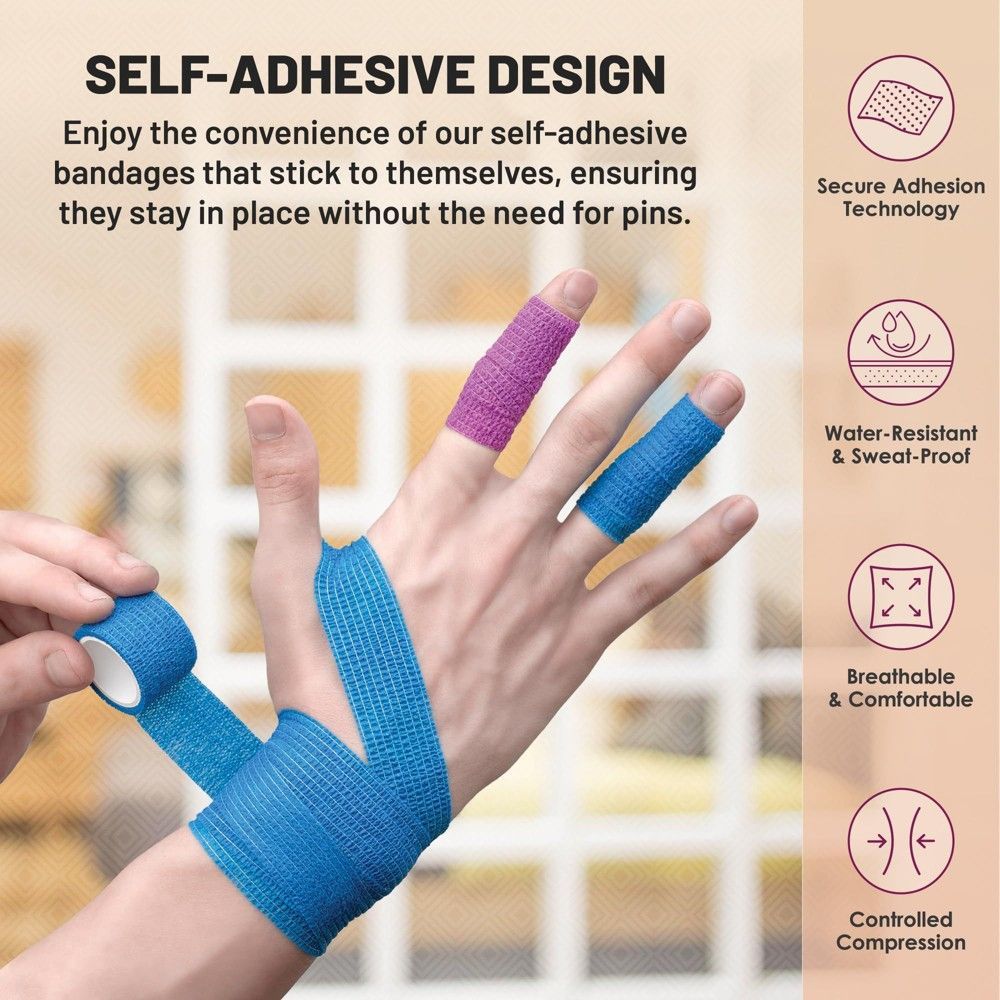

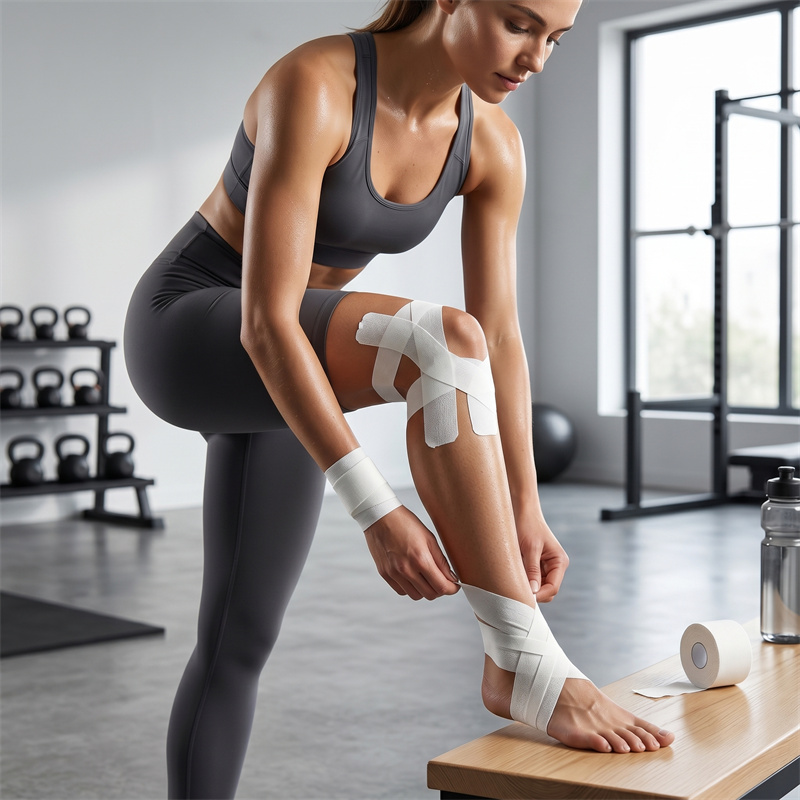
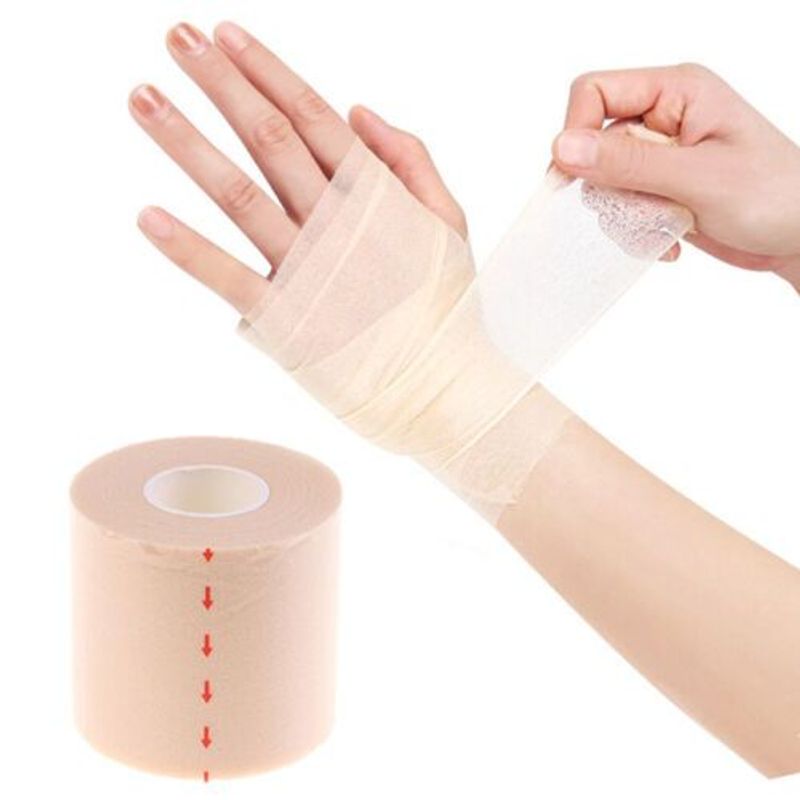

Driven by uncompromising quality, competitive value, and customer-centric service, Healthline’s products are now present in over 50 countries and regions across the globe. As a dedicated OEM/ODM manufacturer of medical cohesive bandages and sports tape, we serve a diverse client portfolio—including hospitals and clinics,veterinary,authorized distributors, government procurement agencies, national pharmacy chains, and retail supermarkets,on-line Amazon,Lotte & Tiktok e-commerce industry .
We are proud to be the long-term OEM/ODM partner for globally recognized names such as Target, CVS, Aldi, Lidl, Carrefour,Tesco, Alliance Boots,Deathlon,Covetrus and Kruuse. Our annual sales volume has maintained a steady year-over-year growth of 15% for consecutive years—a testament to the trust our partners place in us.
In today’s competitive global market, we believe sustainable success comes from continuously delivering superior products and responsive service at a fair price. This philosophy has guided Healthline for three decades, and we are committed to repaying your trust with solutions that help your business grow.























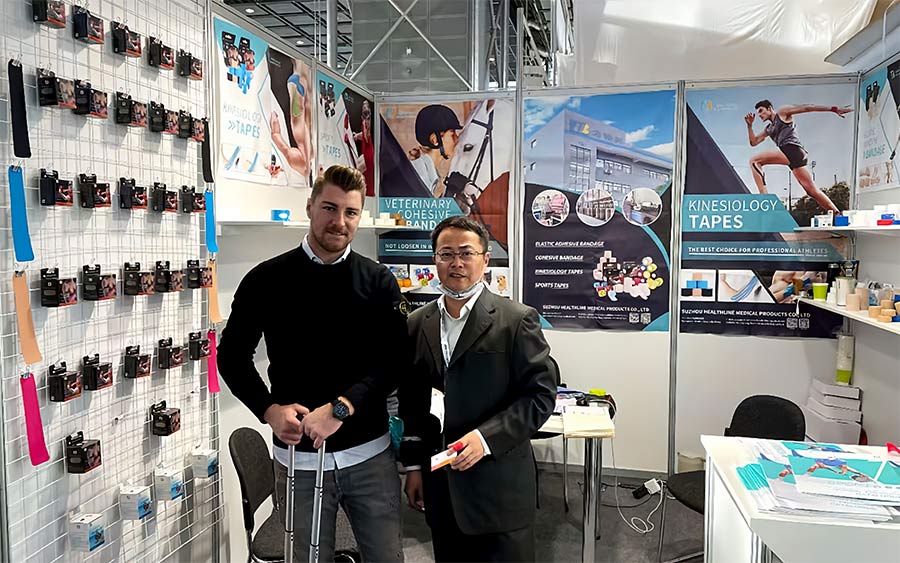






- Ethan Zhang
- Tel:+86-512-6289 3223
- Mob:+86-19822909189
- Email:ethanzhang@healthline-medical.com
- Whatsapp / Wechat:+86-19822909189
- Skype:+86-19822909189
- Asher.cao
- Tel:+86-512-6289 3223
- Mob:+86-17625487782
-
Email:ethanzhang@healthline-medical.com
Asher.cao@healthline-medical.com
- Whatsapp / Wechat:+86-17625487782
- Skype:+86-176 2548 7782
- Jason Zhang
- Tel:+86-512-6289 3223
- Mob:+86-13152123359
- Email:jason@healthline-medical.com
- Whatsapp / Wechat:+86-13152123359
Copyright © 2025 SUZHOU HEALTHLINE MEDICAL PRODUCTS CO., LTD
All Rights Reserved.
 Sports Tape Manufacturers Cohesive Bandages Suppliers
The information provided on this website is intended for use only in countries and jurisdictions outside of the People's Republic of China.


