
 English
 Español
 русский
 عربى


- Cotton Kinesiology Tape
- Synthetic Kinesiology Tape
- Nylon Kinesiology Tape
- 4-Way Stretch Elastic Kinesiology Tape
- Standard Kinesiology Tape Roll
- Pre-Cut Kinesiology Tape Strips
- Printed / Pattern Kinesiology Tape
- Perforated Kinesiology Tape (Ventilated)
- Special Shape Kinesiology Tape
- Water-Resistant Kinesiology Tape
- Pregnancy Support Tape
- Face Lift Kinesiology Tape
- Gentle / Beauty Kinesiology Tape
- Veterinary Kinesiology Tape
- Breast Lift Tape
- Customized Kinesiology Tape
- Pre-cut I Strip Kinesiology Tape
- Pre-cut Y Strip Kinesiology Tape
- Pre-cut X Strip Kinesiology Tape
- Knee Kinesiology Tape
- Leg Kinesiology Tape
- Shoulder Kinesiology Tape
- Back Kinesiology Tape
- Waist Kinesiology Tape
- Ankle Kinesiology Tape
- Pregnancy Belly Tape
- Beauty Face Tape
- Solid Color Cohesive Bandage Roll
- Printed & Pattern Cohesive Bandage
- Non-Woven Self-Adhesive Bandage
- Cotton Self-Adhesive Bandage
- PBT Gauze Cohesive Bandage Rolls
- Pet Vet Wrap
- Horse and Cattle Self-Adhesive Bandage
- Veterinary Cohesive Bandage
- Camo Cohesive Wrap Tape
- Military and Tactical Cohesive Bandage
- Tattoo Grip Tape
- Latex Cohesive Bandage
- Latex-Free Cohesive Bandage
- Pet Laminated Self-Adhesive Bandage
- High-Tensile Cohesive Bandage
- Football Sock Wrap Self-Adhesive Bandage
- Sterile Cohesive Bandage
- Special Function Cohesive Bandage
- OEM / Bulk Cohesive Bandage Roll
- Rigid Strapping Tape
- Athletic Tape
- Zinc Oxide Sports Tape
- Rayon Rigid Sports Tape
- Sports Strapping Tape
- Finger Bob Bandages
- Boxing Tape
- Heavyweight Elastic Adhesive Bandage (EAB)
- 93 Cotton Heavyweight Elastic Adhesive Bandages(EAB)
- Athletic Heavyweight Elastic Adhesive Bandage (EAB)
- Lightweight Elastic Adhesive Bandage (EAB)
- Athletic Lightweight Elastic Adhesive Bandage (EAB)
- American Style Elastic Adhesive Bandage (EAB)
- Japanese Style Elastic Adhesive Bandage (EAB)
- Elastic Adhesive Compression Bandage
- Veterinary Elastic Adhesive Bandage (EAB)

Baseball Wrist Wrap Guide: Tape Types, Sizing, Tension and Team Buying
Content
A catcher takes a foul tip square on the glove hand in the fifth inning. Nothing is broken, the swelling is minor, and he wants to finish the game. What goes on that wrist in the next ninety seconds decides whether he keeps catching or watches from the dugout.
Wrist wrapping in baseball is one of the few taping jobs where product choice matters as much as technique. The same 38 mm roll that locks a hitter's wrist for batting will cut off circulation if it is used for post-impact compression, and a stretchy kinesiology strip will not stop a wrist from rolling through a checked swing. This guide separates those jobs, gives the numbers that hold up on the field, and covers what team buyers and distributors should specify before placing an order.
What a baseball wrist wrap actually does
A baseball wrist wrap limits the last few degrees of wrist travel during a swing and puts a protective layer between the joint and whatever hits it.
Definition: A baseball wrist wrap is a 25 mm to 50 mm wide strip of rigid tape, elastic adhesive bandage, cohesive wrap or kinesiology tape applied in overlapping turns around the carpus and distal forearm, used to restrict end-range wrist motion, hold padding or ice in place, and maintain light compression after impact.
The job splits into three practical roles:
- Batting stability. Two or three turns across the wrist crease reduce extension so the barrel does not roll over early. Hitters usually feel this as a firmer top hand at contact.
- Glove-hand protection. Catchers and infielders absorb repeated impacts. A padded elastic or cohesive layer spreads the load across the wrist instead of one hot spot on the radial side.
- Post-play compression. After a jam or a head-first slide, a light elastic wrap holds compression while the player sits on the bench, then comes off before it interferes with the next at-bat.
None of this treats an injury. Point tenderness over the thumb-side wrist bones, a painful grip, or numbness in the fingers belongs with a clinician, not a roll of tape. For a closer look at when each wrap style is appropriate on the field, the guide to baseball wrist taping applications and selection criteria walks through the decision in more detail.
Rigid tape, elastic bandage, cohesive wrap or kinesiology tape
Rigid zinc oxide tape is the default for batting and glove-hand stability, elastic and cohesive wraps handle compression and padding, and kinesiology tape suits players who want support without losing range.
| Wrap type | Stretch | Adhesion | Best use on a wrist |
| Rigid cotton tape | 0 to 5 percent | Zinc oxide, high tack | Batting wrist lock, glove-hand support, securing a pad |
| Elastic adhesive bandage | 60 to 90 percent | Natural rubber or synthetic | Light compression after impact, holding ice, padded support |
| Cohesive self-adhesive wrap | 40 to 70 percent | Cohesive, bonds to itself | Fast changeover, equipment wrap, players with adhesive sensitivity |
| Kinesiology tape | 140 to 180 percent | Acrylic wave adhesive | Support through full range of motion, multi-day wear |
Quick rule: if the wrist has to stop moving, tape it. If it has to keep moving while feeling supported, use kinesiology tape. If it needs compression and padding, reach for elastic or cohesive wrap.
Rigid tape earns its place because it does not stretch. A cotton zinc oxide roll holds its shape under sweat and load, which is why it remains the standard for a batting wrist.
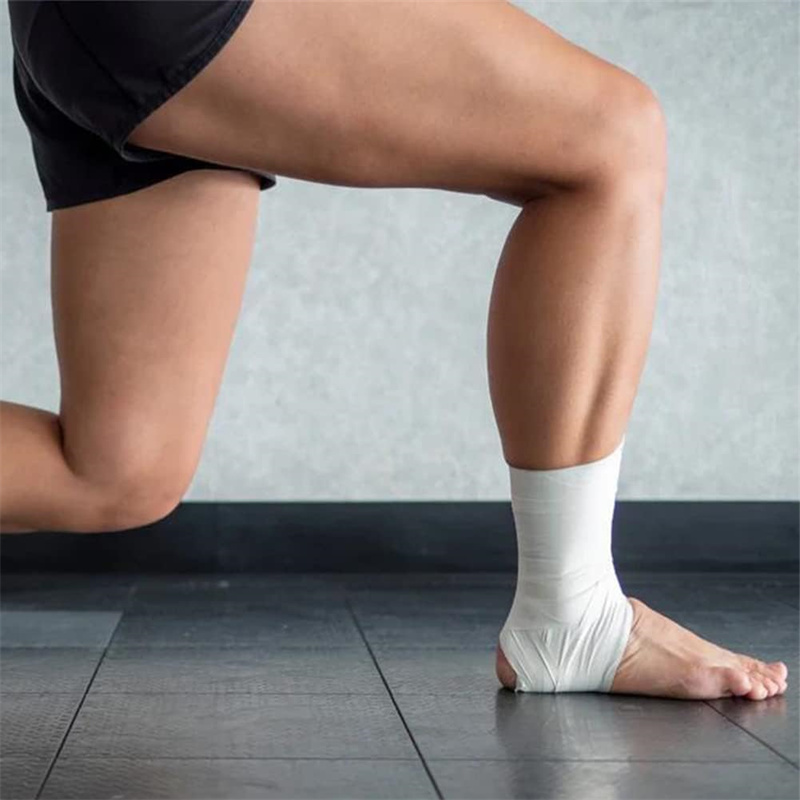 Rigid Zinc Oxide Athletic Tape for Joint SupportNon-elastic cotton tape with sweat-resistant zinc oxide adhesive for firm wrist, ankle and finger stabilization; available in multiple widths and latex-free options.View Product →
Width, tension and overlap: the numbers that matter
An adult baseball wrist usually takes a 38 mm tape, with 25 mm for glove-hand detailing and 50 mm when the wrap has to carry padding.
Tension is where most wraps fail. Pull rigid tape to roughly 70 to 80 percent of its available stretch across the wrist crease, and let the anchor and closing turns sit at zero tension so the edges stay flat. Elastic and cohesive wraps need far less: 25 to 50 percent is enough to hold compression without acting like a tourniquet. Width matters too, because a 50 mm tape on a narrow wrist overlaps itself at the crease and creates a pressure ridge within an inning.
Circulation check: press a fingernail until it whitens, release, and count. Color should return in about two seconds. Tingling, cold fingers, or deep ridges left after ten minutes mean the wrap is too tight and has to come off, not be adjusted by the player between pitches.
Pre-cut shapes remove the measuring step for athletic trainers working through a bullpen session or a doubleheader. A wrist-shaped patch lands in the same footprint every time, which matters when four players need the same wrap in five minutes.
 Pre-Cut Kinesiology Tape Wrist PatchReady-to-apply wrist-shaped kinesiology patch with high elasticity and professional adhesion, sized to support natural motion during repetitive sport and daily tasks.View Product →
How to wrap a wrist before a game
Wrap with the wrist in slight extension, anchor on the forearm, and work toward the hand so no tape edge lands inside the wrist crease.
- Prep the skin. Clean and dry the wrist, and clip hair in the direction the tape will travel so removal does not pull.
- Add a barrier when needed. Thin or sensitive skin benefits from a foam underlayer, especially under zinc oxide adhesive that will stay on for a full game.
- Anchor flat. One turn around the distal forearm at zero tension gives the rest of the wrap something to bite into.
- Lock the joint. Two or three turns across the wrist at working tension with a 50 percent overlap, holding the wrist in slight extension.
- Close out. A final turn at zero tension, smoothed down so the edge does not catch on a glove cuff.
- Test before the inning. Grip a bat, flex and extend, then check finger color and sensation. If anything feels wrong, cut it off and start again.
The underlayer in step two is the step most players skip and most trainers refuse to skip. A thin foam layer spreads shear force, keeps adhesive off the skin, and turns a painful removal into a two-second peel.
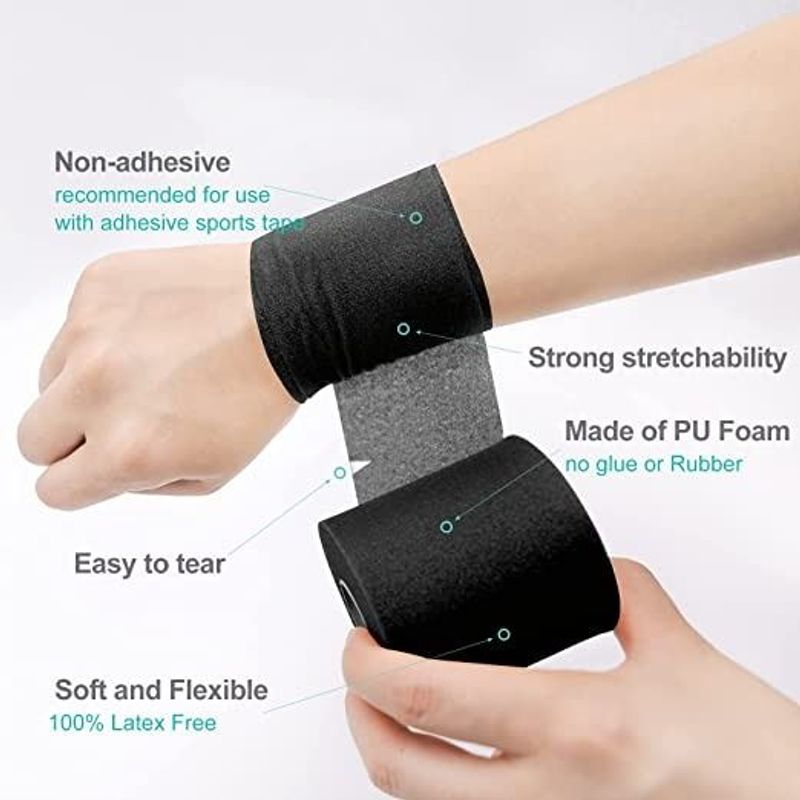 Foam Underwrap Pre-Tape for Athletic TapingLatex-free foam barrier applied under sports tape to reduce friction and adhesive contact, cushion skin and make removal easier during frequent taping.View Product →
Buying wrist wraps for a team, clinic or retail program
Buyers should fix width tolerance, roll length, adhesive family and elongation before comparing price per roll, because those four specifications drive both cost and complaint rates.
Specify in the RFQ
- Width and tolerance, for example 38 mm plus or minus 1 mm
- Roll length and core diameter, with 10 yd or 13.7 m as a common standard
- Adhesive family: zinc oxide, natural rubber, or latex-free synthetic
- Elongation range and unwind force for clean hand tearing
- Printed core, private label artwork and carton configuration
Verify on the sample
- Hand tear across the roll without fraying the edge
- Residue left on skin after 24 hours
- Peel performance after 30 minutes of sweaty wear
- Color and adhesive coat consistency across the lot
- Latex-free documentation if that claim appears on the label
The cheapest roll is rarely the cheapest wrap. A tape that tears badly or lifts after twenty minutes costs a team more in re-taping time than the price difference per carton.
For private label programs, width, elongation, adhesive type and packaging can all be set through custom product development, with physical samples approved before bulk production begins.
Frequently asked questions
How tight should a baseball wrist wrap be?
Firm enough that the tape does not shift during a swing, loose enough that fingertips stay pink and warm. A press-and-release color return in about two seconds is a practical check, and any tingling means the wrap comes off.
Can kinesiology tape replace rigid tape on a wrist?
Not for load restriction. Kinesiology tape stretches 140 to 180 percent, so it moves with the joint instead of blocking end range. It suits players who want light support across a full game and multi-day wear, but it will not lock a wrist for batting.
How long can a player leave a wrist wrap on?
Rigid tape usually lasts one practice block or a few innings. Kinesiology tape can stay three to five days if the edges hold. Compression wraps cover short windows, typically 20 to 30 minutes with ice, and should come off before sleep.
Does latex-free material matter for baseball teams?
Yes if anyone on the roster has a latex sensitivity, and it simplifies retail labeling in markets that restrict latex claims. Specify a synthetic or latex-free adhesive and ask for documentation rather than relying on the product name alone.
One rule covers most of it: match the wrap to the job, not to whichever roll happens to be sitting in the training bag.
Share:
RECOMMENDED PRODUCTS



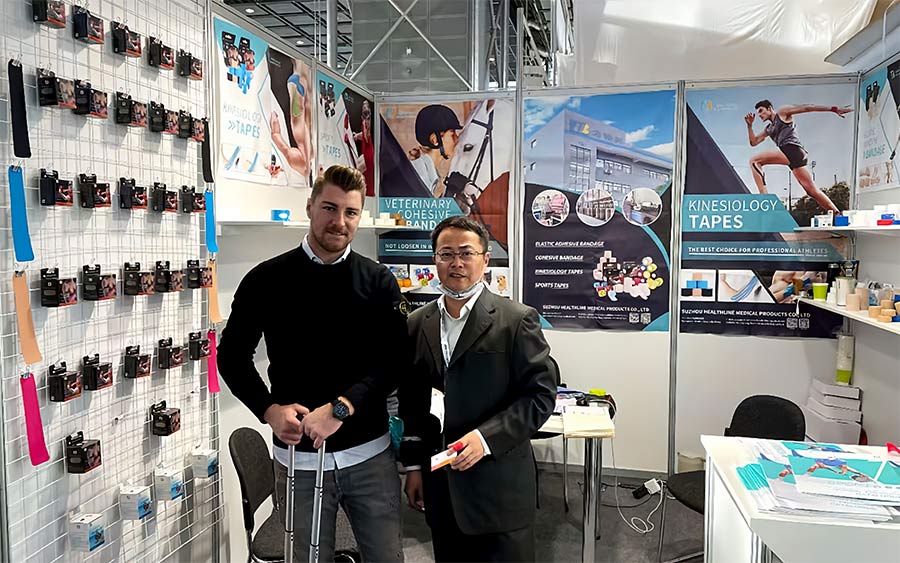
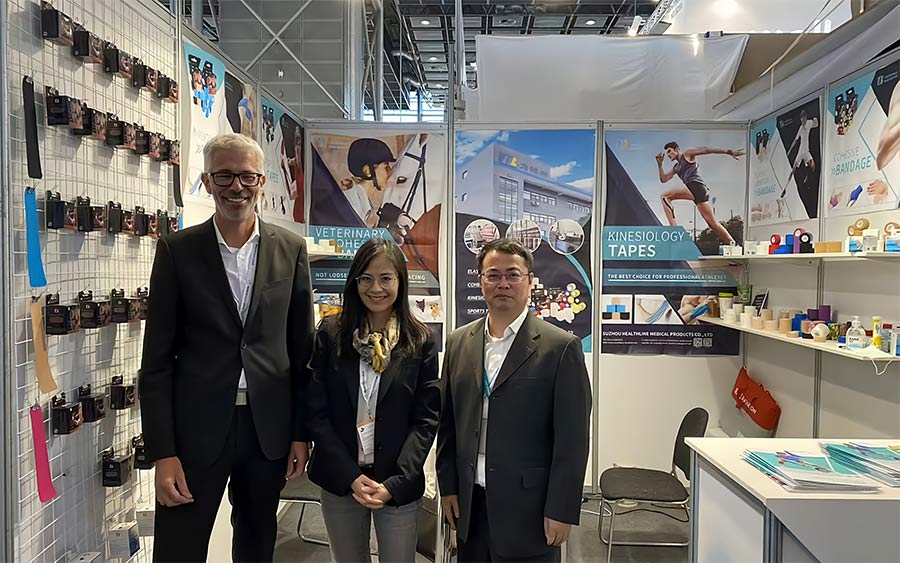
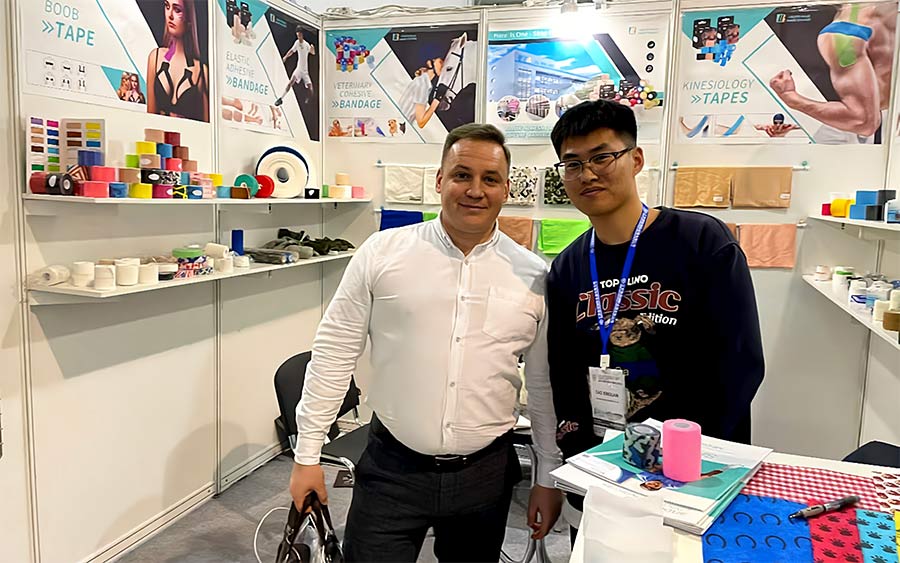
Driven by uncompromising quality, competitive value, and customer-centric service, Healthline’s products are now present in over 50 countries and regions across the globe. As a dedicated OEM/ODM manufacturer of medical cohesive bandages and sports tape, we serve a diverse client portfolio—including hospitals and clinics,veterinary,authorized distributors, government procurement agencies, national pharmacy chains, and retail supermarkets,on-line Amazon,Lotte & Tiktok e-commerce industry .
We are proud to be the long-term OEM/ODM partner for globally recognized names such as Target, CVS, Aldi, Lidl, Carrefour,Tesco, Alliance Boots,Deathlon,Covetrus and Kruuse. Our annual sales volume has maintained a steady year-over-year growth of 15% for consecutive years—a testament to the trust our partners place in us.
In today’s competitive global market, we believe sustainable success comes from continuously delivering superior products and responsive service at a fair price. This philosophy has guided Healthline for three decades, and we are committed to repaying your trust with solutions that help your business grow.





























- Ethan Zhang
- Tel:+86-512-6289 3223
- Mob:+86-19822909189
- Email:ethanzhang@healthline-medical.com
- Whatsapp / Wechat:+86-19822909189
- Skype:+86-19822909189
- Asher.cao
- Tel:+86-512-6289 3223
- Mob:+86-17625487782
-
Email:ethanzhang@healthline-medical.com
Asher.cao@healthline-medical.com
- Whatsapp / Wechat:+86-17625487782
- Skype:+86-176 2548 7782
- Jason Zhang
- Tel:+86-512-6289 3223
- Mob:+86-13152123359
- Email:jason@healthline-medical.com
- Whatsapp / Wechat:+86-13152123359
Copyright © 2025 SUZHOU HEALTHLINE MEDICAL PRODUCTS CO., LTD
All Rights Reserved.
 Sports Tape Manufacturers Cohesive Bandages Suppliers
The information provided on this website is intended for use only in countries and jurisdictions outside of the People's Republic of China.


