
 English
 Español
 русский
 عربى
عربى

- Cotton Kinesiology Tape
- Synthetic Kinesiology Tape
- Nylon Kinesiology Tape
- 4-Way Stretch Elastic Kinesiology Tape
- Standard Kinesiology Tape Roll
- Pre-Cut Kinesiology Tape Strips
- Printed / Pattern Kinesiology Tape
- Perforated Kinesiology Tape (Ventilated)
- Special Shape Kinesiology Tape
- Water-Resistant Kinesiology Tape
- Pregnancy Support Tape
- Face Lift Kinesiology Tape
- Gentle / Beauty Kinesiology Tape
- Veterinary Kinesiology Tape
- Breast Lift Tape
- Customized Kinesiology Tape
- Pre-cut I Strip Kinesiology Tape
- Pre-cut Y Strip Kinesiology Tape
- Pre-cut X Strip Kinesiology Tape
- Knee Kinesiology Tape
- Leg Kinesiology Tape
- Shoulder Kinesiology Tape
- Back Kinesiology Tape
- Waist Kinesiology Tape
- Ankle Kinesiology Tape
- Pregnancy Belly Tape
- Beauty Face Tape
- Solid Color Cohesive Bandage Roll
- Printed & Pattern Cohesive Bandage
- Non-Woven Self-Adhesive Bandage
- Cotton Self-Adhesive Bandage
- PBT Gauze Cohesive Bandage Rolls
- Pet Vet Wrap
- Horse and Cattle Self-Adhesive Bandage
- Veterinary Cohesive Bandage
- Camo Cohesive Wrap Tape
- Military and Tactical Cohesive Bandage
- Tattoo Grip Tape
- Latex Cohesive Bandage
- Latex-Free Cohesive Bandage
- Pet Laminated Self-Adhesive Bandage
- High-Tensile Cohesive Bandage
- Football Sock Wrap Self-Adhesive Bandage
- Sterile Cohesive Bandage
- Special Function Cohesive Bandage
- OEM / Bulk Cohesive Bandage Roll
- Rigid Strapping Tape
- Athletic Tape
- Zinc Oxide Sports Tape
- Rayon Rigid Sports Tape
- Sports Strapping Tape
- Finger Bob Bandages
- Boxing Tape
- Heavyweight Elastic Adhesive Bandage (EAB)
- 93 Cotton Heavyweight Elastic Adhesive Bandages(EAB)
- Athletic Heavyweight Elastic Adhesive Bandage (EAB)
- Lightweight Elastic Adhesive Bandage (EAB)
- Athletic Lightweight Elastic Adhesive Bandage (EAB)
- American Style Elastic Adhesive Bandage (EAB)
- Japanese Style Elastic Adhesive Bandage (EAB)
- Elastic Adhesive Compression Bandage
- Veterinary Elastic Adhesive Bandage (EAB)
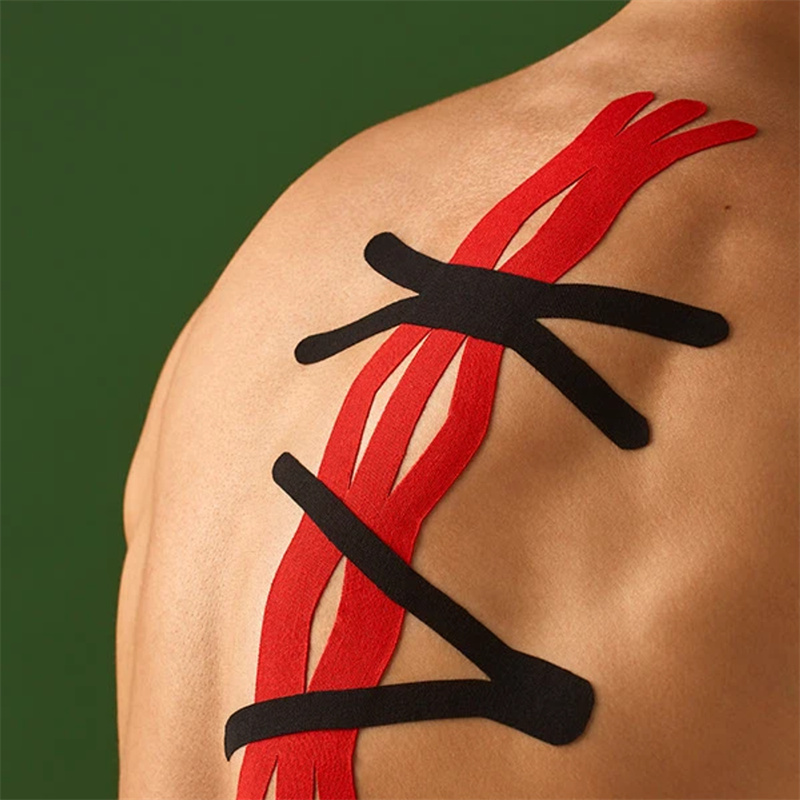
Achilles Tendinitis Tape: How to Apply Kinesiology and Rigid Tape Correctly
Content
- What Taping Actually Does for an Irritated Achilles Tendon
- Kinesiology Tape or Rigid Strapping Tape: Which One Fits Your Case?
- How to Apply Kinesiology Tape to the Achilles, Step by Step
- How Rigid Achilles Strapping Is Applied
- Wear Time, Skin Care, and Removal
- How to Pick a Tape That Stays on Through a Workout
The first few steps out of bed, or the push-off halfway through a run, are usually where an irritated Achilles announces itself: a sharp, localized sting in the cord running from the heel bone up the back of the ankle. Tape is one of the few things you can do about it in under five minutes. The short answer first: Achilles tendinitis tape does not repair the tendon — it manages load. Elastic kinesiology tape supports the tendon through push-off while leaving the ankle nearly free to move, while rigid strapping tape restricts ankle motion outright. Applied for the right situation, either one can keep you walking and training at reduced intensity while progressive loading does the actual rebuilding.
What Taping Actually Does for an Irritated Achilles Tendon
A tape job is a load-management tool, not a treatment. Achilles tendinitis is, in plain terms, an overload problem: the tendon has been asked to transmit more force than it can currently handle, usually through a jump in running mileage, more hill sessions, harder courts, or years of repetitive push-off without enough recovery.
Taping works on that problem from two directions depending on the tape you choose. Rigid strapping limits how far the ankle can bend upward (dorsiflexion), so the tendon is never taken into the range where strain peaks; NHS patient guidance for Achilles strapping describes exactly this — restricting tendon movement to reduce discomfort during long periods on your feet. Kinesiology tape works more gently: its elastic recoil and the light pressure on the skin ease perceived strain and pain without locking the joint down.
There is measured evidence behind the protective idea, not just tradition. A peer-reviewed study on kendo athletes reported that Achilles taping tended to decrease the force the tendon had to transmit during movement, which is why the researchers recommended taping specifically for tendon protection.
What tape cannot do matters just as much. It will not reverse tendon degeneration, fix a training error, or replace strength work. Treat it as a way to buy comfortable days while the tendon rebuilds.
Kinesiology Tape or Rigid Strapping Tape: Which One Fits Your Case?
A simple rule: moderate pain plus a normal training day or workday calls for kinesiology tape; sharp, reactive pain that needs calming for a specific session calls for rigid strapping.
Kinesiology tape is a lightweight cotton or synthetic fabric with elastic fibers woven through it. It stretches to roughly 140–180% of its resting length but is applied at only 15–50% tension, which leaves the ankle free to move through almost its full arc. A good application survives showers and stays on for three to five days.
Rigid strapping tape — typically cotton with a strong zinc oxide adhesive — has no stretch at all. Applied with the ankle held at a right angle, it physically blocks part of the dorsiflexion range. It is mechanically stronger, but it is worn for hours or a single day rather than all week, and it seals the skin underneath, so the skin needs checking afterward.
| Tape type | Stretch | Main function | Typical wear time | Suits best |
|---|---|---|---|---|
| Kinesiology tape | Elastic fabric, applied at 15–50% tension | Supports and offloads while allowing near-full ankle motion | 3–5 days | Training days, daily activity, moderate symptoms |
| Rigid strapping tape | Non-stretch | Restricts ankle range and stabilizes the tendon | Hours to 1 day | Sharp pain phases, short-term protection |
| Foam underwrap | No adhesive, no stretch | Skin barrier worn beneath rigid tape | Under the tape layer | Sensitive skin, frequent taping |
One detail decides success behind the heel more than anywhere else on the body: adhesion. The back of the ankle flexes constantly at the tape's widest point, sweat collects inside the shoe, and the heel counter rubs every stride. A tape that grips a shoulder all week can peel off an Achilles by lunchtime, so sweat resistance and a breathable adhesive layer are worth checking before anything else.
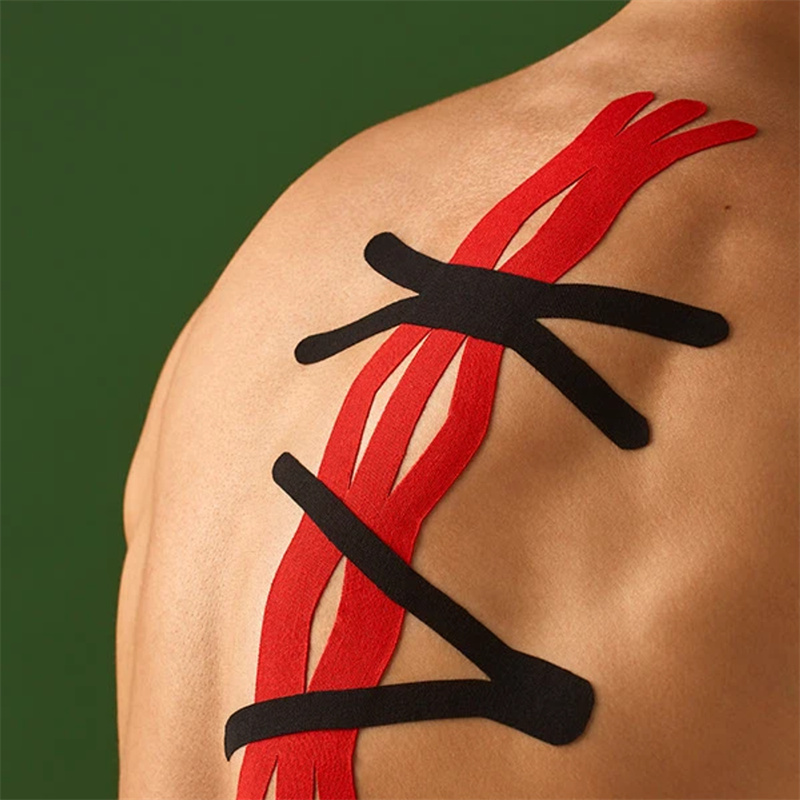 Breathable Sweat-Resistant Kinesiology Tape for Muscles and JointsFor Achilles taping, adhesion behind the heel is the biggest failure point, with sweat and heel-counter rubbing loosening ordinary tape quickly. This breathable kinesiology tape offers sweat-resistant hold and flexible support that suits the 50% stretch technique described here.View Product →
How to Apply Kinesiology Tape to the Achilles, Step by Step
Two details decide whether the application works: the ankle stays at a right angle while the tape goes on, and the middle of the strip carries roughly 50% stretch while both ends carry none. NHS podiatry guidance uses the same numbers — foot at a right angle, 50% stretch over the tendon, the top 3 cm anchored without tension.
- Measure a strip long enough to run from the base of the heel to about halfway up the calf, and round all four corners with scissors so the edges cannot catch on a sock or heel counter.
- Prepare the skin: clean and dry, no lotion, shaved at least 12 hours earlier if needed, with a quick alcohol wipe to remove sweat and skin film.
- Sit with the leg extended and hold the foot at 90 degrees to the shin — the tendon's standing position, not a stretched one.
- Anchor the top 3 cm on the calf with zero tension, then peel the backing progressively down toward the heel.
- Lay the middle section over the tendon line at about 50% stretch, smoothing the skin behind it rather than gathering it.
- Finish the last 3 cm onto the heel with no stretch, then rub the whole strip firmly for 30–60 seconds; body heat activates the adhesive.
- Test it by pointing and flexing the foot several times. Any pinching, tingling, or sharp pain means the strip comes off and goes back on with less tension.
If measuring and estimating stretch yourself does not appeal, pre-cut Achilles patches fix length, shape, and tension zones at the factory, so skin prep and placement become the only variables left. That consistency is why pre-cut Achilles shapes grew into a product category of their own for clinics and retail programs — this overview of pre-cut Achilles tendon support tapes built for global markets explains the design logic.
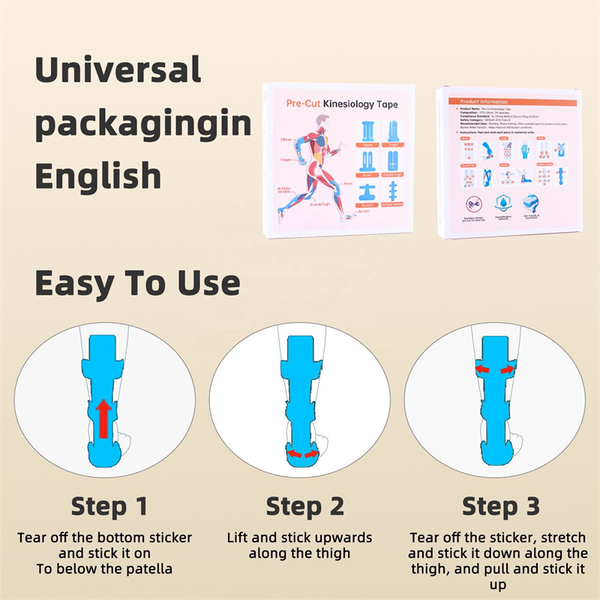 Pre-Cut Achilles Tendon Support PatchesPre-cut patches remove the need to measure length and stretch yourself, fixing shape and tension zones at the factory. For anyone unsure about estimating 50% stretch over the tendon, they simplify application to just skin prep and correct placement.View Product →
How Rigid Achilles Strapping Is Applied
Rigid taping is a restriction technique, and the first attempt is worth doing with a physiotherapist or athletic trainer watching. The principle is simple: with the ankle held at a right angle, anchor bands go around the lower calf and across the midfoot, then non-stretch strips bridge the two anchors over the tendon so the ankle cannot drop into the dorsiflexion range where strain peaks.
Practical checks matter more than perfect technique on the first tries: the toes stay warm and pink, there is no numbness across the top of the foot, and the whole job comes off after the activity or workday rather than sleeping in it. For sensitive skin, a layer of foam underwrap between skin and tape prevents the two most common complaints — pulling on removal and adhesive irritation. For the tape itself, rigid cotton strapping with a zinc oxide adhesive is the standard choice for ankle and heel work.
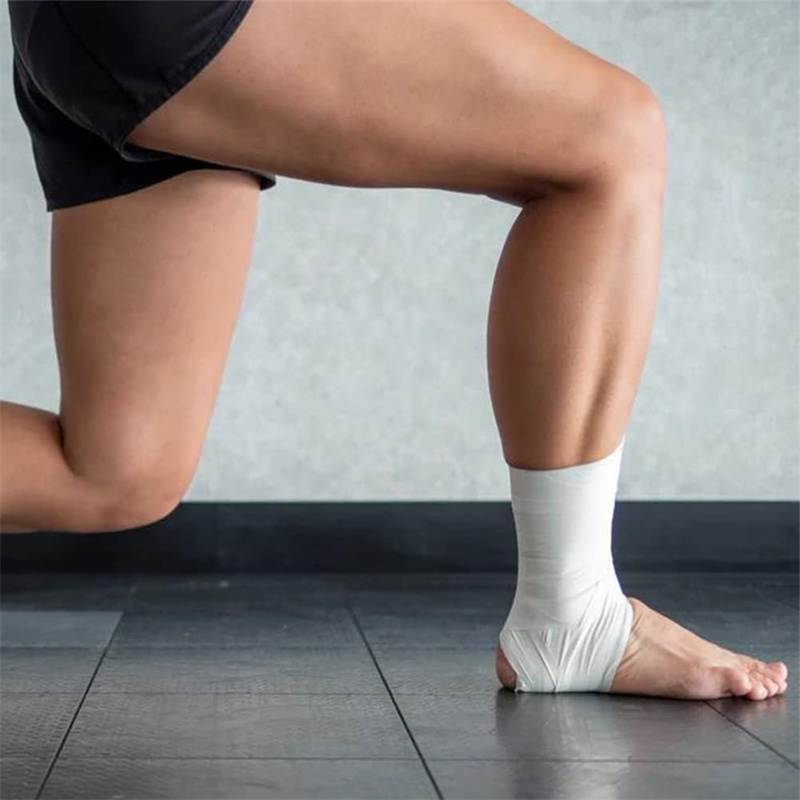 Rigid Zinc Oxide Athletic Tape for Ankle and Joint SupportWhen a restrictive strapping approach is preferred over elastic tape, rigid cotton strapping with zinc oxide adhesive is the standard choice. Its non-elastic strips bridge anchor bands to limit dorsiflexion, making it well suited to the ankle technique outlined here.View Product →
Wear Time, Skin Care, and Removal
Kinesiology tape lives on the skin for three to five days. Shower with it, pat it dry rather than rubbing, and expect some edge lifting by day four — pressing the edge down with a hair dryer on low for a few seconds reseals it. Rigid strapping comes off the same day; sleeping in it is not advised unless a clinician says so.
Removal is where skin gets damaged. Peel slowly in the direction of hair growth while holding the skin taut with a finger; baby oil or soapy water dissolves the adhesive and turns a painful rip into a painless slide. Never pull a dried-out strip off in one fast motion.
Stop taping and reassess if any of these show up: itching or a rash under the tape, pain that worsens instead of settling over a week of use, pain at rest or at night, a visibly thickened or swollen tendon, or — urgently — a sudden pop with weakness pushing off, which needs immediate medical assessment rather than tape.
How to Pick a Tape That Stays on Through a Workout
For the Achilles specifically, the shopping list is short and specific:
- Fabric: cotton breathes and feels gentler for multi-day wear, while synthetic fabric dries faster and survives water better.
- Adhesive: a wave-pattern or full-coverage acrylic adhesive rated as sweat-resistant is the single biggest predictor of whether a strip survives the shoe environment.
- Stretch and thickness: around 140–180% elongation for kinesiology tape, thin enough to disappear under a sock.
- Skin compatibility: latex-free and hypoallergenic options for anyone with a reaction history, tested on a small patch first.
- Format: rolls offer flexibility and value, pre-cut patches offer consistency — cost per application versus skill required.
For clinics, gyms, and retailers, the same list doubles as a sourcing checklist with two additions: batch-to-batch adhesive consistency and private-label options. Manufacturers that coat their own fabrics control both the cloth and the glue — where most peeling problems actually originate — and a company like Healthline Medical, with three decades of woven and coated medical textiles behind it, works at exactly that level of the supply chain.
Tape is the comfort layer; loading is the treatment. The approach with the strongest track record for mid-portion Achilles tendinopathy is progressive calf loading — slow, controlled heel drops off a step, scaled up over weeks — ideally under professional guidance once symptoms go beyond mild. Taping belongs inside a broader sports rehabilitation plan, not instead of one: it takes the edge off hard training days and long shifts on your feet while the tendon adapts. Used that way, a strip of kinesiology tape or an hour of strapping is a small, cheap, low-risk tool with a clear job — and if the pain trend is not improving over several weeks, the tape has told you what it can, and the next step is a proper assessment.
Share:
RECOMMENDED PRODUCTS
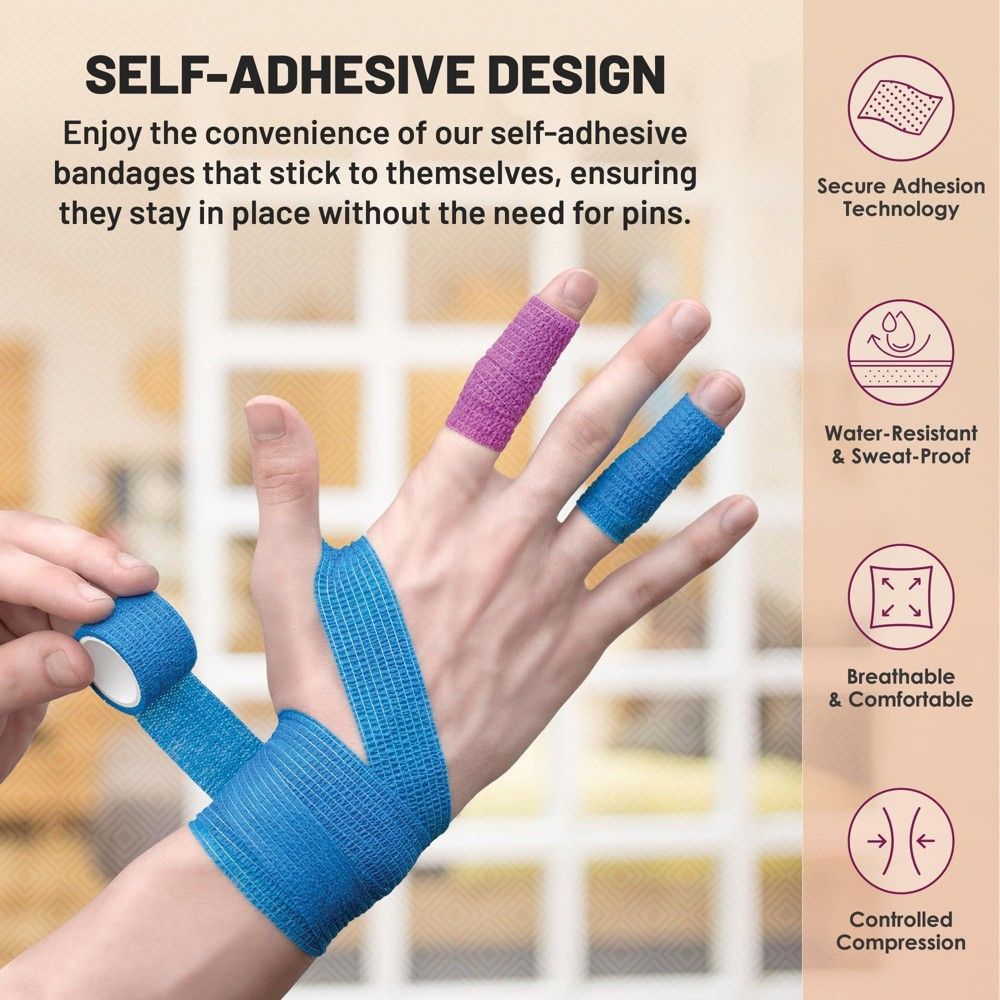

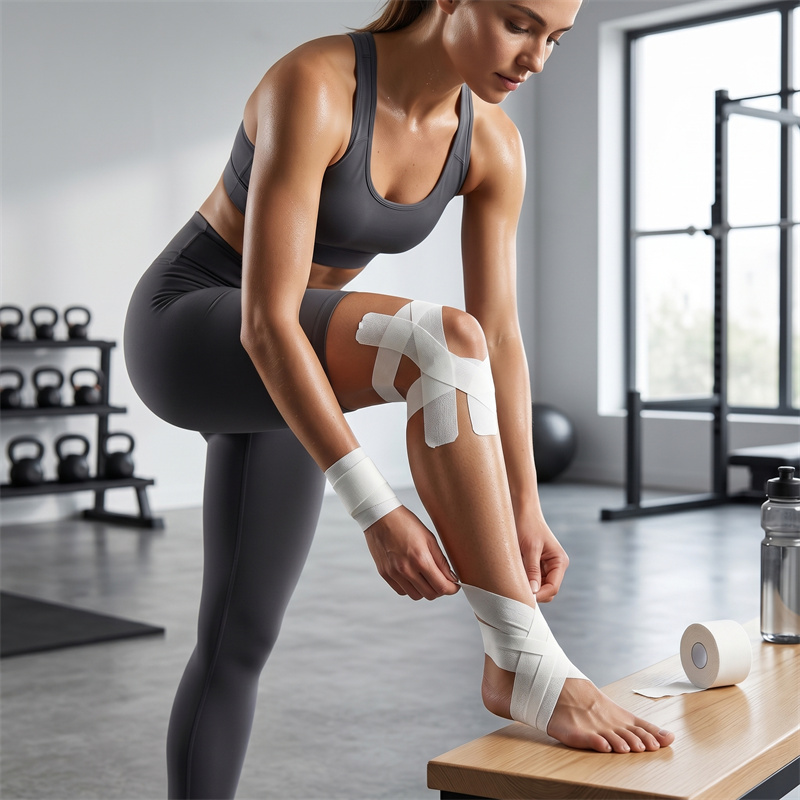
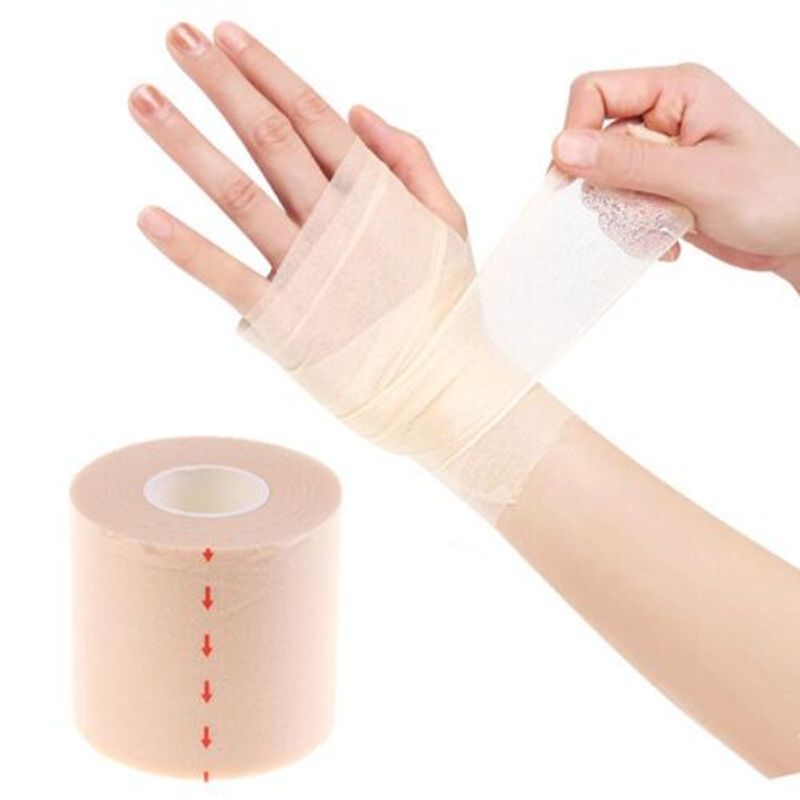

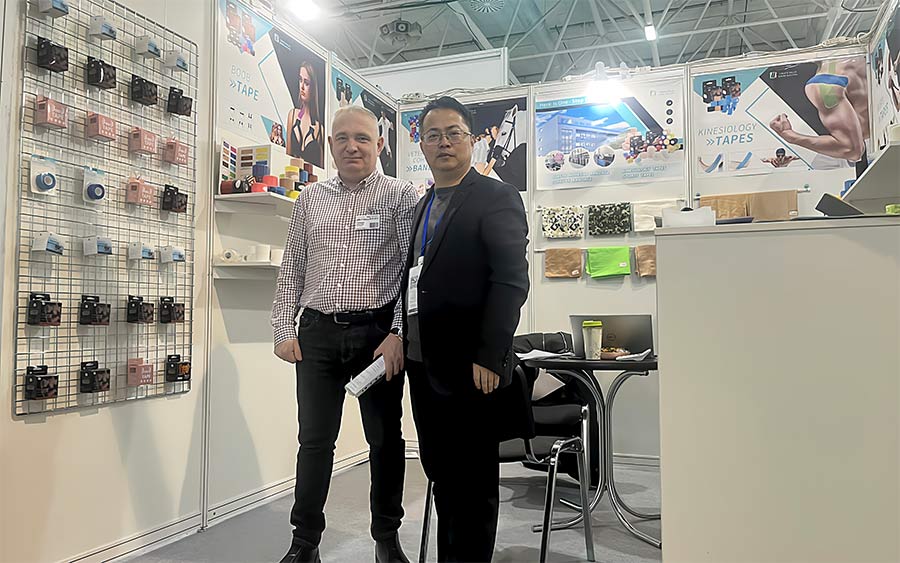
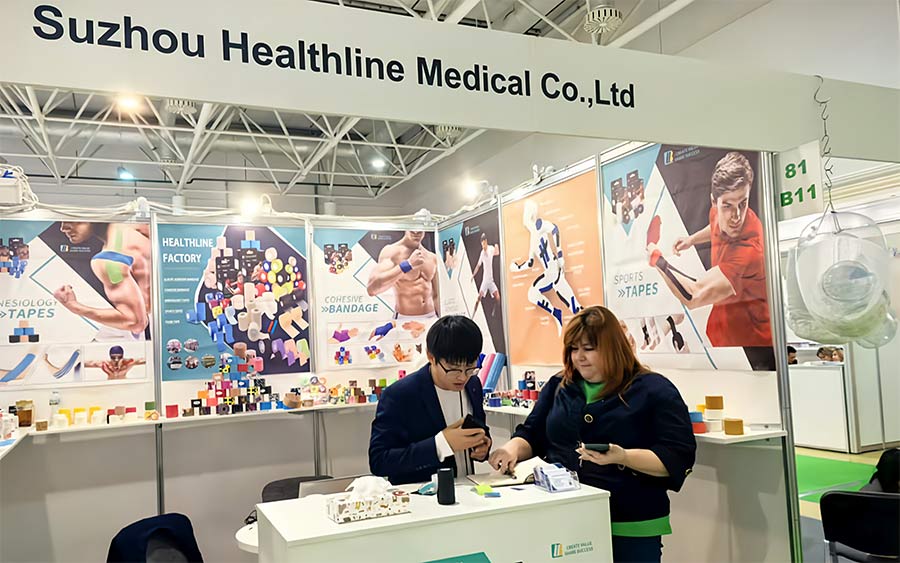
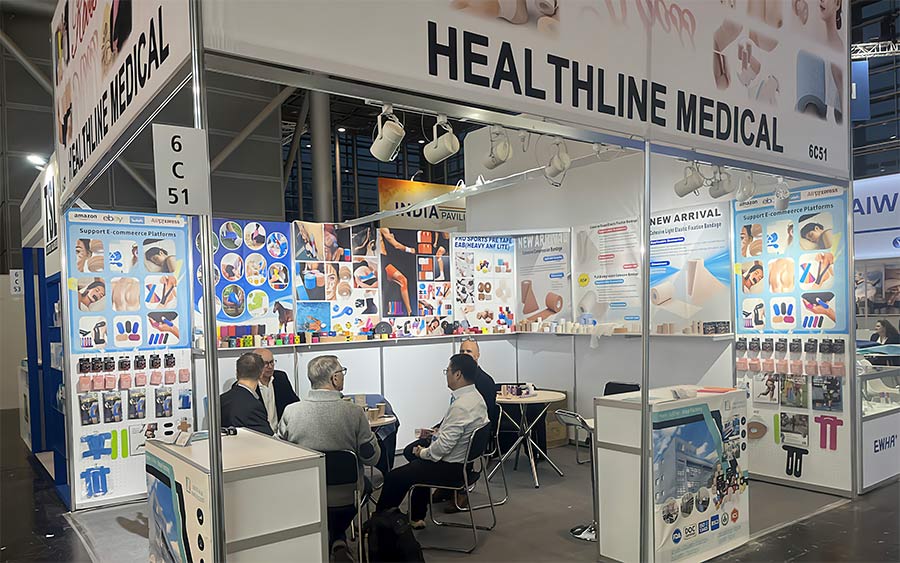
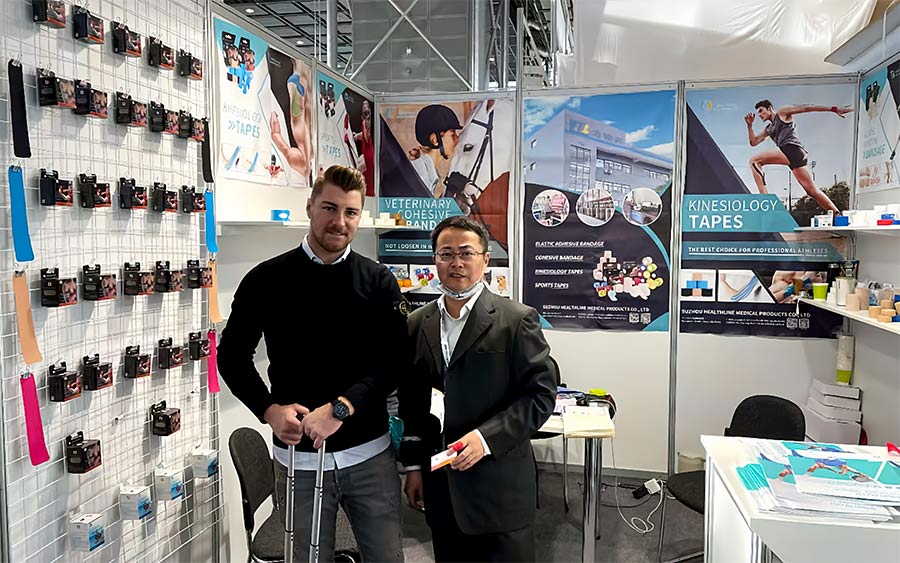
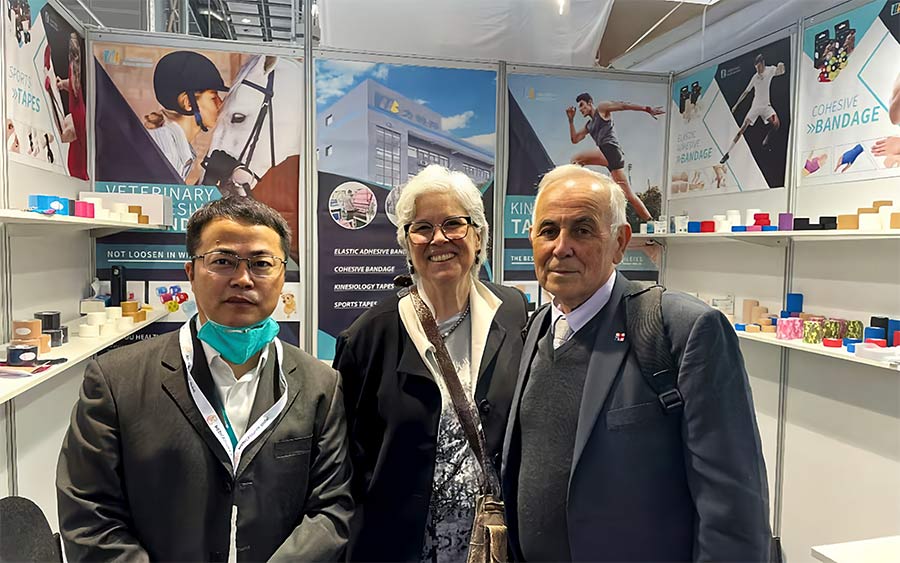
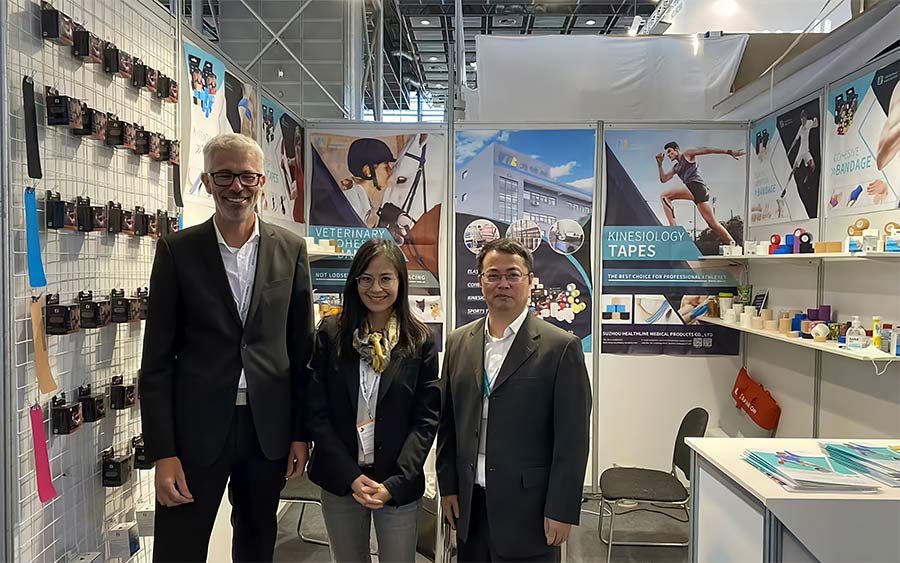
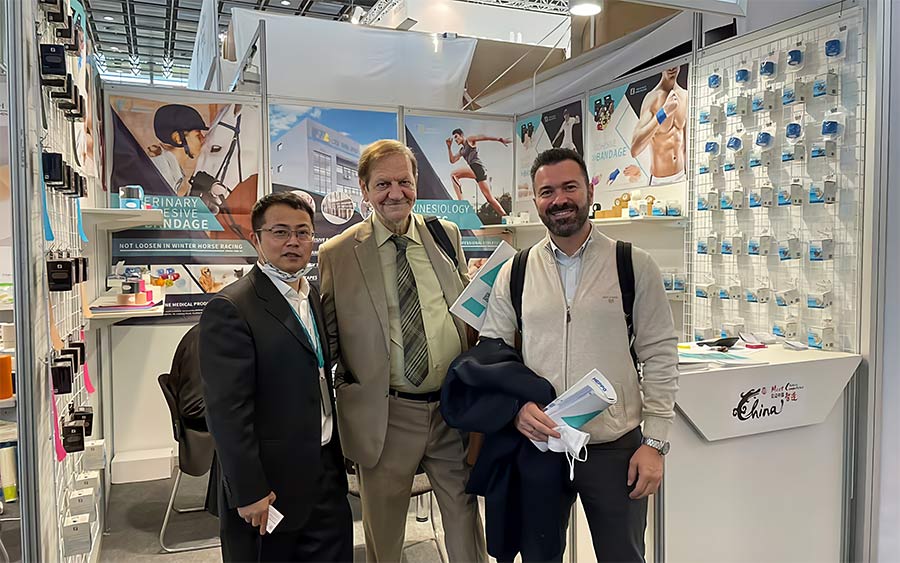
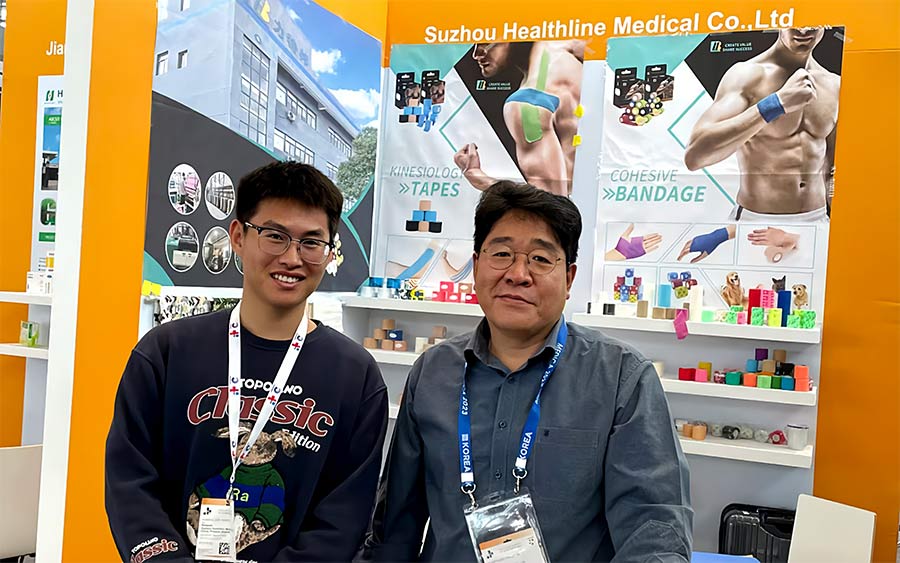
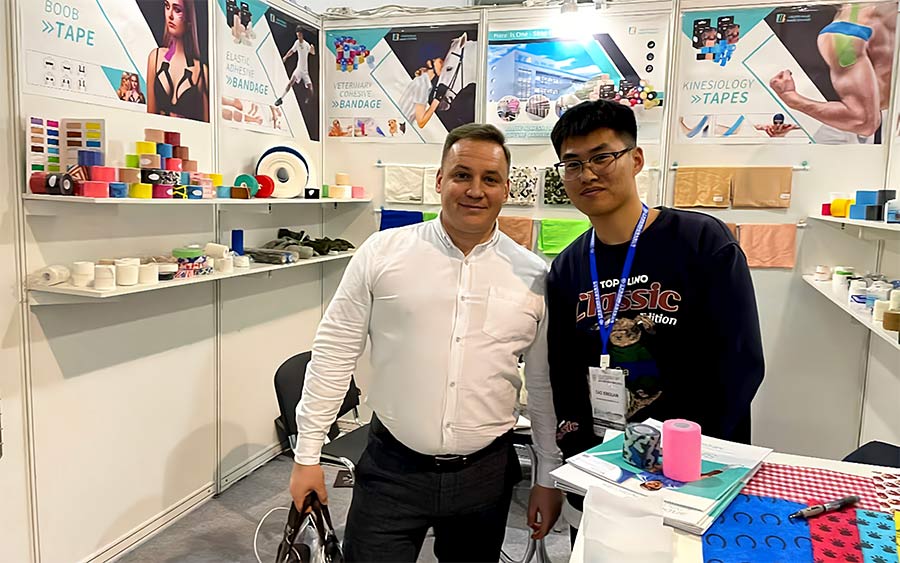
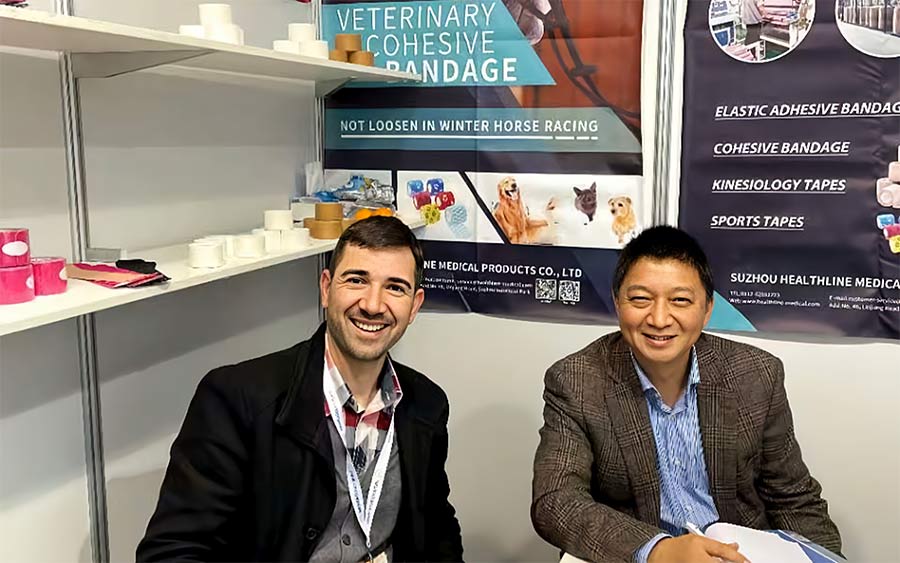
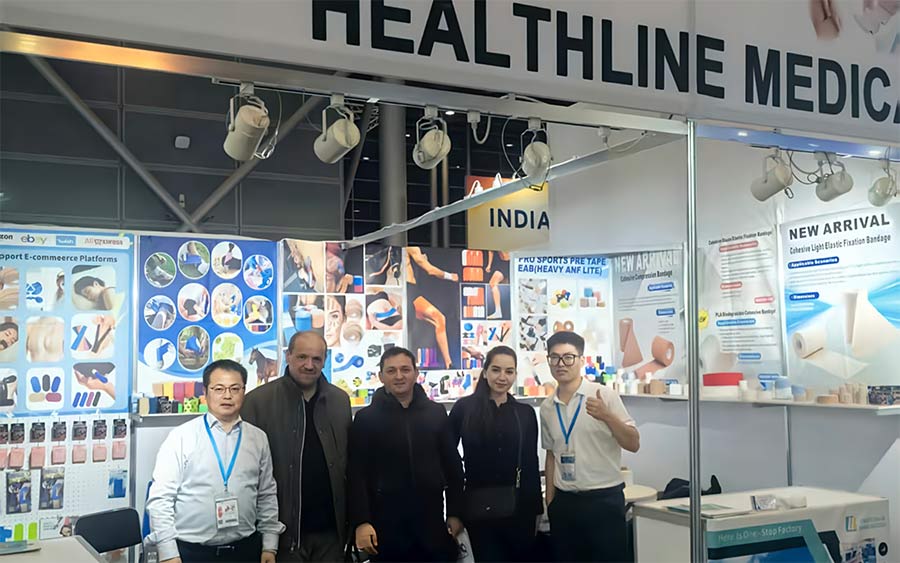
Driven by uncompromising quality, competitive value, and customer-centric service, Healthline’s products are now present in over 50 countries and regions across the globe. As a dedicated OEM/ODM manufacturer of medical cohesive bandages and sports tape, we serve a diverse client portfolio—including hospitals and clinics,veterinary,authorized distributors, government procurement agencies, national pharmacy chains, and retail supermarkets,on-line Amazon,Lotte & Tiktok e-commerce industry .
We are proud to be the long-term OEM/ODM partner for globally recognized names such as Target, CVS, Aldi, Lidl, Carrefour,Tesco, Alliance Boots,Deathlon,Covetrus and Kruuse. Our annual sales volume has maintained a steady year-over-year growth of 15% for consecutive years—a testament to the trust our partners place in us.
In today’s competitive global market, we believe sustainable success comes from continuously delivering superior products and responsive service at a fair price. This philosophy has guided Healthline for three decades, and we are committed to repaying your trust with solutions that help your business grow.



















- Ethan Zhang
- Tel:+86-512-6289 3223
- Mob:+86-19822909189
- Email:ethanzhang@healthline-medical.com
- Whatsapp / Wechat:+86-19822909189
- Skype:+86-19822909189
- Asher.cao
- Tel:+86-512-6289 3223
- Mob:+86-17625487782
-
Email:ethanzhang@healthline-medical.com
Asher.cao@healthline-medical.com
- Whatsapp / Wechat:+86-17625487782
- Skype:+86-176 2548 7782
- Jason Zhang
- Tel:+86-512-6289 3223
- Mob:+86-13152123359
- Email:jason@healthline-medical.com
- Whatsapp / Wechat:+86-13152123359
Copyright © 2025 SUZHOU HEALTHLINE MEDICAL PRODUCTS CO., LTD
All Rights Reserved.
 Sports Tape Manufacturers Cohesive Bandages Suppliers
The information provided on this website is intended for use only in countries and jurisdictions outside of the People's Republic of China.


