
 English
 Español
 русский
 عربى
عربى

- Cotton Kinesiology Tape
- Synthetic Kinesiology Tape
- Nylon Kinesiology Tape
- 4-Way Stretch Elastic Kinesiology Tape
- Standard Kinesiology Tape Roll
- Pre-Cut Kinesiology Tape Strips
- Printed / Pattern Kinesiology Tape
- Perforated Kinesiology Tape (Ventilated)
- Special Shape Kinesiology Tape
- Water-Resistant Kinesiology Tape
- Pregnancy Support Tape
- Face Lift Kinesiology Tape
- Gentle / Beauty Kinesiology Tape
- Veterinary Kinesiology Tape
- Breast Lift Tape
- Customized Kinesiology Tape
- Pre-cut I Strip Kinesiology Tape
- Pre-cut Y Strip Kinesiology Tape
- Pre-cut X Strip Kinesiology Tape
- Knee Kinesiology Tape
- Leg Kinesiology Tape
- Shoulder Kinesiology Tape
- Back Kinesiology Tape
- Waist Kinesiology Tape
- Ankle Kinesiology Tape
- Pregnancy Belly Tape
- Beauty Face Tape
- Solid Color Cohesive Bandage Roll
- Printed & Pattern Cohesive Bandage
- Non-Woven Self-Adhesive Bandage
- Cotton Self-Adhesive Bandage
- PBT Gauze Cohesive Bandage Rolls
- Pet Vet Wrap
- Horse and Cattle Self-Adhesive Bandage
- Veterinary Cohesive Bandage
- Camo Cohesive Wrap Tape
- Military and Tactical Cohesive Bandage
- Tattoo Grip Tape
- Latex Cohesive Bandage
- Latex-Free Cohesive Bandage
- Pet Laminated Self-Adhesive Bandage
- High-Tensile Cohesive Bandage
- Football Sock Wrap Self-Adhesive Bandage
- Sterile Cohesive Bandage
- Special Function Cohesive Bandage
- OEM / Bulk Cohesive Bandage Roll
- Rigid Strapping Tape
- Athletic Tape
- Zinc Oxide Sports Tape
- Rayon Rigid Sports Tape
- Sports Strapping Tape
- Finger Bob Bandages
- Boxing Tape
- Heavyweight Elastic Adhesive Bandage (EAB)
- 93 Cotton Heavyweight Elastic Adhesive Bandages(EAB)
- Athletic Heavyweight Elastic Adhesive Bandage (EAB)
- Lightweight Elastic Adhesive Bandage (EAB)
- Athletic Lightweight Elastic Adhesive Bandage (EAB)
- American Style Elastic Adhesive Bandage (EAB)
- Japanese Style Elastic Adhesive Bandage (EAB)
- Elastic Adhesive Compression Bandage
- Veterinary Elastic Adhesive Bandage (EAB)
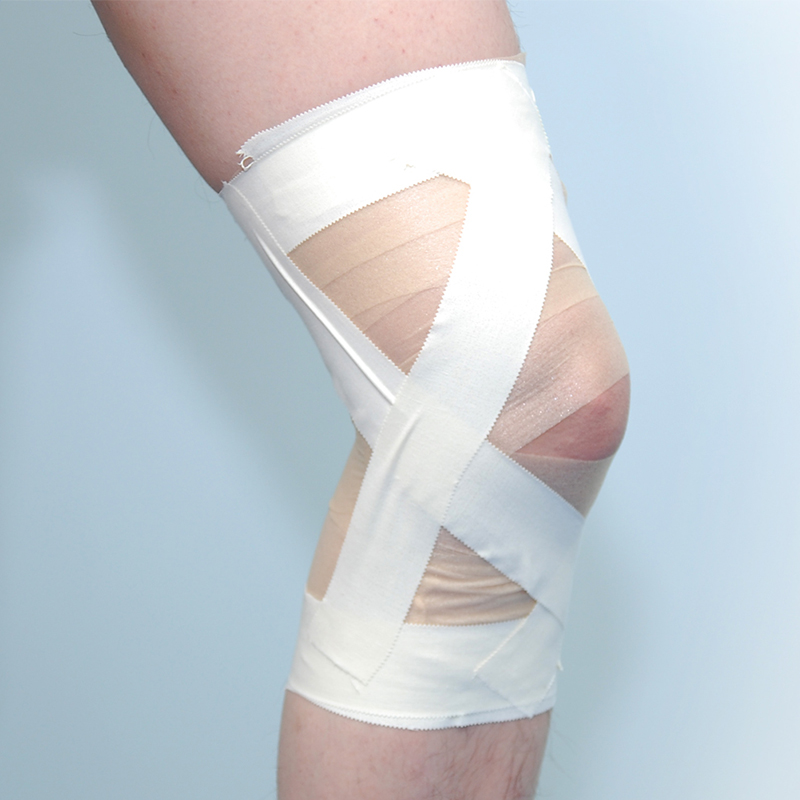
Athletic Tape for a Jammed Finger: Support, Technique, and Safe Return to Play
Content
- What Athletic Tape for a Jammed Finger Actually Does
- Rigid, Elastic, or Kinesiology Tape: Which One Belongs on a Jammed Finger
- How to Buddy Tape a Jammed Finger, Step by Step
- Material, Adhesive, and Specs That Decide Whether the Tape Stays On
- Common Mistakes and Skin Risks
- Buying Athletic Finger Tape for Clinics, Teams, and Distributors
- Frequently Asked Questions
A volleyball or basketball that lands on the tip of an outstretched finger drives the force straight into the middle joint, and the volar plate and collateral ligaments take the damage. That is what players call a jammed finger, and the tape job that follows often decides whether they are back in three days or stiff for six weeks. Athletic tape for a jammed finger has a narrow job: block sideways and hyperextension movement at one joint, keep the rest of the hand working, and stay stuck through sweat, grip tape and a full training session.
What Athletic Tape for a Jammed Finger Actually Does
Athletic tape for a jammed finger supports an injured finger joint by limiting lateral and hyperextension stress while leaving flexion and the rest of the hand free.
Tape is not a cast. A 12.5 mm strip of rigid zinc oxide tape will not put a displaced joint back in place, and it will not turn a ligament sprain into a one-day problem. What it can do is limit the two movements that re-injure the joint most often: forced sideways deviation and backward opening past neutral. Used well, the tape works as an external check rein, absorbing part of the load before it reaches a healing ligament, and it gives the player constant feedback so they stop catching and gripping the way that caused the injury.
- Lateral support: two strips joining the injured finger to a neighbour resist sideways bending at the joint.
- Hyperextension control: a strip across the back of the finger limits how far the joint opens backwards.
- Proprioceptive cue: constant contact reminds the athlete to change how they catch, grip or post up.
- Swelling management: elastic and cohesive wraps handle oedema, but they do not replace a rigid support.
- Assessment first: an inability to straighten the finger, a visible deformity or numbness needs a professional check before tape goes on.
Once the acute phase passes, taping usually shifts from rigid support towards graded loading. Our sports protection applications outline how clinics and teams combine rigid tape, elastic wraps and protective foam at different stages of return to play.
Rigid, Elastic, or Kinesiology Tape: Which One Belongs on a Jammed Finger
A freshly jammed finger is normally taped with thin rigid zinc oxide tape between 12.5 mm and 25 mm wide, because it stretches less than 5 percent and resists sideways bending; elastic and kinesiology tapes suit swelling control, skin protection and mild cases where the joint still needs to move. If you are unsure whether a rigid strapping tape or a general medical tape belongs in the kit, the difference between athletic finger tape and regular medical tape comes down to backing stiffness and adhesive coat.
| Tape type | Typical width | Elongation | Main role | Watch out for |
| Rigid cotton zinc oxide tape | 12.5 to 25 mm | Under 5 percent | Lateral and hyperextension control, buddy taping | Adhesive residue, skin sensitivity |
| Elastic adhesive bandage | 50 to 75 mm | 140 to 160 percent | Compression over swelling and dressings | Too bulky to fold around a finger joint |
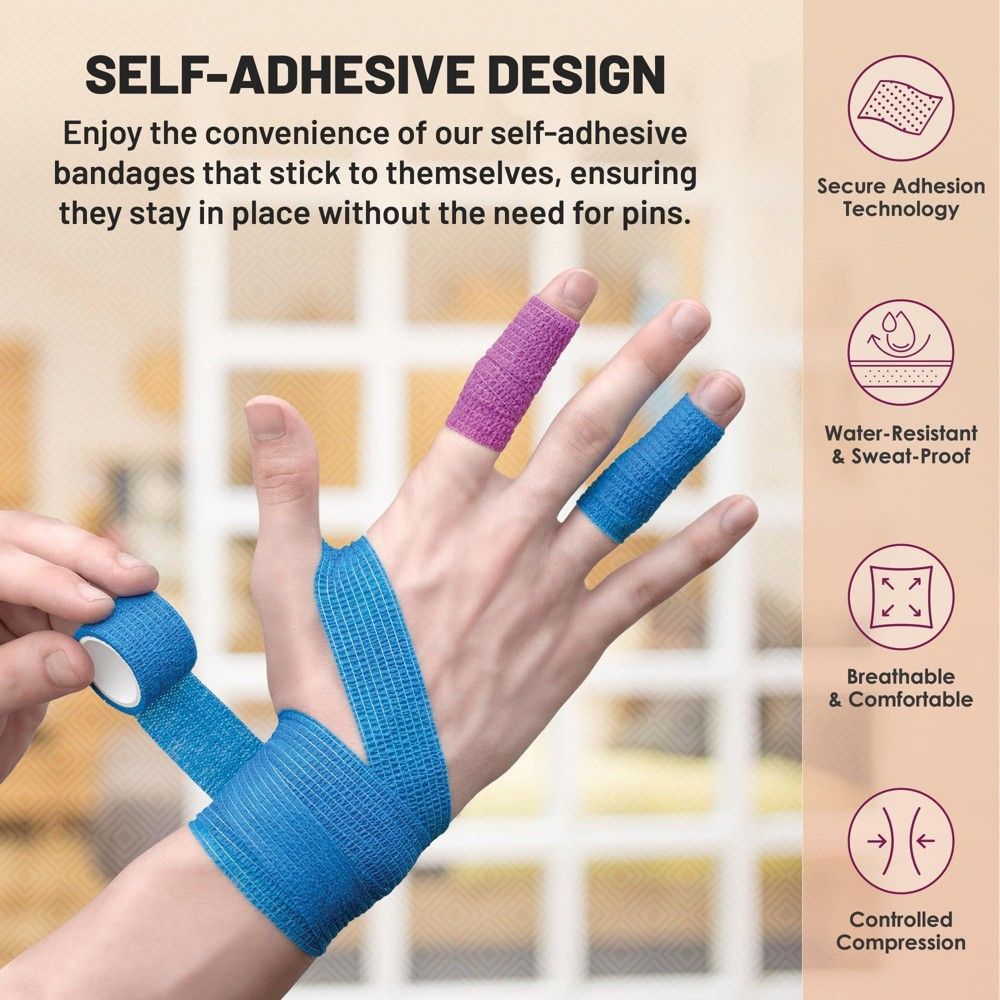
| Cohesive self-adhesive bandage | 25 to 50 mm | High stretch | Quick wraps, dressing retention, no adhesive residue | Not stiff enough to stop hyperextension |
| Kinesiology tape | 50 mm cut down to 12.5 mm | 140 to 180 percent | Feedback and mild support late in recovery | Does not limit end-range movement |
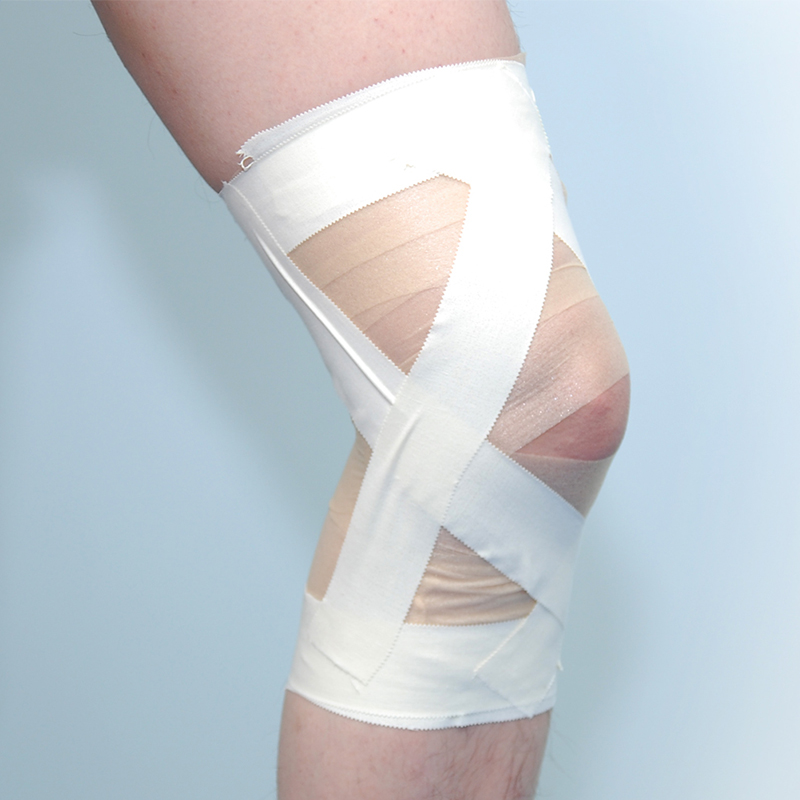 99.99% Rigid Cotton Sports Tape for Finger Knee Toe Ankle ProtectionElevate your performance and safeguard your body with the 99.99% Rigid Cotton Sports Tape, engineered for unparalleled protection and support across a variety of sport...View Product →
How to Buddy Tape a Jammed Finger, Step by Step
Buddy taping takes about two minutes: clean and dry the skin, place a gauze or foam spacer between the fingers, fix the injured finger to its neighbour with one strip above and one below the injured joint, then re-check circulation ten minutes later. The sequence below is the one we recommend to clinics that tape fingers every week.
- Screen the finger first. If it cannot be straightened, looks deformed, or feels numb, keep the tape in the bag until the joint has been assessed.
- Prepare the skin. Wash and dry the finger and wipe it with an alcohol prep if the skin is oily; moisture and hair are the fastest ways to lose adhesion.
- Cut two strips. Each around 6 to 8 cm long from 12.5 mm rigid tape, with the corners trimmed if the edges are sharp.
- Add a spacer. A small square of gauze or thin foam between the two fingers prevents skin maceration during a long session.
- Tape above and below the joint. Place one strip just distal to the injured joint and one just proximal, leaving the joint line free of adhesive and the finger held in 15 to 20 degrees of flexion.
- Check circulation. After ten minutes look at colour, warmth and capillary refill, and loosen the tape immediately if the finger turns pale, blue or numb.
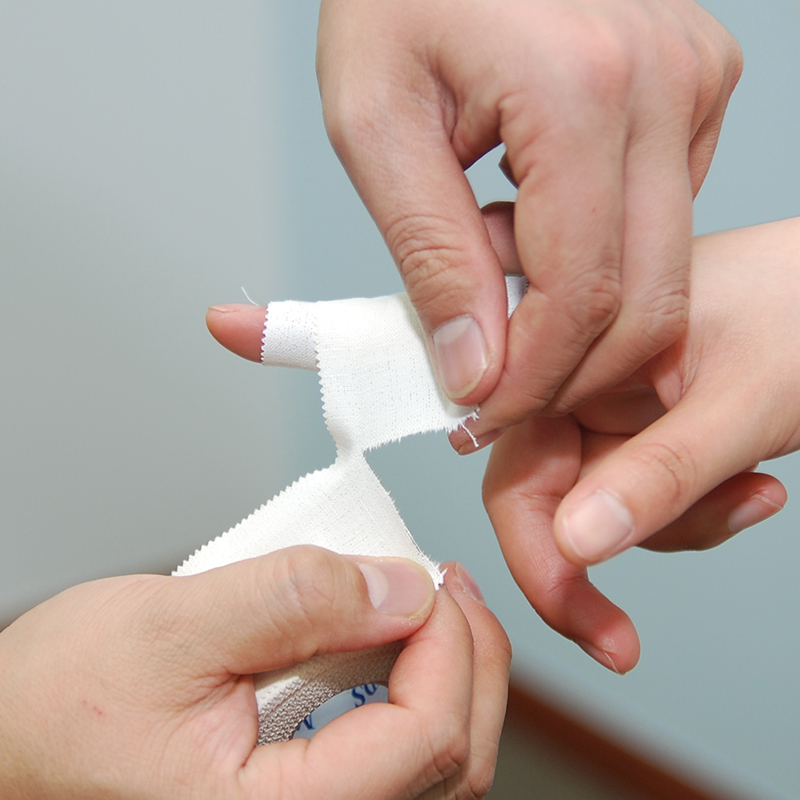 Athletic Finger TapeAthletic Finger Tape is an essential tool for athletes, physical therapists, and anyone requiring reliable joint support during physical activity. Designed to provide ...View Product →
Material, Adhesive, and Specs That Decide Whether the Tape Stays On
On a finger, backing material and adhesive coat decide performance far more than the printed brand: a 100 percent cotton rigid tape with a zinc oxide adhesive at 12.5 mm wide holds through a full game, while thin nonwoven tapes with a light coat lift at the edges within minutes of sweating.
Adhesive choice matters just as much. Zinc oxide gives the strongest grip on cotton but is the most likely to irritate sensitive skin, hot melt synthetic adhesive removes more cleanly and still holds well under shear, and acrylic adhesives are gentler on skin with lower initial tack.
- Elongation at break, and elongation at working load
- Peel adhesion expressed in newtons per 25 mm
- Adhesive coat weight in grams per square metre
- Backing thread count, weave and tensile strength
- Core diameter and roll length tolerance
- Edge type: flat, serrated or hand tear
- A written latex statement for clinic and school tenders
Common Mistakes and Skin Risks
The most frequent error is taping too tight and too high: a rigid wrap that circles the whole finger can restrict blood flow within minutes, and taping a joint in full extension leaves it stiff for weeks after the ligament has settled.
- Tape with the joint in slight flexion
- Keep the joint line free of adhesive
- Use a spacer between the fingers
- Re-check the finger during activity
- Remove tape after training and clean the skin
- Full circumferential rigid wraps on one finger
- Taping over blisters or broken skin
- Leaving the same tape on for days
- Reusing a strip after removal
- Taping a finger that cannot be straightened
Buying Athletic Finger Tape for Clinics, Teams, and Distributors
When you buy finger tape at volume, fix the specification before discussing price: width, elongation, backing, adhesive type and latex status decide whether a roll works at the sideline, and only after that do packaging and private label come into play.
- Width and edge: 12.5 mm rolls with a hand tear or serrated edge save seconds on the field, which matters when a physio is taping six players in ten minutes.
- Backing and adhesive: cotton rigid tape with zinc oxide for support work, latex free synthetic options for schools and clinics with a latex policy.
- Roll format: core diameter, roll length tolerance and winding tension affect how the tape feeds from a kit bag under pressure.
- Pre-cut formats: shaped finger and toe patches cut application time for high volume teams and rehab rooms.
- Private label: logo printing, custom sizes and packaging design are usually the first requests from distributors building their own brand.
 Pre-Cut Shape Kinesiology Tape Muscle Patch For Finger And ToeDigital Support Strips (50mm×20mm) - Precision Protection for Hands FeetView Product →
Frequently Asked Questions
How long should a jammed finger stay taped?
Most mild jams are buddy taped during activity for five to ten days and left untaped at rest, with the tape removed for sleep and washing. If pain, swelling or stiffness has not improved after a week, the finger should be reassessed before taping continues.
Can kinesiology tape replace rigid tape on a jammed finger?
No. Kinesiology tape stretches 140 to 180 percent, which gives feedback and mild support but will not block hyperextension at the joint. Use rigid zinc oxide tape while the joint needs a hard limit and switch to kinesiology tape later in recovery.
How tight should finger tape be?
Snug enough to hold the two fingers together and no tighter. The fingertip should keep its normal colour and warmth, and there should be no tingling or numbness. If you are unsure, apply the strips, wait ten minutes and check the finger again before the athlete returns to play.
Does finger tape need to be latex free?
For clinics, schools and shared first aid kits, yes. Zinc oxide adhesive can also irritate sensitive skin, so hypoallergenic and latex free tapes are the safer default for long events and repeated daily taping.
Share:
RECOMMENDED PRODUCTS





















- Asher.cao
- Tel:+86-512-6289 3223
- Mob:+86-176 2548 7782
- Email:Asher.cao@healthline-medical.com
- Whatsapp / Wechat:+86-176 2548 7782
- Skype:+86-176 2548 7782
- Ethan Zhang
- Tel:+86-512-6289 3223
- Mob:+86-19822909189
- Email:ethanzhang@healthline-medical.com
- Whatsapp / Wechat:+86-19822909189
- Skype:+86-19822909189
- Jason Zhang
- Tel:+86-512-6289 3223
- Mob:+86-13152123359
- Email:jason@healthline-medical.com
- Whatsapp / Wechat:+86-13152123359
Copyright © 2025 SUZHOU HEALTHLINE MEDICAL PRODUCTS CO., LTD
All Rights Reserved.
 Sports Tape Manufacturers Cohesive Bandages Suppliers
The information provided on this website is intended for use only in countries and jurisdictions outside of the People's Republic of China.


