
 English
 Español
 русский
 عربى
عربى

- Cotton Kinesiology Tape
- Synthetic Kinesiology Tape
- Nylon Kinesiology Tape
- 4-Way Stretch Elastic Kinesiology Tape
- Standard Kinesiology Tape Roll
- Pre-Cut Kinesiology Tape Strips
- Printed / Pattern Kinesiology Tape
- Perforated Kinesiology Tape (Ventilated)
- Special Shape Kinesiology Tape
- Water-Resistant Kinesiology Tape
- Pregnancy Support Tape
- Face Lift Kinesiology Tape
- Gentle / Beauty Kinesiology Tape
- Veterinary Kinesiology Tape
- Breast Lift Tape
- Customized Kinesiology Tape
- Pre-cut I Strip Kinesiology Tape
- Pre-cut Y Strip Kinesiology Tape
- Pre-cut X Strip Kinesiology Tape
- Knee Kinesiology Tape
- Leg Kinesiology Tape
- Shoulder Kinesiology Tape
- Back Kinesiology Tape
- Waist Kinesiology Tape
- Ankle Kinesiology Tape
- Pregnancy Belly Tape
- Beauty Face Tape
- Solid Color Cohesive Bandage Roll
- Printed & Pattern Cohesive Bandage
- Non-Woven Self-Adhesive Bandage
- Cotton Self-Adhesive Bandage
- PBT Gauze Cohesive Bandage Rolls
- Pet Vet Wrap
- Horse and Cattle Self-Adhesive Bandage
- Veterinary Cohesive Bandage
- Camo Cohesive Wrap Tape
- Military and Tactical Cohesive Bandage
- Tattoo Grip Tape
- Latex Cohesive Bandage
- Latex-Free Cohesive Bandage
- Pet Laminated Self-Adhesive Bandage
- High-Tensile Cohesive Bandage
- Football Sock Wrap Self-Adhesive Bandage
- Sterile Cohesive Bandage
- Special Function Cohesive Bandage
- OEM / Bulk Cohesive Bandage Roll
- Rigid Strapping Tape
- Athletic Tape
- Zinc Oxide Sports Tape
- Rayon Rigid Sports Tape
- Sports Strapping Tape
- Finger Bob Bandages
- Boxing Tape
- Heavyweight Elastic Adhesive Bandage (EAB)
- 93 Cotton Heavyweight Elastic Adhesive Bandages(EAB)
- Athletic Heavyweight Elastic Adhesive Bandage (EAB)
- Lightweight Elastic Adhesive Bandage (EAB)
- Athletic Lightweight Elastic Adhesive Bandage (EAB)
- American Style Elastic Adhesive Bandage (EAB)
- Japanese Style Elastic Adhesive Bandage (EAB)
- Elastic Adhesive Compression Bandage
- Veterinary Elastic Adhesive Bandage (EAB)
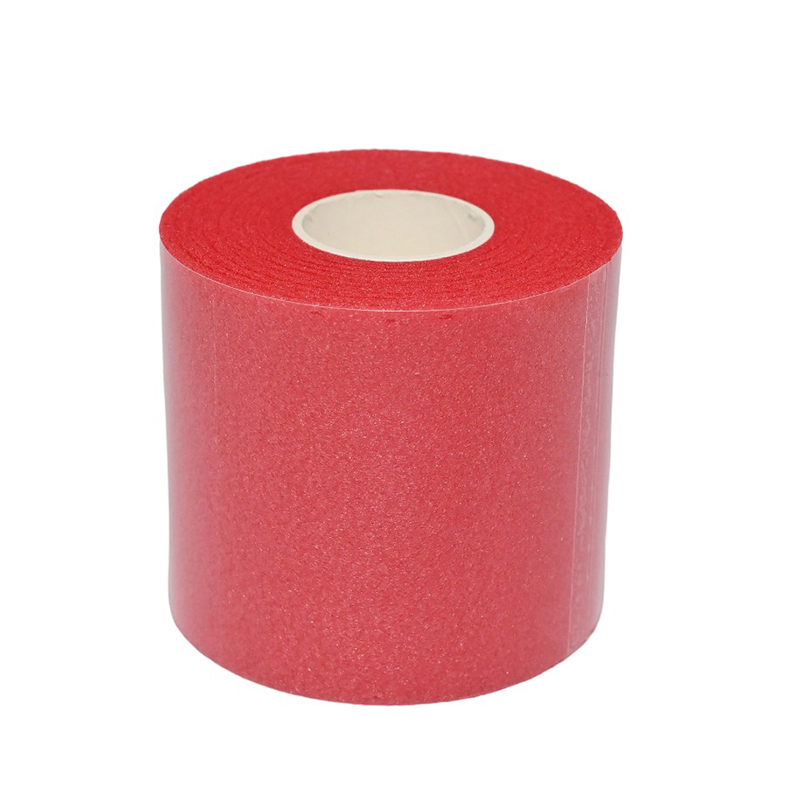
Athletic Pre Wrap: Why Foam Underwrap Protects Skin Beneath Sports Tape
Content
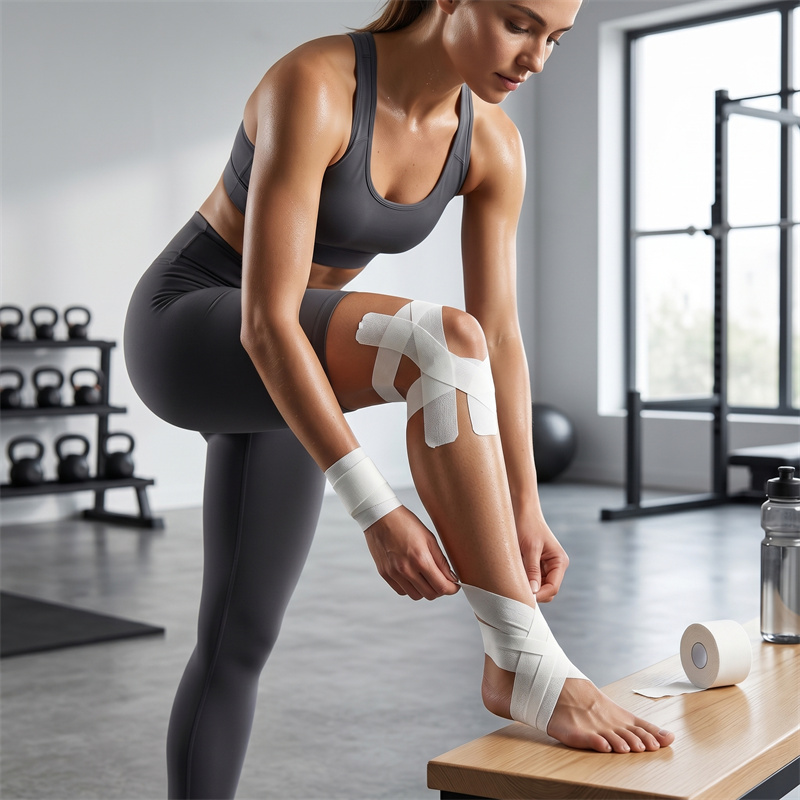
A trainer tapes an ankle at 8 a.m., the athlete plays two matches, and at 4 p.m. the tape comes off in one pull — along with a strip of skin. That failure is the reason athletic pre wrap exists. If you tape the same joints more than a few times a month, or if you tape other people, the answer is short: run one or two layers of thin foam underwrap between the skin and the tape before any adhesive touches the body. It costs cents per application and takes about fifteen seconds.
The logic is mechanical, not cosmetic. Rigid sports tape works by bonding zinc oxide adhesive to skin, and that bond is strong enough to hold an ankle through a full match. It does not care whether the surface underneath is intact. Foam pre-wrap changes the surface; the tape still locks down, and the skin no longer pays for it.
Pre-wrap also buys consistency. Tape over bare skin grips unevenly on hairy, sweaty or freshly shaved areas, so the same job can feel tighter on one side than the other. A foam layer gives the tape one predictable surface to bond to.
What Athletic Pre Wrap Actually Does Under the Tape
Pre-wrap is often shelved beside tape and treated as the same product in a smaller roll. It is not. Foam underwrap creates a barrier; the tape above it creates support. Confusing the two produces either a loose taping job or a tight foam wrap that does nothing useful.
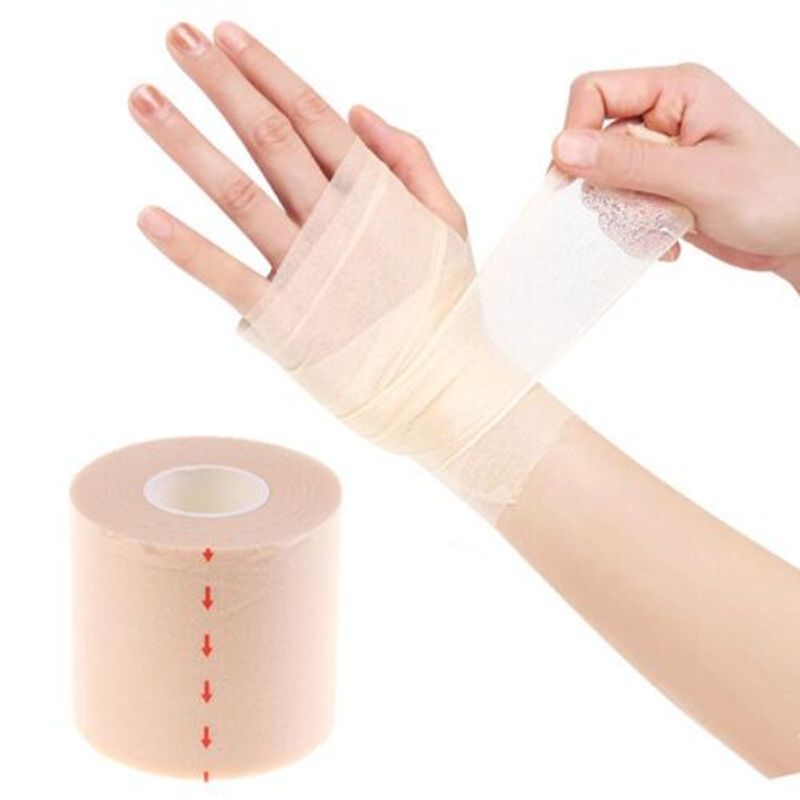
A standard roll, usually 2.75 in × 30 yd (7 cm × 27 m), does four things:
- Separates skin from adhesive. A foam layer of roughly 0.5 to 1.5 mm keeps zinc oxide adhesive off the dermis, which is exactly what prevents tape tears at removal.
- Cuts shear. Foam compresses slightly, so when tape shifts during cutting, sprinting or landings, the movement does not drag the top layer of skin with it.
- Creates an even anchor. Tape lies flatter over foam, and edges stay down instead of rolling up after twenty minutes of play.
- Handles moderate sweat. Open-cell foams take up some moisture, slowing adhesive breakdown compared with tape applied straight to damp skin.
What pre-wrap does not do is limit joint motion. Anyone expecting support from the foam alone will be disappointed — the role foam underwrap plays is protection, not stabilisation. Stability comes from the tape, or from a cohesive bandage layered above it.
Healthline Medical supplies pre wrap in the standard 2.75 in × 30 yd format and in narrower widths for fingers and wrists.
 Athletic Pre Wrap ManufacturersSolid Color Protective Soft Foam Underwrap Pre Wrap Sports Tape Elevate your athletic performance with the Solid Color Protective Soft Foam Underwrap Pre Wrap Sports T...View Product →
| Job | Foam pre-wrap | Rigid sports tape |
|---|---|---|
| Contact with skin | Sits between skin and adhesive, no tack on skin | Adhesive bonds directly to skin |
| Support level | None to very light compression | Restricts joint motion |
| Removal | Lifts away with the tape, no skin pull | Can tear skin and hair if applied bare |
| Sweat handling | Open-cell foam absorbs some moisture | Adhesive weakens once soaked |
What to Look For: Thickness, Stretch and Adhesion
Thickness decides how the tape behaves
0.5 to 1.0 mm suits fingers, toes and any job where bulk lifts tape edges. 1.5 to 2 mm suits ankles, knees and shoulders, where skin is thin and tape tension is high. Push past roughly 2 mm and the tape's own grip on the limb drops — you gain cushioning and lose the support you were taping for.
Stretch and hand-tear
Pre-wrap should follow a calf or an ankle curve without wrinkling, and tear in one pull by hand. A roll that needs scissors costs seconds you do not have during a warm-up, and a badly cut edge becomes a fold under the tape.
Non-adhesive foam or self-adherent pre-wrap
Plain foam underwrap has no tack and relies on the tape to pin it. Self-adherent pre-wrap sticks lightly to itself, which helps on moving athletes and in warm rooms where plain foam slides. Latex-free versions matter for clinics and for anyone taping the same skin repeatedly.
Two specifications buyers forget
Core inner diameter, usually 38 mm, has to fit your tape caddies and dispenser stands. Thickness consistency between production lots matters just as much — a batch that arrives 0.3 mm thicker than the last one quietly changes how every tape job performs.
The breathable pre-wrap format is the one most taping rooms reach for when a lighter layer is enough.
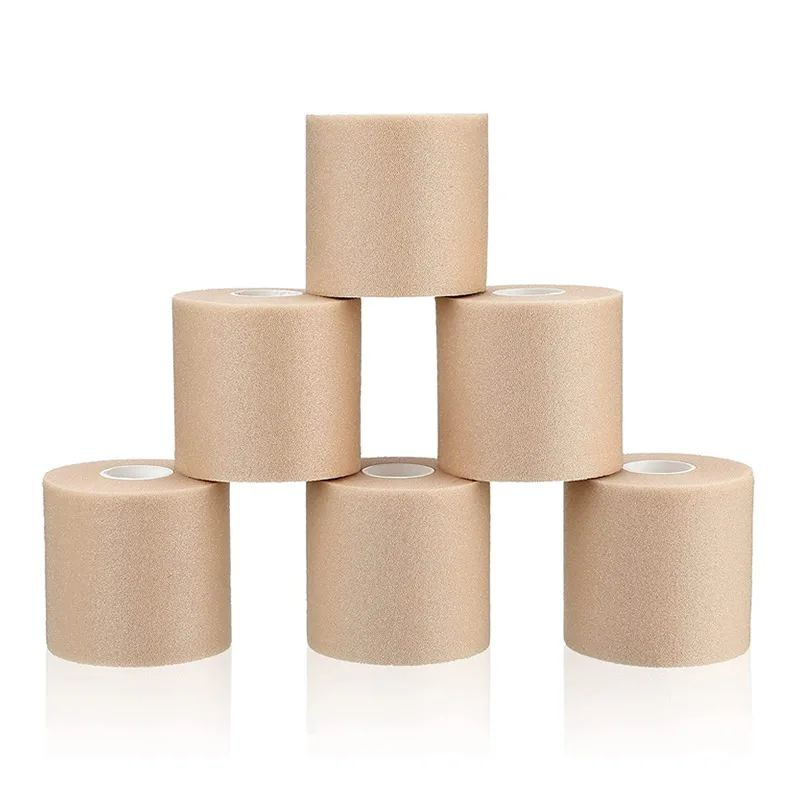 Foam Underwrap Pre-Wrap | Breathable Pre-Tape Wrap for Athletic Taping, Skin Protection, aFoam Underwrap is a lightweight pre-wrap designed to sit comfortably between your skin and athletic tape. It helps protect the skin, reduce friction, and make tape rem...View Product →
| Format | Typical thickness | Best suited to | Watch out for |
|---|---|---|---|
| Non-adhesive foam underwrap | 0.5–1.5 mm | Standard taping under rigid tape | Needs tape to anchor; can slide on very sweaty skin |
| Self-adherent pre-wrap | 0.6–1.5 mm | Moving athletes, veterinary use, fast changes | Light tack can grab hair on removal |
| PU skin protection film | Under 0.5 mm | Waterproof areas, swimming, tape-sensitive skin | Minimal cushioning |
| High-density padded underwrap | 1.5–2 mm | Ankles and shoulders needing extra cushioning | Too much bulk lifts tape edges |
Pre Wrap, Athletic Tape and Cohesive Bandage: Three Different Jobs
Once the layers are clear, selection gets easier, because each material answers a different question.
- Foam pre-wrap answers: how do I keep adhesive off the skin and still tape firmly?
- Rigid sports tape answers: how do I limit motion at an ankle, wrist or shoulder for a defined period?
- Cohesive bandage answers: how do I apply light compression that holds itself without glue on skin?
The pairing that causes the most trouble is rigid tape applied bare to a joint that gets taped daily, because the skin never gets time to recover. For a wider view of layer order across ankles, wrists, shoulders and hands, the sports protection application notes are a useful companion to this guide.
Healthline Medical's rigid zinc oxide tapes are built for exactly this pairing with a foam underwrap layer.
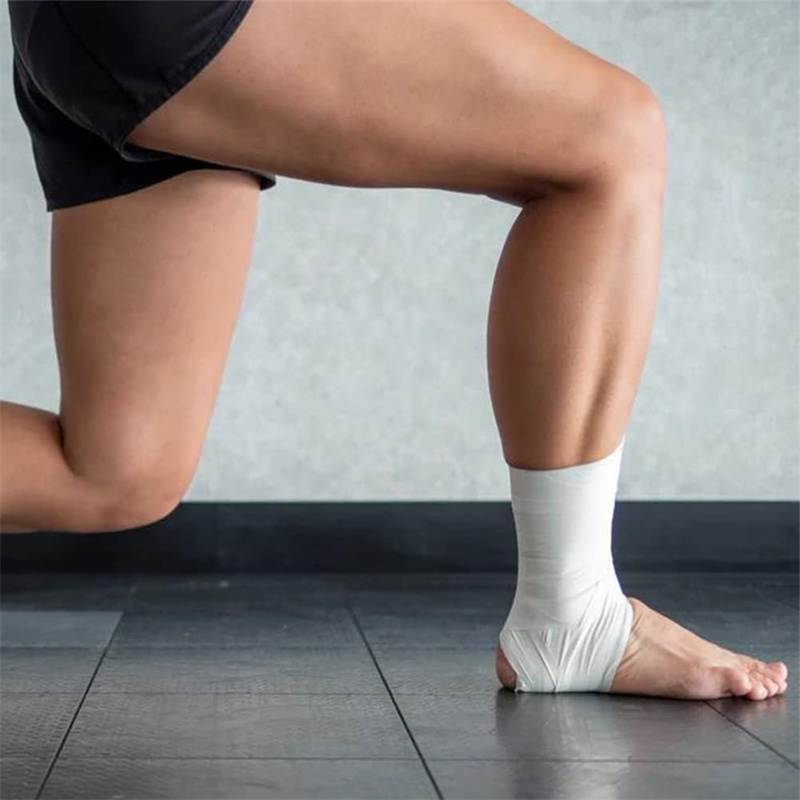 Athletic Tape – Rigid Zinc Oxide Sports Tape for Ankle, Wrist and Finger SupportProduct Overview: This rigid athletic tape provides firm, dependable joint stabilization for training, competition and rehabilitation. Built with a high thread-count c...View Product →
How to Apply Pre Wrap So It Stays Where You Put It
- Prepare the skin: clean and dry, no lotion. If hair is heavy, clip it a day ahead rather than shaving immediately before taping.
- Start below the joint and work upward, so the wrap edge points away from the direction the tape will be pulled.
- Use light tension, roughly 10 to 20 percent stretch. The foam should follow the limb, not compress it.
- Overlap by half for full coverage, or by a quarter if you want a thinner layer under a tight tape job.
- Extend one to two inches past both ends of the taped area, so no tape edge ever touches bare skin.
- Smooth every wrinkle out before the tape goes on; one fold becomes a pressure point after an hour of play.
- Pin the foam with a light tape strip, or switch to self-adherent pre-wrap when the athlete is already sweating.
Four mistakes show up again and again in clinics:
- Wrapping the foam tight enough to leave a mark, which restricts circulation before the tape is even applied.
- Building padding with four or five layers of pre-wrap instead of using a pad, which lifts the tape too far from the joint.
- Applying over damp skin straight out of a shower or an ice bath.
- Cutting the roll at an angle, which creates a tapered edge that rolls under tension.
Buying Pre Wrap by the Case: What Procurement Should Specify
Buying by the case changes the questions. Four specifications drive most of the complaints that come back from clinics and team managers:
- Thickness tolerance. State a figure such as plus or minus 0.1 mm and ask for it in writing; foam density varies more between runs than most buyers expect.
- Roll size and labelling. 2.75 in × 30 yd is the common US format, while European and export buyers often want 7 cm × 27 m with metric-only labels and local language text.
- Core diameter and case count. A 38 mm core fits most caddies and dispensers, and rolls per case affect storage more than unit price does.
- Latex declaration. Clinics ask, and so do schools. If the foam and the adhesive layer are both free of natural rubber, the statement belongs on the label.
For distributors and private-label brands, pre-wrap is usually a supporting SKU that sells beside rigid tape and cohesive bandages, so consistency across the range matters more than any single roll. The real question is whether a supplier can hold the same thickness, colour and hand-tear behaviour across repeated production runs, and back it with matching private-label print, cartons and case counts.
Healthline Medical has worked in medical and sports taping materials since 1993 and runs OEM and ODM programmes that move from concept to virtual proof to physical samples. Raw materials for several orders are purchased together, which keeps small-volume pricing close to large-order pricing, and the company's own packaging plant handles carton and label design for OEM work.
Athletic pre wrap will never appear in a highlight reel, but it decides whether an athlete can be taped again tomorrow without raw skin. Two layers of 0.5 to 1.5 mm foam, applied at light tension and extended past every tape edge, keep adhesive off the skin and keep the tape doing the job it was chosen for.
If you buy by the case, treat the specification sheet as seriously as the price: thickness tolerance, roll size, core diameter and a clear latex statement. Get those four right and the roll performs the same in week one and week fifty.
Share:
RECOMMENDED PRODUCTS




















- Asher.cao
- Tel:+86-512-6289 3223
- Mob:+86-176 2548 7782
- Email:Asher.cao@healthline-medical.com
- Whatsapp / Wechat:+86-176 2548 7782
- Skype:+86-176 2548 7782
- Ethan Zhang
- Tel:+86-512-6289 3223
- Mob:+86-19822909189
- Email:ethanzhang@healthline-medical.com
- Whatsapp / Wechat:+86-19822909189
- Skype:+86-19822909189
- Jason Zhang
- Tel:+86-512-6289 3223
- Mob:+86-13152123359
- Email:jason@healthline-medical.com
- Whatsapp / Wechat:+86-13152123359
Copyright © 2025 SUZHOU HEALTHLINE MEDICAL PRODUCTS CO., LTD
All Rights Reserved.
 Sports Tape Manufacturers Cohesive Bandages Suppliers
The information provided on this website is intended for use only in countries and jurisdictions outside of the People's Republic of China.


