
 English
 Español
 русский
 عربى
عربى

- Cotton Kinesiology Tape
- Synthetic Kinesiology Tape
- Nylon Kinesiology Tape
- 4-Way Stretch Elastic Kinesiology Tape
- Standard Kinesiology Tape Roll
- Pre-Cut Kinesiology Tape Strips
- Printed / Pattern Kinesiology Tape
- Perforated Kinesiology Tape (Ventilated)
- Special Shape Kinesiology Tape
- Water-Resistant Kinesiology Tape
- Pregnancy Support Tape
- Face Lift Kinesiology Tape
- Gentle / Beauty Kinesiology Tape
- Veterinary Kinesiology Tape
- Breast Lift Tape
- Customized Kinesiology Tape
- Pre-cut I Strip Kinesiology Tape
- Pre-cut Y Strip Kinesiology Tape
- Pre-cut X Strip Kinesiology Tape
- Knee Kinesiology Tape
- Leg Kinesiology Tape
- Shoulder Kinesiology Tape
- Back Kinesiology Tape
- Waist Kinesiology Tape
- Ankle Kinesiology Tape
- Pregnancy Belly Tape
- Beauty Face Tape
- Solid Color Cohesive Bandage Roll
- Printed & Pattern Cohesive Bandage
- Non-Woven Self-Adhesive Bandage
- Cotton Self-Adhesive Bandage
- PBT Gauze Cohesive Bandage Rolls
- Pet Vet Wrap
- Horse and Cattle Self-Adhesive Bandage
- Veterinary Cohesive Bandage
- Camo Cohesive Wrap Tape
- Military and Tactical Cohesive Bandage
- Tattoo Grip Tape
- Latex Cohesive Bandage
- Latex-Free Cohesive Bandage
- Pet Laminated Self-Adhesive Bandage
- High-Tensile Cohesive Bandage
- Football Sock Wrap Self-Adhesive Bandage
- Sterile Cohesive Bandage
- Special Function Cohesive Bandage
- OEM / Bulk Cohesive Bandage Roll
- Rigid Strapping Tape
- Athletic Tape
- Zinc Oxide Sports Tape
- Rayon Rigid Sports Tape
- Sports Strapping Tape
- Finger Bob Bandages
- Boxing Tape
- Heavyweight Elastic Adhesive Bandage (EAB)
- 93 Cotton Heavyweight Elastic Adhesive Bandages(EAB)
- Athletic Heavyweight Elastic Adhesive Bandage (EAB)
- Lightweight Elastic Adhesive Bandage (EAB)
- Athletic Lightweight Elastic Adhesive Bandage (EAB)
- American Style Elastic Adhesive Bandage (EAB)
- Japanese Style Elastic Adhesive Bandage (EAB)
- Elastic Adhesive Compression Bandage
- Veterinary Elastic Adhesive Bandage (EAB)
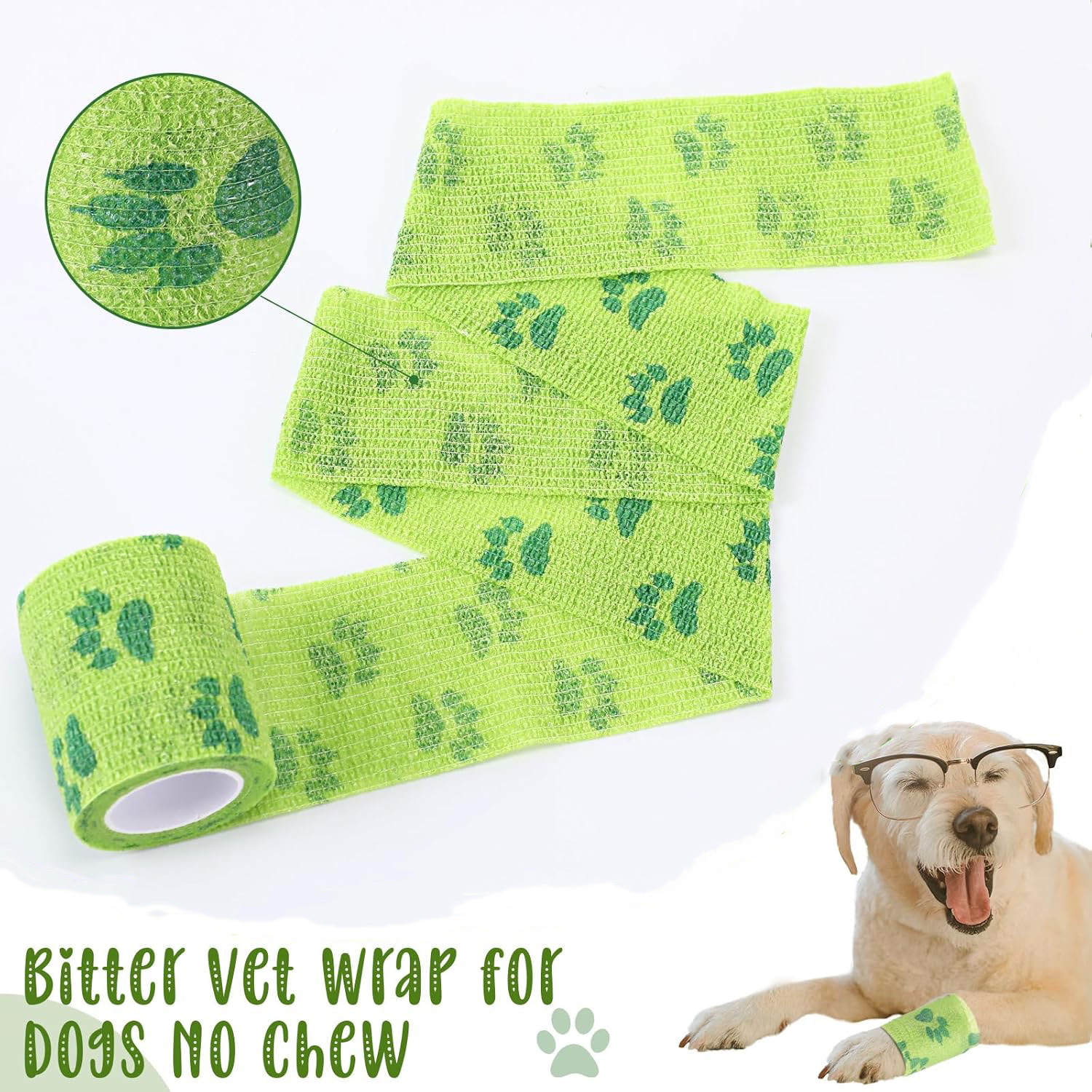
Bandage Wrap for Dogs: How to Choose a Cohesive Vet Wrap That Stays On
Content
What a Bandage Wrap for Dogs Has to Do
A bandage wrap for dogs has to hold a dressing on a moving, licking, fur-covered limb without sticking to the wound or the coat. Most wraps that end up on the floor miss that balance in one direction or the other.
Dogs make difficult patients for two mechanical reasons. Fur covers most of the leg, so anything that depends on skin contact loses most of its usable surface area. And the shapes a wrap has to follow, a tapered paw, a hock with almost no soft tissue over the bone, a tail base that never stops moving, leave very little margin for error.
Three jobs matter, in this order:
- Containment: hold the contact layer, meaning a non-stick pad plus one or two gauze layers, exactly where it was placed, without shifting when the dog stands up.
- Compression: apply even, light pressure that supports the limb and limits swelling, without narrowing into a tourniquet at the top edge.
- Barrier: keep dirt, saliva, and direct licking away from the wound for the hours between changes.
Those three priorities are the same ones that govern human wound care and secondary fixation, where dressing retention is a materials question rather than a technique question.
Cohesive Wrap vs. Adhesive Tape
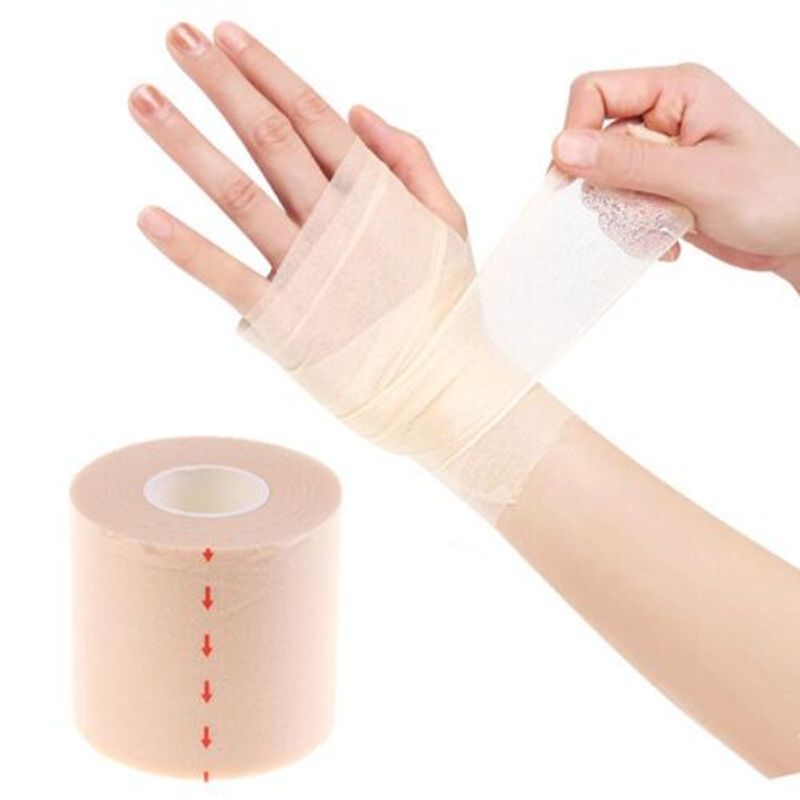
A cohesive bandage, also called self-adherent wrap, vet wrap, or cohesive flexible bandage, is an elastic substrate coated with a patterned adhesive on one face that bonds only to itself when stretched and layered, so it needs no clips, pins, or tape to stay in place.
The difference shows up most clearly at removal. Zinc oxide tape and similar pressure-sensitive tapes grip fur, and pulling them off takes hair and sometimes superficial skin with it. A cohesive wrap separates from its own layers with a light pull, which is why veterinary clinics moved to it for anything that has to survive more than a few hours on an active dog.
| Material | Bonds to | Removal from fur | Typical role |
| Cohesive self-adherent wrap | Its own backing only | Lifts away with little pull | Outer stabilizing layer |
| Zinc oxide or athletic tape | Skin, fur, and itself | Pulls hair and stings | Rigid anchoring at toes or splint |
| Rolled gauze | Nothing | Slides off easily | Contact and absorbent layer |
| Cohesive wrap over gauze | Itself, pressing the gauze down | Lifts as a single unit | Standard wound dressing build |
Choosing the Roll: Width, Material, and Stretch
For most dogs, a 5 cm (2 inch) roll covers paws, hocks, and tails, while 7.5 cm and 10 cm rolls are reserved for chest, torso, and abdominal wraps where the wrap has to cover ground quickly.
| Body area | Roll width | Why this size |
| Paw and toes | 2.5 to 5 cm | Narrow wraps follow the curve of the paw without bunching |
| Metacarpus and hock | 5 cm | The most common size in veterinary practice |
| Lower leg and tail base | 5 to 7.5 cm | Covers with fewer turns and less bulk |
| Chest and torso | 7.5 to 10 cm | Wide rolls hold a figure-eight around the chest |
| Ear or small surgical site | 2.5 cm | Cut to length and wrap with almost no tension |
Substrate choice changes how the wrap behaves in the hand. Cotton cohesive wrap tears cleanly and finishes with a soft matte surface, PP nonwoven is lighter and is what most bulk vet wrap is made from, and PET-laminated nonwoven shrugs off water better and keeps its shape on a wet paw. Adhesive chemistry matters more than color: natural rubber gives the strongest grip but is not suitable for latex-sensitive handlers, while synthetic latex-free coatings trade a little tack for predictable unwind and a longer shelf life.
 Veterinary Cohesive Bandage and Self-Adherent Wrap CollectionExplore a category of veterinary cohesive bandages and self-adherent wraps, including bitter, pet, sports, and first-aid options for varied wrapping needs.View Product →
How to Wrap a Dog's Paw Without Cutting Off Circulation
Wrap from the toes upward, overlap each turn by half the roll width, and finish above the next joint so the wrap cannot slide back down the leg.
- Clean and dry the paw. Clip fur only where it is long enough to tangle under the wrap, and never clip over an open wound.
- Place the contact layer: a non-stick pad over the wound, then one or two flat layers of gauze.
- Anchor at the toes with one full turn at almost no tension, so the wrap sits flat instead of digging in.
- Spiral upward, keeping the roll low and flat against the leg, with half the width overlapping the previous turn.
- Stop above the joint. A wrap that ends mid-limb will bunch and slide the moment the dog stands.
- Press the tail of the wrap onto the layer beneath it. No knot, no tape on fur, no staples.
When Wraps Fail: Loose, Tight, or Chewed
Almost every failed bandage on a dog fails for one of three reasons: it was too loose, it was too tight, or the dog chewed through it.
Too loose
- The wrap slides down the leg within an hour
- Gauze or pad becomes visible at the top edge
- The dog hooks the loose end with a claw and pulls
- You find the whole wrap intact on the floor
Too tight
- Toes below the wrap look puffy or feel cool
- Skin above the top edge stays indented after the wrap is removed
- The dog chews at the top edge rather than the wound
- The leg is held up or not fully weight-bearing
Chewing is the third failure mode, and it is behavioral rather than mechanical. A bitter coating applied to the wrap surface is the least invasive fix, followed by an Elizabethan collar for dogs that will not leave a wound alone. Bitter-coated cohesive wrap uses the same nonwoven substrate as standard vet wrap, with a food-grade bittering agent carried in the adhesive, so it still tears by hand and still bonds to itself.
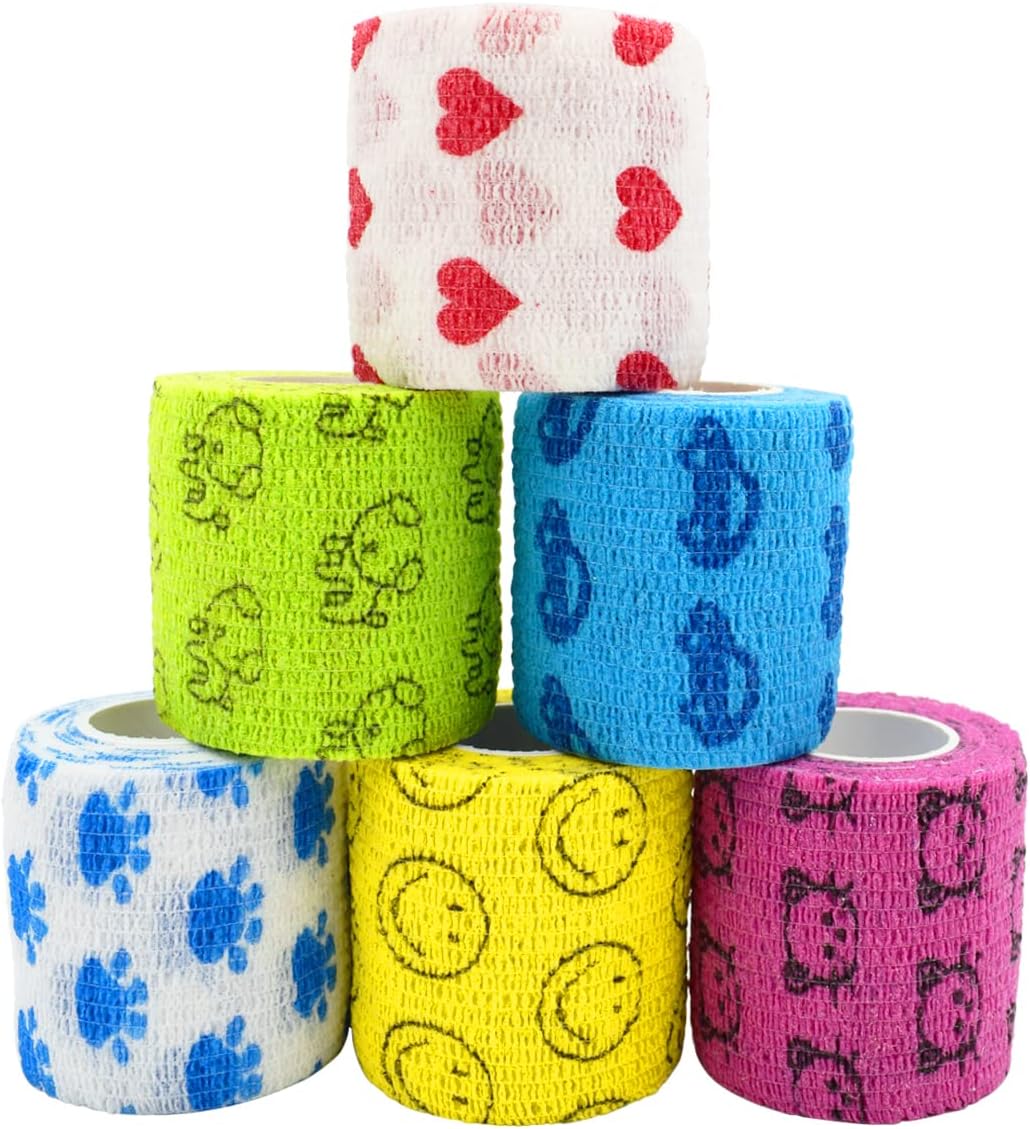 Bitter Vet Wrap Elastic Self-Adhesive Veterinary Cohesive BandageThis bitter-coated veterinary cohesive bandage discourages chewing while staying self-adherent, hand-tearable, and suitable for pet wound care and recovery bandaging.View Product →
Buying Vet Wrap in Bulk: What to Specify
Buyers ordering cohesive wrap for veterinary use should lock down six specifications before the first production run, because two rolls that look identical on a sample table can behave very differently at three in the morning in a clinic.
- Substrate: cotton, PP nonwoven, or PET-laminated nonwoven, since each one tears and stretches differently.
- Adhesive chemistry: natural rubber or synthetic latex-free, which decides who can handle the product and how long it stores.
- Elongation: 150 to 180 percent is typical; too little stretch means the wrap will not lock onto itself.
- Roll format: width, stretched length, core diameter, and whether rolls ship individually wrapped or bulk bagged.
- Surface treatment: plain, bitter-coated, printed, or solid color, all of which affect minimum order quantities.
- Private label artwork: roll print, poly bag, box, and carton, prepared before the packaging line is scheduled.
Small-batch flexibility counts as much as unit price when a clinic chain wants one width across forty locations. Manufacturers that consolidate raw material purchasing across orders can keep small runs close to bulk pricing, and custom size and shape programs let buyers standardize on 5 cm rolls, hand-tear edges, and color-coded lines instead of accepting whatever is in stock.
Frequently Asked Questions
Can I use a human cohesive bandage on my dog?
Yes, provided the material is the same self-adherent cohesive type and the wrap passes the two-finger tightness check. Human products are often sold in narrower widths, so a 2.5 cm roll is a reasonable substitute for a small paw, but check the label for natural rubber if the dog or the person handling the wrap has a known latex sensitivity.
How long can a bandage wrap stay on a dog?
A wound dressing is normally changed every 12 to 24 hours, and immediately if it becomes wet, soiled, or starts to smell. A support wrap over intact skin can stay on longer if it remains clean and dry, but check twice a day for swelling, slipping, or an indentation line at the top edge.
What happens if my dog eats the bandage wrap?
Cohesive wrap is not digestible. A short strand usually passes, but a swallowed roll or a large knotted section can cause an obstruction. Contact a veterinarian if the dog vomits repeatedly, refuses food, drools, or strains without producing stool.
Do I need tape to secure the end of the wrap?
No. Press the tail of the cohesive wrap against the layer below and it bonds on contact. Tape applied over fur adds nothing to security and is painful to remove, and it is the single most common reason owners report that bandage changes upset their dog.
Share:
RECOMMENDED PRODUCTS


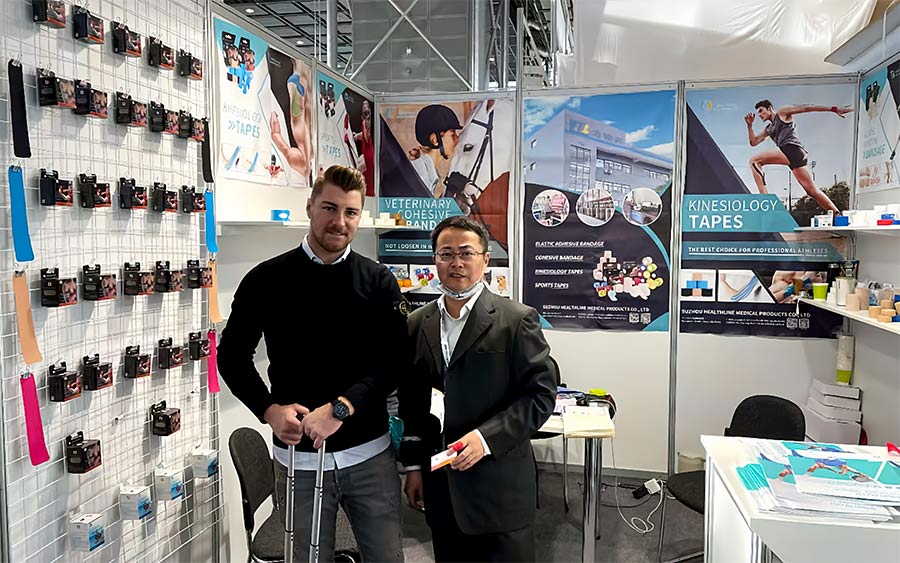
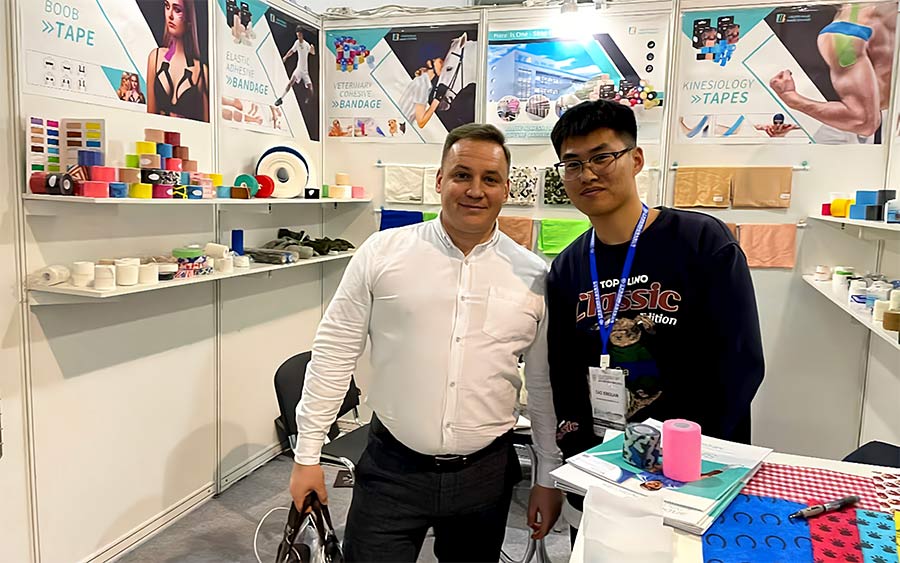
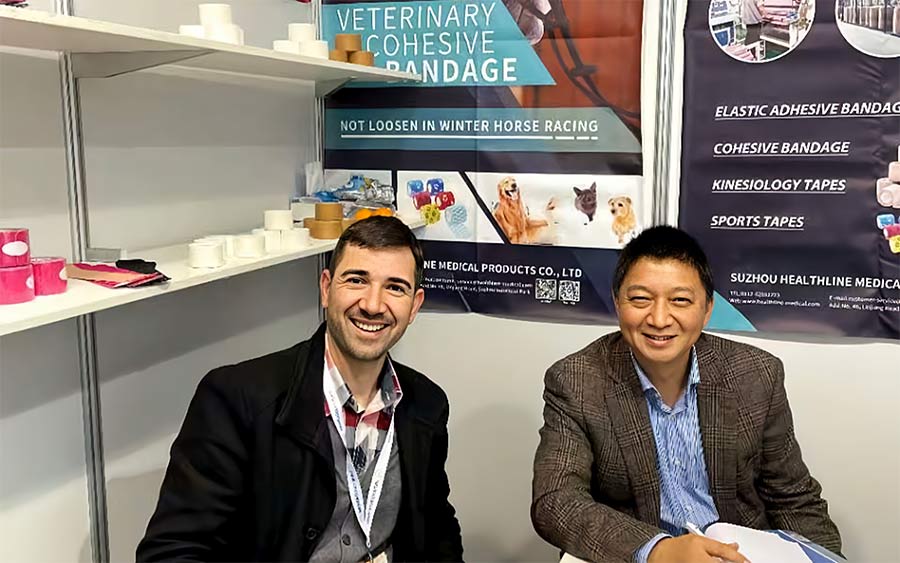
Driven by uncompromising quality, competitive value, and customer-centric service, Healthline’s products are now present in over 50 countries and regions across the globe. As a dedicated OEM/ODM manufacturer of medical cohesive bandages and sports tape, we serve a diverse client portfolio—including hospitals and clinics,veterinary,authorized distributors, government procurement agencies, national pharmacy chains, and retail supermarkets,on-line Amazon,Lotte & Tiktok e-commerce industry .
We are proud to be the long-term OEM/ODM partner for globally recognized names such as Target, CVS, Aldi, Lidl, Carrefour,Tesco, Alliance Boots,Deathlon,Covetrus and Kruuse. Our annual sales volume has maintained a steady year-over-year growth of 15% for consecutive years—a testament to the trust our partners place in us.
In today’s competitive global market, we believe sustainable success comes from continuously delivering superior products and responsive service at a fair price. This philosophy has guided Healthline for three decades, and we are committed to repaying your trust with solutions that help your business grow.



















- Asher.cao
- Tel:+86-512-6289 3223
- Mob:+86-176 2548 7782
- Email:Asher.cao@healthline-medical.com
- Whatsapp / Wechat:+86-176 2548 7782
- Skype:+86-176 2548 7782
- Ethan Zhang
- Tel:+86-512-6289 3223
- Mob:+86-19822909189
- Email:ethanzhang@healthline-medical.com
- Whatsapp / Wechat:+86-19822909189
- Skype:+86-19822909189
- Jason Zhang
- Tel:+86-512-6289 3223
- Mob:+86-13152123359
- Email:jason@healthline-medical.com
- Whatsapp / Wechat:+86-13152123359
Copyright © 2025 SUZHOU HEALTHLINE MEDICAL PRODUCTS CO., LTD
All Rights Reserved.
 Sports Tape Manufacturers Cohesive Bandages Suppliers
The information provided on this website is intended for use only in countries and jurisdictions outside of the People's Republic of China.


