
 English
 Español
 русский
 عربى
عربى

- Cotton Kinesiology Tape
- Synthetic Kinesiology Tape
- Nylon Kinesiology Tape
- 4-Way Stretch Elastic Kinesiology Tape
- Standard Kinesiology Tape Roll
- Pre-Cut Kinesiology Tape Strips
- Printed / Pattern Kinesiology Tape
- Perforated Kinesiology Tape (Ventilated)
- Special Shape Kinesiology Tape
- Water-Resistant Kinesiology Tape
- Pregnancy Support Tape
- Face Lift Kinesiology Tape
- Gentle / Beauty Kinesiology Tape
- Veterinary Kinesiology Tape
- Breast Lift Tape
- Customized Kinesiology Tape
- Pre-cut I Strip Kinesiology Tape
- Pre-cut Y Strip Kinesiology Tape
- Pre-cut X Strip Kinesiology Tape
- Knee Kinesiology Tape
- Leg Kinesiology Tape
- Shoulder Kinesiology Tape
- Back Kinesiology Tape
- Waist Kinesiology Tape
- Ankle Kinesiology Tape
- Pregnancy Belly Tape
- Beauty Face Tape
- Solid Color Cohesive Bandage Roll
- Printed & Pattern Cohesive Bandage
- Non-Woven Self-Adhesive Bandage
- Cotton Self-Adhesive Bandage
- PBT Gauze Cohesive Bandage Rolls
- Pet Vet Wrap
- Horse and Cattle Self-Adhesive Bandage
- Veterinary Cohesive Bandage
- Camo Cohesive Wrap Tape
- Military and Tactical Cohesive Bandage
- Tattoo Grip Tape
- Latex Cohesive Bandage
- Latex-Free Cohesive Bandage
- Pet Laminated Self-Adhesive Bandage
- High-Tensile Cohesive Bandage
- Football Sock Wrap Self-Adhesive Bandage
- Sterile Cohesive Bandage
- Special Function Cohesive Bandage
- OEM / Bulk Cohesive Bandage Roll
- Rigid Strapping Tape
- Athletic Tape
- Zinc Oxide Sports Tape
- Rayon Rigid Sports Tape
- Sports Strapping Tape
- Finger Bob Bandages
- Boxing Tape
- Heavyweight Elastic Adhesive Bandage (EAB)
- 93 Cotton Heavyweight Elastic Adhesive Bandages(EAB)
- Athletic Heavyweight Elastic Adhesive Bandage (EAB)
- Lightweight Elastic Adhesive Bandage (EAB)
- Athletic Lightweight Elastic Adhesive Bandage (EAB)
- American Style Elastic Adhesive Bandage (EAB)
- Japanese Style Elastic Adhesive Bandage (EAB)
- Elastic Adhesive Compression Bandage
- Veterinary Elastic Adhesive Bandage (EAB)
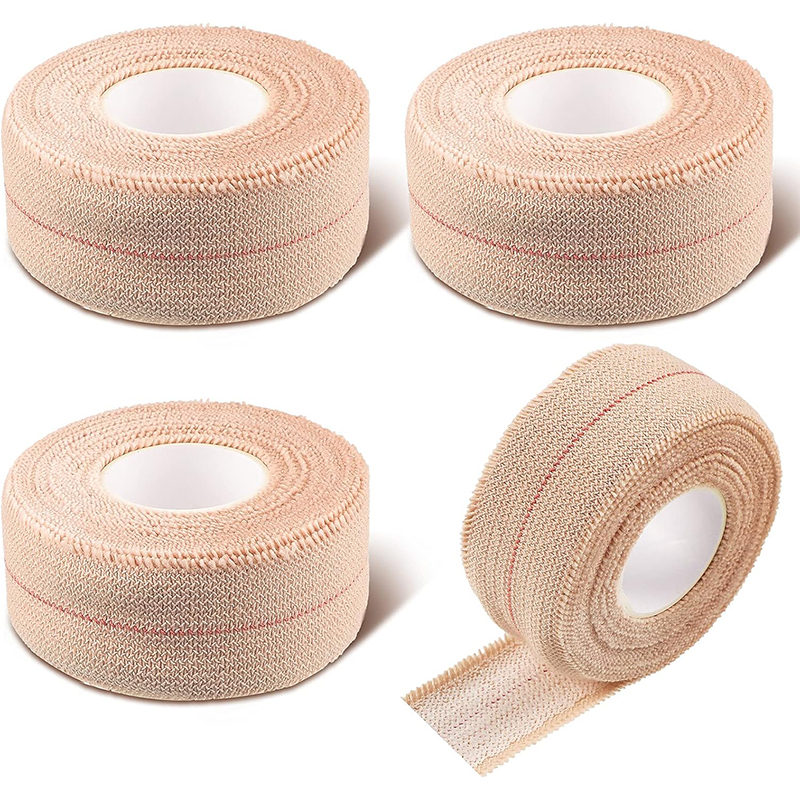
Can Porous Elastic Tape Be Used on Joints such as Knees and Elbows?
Content
Porous Elastic Tape (PET) has gained popularity in recent years as a tool to support muscles and joints, reduce pain, and enhance athletic performance. Its breathable and flexible design makes it appealing for individuals seeking relief from joint discomfort or support during physical activity. However, many people wonder whether this type of tape is suitable for application on major joints such as the knees and elbows, which undergo significant movement and stress.
Understanding Porous Elastic Tape
Porous Elastic Tape is a type of adhesive tape designed to provide support while allowing movement. Unlike rigid medical tapes, PET is lightweight, flexible, and breathable, making it suitable for prolonged use without causing significant discomfort or restricting blood flow. The tape is often made of cotton or synthetic fibers with an elastic component, allowing it to stretch along with the skin and muscles. Its porous nature ensures that moisture and sweat do not accumulate beneath the tape, reducing the risk of skin irritation.
Some of the key features of Porous Elastic Tape include:
- Elasticity: It stretches along with the body, accommodating natural movement.
- Breathability: Its porous structure allows air circulation, keeping the skin dry.
- Adhesiveness: The tape adheres firmly but can be removed without damaging the skin.
- Durability: It can withstand physical activity and daily movements for several hours.
These properties make it an appealing choice for both professional athletes and individuals managing joint discomfort in daily life.
Common Applications of Porous Elastic Tape
Porous Elastic Tape is commonly used in a variety of contexts, including:
- Sports and Athletics: Athletes use PET to support muscles and joints, prevent injuries, and enhance performance.
- Rehabilitation: It can help individuals recovering from injuries by providing mild support and reducing strain on injured tissues.
- Pain Management: PET may alleviate discomfort from joint or muscle pain by stabilizing the area and improving circulation.
- Posture Correction: The tape can gently encourage proper alignment of muscles and joints during movement.
While PET is versatile, it is essential to understand its suitability for high-stress areas like the knees and elbows, which are prone to frequent bending, twisting, and impact.
Using Porous Elastic Tape on Knees
The knee is a complex joint composed of bones, ligaments, tendons, and muscles. It bears the weight of the body, making it prone to injuries such as sprains, strains, and tendonitis. Using Porous Elastic Tape on the knee can provide several potential benefits:
- Support During Activity: PET can help stabilize the knee joint during physical activities such as running, jumping, or squatting. By providing light support, it can reduce the risk of overstretching ligaments and tendons.
- Pain Relief: By lifting the skin slightly, PET may improve blood circulation and reduce pressure on pain-sensitive areas, potentially alleviating discomfort from conditions like patellar tendonitis or mild osteoarthritis.
- Enhanced Proprioception: PET may increase body awareness of knee movement, helping individuals move more cautiously and avoid injury.
- Rehabilitation Aid: After minor knee injuries, PET can support recovery by limiting excessive joint motion without restricting full movement.
Application Tips for Knees
- Clean and dry the skin before applying the tape to ensure proper adhesion.
- Use moderate tension to avoid restricting blood flow or causing discomfort.
- Follow natural contours of the knee, ensuring the tape bends with the joint.
- Avoid excessive stretching at the ends, as this may cause skin irritation.
While PET can be helpful for general support, it is not a substitute for professional medical devices in cases of severe knee injuries, such as ligament tears or fractures. In such cases, consulting a healthcare professional is essential.
Using Porous Elastic Tape on Elbows
The elbow is another joint that experiences frequent movement, particularly flexion and extension. Common issues affecting the elbow include tennis elbow (lateral epicondylitis), golfer’s elbow (medial epicondylitis), and general joint strain. Porous Elastic Tape may be useful in the following ways:
- Stabilization: PET can help stabilize muscles and tendons around the elbow, reducing strain during repetitive movements such as lifting, throwing, or typing.
- Pain Reduction: Gentle lifting of the skin and tissues can improve blood flow, which may help relieve discomfort from inflammation or overuse.
- Rehabilitation Support: During recovery from minor tendon or muscle injuries, PET can provide light support without restricting full elbow motion.
Application Tips for Elbows
- Start with a clean area: Remove oils, lotions, or sweat for better adhesion.
- Anchor tape properly: Secure the ends without stretching them excessively.
- Apply with gentle tension: Overstretching can reduce comfort and effectiveness.
- Monitor skin condition: Remove the tape if redness, itching, or irritation occurs.
Like the knee, the elbow is best supported with PET for mild discomfort or preventive purposes rather than serious injuries requiring immobilization.
Safety Considerations
While Porous Elastic Tape is generally safe, certain precautions should be followed:
- Allergic Reactions: Some individuals may develop irritation or allergic reactions to the adhesive. Conduct a patch test before full application.
- Proper Technique: Incorrect taping may reduce effectiveness or cause further strain. Following manufacturer instructions or consulting a trained professional is recommended.
- Underlying Conditions: PET is not a treatment for severe injuries. Conditions such as fractures, ligament tears, or chronic joint diseases require medical evaluation.
- Duration of Use: Avoid leaving tape on for extended periods beyond manufacturer guidelines to prevent skin issues.
By following these guidelines, users can safely benefit from PET while minimizing the risk of complications.
Limitations of Porous Elastic Tape on Joints
Although Porous Elastic Tape can provide support and pain relief, it is not a cure-all. Its limitations include:
- Limited Structural Support: PET provides light stabilization but cannot replace braces or orthotics for severe injuries.
- Temporary Relief: Benefits are often temporary, focusing on symptom management rather than addressing underlying causes.
- Variable Effectiveness: Individual response to PET varies based on injury type, tape application, and body mechanics.
- Skill-Dependent Application: Proper taping technique is crucial. Incorrect use may reduce effectiveness or cause irritation.
Understanding these limitations ensures realistic expectations when using PET on joints like knees and elbows.
Conclusion
Porous Elastic Tape can be a valuable tool for supporting joints such as knees and elbows, particularly for mild discomfort, preventive support, or rehabilitation from minor injuries. Its breathable, elastic, and skin-friendly properties make it suitable for these joints, which experience frequent movement and stress. Proper application, attention to safety, and awareness of its limitations are key to maximizing benefits.
While PET can enhance comfort, stability, and proprioception, it should not replace professional medical care for severe joint injuries. By combining PET with proper exercise, rest, and medical guidance when needed, individuals can enjoy improved joint support and potentially reduce the risk of further injury.
Porous Elastic Tape, when used thoughtfully, is a versatile aid that supports joint health and facilitates active lifestyles without compromising mobility. For those seeking a non-invasive, flexible, and breathable method to manage mild joint strain, PET is certainly worth considering.
Share:
RECOMMENDED PRODUCTS





















- Asher.cao
- Tel:+86-512-6289 3223
- Mob:+86-176 2548 7782
- Email:Asher.cao@healthline-medical.com
- Whatsapp / Wechat:+86-176 2548 7782
- Skype:+86-176 2548 7782
- Ethan Zhang
- Tel:+86-512-6289 3223
- Mob:+86-19822909189
- Email:ethanzhang@healthline-medical.com
- Whatsapp / Wechat:+86-19822909189
- Skype:+86-19822909189
- Jason Zhang
- Tel:+86-512-6289 3223
- Mob:+86-13152123359
- Email:jason@healthline-medical.com
- Whatsapp / Wechat:+86-13152123359
Copyright © 2025 SUZHOU HEALTHLINE MEDICAL PRODUCTS CO., LTD
All Rights Reserved.
 Sports Tape Manufacturers Cohesive Bandages Suppliers
The information provided on this website is intended for use only in countries and jurisdictions outside of the People's Republic of China.


