
 English
 Español
 русский
 عربى
عربى

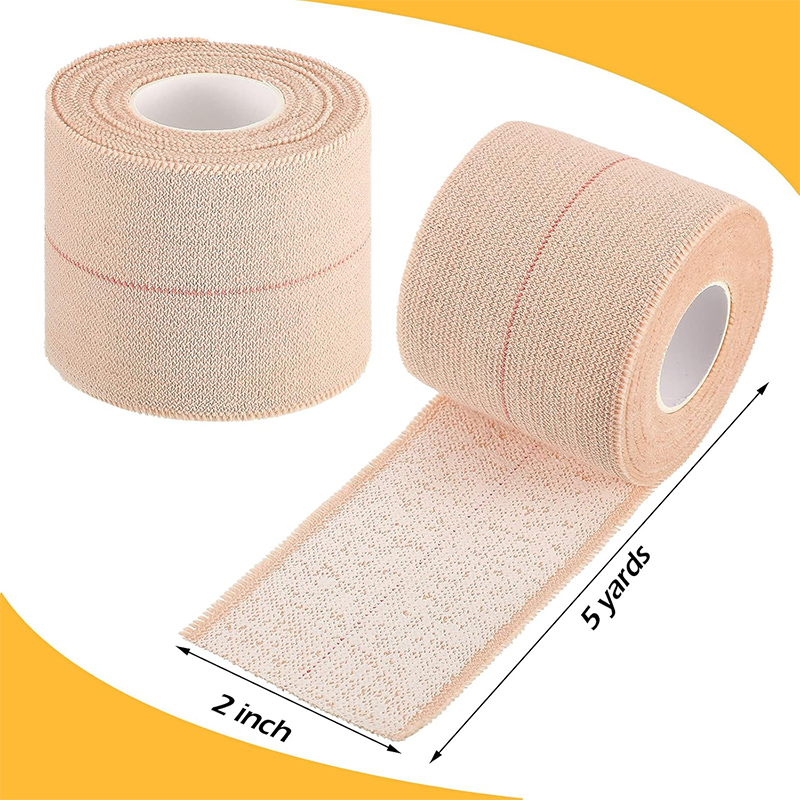
Elastic Adhesive Bandage: Key Benefits, Applications & Proper Usage Guide
Content
What Is an Elastic Adhesive Bandage?
An elastic adhesive bandage is a self-adhesive, stretchable wound-care product that combines the compression properties of a traditional bandage with a built-in adhesive layer — eliminating the need for clips, pins, or separate tape. Made from woven or non-woven fabric blended with elastic fibers such as spandex or latex, these bandages conform naturally to body contours and maintain consistent pressure across irregular surfaces.
Unlike conventional gauze rolls, elastic adhesive bandages stick only to themselves or to the skin (depending on formulation), making them quick to apply and resistant to slipping — even during movement or in high-moisture environments. They are widely used in clinical wound management, sports medicine, and occupational first aid.
Key Benefits of Elastic Adhesive Bandages
The growing adoption of elastic adhesive bandages across healthcare and sports sectors is driven by a distinct combination of functional advantages that traditional bandaging systems cannot fully replicate.
Controlled, Sustained Compression
Elastic adhesive bandages deliver graduated compression that reduces edema and promotes venous return. Studies published in the Journal of Wound Care indicate that consistent sub-bandage pressure between 20–40 mmHg is clinically effective for managing venous leg ulcers and post-surgical swelling. The elastic construction maintains this therapeutic pressure range even as limb volume fluctuates throughout the day.
Superior Conformability
The stretchable fabric adapts to joints, heels, elbows, and other complex anatomical shapes without bunching or creating pressure points. This conformability is critical for maintaining wound dressing integrity at high-mobility sites — an area where rigid bandages consistently fail.
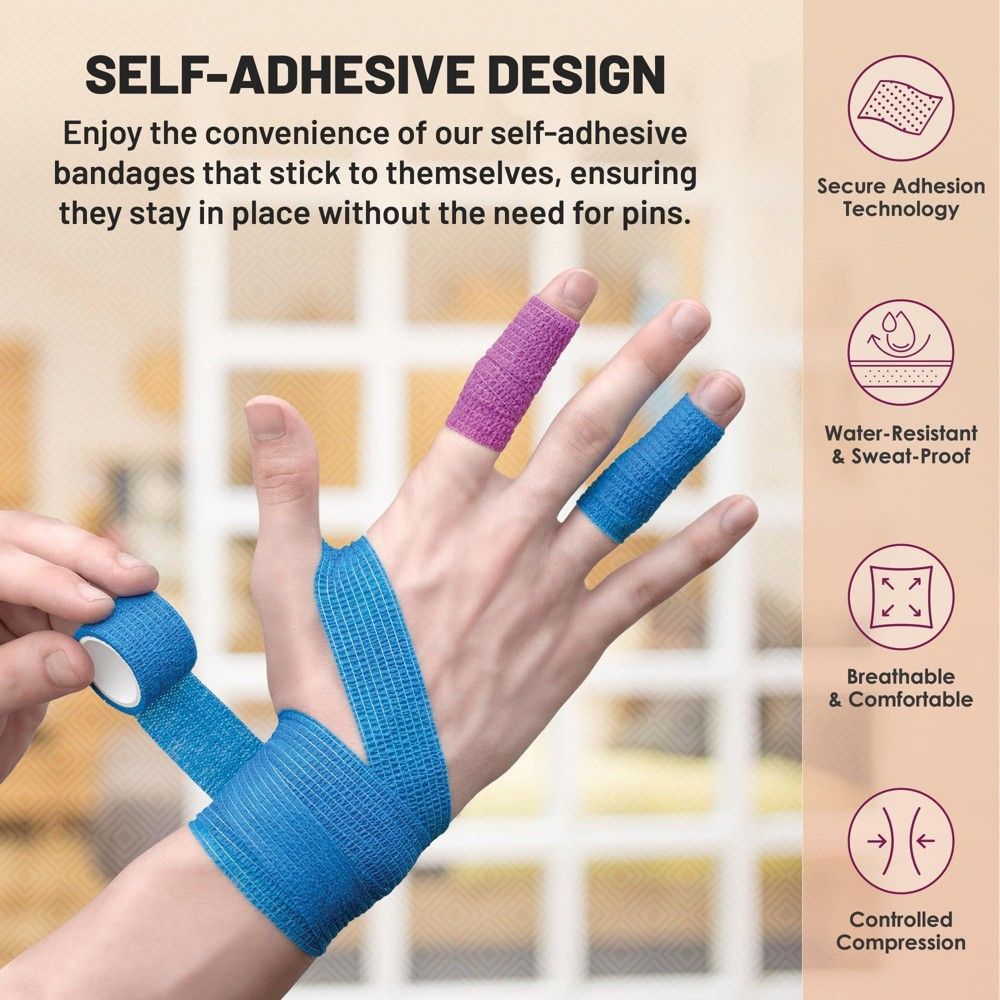
Self-Adhesive Design for Secure Fixation
The adhesive layer bonds directly to itself or the skin, eliminating external fasteners that can loosen, snag clothing, or cause pressure injuries. This design reduces application time by up to 40% compared to clip-secured compression bandages — a meaningful efficiency gain in high-volume clinical or field settings.
Moisture Management and Breathability
Premium elastic adhesive bandages feature open-weave or perforated constructions that allow moisture vapor transmission, reducing maceration risk beneath the bandage. Breathable variants are especially important for chronic wound management where prolonged wear is required.
Latex-Free and Skin-Safe Formulations
With latex allergy prevalence estimated at 1–6% in the general population and up to 17% among healthcare workers, latex-free elastic adhesive bandages are now considered the clinical standard. Acrylic-based and silicone adhesive formulations further minimize skin trauma during removal — a key consideration for elderly patients with fragile skin.
Clinical and Sports Applications
Elastic adhesive bandages serve a wide spectrum of use cases across medical and athletic contexts. Understanding the right application for each scenario ensures optimal outcomes.
| Application Area | Primary Use | Recommended Product Type |
|---|---|---|
| Wound Care | Securing primary dressings on limbs and joints | Cohesive (self-adhesive) elastic bandage |
| Compression Therapy | Venous ulcers, lymphedema, post-op edema | High-stretch, graduated compression bandage |
| Sports Medicine | Ankle sprains, muscle support, taping over strapping | Cohesive athletic bandage (non-skin adhesive) |
| First Aid | Field dressing, bleeding control, blister protection | Lightweight elastic adhesive strip or roll |
| Veterinary Care | Leg bandaging in horses and small animals | Cohesive bandage (no skin adhesive) |
Sports and Athletic Use
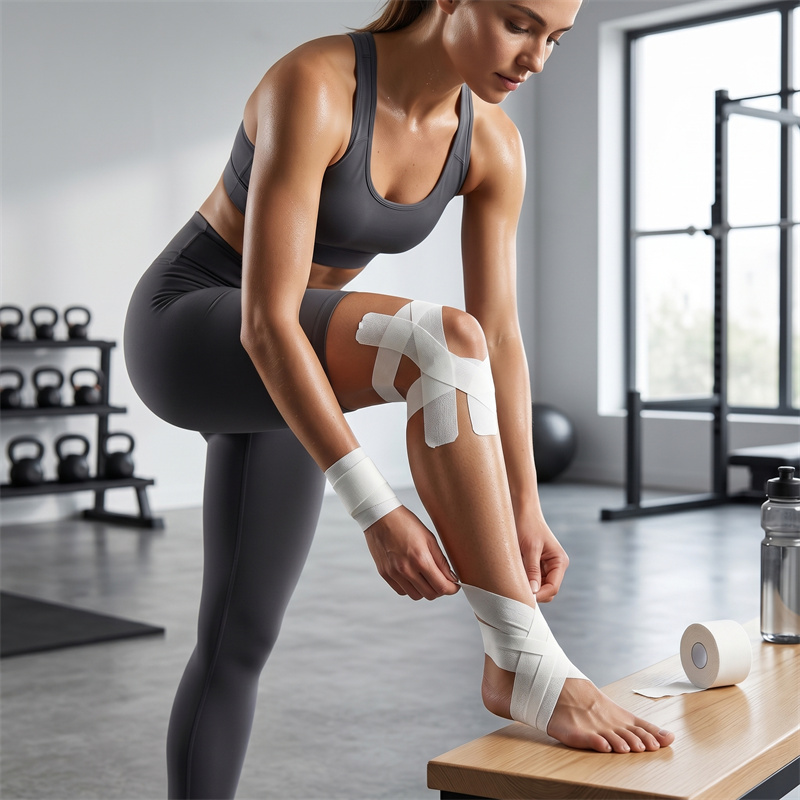
In sports medicine, elastic adhesive bandages — particularly cohesive (self-adhesive, non-skin-bonding) variants — are applied over rigid athletic tape to reduce skin irritation while maintaining joint proprioception and stability. They are also used to hold ice packs in place, secure electrode leads during muscle stimulation, and provide protective padding over bony prominences. A 2022 survey of sports physiotherapists found that cohesive elastic bandages were the single most frequently used external support product in professional team sports environments.
Chronic Wound and Compression Therapy
For venous leg ulcers, multi-layer compression bandaging systems — in which an elastic adhesive bandage forms the outer compression layer — have demonstrated healing rates of 60–70% within 12 weeks in controlled trials. The bandage's elasticity preserves ambulatory compression: pressure increases during walking (muscle contraction phase) and decreases at rest, mimicking the natural calf muscle pump.
How to Apply an Elastic Adhesive Bandage Correctly
Correct application technique is as important as product selection. Improper bandaging is the leading cause of pressure injuries, reduced therapeutic compression, and premature bandage failure.
Step 1 — Prepare the Skin and Primary Dressing
Clean and dry the skin thoroughly. If applying over a wound, ensure the primary dressing is correctly positioned and fully covers the wound bed before bandaging. For sensitive or fragile skin, apply a thin layer of skin protectant or barrier film and allow it to dry.
Step 2 — Position the Limb in a Neutral or Functional Position
For ankle bandaging, hold the foot at a 90-degree angle. For knee or elbow joints, position at approximately 30–45 degrees of flexion. Never bandage in a fully extended or hyperflexed position — this creates uneven pressure that intensifies at joint margins when the limb returns to a functional position.
Step 3 — Start Distally and Work Proximally
Begin at the furthest point from the body and wrap in an overlapping spiral pattern toward the torso. Each layer should overlap the previous by 50% of the bandage width. This distal-to-proximal direction creates graduated compression that facilitates lymphatic and venous drainage toward the heart.
Step 4 — Apply Consistent, Controlled Tension
Unroll the bandage just ahead of the application point — do not pre-stretch it. Allow the bandage's natural elasticity to apply tension uniformly. Uneven pulling or over-stretching creates tourniquet-like pressure points, particularly at bony prominences, which can impair circulation within 30–60 minutes.
Step 5 — Verify Circulation After Application
Immediately after application, assess capillary refill time by pressing a fingernail or toenail for two seconds and releasing — color should return in under two seconds. Ask the patient whether the bandage feels tight, numb, or causes tingling. These are early indicators of circulatory compromise requiring immediate re-application.
Step 6 — Monitor and Replace on Schedule
Compression bandages lose therapeutic pressure as elastic fibers fatigue and as the limb adapts. For wound care applications, replace the bandage each time the primary dressing is changed. For compression therapy, re-apply daily or per clinical protocol. Discard any bandage that has lost cohesion, developed an odor, or been contaminated.
Common Mistakes to Avoid
- Wrapping too tightly: Excess tension restricts arterial blood flow. If swelling, discoloration, or coolness appears distal to the bandage, remove and reapply with less tension immediately.
- Leaving the bandage on too long: Self-adhesive cohesive bandages can bond to skin or hair with extended wear, causing painful removal and skin stripping.
- Applying to broken or infected skin without a primary dressing: Adhesive contact with open wounds delays healing and dramatically increases infection risk.
- Storing in extreme temperatures: High heat degrades adhesive and elastic properties. Store bandages below 30°C in a dry environment away from direct sunlight.
- Reusing single-use bandages: The adhesive and elastic integrity of disposable elastic bandages cannot be restored by rewashing. Reuse creates inconsistent compression and contamination risk.
Choosing the Right Elastic Adhesive Bandage
Selecting the correct product requires matching bandage characteristics to the clinical or athletic objective. Key factors to evaluate include:
- Extensibility: Short-stretch bandages (under 70% extension) are preferred for sustained, high-pressure ambulatory compression. Long-stretch bandages suit resting or post-operative applications.
- Adhesive type: Cohesive (self-adherent) bandages are better for sports and pediatric use; skin-adhesive variants suit fixed wound dressing retention in adults.
- Width: Narrow widths (5–7.5 cm) are suitable for fingers, wrists, and ankles; wider rolls (10–15 cm) are used for knee, thigh, and abdominal applications.
- Latex content: Always confirm latex status for patients with known allergies or those in high-risk occupational groups. Latex-free labels should reference ISO 13485 compliance for medical-grade products.
- Water resistance: For patients who need to bathe or engage in aquatic therapy, water-resistant formulations prevent adhesive failure and maintain dressing integrity through exposure.
For procurement decisions in clinical, sports, or industrial settings, sourcing from manufacturers with ISO 13485 certification and CE/FDA clearance ensures product performance meets validated safety and efficacy standards. Always request product data sheets specifying sub-bandage pressure, extensibility percentage, and adhesive chemistry before committing to large-volume purchases.
Share:
RECOMMENDED PRODUCTS












- Asher.cao
- Tel:+86-512-6289 3223
- Mob:+86-176 2548 7782
- Email:Asher.cao@healthline-medical.com
- Whatsapp / Wechat:+86-176 2548 7782
- Skype:+86-176 2548 7782
- Ethan Zhang
- Tel:+86-512-6289 3223
- Mob:+86-19822909189
- Email:ethanzhang@healthline-medical.com
- Whatsapp / Wechat:+86-19822909189
- Skype:+86-19822909189
- Jason Zhang
- Tel:+86-512-6289 3223
- Mob:+86-13152123359
- Email:jason@healthline-medical.com
- Whatsapp / Wechat:+86-13152123359
Copyright © 2025 SUZHOU HEALTHLINE MEDICAL PRODUCTS CO., LTD
All Rights Reserved.
 Sports Tape Manufacturers Cohesive Bandages Suppliers
The information provided on this website is intended for use only in countries and jurisdictions outside of the People's Republic of China.


