
 English
 Español
 русский
 عربى
عربى

- Cotton Kinesiology Tape
- Synthetic Kinesiology Tape
- Nylon Kinesiology Tape
- 4-Way Stretch Elastic Kinesiology Tape
- Standard Kinesiology Tape Roll
- Pre-Cut Kinesiology Tape Strips
- Printed / Pattern Kinesiology Tape
- Perforated Kinesiology Tape (Ventilated)
- Special Shape Kinesiology Tape
- Water-Resistant Kinesiology Tape
- Pregnancy Support Tape
- Face Lift Kinesiology Tape
- Gentle / Beauty Kinesiology Tape
- Veterinary Kinesiology Tape
- Breast Lift Tape
- Customized Kinesiology Tape
- Pre-cut I Strip Kinesiology Tape
- Pre-cut Y Strip Kinesiology Tape
- Pre-cut X Strip Kinesiology Tape
- Knee Kinesiology Tape
- Leg Kinesiology Tape
- Shoulder Kinesiology Tape
- Back Kinesiology Tape
- Waist Kinesiology Tape
- Ankle Kinesiology Tape
- Pregnancy Belly Tape
- Beauty Face Tape
- Solid Color Cohesive Bandage Roll
- Printed & Pattern Cohesive Bandage
- Non-Woven Self-Adhesive Bandage
- Cotton Self-Adhesive Bandage
- PBT Gauze Cohesive Bandage Rolls
- Pet Vet Wrap
- Horse and Cattle Self-Adhesive Bandage
- Veterinary Cohesive Bandage
- Camo Cohesive Wrap Tape
- Military and Tactical Cohesive Bandage
- Tattoo Grip Tape
- Latex Cohesive Bandage
- Latex-Free Cohesive Bandage
- Pet Laminated Self-Adhesive Bandage
- High-Tensile Cohesive Bandage
- Football Sock Wrap Self-Adhesive Bandage
- Sterile Cohesive Bandage
- Special Function Cohesive Bandage
- OEM / Bulk Cohesive Bandage Roll
- Rigid Strapping Tape
- Athletic Tape
- Zinc Oxide Sports Tape
- Rayon Rigid Sports Tape
- Sports Strapping Tape
- Finger Bob Bandages
- Boxing Tape
- Heavyweight Elastic Adhesive Bandage (EAB)
- 93 Cotton Heavyweight Elastic Adhesive Bandages(EAB)
- Athletic Heavyweight Elastic Adhesive Bandage (EAB)
- Lightweight Elastic Adhesive Bandage (EAB)
- Athletic Lightweight Elastic Adhesive Bandage (EAB)
- American Style Elastic Adhesive Bandage (EAB)
- Japanese Style Elastic Adhesive Bandage (EAB)
- Elastic Adhesive Compression Bandage
- Veterinary Elastic Adhesive Bandage (EAB)
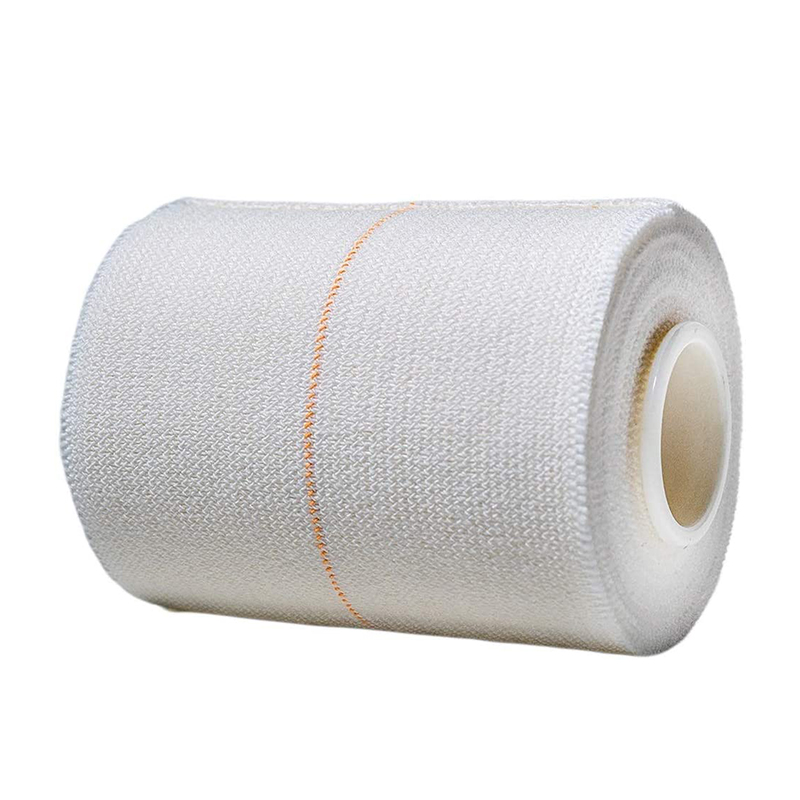
How to Choose the Right Elastic Adhesive Bandage for Sports and Medical Support
Content
- What Makes Elastic Adhesive Bandages Different From Regular Bandages
- Sports Use vs. Medical Use: The Requirements Are Not the Same
- Key Specifications to Evaluate Before Purchasing
- Self-Adhesive vs. Cohesive Bandages: Choosing the Right Bonding Mechanism
- Width, Length, and Application Area: Matching the Format to the Body Part
- Skin Sensitivity and Allergy Risk: What to Check on the Product Data Sheet
- Practical Buying Checklist: Questions to Ask Your Supplier
What Makes Elastic Adhesive Bandages Different From Regular Bandages
Elastic adhesive bandages — also called self-adhesive elastic bandages, cohesive bandages, or elastic tape — are engineered to conform to body contours, support joints under load, and stay in place during movement. Unlike standard gauze or rigid strapping tape, they combine stretch with adhesion, allowing controlled compression without restricting circulation when applied correctly.
The core distinction lies in their construction. Most elastic adhesive bandages are made from a woven or non-woven cotton, polyester, or spandex blend coated with a natural rubber latex or synthetic acrylate adhesive. This gives them two-way or four-way stretch, meaning the bandage moves with the body rather than against it — critical for both athletic performance and post-injury recovery.
For buyers choosing between product lines, the key variables are: substrate material, stretch percentage, adhesive type, breathability, and whether the bandage is self-cohesive (sticks to itself) or skin-adhesive (sticks to skin). Getting these wrong leads to bandages that slip, cause skin irritation, or fail to provide the intended support level.
Sports Use vs. Medical Use: The Requirements Are Not the Same
A common sourcing mistake is treating sports taping and clinical wound management as interchangeable applications. In practice, each demands a different bandage specification.
Sports and Athletic Applications
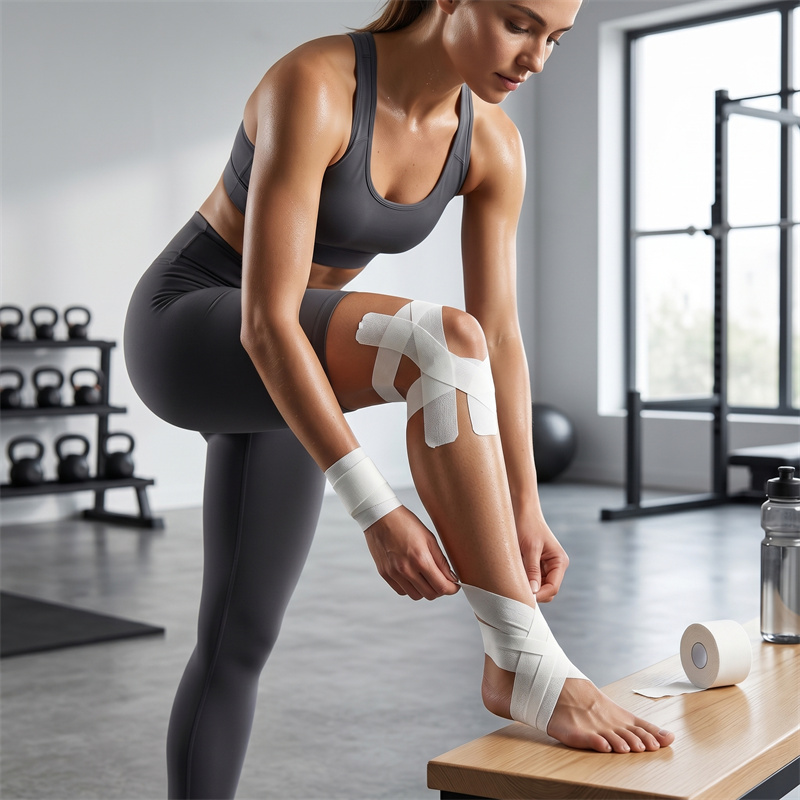
In sports settings — ankle taping, knee stabilization, wrist support, muscle compression — the bandage must withstand high repetitive stress, sweat, and friction. Key requirements include:
- High elongation capacity (typically 150–200% stretch) for dynamic movement
- Strong but skin-safe adhesive that resists moisture and perspiration
- Lightweight construction that doesn't add bulk under equipment
- Easy tear-by-hand design for rapid application on the field
- Color or patterned options that comply with sport-specific uniform regulations
Medical and Clinical Applications
For post-surgical support, edema management, wound dressing retention, or orthopedic rehabilitation, the emphasis shifts toward:
- Controlled compression levels (often graded, measured in mmHg) to manage swelling without occluding blood flow
- Hypoallergenic adhesives suitable for extended skin contact
- High breathability and moisture-wicking to prevent maceration under the bandage
- Latex-free formulations for patient populations with known sensitivities
- Regulatory compliance (CE marking, FDA 510(k) clearance depending on market)
A bandage optimized for athletic taping may carry adhesive formulations that are too aggressive for fragile post-operative skin. Conversely, a gentle medical-grade product may not withstand the shear forces of competitive sport. Always match the specification to the end-use scenario.
Key Specifications to Evaluate Before Purchasing
Whether you are procuring for a hospital, a sports clinic, a pharmacy chain, or an OEM product line, the following technical parameters should be reviewed and tested against your application requirements.
| Specification | Sports Focus | Medical Focus |
|---|---|---|
| Stretch Ratio | 150–200% | 50–130% |
| Adhesive Type | Rubber-based (moisture resistant) | Acrylic (hypoallergenic) |
| Latex Content | Standard or latex-free | Latex-free preferred |
| Breathability | Medium–High | High (perforated or open-weave) |
| Tear Method | Hand-tearable | Scissors or hand-tearable |
| Width Range | 2.5 cm – 7.5 cm | 5 cm – 15 cm |
| Regulatory Standard | ISO 10993 (skin contact) | CE Class I / FDA 510(k) |
Beyond these parameters, always request peel adhesion test data (measured in N/cm) and elongation-at-break values from suppliers. Products with inconsistent batch-to-batch performance — even if within advertised ranges — create liability in clinical settings and performance issues in sports environments.
Self-Adhesive vs. Cohesive Bandages: Choosing the Right Bonding Mechanism
One of the most practically important distinctions in elastic bandage selection is whether the product uses a skin-adhesive or self-cohesive (self-adhesive without glue) mechanism.
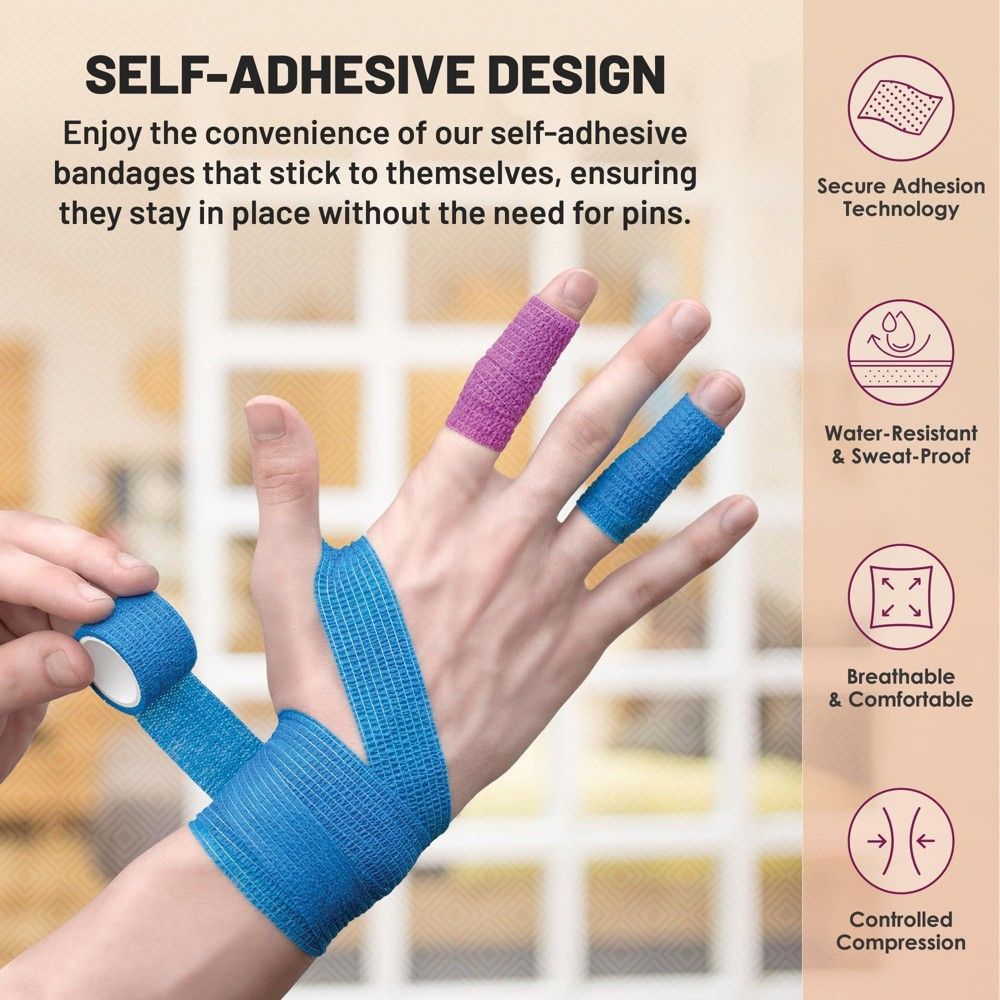
Skin-adhesive elastic bandages bond directly to the skin surface via an adhesive layer. They are ideal when the bandage must remain fixed during high-intensity activity, particularly over joints like the ankle or thumb. The trade-off is potential skin irritation during removal, especially with prolonged wear exceeding 24 hours.
Cohesive bandages (sometimes called self-cohesive or co-bandages) bond only to themselves — not to skin or hair. They are widely used in veterinary settings, emergency first aid, and post-procedure compression. Their major advantages: easy, painless removal; no residue; and the ability to be repositioned during application. However, they are less suitable where the bandage must anchor to skin at the edges without slipping.
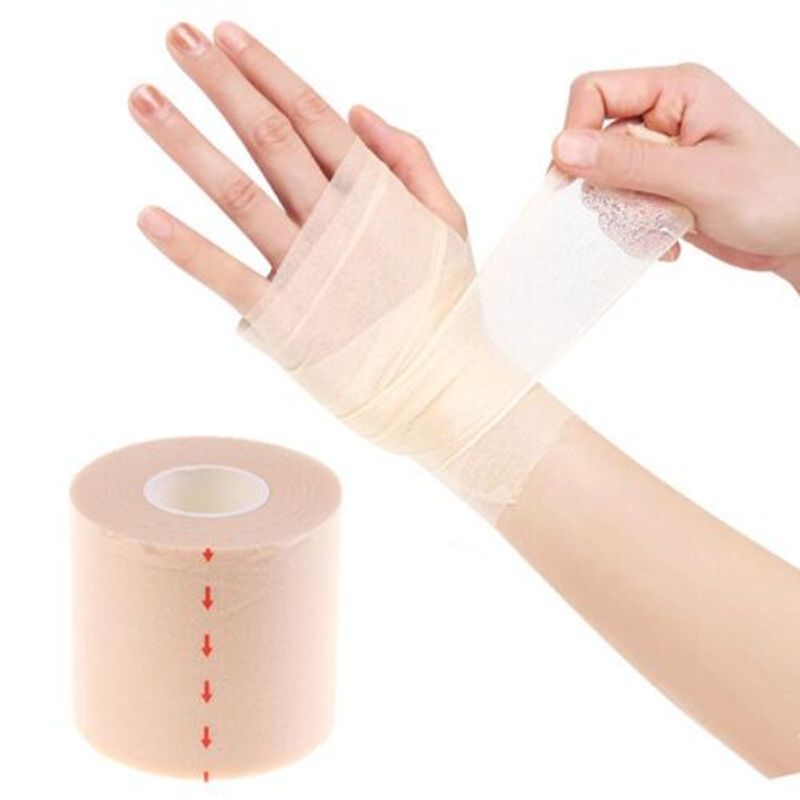
For athletic taping, a hybrid approach is common: an underwrap foam layer is applied first to protect skin, followed by a skin-adhesive elastic bandage over the top. This combines the anchoring strength of adhesive products with the skin protection of a barrier layer — reducing the risk of blistering or follicular damage during multi-day wear.
Width, Length, and Application Area: Matching the Format to the Body Part
Selecting the correct width and roll length is often underestimated, yet it directly affects application ease, material waste, and support effectiveness. Standard widths and their primary use cases:
- 2.5 cm (1 inch): Fingers, toes, small joint taping
- 3.75 cm (1.5 inches): Wrists, thumbs, hand support
- 5 cm (2 inches): Ankles, forearms — the most versatile and widely stocked width
- 7.5 cm (3 inches): Knees, shoulders, thigh taping
- 10–15 cm (4–6 inches): Post-surgical compression wrapping on limbs or torso
Standard roll lengths range from 4.5 meters (5 yards) for sports formats to 6 meters (6.5 yards) for medical wrapping. For procurement at volume, roll length standardization matters: inconsistency between supplier batches creates inventory management problems and can cause under-wrapping if clinical staff rely on a specific length per application procedure.
Skin Sensitivity and Allergy Risk: What to Check on the Product Data Sheet
Adverse skin reactions from elastic adhesive bandages — ranging from mild erythema to contact dermatitis — are a documented clinical and liability concern. The primary culprits are:
- Natural rubber latex: Affects approximately 1–6% of the general population and up to 17% of healthcare workers with repeated exposure (per WHO estimates). Latex-free alternatives using synthetic polyisoprene or silicone-gel adhesives are the standard recommendation for medical settings.
- Rosin (colophony) in rubber adhesives: A common sensitizer found in many traditional sports tapes. Check whether the product data sheet lists rosin as an adhesive component.
- Zinc oxide additives: Present in some adhesive formulations as an antiseptic agent; may cause sensitivity in some users with prolonged contact.
When sourcing for healthcare facilities or products that will carry a medical device classification, insist on ISO 10993-10 cytotoxicity and sensitization testing documentation from the manufacturer. For sports retail, displaying latex-free or hypoallergenic claims without underlying test data is increasingly scrutinized by regulatory bodies in the EU and North America.
Practical Buying Checklist: Questions to Ask Your Supplier
Before committing to a supplier or placing a large order, verify the following:
- What is the peel adhesion value (N/2.5 cm) and how is it tested — on steel or on synthetic skin simulant?
- What is the elongation at break (%) and the elastic recovery after 50% stretch for 60 seconds?
- Is the product latex-free? If so, what synthetic alternative is used in the adhesive?
- Has the product been tested to ISO 10993 or equivalent skin biocompatibility standard?
- What are the storage conditions and shelf life (typically 3–5 years at 15–30°C, <75% RH)?
- Can the supplier provide batch consistency data across multiple production runs?
- What regulatory clearances does the product hold (CE, FDA, TGA, etc.) and for which classification?
- Is custom labeling, width, and color available for OEM or private-label orders?
A supplier unwilling or unable to provide documentation on the above points represents a quality and compliance risk — regardless of price competitiveness. The lowest unit cost on a bandage that fails adhesion testing mid-competition or causes a hospital-acquired contact dermatitis incident is never the lowest total cost.
Share:
RECOMMENDED PRODUCTS


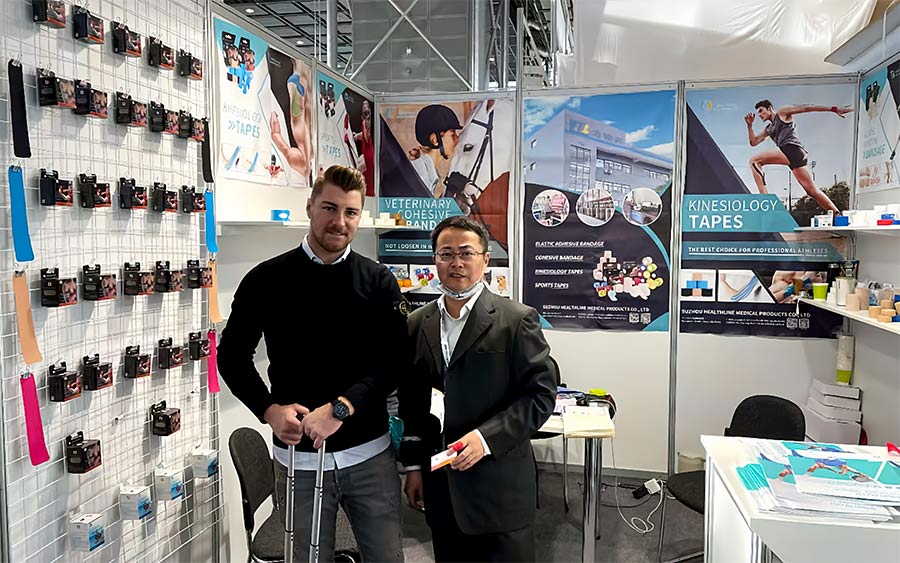
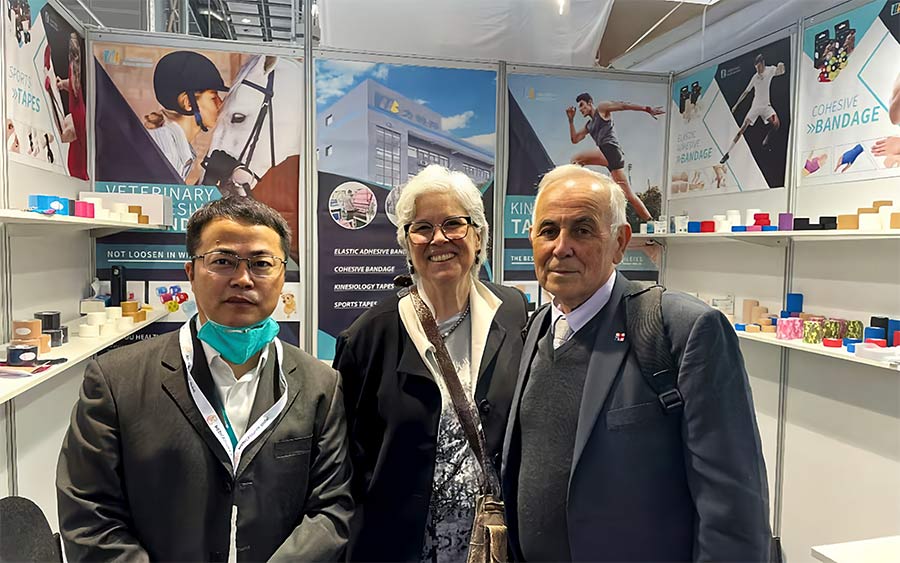
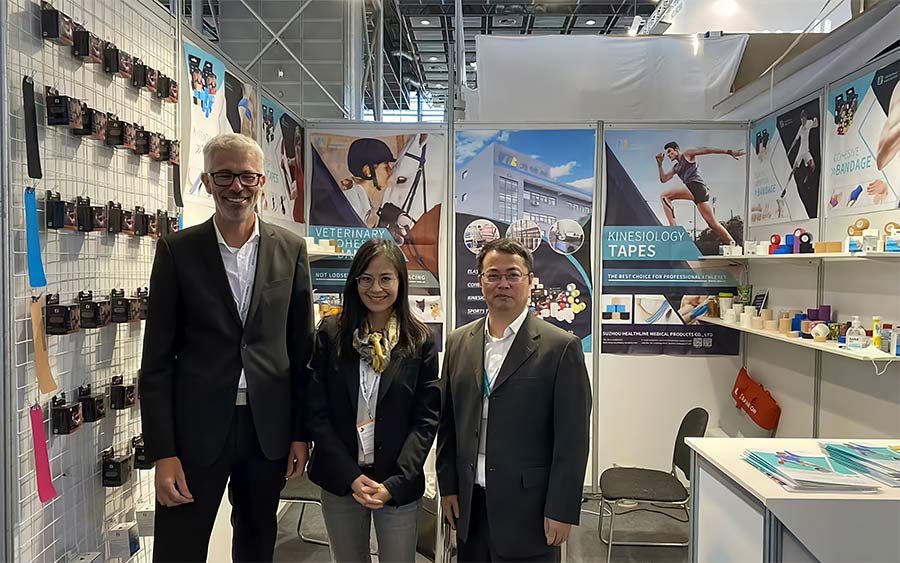
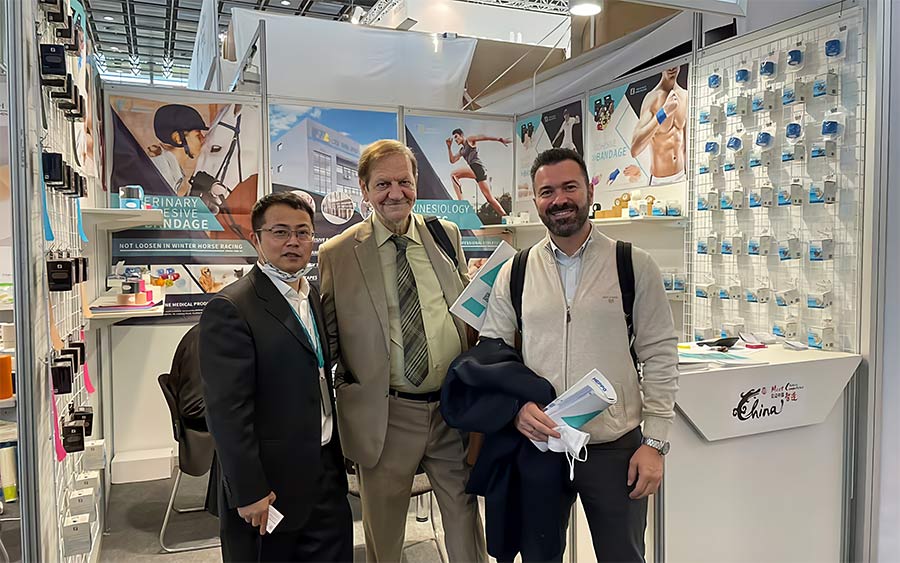
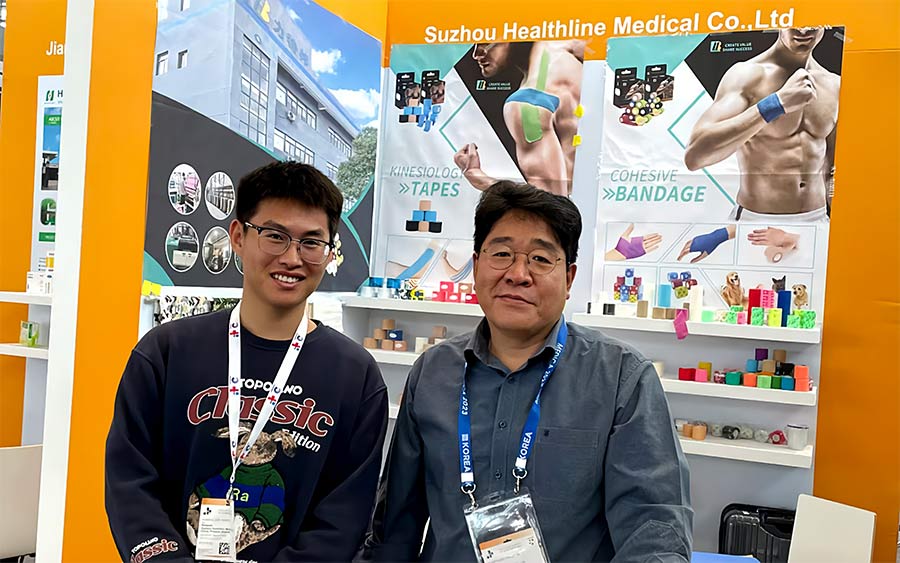
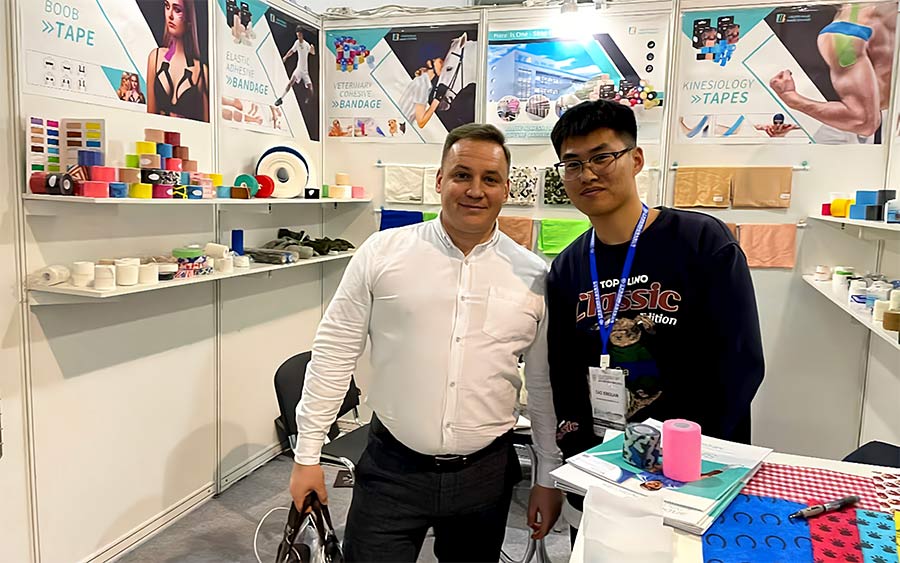
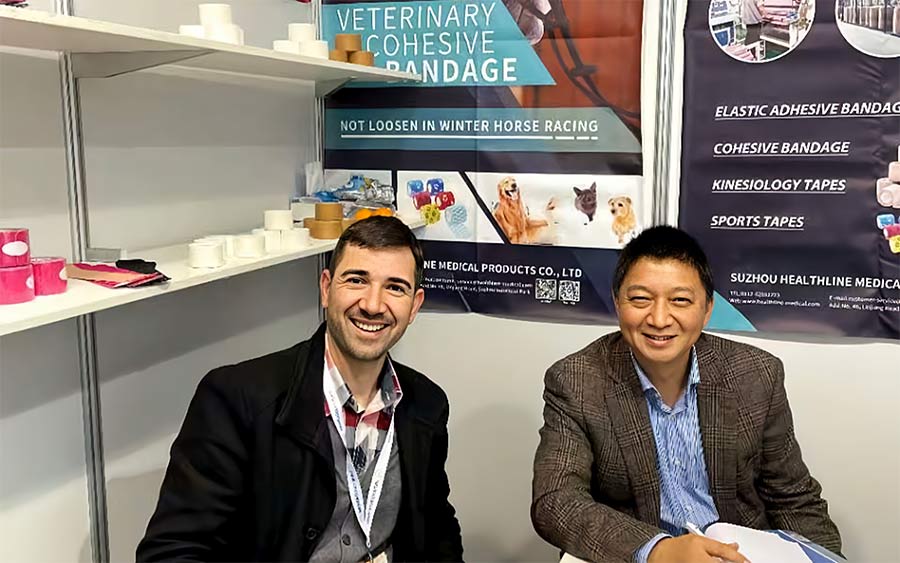
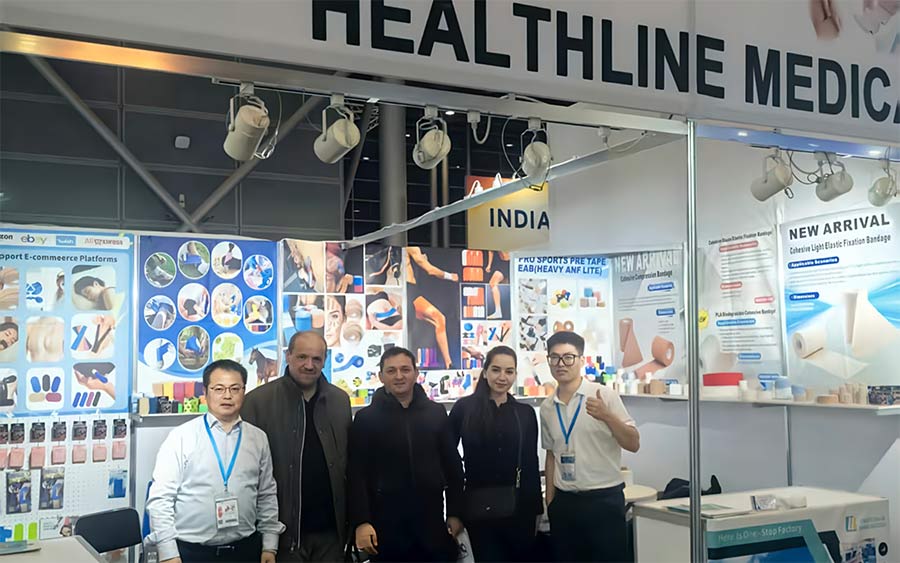
Driven by uncompromising quality, competitive value, and customer-centric service, Healthline’s products are now present in over 50 countries and regions across the globe. As a dedicated OEM/ODM manufacturer of medical cohesive bandages and sports tape, we serve a diverse client portfolio—including hospitals and clinics,veterinary,authorized distributors, government procurement agencies, national pharmacy chains, and retail supermarkets,on-line Amazon,Lotte & Tiktok e-commerce industry .
We are proud to be the long-term OEM/ODM partner for globally recognized names such as Target, CVS, Aldi, Lidl, Carrefour,Tesco, Alliance Boots,Deathlon,Covetrus and Kruuse. Our annual sales volume has maintained a steady year-over-year growth of 15% for consecutive years—a testament to the trust our partners place in us.
In today’s competitive global market, we believe sustainable success comes from continuously delivering superior products and responsive service at a fair price. This philosophy has guided Healthline for three decades, and we are committed to repaying your trust with solutions that help your business grow.



















- Ethan Zhang
- Tel:+86-512-6289 3223
- Mob:+86-19822909189
- Email:ethanzhang@healthline-medical.com
- Whatsapp / Wechat:+86-19822909189
- Skype:+86-19822909189
- Asher.cao
- Tel:+86-512-6289 3223
- Mob:+86-17625487782
-
Email:ethanzhang@healthline-medical.com
Asher.cao@healthline-medical.com
- Whatsapp / Wechat:+86-17625487782
- Skype:+86-176 2548 7782
- Jason Zhang
- Tel:+86-512-6289 3223
- Mob:+86-13152123359
- Email:jason@healthline-medical.com
- Whatsapp / Wechat:+86-13152123359
Copyright © 2025 SUZHOU HEALTHLINE MEDICAL PRODUCTS CO., LTD
All Rights Reserved.
 Sports Tape Manufacturers Cohesive Bandages Suppliers
The information provided on this website is intended for use only in countries and jurisdictions outside of the People's Republic of China.


