
 English
 Español
 русский
 عربى
عربى

- Cotton Kinesiology Tape
- Synthetic Kinesiology Tape
- Nylon Kinesiology Tape
- 4-Way Stretch Elastic Kinesiology Tape
- Standard Kinesiology Tape Roll
- Pre-Cut Kinesiology Tape Strips
- Printed / Pattern Kinesiology Tape
- Perforated Kinesiology Tape (Ventilated)
- Special Shape Kinesiology Tape
- Water-Resistant Kinesiology Tape
- Pregnancy Support Tape
- Face Lift Kinesiology Tape
- Gentle / Beauty Kinesiology Tape
- Veterinary Kinesiology Tape
- Breast Lift Tape
- Customized Kinesiology Tape
- Pre-cut I Strip Kinesiology Tape
- Pre-cut Y Strip Kinesiology Tape
- Pre-cut X Strip Kinesiology Tape
- Knee Kinesiology Tape
- Leg Kinesiology Tape
- Shoulder Kinesiology Tape
- Back Kinesiology Tape
- Waist Kinesiology Tape
- Ankle Kinesiology Tape
- Pregnancy Belly Tape
- Beauty Face Tape
- Solid Color Cohesive Bandage Roll
- Printed & Pattern Cohesive Bandage
- Non-Woven Self-Adhesive Bandage
- Cotton Self-Adhesive Bandage
- PBT Gauze Cohesive Bandage Rolls
- Pet Vet Wrap
- Horse and Cattle Self-Adhesive Bandage
- Veterinary Cohesive Bandage
- Camo Cohesive Wrap Tape
- Military and Tactical Cohesive Bandage
- Tattoo Grip Tape
- Latex Cohesive Bandage
- Latex-Free Cohesive Bandage
- Pet Laminated Self-Adhesive Bandage
- High-Tensile Cohesive Bandage
- Football Sock Wrap Self-Adhesive Bandage
- Sterile Cohesive Bandage
- Special Function Cohesive Bandage
- OEM / Bulk Cohesive Bandage Roll
- Rigid Strapping Tape
- Athletic Tape
- Zinc Oxide Sports Tape
- Rayon Rigid Sports Tape
- Sports Strapping Tape
- Finger Bob Bandages
- Boxing Tape
- Heavyweight Elastic Adhesive Bandage (EAB)
- 93 Cotton Heavyweight Elastic Adhesive Bandages(EAB)
- Athletic Heavyweight Elastic Adhesive Bandage (EAB)
- Lightweight Elastic Adhesive Bandage (EAB)
- Athletic Lightweight Elastic Adhesive Bandage (EAB)
- American Style Elastic Adhesive Bandage (EAB)
- Japanese Style Elastic Adhesive Bandage (EAB)
- Elastic Adhesive Compression Bandage
- Veterinary Elastic Adhesive Bandage (EAB)
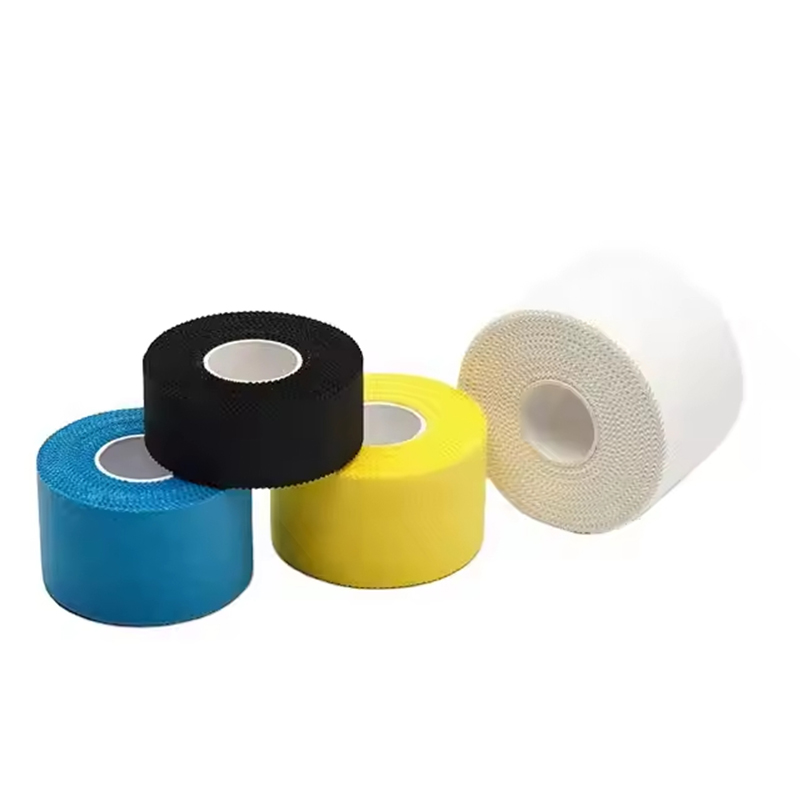
Flex, Support, Dominate: Why Sports Tape Is the Ultimate Performance Hack
Content
Walk into any professional locker room before a game and you'll spot the same thing: strips of colored tape stretched across shoulders, knees, ankles, and wrists. This isn't superstition or aesthetics. Sports tape has become one of the most practical, low-cost tools in an athlete's arsenal — and the science behind it is more compelling than most people realize.
Two Tapes, Two Strategies
Not all sports tape is the same, and using the wrong type for your goal is a common mistake. The two primary options are rigid athletic tape (zinc oxide) and kinesiology tape (K-tape), and they work in fundamentally different ways.
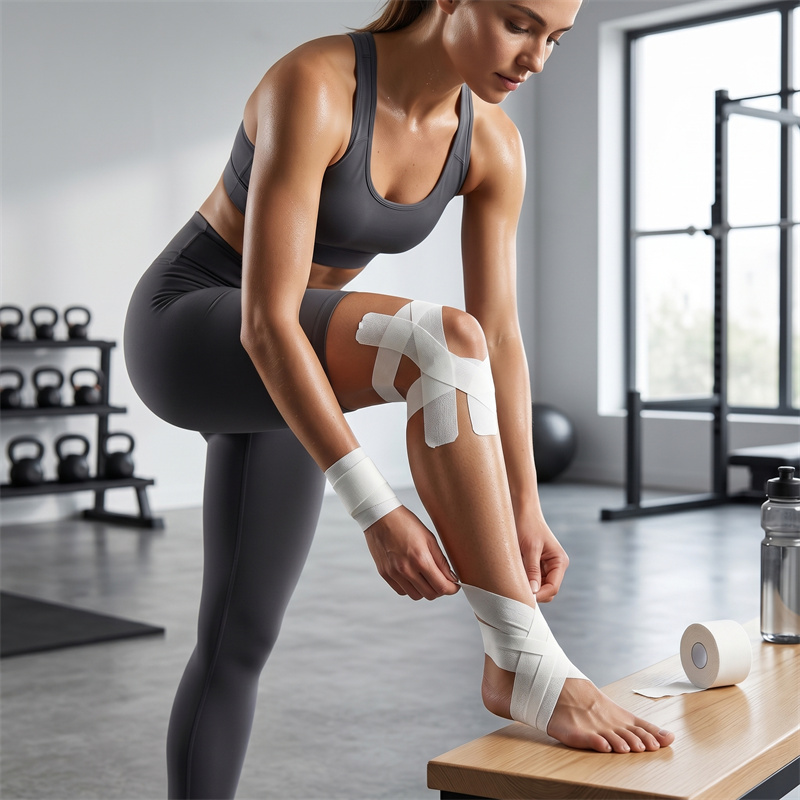
Rigid tape locks joints in place. It's the go-to for high-contact sports — football, basketball, volleyball — where you need to cap the range of motion on a vulnerable ankle or wrist and prevent it from rolling into injury. Once applied, the joint is stabilized, period.
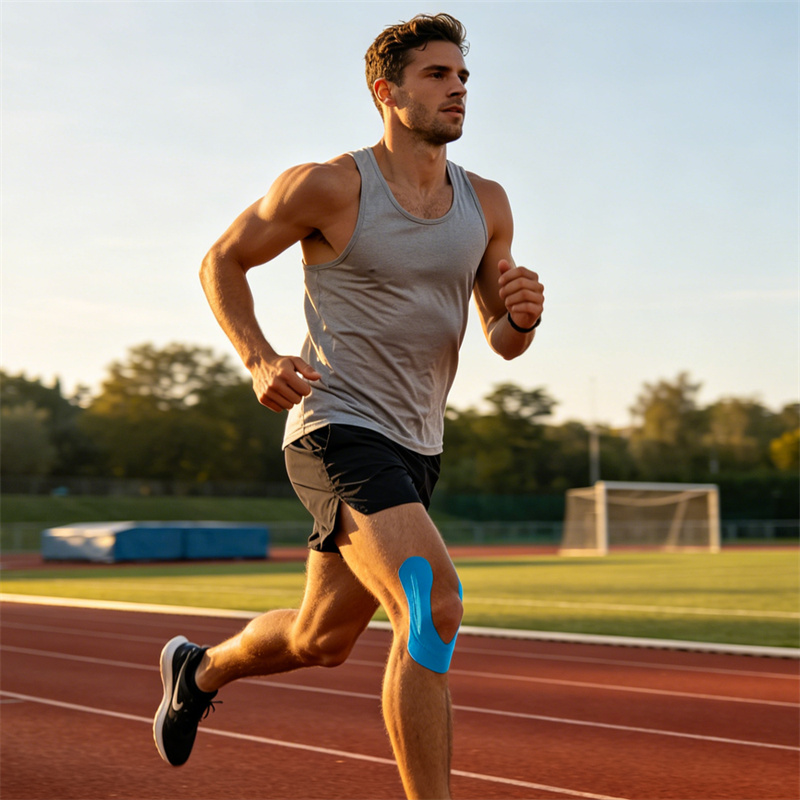
Kinesiology tape takes the opposite approach. Engineered to stretch at roughly 130–140% of its resting length, it mimics the elasticity of skin. It doesn't restrict movement — it supports it. Athletes wear it to manage muscle fatigue, reduce swelling, and maintain proprioceptive feedback during a full range of motion. This is why you see marathon runners finishing races with it still on their knees, looking completely unbothered.
For a full range of high-performance sports taping solutions for every application, the choice of format and material matters as much as technique.
The Proprioception Edge
Here's where sports tape gets interesting from a performance standpoint. When kinesiology tape is applied under slight tension, it creates a gentle lift on the skin. That lift stimulates cutaneous mechanoreceptors — the sensory cells responsible for feeding your brain real-time data about joint position and movement. The result is enhanced proprioception: your nervous system gets sharper, faster input about where your body is in space.
A 2025 study published in BMC Sports Science, Medicine and Rehabilitation found that kinesiology taping produced measurable improvements in proprioceptive function and neuromuscular responsiveness in athletes with chronic ankle instability. The improvements showed up not just in balance tests, but in real-time athletic tasks including single-leg hopping and agility drills. For athletes returning from injury, this kind of sensory recalibration is exactly what bridges the gap between rehab and full competition.
This proprioceptive benefit also explains why many athletes tape preventively, not reactively. An ankle that receives better sensory feedback is an ankle that responds faster to uneven terrain — and that speed difference is often the difference between a clean landing and a sprain.
Injury Prevention Without Sacrificing Movement
One of the oldest objections to taping was that rigid support comes at the cost of mobility. That trade-off is real with zinc oxide tape — but kinesiology tape eliminates it entirely. The elastic structure means muscles and joints move freely, while the tape continuously provides supportive feedback throughout the movement arc.
For muscles, this translates into measurable fatigue management. By providing a layer of external support, K-tape reduces the load that muscles absorb during repetitive contractions. Delayed-onset muscle soreness decreases. Recovery between training sessions shortens. An athlete who can train harder and recover faster has a genuine competitive edge that compounds over time.
The right kinesiology tape for muscle activation and joint recovery should stretch uniformly, maintain adhesion through sweat, and stay in place for multiple training sessions without irritating the skin. These aren't luxury specifications — they're the baseline for tape that actually performs.
Application: Where Most Athletes Go Wrong
The tape itself is only as effective as the application. A few principles that separate proper taping from wasted tape:
- Clean, dry skin. Oils and moisture are the enemy of adhesive. Apply to bare skin, not over clothing or other dressings, and give it a few minutes to activate before training.
- Match tension to purpose. For decompression and swelling reduction, apply with minimal tension. For muscle facilitation, apply with 25–50% stretch. For joint support, increase to 75% and anchor the ends with zero tension to prevent skin lifting.
- Round the corners. Squared-off tape corners catch on clothing and peel faster. A quick trim at each end doubles the wear time.
- Pre-cut strips save time. Pre-cut kinesiology tape patches for targeted muscle areas remove the guesswork and speed up pre-competition prep significantly.
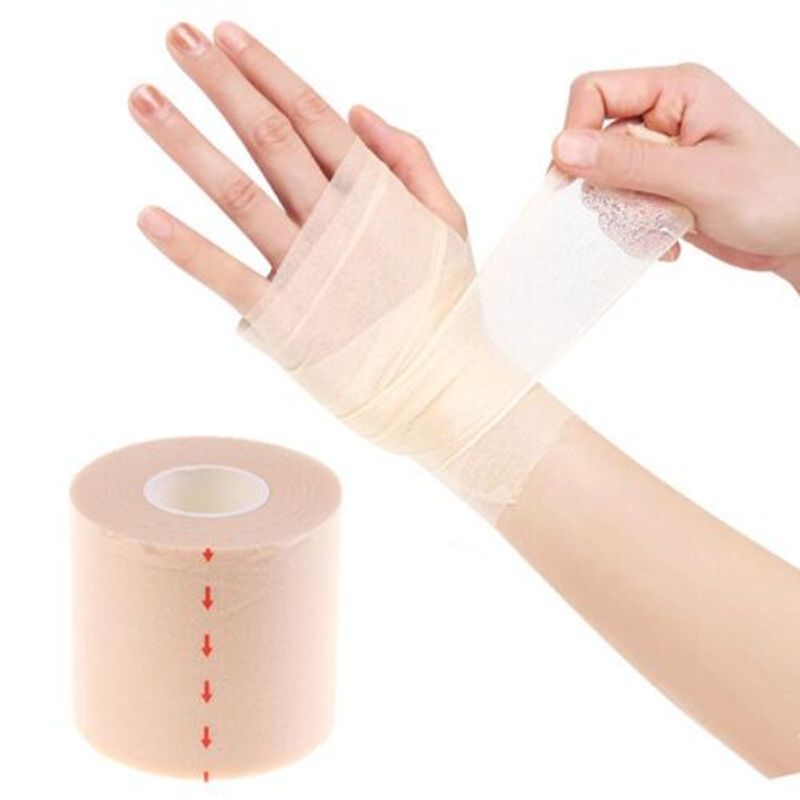
Foam underwrap is worth adding before rigid tape applications. It creates a protective buffer between adhesive and skin, extending wear time and reducing irritation — especially for athletes who tape daily or have sensitive skin. A foam underwrap layer for comfortable, skin-safe pre-taping makes a real difference across a full training week.
The Mental Component
There's a dimension of sports tape that doesn't show up in lab studies: confidence. Athletes who tape consistently report a greater sense of stability and control during performance. Whether that confidence comes purely from the physical support or partly from ritual and routine, the outcome is the same — reduced hesitation, more aggressive movement patterns, and better execution under pressure.
That said, tape isn't a replacement for strength, conditioning, or proper rehabilitation. It performs best as a complement to those foundations, not a shortcut around them.
The Bottom Line for Athletes
Sports tape works — but the right tape, applied correctly, for the right purpose. Rigid tape for stabilization and hard joint protection. Kinesiology tape for muscle support, swelling control, and proprioceptive enhancement without movement restriction. Used strategically, it's one of the highest-value additions to any training or competition routine, with a cost-to-benefit ratio that almost nothing else in sports recovery can match.
For athletes looking to upgrade their taping setup, explore the full line of professional-grade sports tapes and bandaging products for athletes and clinical use — from kinesiology tape and elastic adhesive bandages to self-adhesive wraps built for every sport and body part.
Share:
RECOMMENDED PRODUCTS


















- Asher.cao
- Tel:+86-512-6289 3223
- Mob:+86-176 2548 7782
- Email:Asher.cao@healthline-medical.com
- Whatsapp / Wechat:+86-176 2548 7782
- Skype:+86-176 2548 7782
- Ethan Zhang
- Tel:+86-512-6289 3223
- Mob:+86-19822909189
- Email:ethanzhang@healthline-medical.com
- Whatsapp / Wechat:+86-19822909189
- Skype:+86-19822909189
- Jason Zhang
- Tel:+86-512-6289 3223
- Mob:+86-13152123359
- Email:jason@healthline-medical.com
- Whatsapp / Wechat:+86-13152123359
Copyright © 2025 SUZHOU HEALTHLINE MEDICAL PRODUCTS CO., LTD
All Rights Reserved.
 Sports Tape Manufacturers Cohesive Bandages Suppliers
The information provided on this website is intended for use only in countries and jurisdictions outside of the People's Republic of China.


