
 English
 Español
 русский
 عربى
عربى

- Cotton Kinesiology Tape
- Synthetic Kinesiology Tape
- Nylon Kinesiology Tape
- 4-Way Stretch Elastic Kinesiology Tape
- Standard Kinesiology Tape Roll
- Pre-Cut Kinesiology Tape Strips
- Printed / Pattern Kinesiology Tape
- Perforated Kinesiology Tape (Ventilated)
- Special Shape Kinesiology Tape
- Water-Resistant Kinesiology Tape
- Pregnancy Support Tape
- Face Lift Kinesiology Tape
- Gentle / Beauty Kinesiology Tape
- Veterinary Kinesiology Tape
- Breast Lift Tape
- Customized Kinesiology Tape
- Pre-cut I Strip Kinesiology Tape
- Pre-cut Y Strip Kinesiology Tape
- Pre-cut X Strip Kinesiology Tape
- Knee Kinesiology Tape
- Leg Kinesiology Tape
- Shoulder Kinesiology Tape
- Back Kinesiology Tape
- Waist Kinesiology Tape
- Ankle Kinesiology Tape
- Pregnancy Belly Tape
- Beauty Face Tape
- Solid Color Cohesive Bandage Roll
- Printed & Pattern Cohesive Bandage
- Non-Woven Self-Adhesive Bandage
- Cotton Self-Adhesive Bandage
- PBT Gauze Cohesive Bandage Rolls
- Pet Vet Wrap
- Horse and Cattle Self-Adhesive Bandage
- Veterinary Cohesive Bandage
- Camo Cohesive Wrap Tape
- Military and Tactical Cohesive Bandage
- Tattoo Grip Tape
- Latex Cohesive Bandage
- Latex-Free Cohesive Bandage
- Pet Laminated Self-Adhesive Bandage
- High-Tensile Cohesive Bandage
- Football Sock Wrap Self-Adhesive Bandage
- Sterile Cohesive Bandage
- Special Function Cohesive Bandage
- OEM / Bulk Cohesive Bandage Roll
- Rigid Strapping Tape
- Athletic Tape
- Zinc Oxide Sports Tape
- Rayon Rigid Sports Tape
- Sports Strapping Tape
- Finger Bob Bandages
- Boxing Tape
- Heavyweight Elastic Adhesive Bandage (EAB)
- 93 Cotton Heavyweight Elastic Adhesive Bandages(EAB)
- Athletic Heavyweight Elastic Adhesive Bandage (EAB)
- Lightweight Elastic Adhesive Bandage (EAB)
- Athletic Lightweight Elastic Adhesive Bandage (EAB)
- American Style Elastic Adhesive Bandage (EAB)
- Japanese Style Elastic Adhesive Bandage (EAB)
- Elastic Adhesive Compression Bandage
- Veterinary Elastic Adhesive Bandage (EAB)
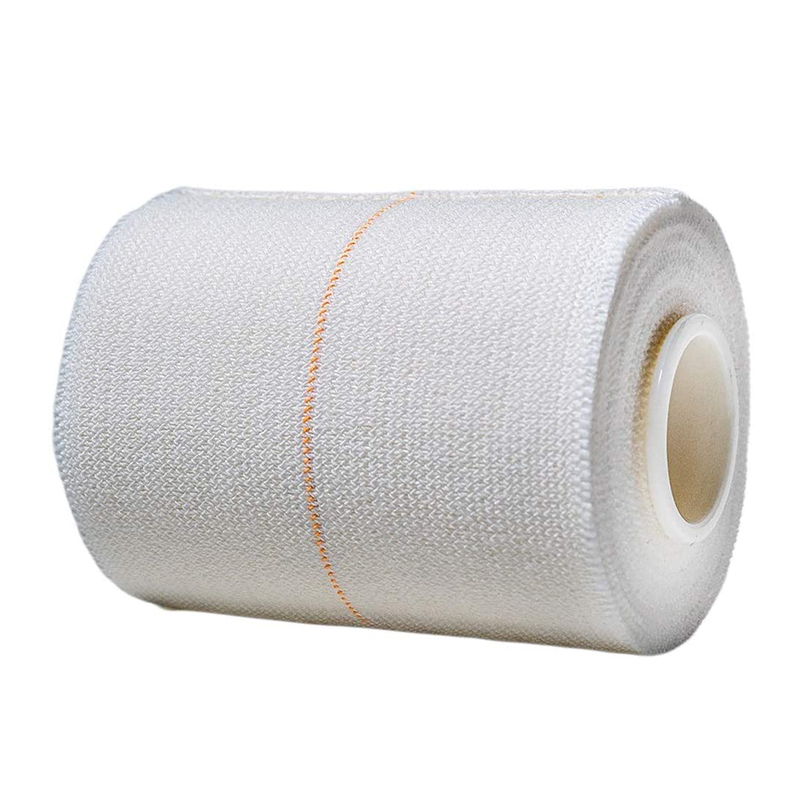
Flex Your Healing Power: Elastic Adhesive Bandages for Active Lives
Content
Ankle rolls happen mid-run. Wrists get strained mid-set. Knees flare up mid-match. For people who train hard and move often, minor injuries are not exceptional events — they are occupational hazards. The question is never whether to push through, but how to do it without making things worse. That is exactly where elastic adhesive bandages (EABs) prove their worth.
What Makes Elastic Adhesive Bandages Different
Unlike rigid strapping tape that locks a joint in place, or a loose gauze wrap that shifts under pressure, elastic adhesive bandages are engineered to move with the body. They are made from a blend of cotton and synthetic elastic fibers, coated with a skin-friendly adhesive that grips without pulling at hair or leaving sticky residue behind.
The defining characteristic is bi-directional stretch. When you wrap an ankle or compress a knee, the bandage conforms to the contour of the joint and maintains consistent pressure as the tissue swells or contracts. It does not go slack when you bend your elbow, and it does not cut off circulation when you flex your wrist. That balance — firm enough to support, flexible enough to allow movement — is what makes EABs the go-to choice across sports medicine, physiotherapy clinics, and serious training environments worldwide.
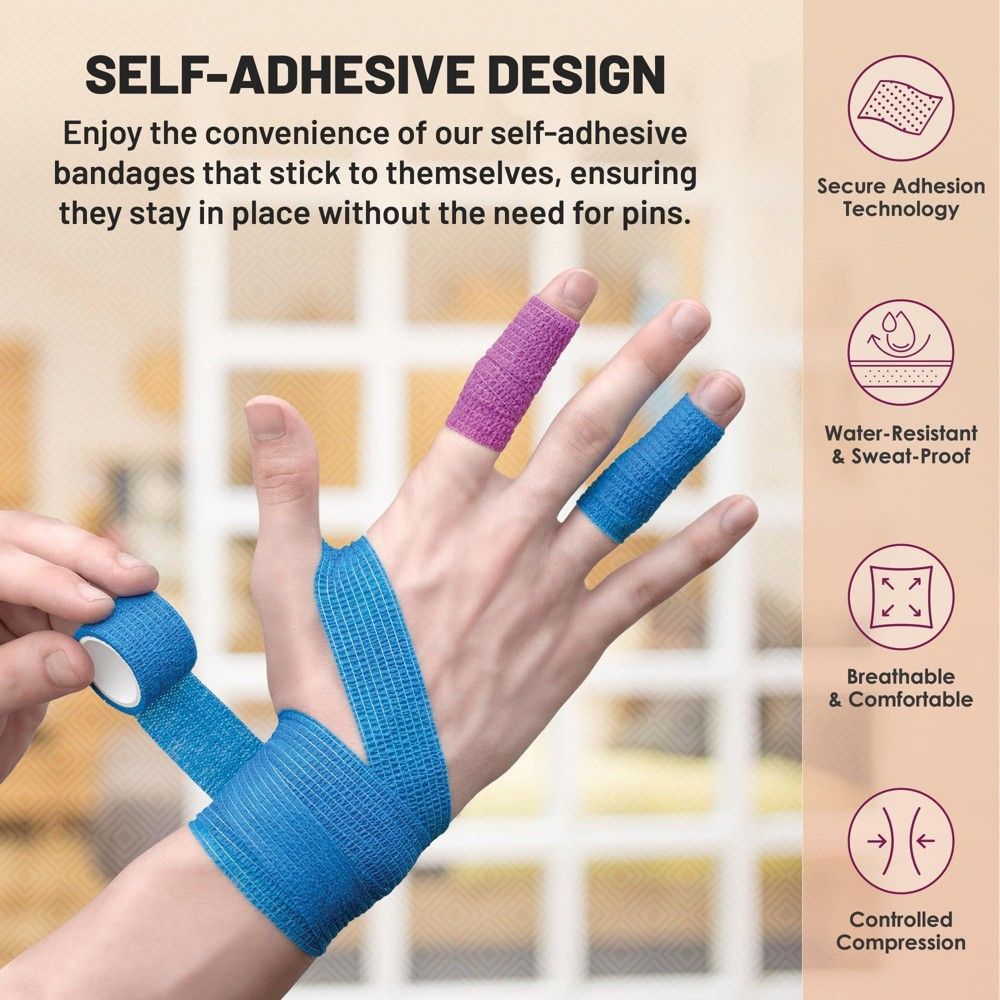
Most EABs also carry an adhesive layer on the outer face, meaning they adhere to themselves and to skin without requiring clips, pins, or additional tape to stay in place. During a 90-minute match or a two-hour training block, that security matters.
Three Moments When EABs Earn Their Keep
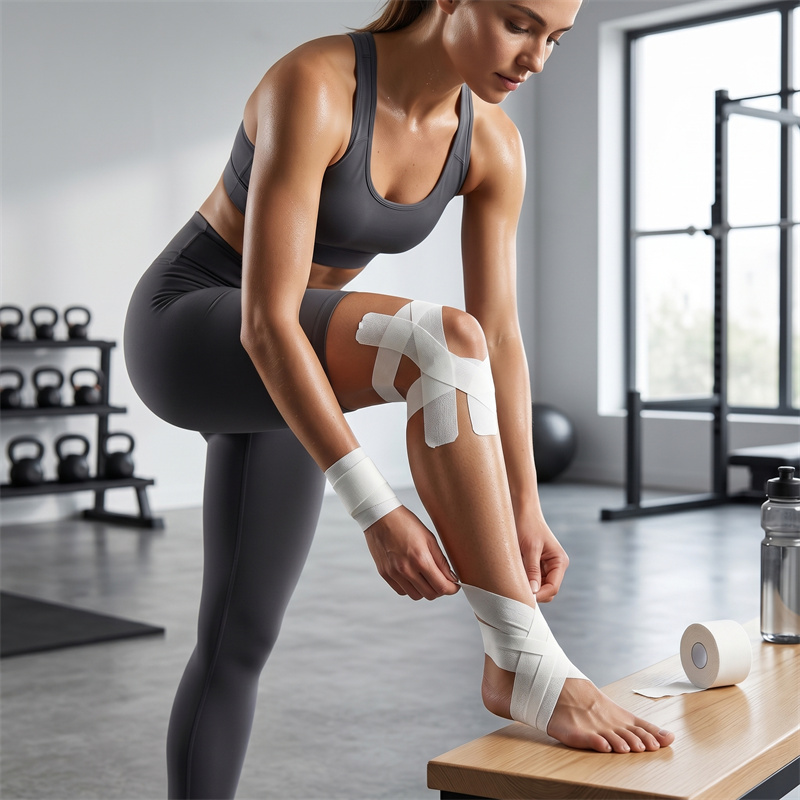
Before activity — preventive taping. Vulnerable joints benefit from structural reinforcement before stress is applied, not after damage is done. Applying an EAB around the ankle before a trail run, or across the wrist before a heavy lifting session, limits the range of movement that causes sprains and strains without restricting the functional range needed to perform. Athletes in basketball, football, and combat sports have used this strategy for decades. The logic is simple: controlled movement is safer movement.
At the point of injury — acute compression. When a soft tissue injury occurs, swelling begins within minutes as blood and fluid rush to the site. An elastic adhesive bandage applied immediately applies controlled compression that slows that fluid accumulation, reduces pain, and stabilizes the area while you assess severity. This is a central pillar of modern injury protocols — the POLICE framework (Protection, Optimal Loading, Ice, Compression, Elevation) that has replaced the older RICE approach in contemporary sports medicine guidance. You can read more about how compression fits into current soft tissue injury management protocols to understand the clinical reasoning behind it. The key advantage of an EAB at this stage is that it stays put — through ice packs, movement, and elevation — without requiring re-application every few minutes.
During recovery — supported return to activity. Returning to training too early without adequate joint support is one of the most reliable ways to re-injure. An EAB provides proprioceptive feedback — a constant tactile signal that reminds the nervous system to stabilize the joint — alongside mechanical compression that controls residual swelling. For a sprained ankle coming back to running, or a strained wrist returning to weight training, this dual function can mean the difference between a setback and a clean recovery. For high-impact recovery scenarios, heavy-duty elastic adhesive bandages for high-impact support provide the firmer compression structure that returning athletes often need. For those transitioning back into lower-intensity sessions, sports tapes for joint stabilization and performance offer complementary options depending on the specific demands of the activity.
Choosing the Right EAB for Your Activity
Not all elastic adhesive bandages are built for the same purpose. The two primary categories are heavy elastic and light elastic, and the difference is meaningful in practice.
Heavy elastic bandages deliver stronger compression and are better suited to joints under significant mechanical load — knees in contact sports, ankles in court sports, wrists in gymnastics or powerlifting. Light elastic bandages are thinner, more breathable, and more appropriate for low-to-moderate load activities, extended wear periods, or sensitive skin that reacts to prolonged pressure. For everyday active use where comfort over long sessions matters most, lightweight elastic adhesive bandages for everyday active use are the more practical choice.
Cotton-based bandages breathe better and tend to be gentler on skin in warm conditions or during high-sweat activities. Synthetic blends often offer better moisture resistance and hold their structure longer when exposed to sweat or water. If your training involves outdoor environments, pool-adjacent work, or multi-hour sessions in humid conditions, material matters as much as compression level. For a more detailed breakdown of which construction suits different sporting contexts, the guide on how to choose the right elastic adhesive bandage for sports covers the key decision points clearly.
Application Tips That Actually Matter
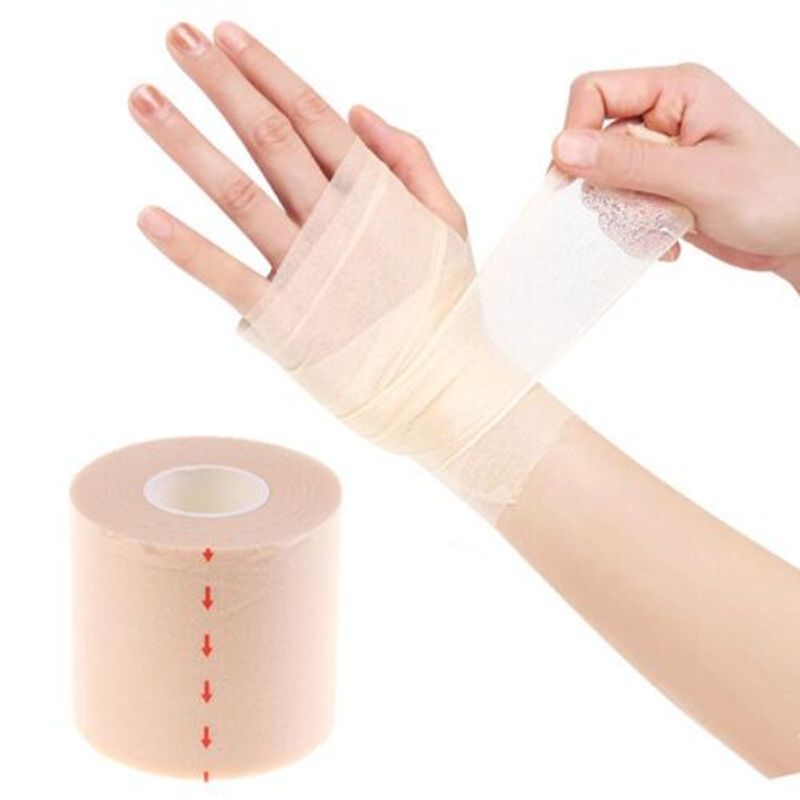
A well-chosen bandage applied incorrectly still underperforms. Start wrapping from the furthest point of the injury — toes for an ankle, fingers for a wrist — and work inward toward the body. This direction supports venous blood flow back toward the heart rather than pushing fluid into the extremities. Each layer should overlap the previous by roughly half its width, maintaining consistent tension throughout.
Tension is the most common variable people get wrong. Too loose and the bandage migrates and provides no real compression. Too tight and circulation becomes restricted — the warning signs are numbness, tingling, skin that turns pale or bluish below the wrap, or a feeling of throbbing pressure that worsens rather than eases. If any of these appear, remove the bandage immediately and re-apply with less tension.
For standard soft tissue injuries, compression bandaging is most effective in the first 24 to 48 hours. After that window, normal blood flow should be allowed to resume as part of the body's natural recovery process. During rehabilitation, short-wear sessions during activity — rather than continuous wrapping — tend to support healing while maintaining the benefits of proprioceptive feedback and movement control.
Elastic adhesive bandages are not a substitute for professional medical assessment when injuries are severe or symptoms persist. But for the everyday strains, sprains, and overuse flare-ups that come with an active life, they remain one of the most practical, cost-effective, and clinically grounded tools an athlete can keep in their kit.
Share:
RECOMMENDED PRODUCTS


















- Asher.cao
- Tel:+86-512-6289 3223
- Mob:+86-176 2548 7782
- Email:Asher.cao@healthline-medical.com
- Whatsapp / Wechat:+86-176 2548 7782
- Skype:+86-176 2548 7782
- Ethan Zhang
- Tel:+86-512-6289 3223
- Mob:+86-19822909189
- Email:ethanzhang@healthline-medical.com
- Whatsapp / Wechat:+86-19822909189
- Skype:+86-19822909189
- Jason Zhang
- Tel:+86-512-6289 3223
- Mob:+86-13152123359
- Email:jason@healthline-medical.com
- Whatsapp / Wechat:+86-13152123359
Copyright © 2025 SUZHOU HEALTHLINE MEDICAL PRODUCTS CO., LTD
All Rights Reserved.
 Sports Tape Manufacturers Cohesive Bandages Suppliers
The information provided on this website is intended for use only in countries and jurisdictions outside of the People's Republic of China.


