
 English
 Español
 русский
 عربى
عربى

- Cotton Kinesiology Tape
- Synthetic Kinesiology Tape
- Nylon Kinesiology Tape
- 4-Way Stretch Elastic Kinesiology Tape
- Standard Kinesiology Tape Roll
- Pre-Cut Kinesiology Tape Strips
- Printed / Pattern Kinesiology Tape
- Perforated Kinesiology Tape (Ventilated)
- Special Shape Kinesiology Tape
- Water-Resistant Kinesiology Tape
- Pregnancy Support Tape
- Face Lift Kinesiology Tape
- Gentle / Beauty Kinesiology Tape
- Veterinary Kinesiology Tape
- Breast Lift Tape
- Customized Kinesiology Tape
- Pre-cut I Strip Kinesiology Tape
- Pre-cut Y Strip Kinesiology Tape
- Pre-cut X Strip Kinesiology Tape
- Knee Kinesiology Tape
- Leg Kinesiology Tape
- Shoulder Kinesiology Tape
- Back Kinesiology Tape
- Waist Kinesiology Tape
- Ankle Kinesiology Tape
- Pregnancy Belly Tape
- Beauty Face Tape
- Solid Color Cohesive Bandage Roll
- Printed & Pattern Cohesive Bandage
- Non-Woven Self-Adhesive Bandage
- Cotton Self-Adhesive Bandage
- PBT Gauze Cohesive Bandage Rolls
- Pet Vet Wrap
- Horse and Cattle Self-Adhesive Bandage
- Veterinary Cohesive Bandage
- Camo Cohesive Wrap Tape
- Military and Tactical Cohesive Bandage
- Tattoo Grip Tape
- Latex Cohesive Bandage
- Latex-Free Cohesive Bandage
- Pet Laminated Self-Adhesive Bandage
- High-Tensile Cohesive Bandage
- Football Sock Wrap Self-Adhesive Bandage
- Sterile Cohesive Bandage
- Special Function Cohesive Bandage
- OEM / Bulk Cohesive Bandage Roll
- Rigid Strapping Tape
- Athletic Tape
- Zinc Oxide Sports Tape
- Rayon Rigid Sports Tape
- Sports Strapping Tape
- Finger Bob Bandages
- Boxing Tape
- Heavyweight Elastic Adhesive Bandage (EAB)
- 93 Cotton Heavyweight Elastic Adhesive Bandages(EAB)
- Athletic Heavyweight Elastic Adhesive Bandage (EAB)
- Lightweight Elastic Adhesive Bandage (EAB)
- Athletic Lightweight Elastic Adhesive Bandage (EAB)
- American Style Elastic Adhesive Bandage (EAB)
- Japanese Style Elastic Adhesive Bandage (EAB)
- Elastic Adhesive Compression Bandage
- Veterinary Elastic Adhesive Bandage (EAB)
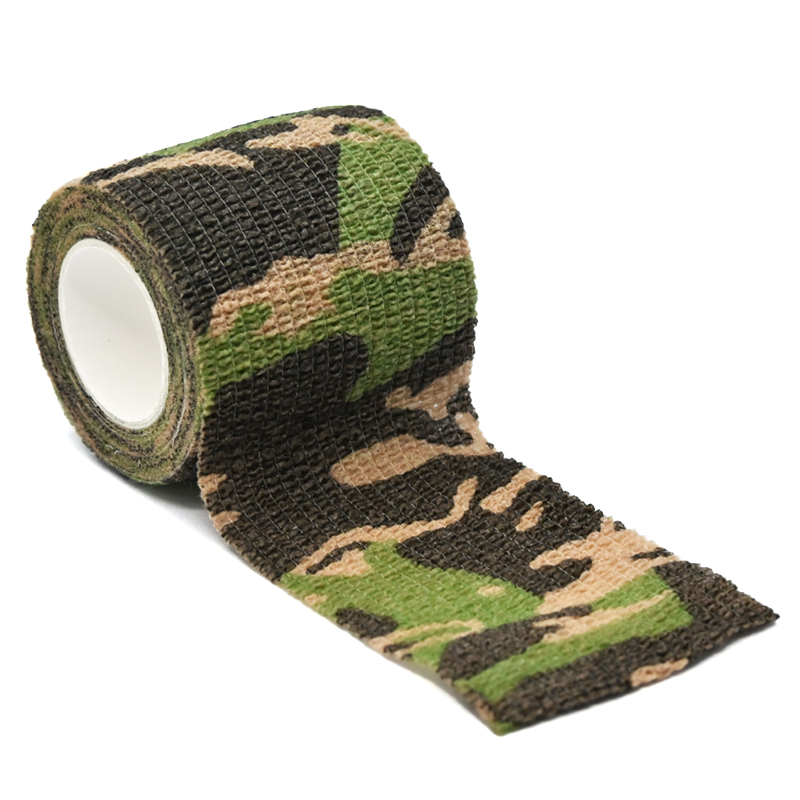
How to Tape a Dislocated Shoulder with Self-Adhesive Bandages
Content
- Can You Tape a Dislocated Shoulder at Home?
- Understanding a Dislocated Shoulder: What's Actually Happening
- Why Self-Adhesive Bandages Are the Right Choice for Shoulder Taping
- What You Need Before You Start
- Step-by-Step: How to Tape a Dislocated Shoulder with Self-Adhesive Bandages
- Tension Control: The Most Critical Technical Skill
- How Long to Wear It and When to Change
- Common Taping Mistakes to Avoid
- Taping for Specific Scenarios
- When Taping Is Not Enough: Seek Medical Help
Can You Tape a Dislocated Shoulder at Home?
Taping a dislocated shoulder is not a substitute for medical reduction — but self-adhesive bandage taping plays a critical role in stabilizing the joint after reduction, managing subluxations, and supporting recovery. If you suspect a full dislocation and the shoulder has not been reduced (popped back into place), immobilize the arm and go to an emergency room immediately. Once the shoulder has been professionally treated, taping becomes a practical, evidence-backed tool for protection and rehabilitation.
Studies in sports medicine show that shoulder taping can reduce re-injury risk by up to 40–60% in overhead athletes returning to activity. Self-adhesive bandages — also called cohesive bandages or self-adherent wraps — are particularly well suited because they conform to the shoulder's complex contours, require no clips or tape adhesive on skin, and provide consistent compression without restricting blood flow when applied correctly.
Understanding a Dislocated Shoulder: What's Actually Happening
The shoulder (glenohumeral joint) is the most mobile joint in the body — and the most frequently dislocated, accounting for roughly 50% of all joint dislocations seen in emergency departments. The ball of the humerus (upper arm bone) slips out of the shallow glenoid socket, usually forward (anterior dislocation, ~95% of cases).
After reduction, the surrounding capsule, ligaments (especially the inferior glenohumeral ligament), and rotator cuff muscles are stretched and weakened. This is why recurrence is common — up to 80–90% in patients under 20 years old — and why external support like taping or bracing during recovery matters.
Signs That Indicate Taping Is Appropriate (Post-Reduction)
- Shoulder has already been reduced by a medical professional
- Mild-to-moderate subluxation (partial dislocation) with physician approval for self-management
- Return-to-sport phase with clearance from a physiotherapist
- Post-surgical rehabilitation support
- Chronic shoulder instability managed conservatively
Do not tape if: the shoulder has not been reduced, the skin is broken or blistered, circulation is already compromised, or there is significant swelling that hasn't been evaluated.
Why Self-Adhesive Bandages Are the Right Choice for Shoulder Taping
Not all taping materials perform equally on the shoulder. The joint's range of motion, the curved topology of the deltoid, and the need to layer across the pectoral and scapular regions make material choice important.
| Material | Adhesion to Skin | Conformability | Best Use |
|---|---|---|---|
| Self-Adhesive Bandage (Cohesive) | Sticks to itself, not skin | Excellent | Layered support, post-reduction, athletes |
| Zinc Oxide Athletic Tape | Strong skin adhesion | Low | Rigid structural taping by therapists |
| Kinesiology Tape (KT) | Moderate skin adhesion | High | Proprioception, light posture support |
| Elastic Compression Bandage | None (clips needed) | Moderate | General compression, less precise |
Self-adhesive bandages (commonly 2-inch or 3-inch width) are ideal for shoulder taping because they self-bond under tension without sticking to hair or skin, can be repositioned if misapplied, and hold firm even with sweat or light activity. For the shoulder, a 3-inch width works best for the main compression layer; a 2-inch width is better for anchor and directional strips.
What You Need Before You Start
Gather your supplies and prepare the area properly. Rushing this phase is the most common reason a tape job fails within an hour.
- Self-adhesive bandage rolls — 2-inch and 3-inch widths (at least 2 rolls of each)
- Skin-safe underwrap foam (optional but recommended for sensitive skin)
- Blunt-tip bandage scissors or trauma shears
- Clean, dry skin — free of lotion, oil, or excessive hair
- A mirror or a second person to help with rear application
- Ice pack (apply 15–20 minutes before taping if there is residual swelling)
The patient should be seated or standing with the arm relaxed at their side, elbow slightly bent, and the shoulder in a neutral, pain-free position. Never tape while the arm is elevated or extended — the tape will lose tension and orientation when the arm returns to rest.
Step-by-Step: How to Tape a Dislocated Shoulder with Self-Adhesive Bandages
This technique focuses on anterior shoulder stabilization — the most common clinical need after anterior dislocation. It uses a layered approach: a compression base, a directional stabilizing layer, and a finishing lock.
Step 1 — Apply the Underwrap Base (Optional)
If using foam underwrap, start at the mid-upper arm and spiral upward over the shoulder to the base of the neck (across the trapezius) and down toward the pectoral area. Use a 50% overlap with each pass. This protects skin and makes removal more comfortable. Skip if the skin is dry and resilient.
Step 2 — Create the Deltoid Compression Layer
Using the 3-inch self-adhesive bandage, begin 3–4 inches below the shoulder joint on the outer upper arm. Wrap circumferentially around the arm with moderate tension (stretch the bandage to about 50–60% of its maximum — enough to feel firm but not tight). Spiral upward over the deltoid, crossing the shoulder joint. Complete 3–4 full passes. This layer reduces anterior translation of the humeral head by providing external compression.
Step 3 — Apply the Anterior Support Strip
Switch to the 2-inch roll. Starting from the posterior deltoid (back of the shoulder), run a diagonal strip forward and downward across the anterior shoulder, ending just below the clavicle or on the upper chest. This is the key functional strip — it mechanically discourages the humerus from sliding forward. Apply 2–3 of these strips with slight overlap, each angled 10–15 degrees from the last.
Step 4 — Add the Superior Stabilizing Loop
From the front of the deltoid, run a strip up and over the top of the shoulder (across the acromion), continuing down to the posterior deltoid. This "shoulder cap" loop helps keep the humeral head properly seated in the glenoid. Apply it with light-to-moderate tension only — excessive tension over the acromion can cause discomfort or neurovascular compression.
Step 5 — Secure with a Finishing Wrap
Return to the 3-inch bandage and do 2 final circumferential passes around the entire shoulder, starting from mid-upper arm and finishing above the deltoid. Press the end of the bandage firmly against itself for 10–15 seconds to activate the self-adhesive bond. Check that no edges are lifting and that the bandage lies flat with no wrinkles that could create pressure points.
Step 6 — Check Circulation and Range of Motion
Immediately after application, verify that:
- Fingers are warm, pink, and can be individually moved without numbness
- The arm can be gently moved forward and to the side without sharp pain
- There is no tingling or heaviness in the forearm or hand
If any of these checks fail, remove the tape immediately and reapply with less tension.
Tension Control: The Most Critical Technical Skill
The single most common mistake in self-adhesive bandage application is applying too much tension. Because cohesive bandages feel light and comfortable during application, it is easy to over-stretch them — particularly over the shoulder, where layers accumulate and multiply pressure.
A practical guide: when you unroll the bandage, let it relax slightly from the roll before pressing it to the previous layer. The bandage should feel "snug but breathable" — similar to a firm handshake, not a tourniquet. Each new layer adds pressure, so reduce tension progressively with each pass: start at ~60% stretch for the base layer, ~40% for the middle, and ~25% for the finishing wrap.
How Long to Wear It and When to Change
Self-adhesive bandages on the shoulder should typically be worn for no more than 8–12 hours at a stretch before being removed and reapplied or rested. Unlike kinesiology tape (which can stay on for 3–5 days), cohesive bandages are not designed for extended wear. Prolonged use can:
- Cause skin maceration (breakdown from moisture trapped under layers)
- Gradually loosen and lose structural support
- Restrict normal shoulder proprioception if worn too consistently over weeks
Remove immediately if swelling increases, skin changes color (purple or pale), the bandage becomes wet and loose, or pain worsens under the tape.
Common Taping Mistakes to Avoid
Even with correct materials and intent, these errors frequently undermine shoulder taping:
- Taping in an elevated arm position — when the arm returns to rest, the tape puckers, loses direction, and compresses unevenly.
- Starting too close to the joint — anchoring the bandage at the shoulder rather than the mid-upper arm gives no mechanical leverage.
- Wrapping too tightly at the axilla (armpit) — this region has dense neurovascular structures; bandage pressure here can cause radial nerve or brachial artery compression.
- Using narrow bandages on the full shoulder wrap — a 1-inch bandage on the shoulder means too many passes and uneven layered pressure. Use 3-inch for the base.
- Applying over wet or oily skin — cohesive bandages still require a clean, dry surface for layer-to-layer bonding to hold under movement.
Taping for Specific Scenarios
For Return to Sport
Athletes returning to throwing, swimming, or contact sports after a dislocation benefit from a combination of the cohesive compression wrap (Steps 1–5 above) plus a kinesiology tape anterior inhibition strip applied directly on skin underneath. This dual-layer approach is used widely in elite sports programs and provides both mechanical restriction and proprioceptive cueing simultaneously.
For Chronic Instability or Hypermobility
Individuals with hypermobile joints (e.g., Ehlers-Danlos syndrome or general ligamentous laxity) may benefit from taping before activity as a habitual protocol. In these cases, a lighter compression with more emphasis on the superior stabilizing loop (Step 4) tends to be more appropriate than heavy circumferential wrapping.
For Acute Post-Reduction at Home (Temporary Immobilization)
If a sling is unavailable and the shoulder has just been reduced, a simple shoulder-to-elbow figure-of-eight wrap with a self-adhesive bandage can temporarily support the arm until a proper sling is obtained. This is a bridging measure only — see a physician within 24 hours for imaging and definitive management guidance.
When Taping Is Not Enough: Seek Medical Help
Taping is a supportive tool, not a treatment. The following situations require prompt medical evaluation regardless of how well the shoulder is taped:
- The shoulder dislocates again despite taping (recurrent instability)
- There is numbness or weakness in the arm (possible axillary nerve injury)
- Pain is severe or worsening rather than gradually improving
- A visible deformity remains after attempted reduction
- The injury occurred from high-energy trauma (fall from height, vehicle accident)
First-time dislocations in patients under 30 have a recurrence rate exceeding 50%, and surgical intervention (Bankart repair or Latarjet procedure) may ultimately be required. Taping can reduce re-injury risk and support rehab, but it does not repair torn labral tissue or stretched capsules.
Share:
RECOMMENDED PRODUCTS


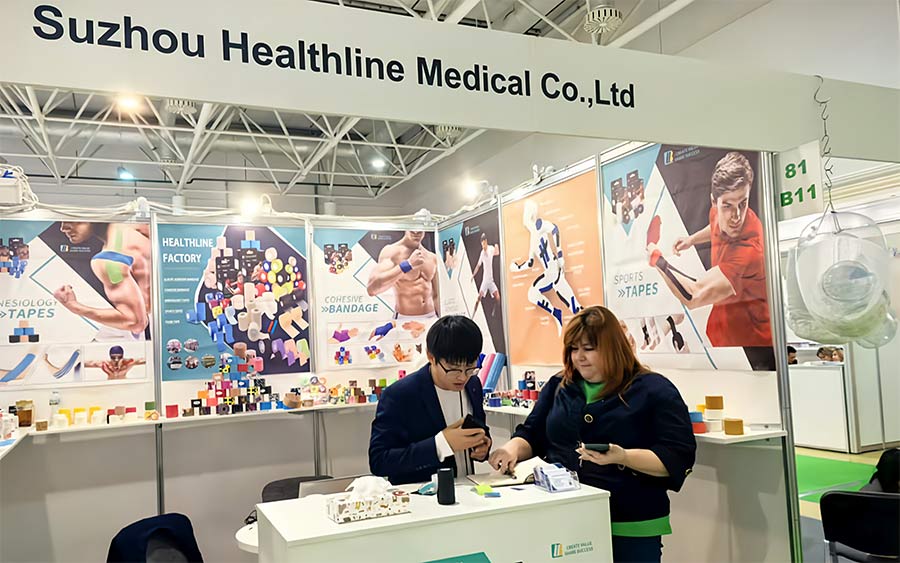
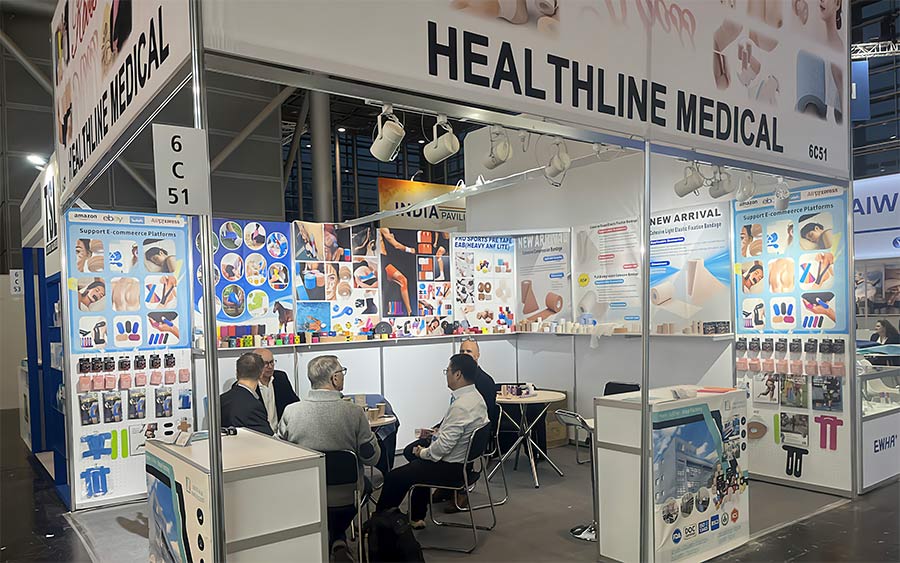
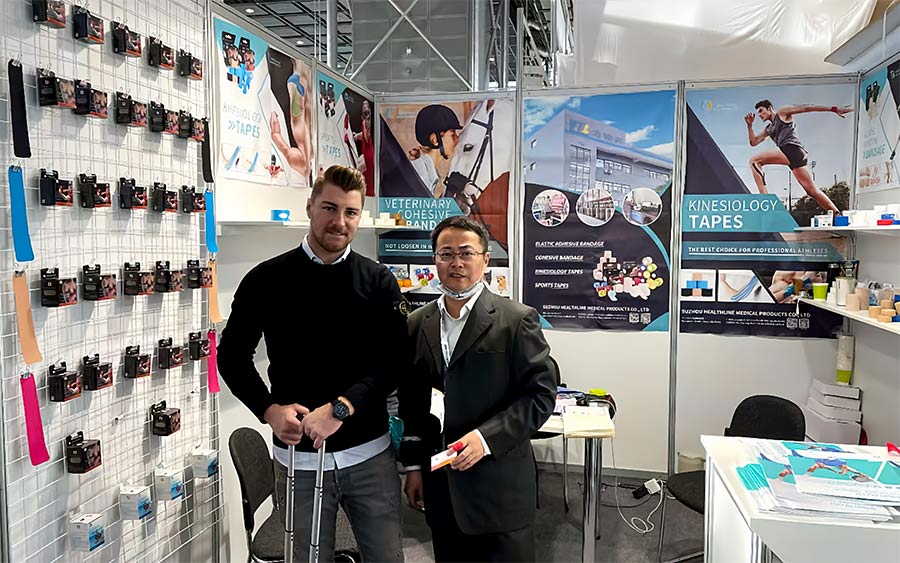
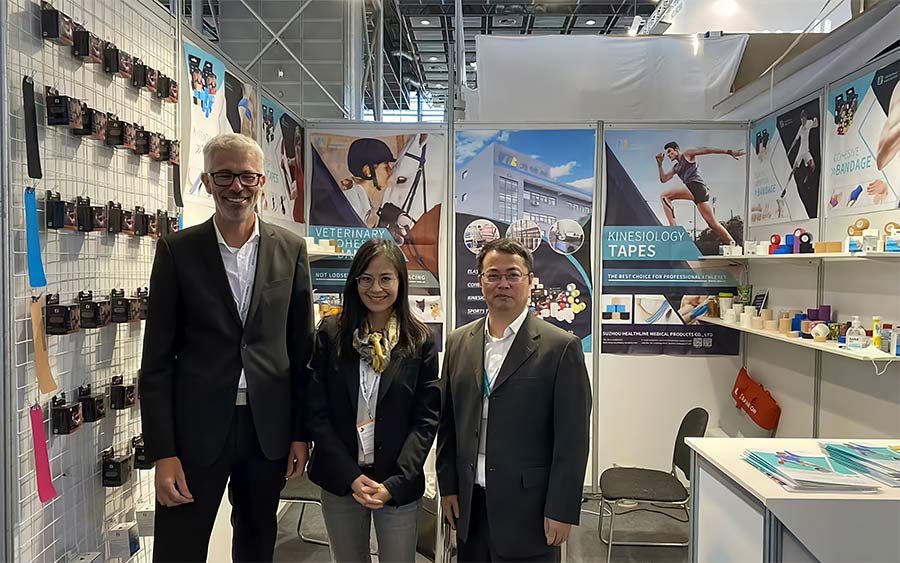
Driven by uncompromising quality, competitive value, and customer-centric service, Healthline’s products are now present in over 50 countries and regions across the globe. As a dedicated OEM/ODM manufacturer of medical cohesive bandages and sports tape, we serve a diverse client portfolio—including hospitals and clinics,veterinary,authorized distributors, government procurement agencies, national pharmacy chains, and retail supermarkets,on-line Amazon,Lotte & Tiktok e-commerce industry .
We are proud to be the long-term OEM/ODM partner for globally recognized names such as Target, CVS, Aldi, Lidl, Carrefour,Tesco, Alliance Boots,Deathlon,Covetrus and Kruuse. Our annual sales volume has maintained a steady year-over-year growth of 15% for consecutive years—a testament to the trust our partners place in us.
In today’s competitive global market, we believe sustainable success comes from continuously delivering superior products and responsive service at a fair price. This philosophy has guided Healthline for three decades, and we are committed to repaying your trust with solutions that help your business grow.

























- Ethan Zhang
- Tel:+86-512-6289 3223
- Mob:+86-19822909189
- Email:ethanzhang@healthline-medical.com
- Whatsapp / Wechat:+86-19822909189
- Skype:+86-19822909189
- Asher.cao
- Tel:+86-512-6289 3223
- Mob:+86-17625487782
-
Email:ethanzhang@healthline-medical.com
Asher.cao@healthline-medical.com
- Whatsapp / Wechat:+86-17625487782
- Skype:+86-176 2548 7782
- Jason Zhang
- Tel:+86-512-6289 3223
- Mob:+86-13152123359
- Email:jason@healthline-medical.com
- Whatsapp / Wechat:+86-13152123359
Copyright © 2025 SUZHOU HEALTHLINE MEDICAL PRODUCTS CO., LTD
All Rights Reserved.
 Sports Tape Manufacturers Cohesive Bandages Suppliers
The information provided on this website is intended for use only in countries and jurisdictions outside of the People's Republic of China.


