
 English
 Español
 русский
 عربى
عربى

- Cotton Kinesiology Tape
- Synthetic Kinesiology Tape
- Nylon Kinesiology Tape
- 4-Way Stretch Elastic Kinesiology Tape
- Standard Kinesiology Tape Roll
- Pre-Cut Kinesiology Tape Strips
- Printed / Pattern Kinesiology Tape
- Perforated Kinesiology Tape (Ventilated)
- Special Shape Kinesiology Tape
- Water-Resistant Kinesiology Tape
- Pregnancy Support Tape
- Face Lift Kinesiology Tape
- Gentle / Beauty Kinesiology Tape
- Veterinary Kinesiology Tape
- Breast Lift Tape
- Customized Kinesiology Tape
- Pre-cut I Strip Kinesiology Tape
- Pre-cut Y Strip Kinesiology Tape
- Pre-cut X Strip Kinesiology Tape
- Knee Kinesiology Tape
- Leg Kinesiology Tape
- Shoulder Kinesiology Tape
- Back Kinesiology Tape
- Waist Kinesiology Tape
- Ankle Kinesiology Tape
- Pregnancy Belly Tape
- Beauty Face Tape
- Solid Color Cohesive Bandage Roll
- Printed & Pattern Cohesive Bandage
- Non-Woven Self-Adhesive Bandage
- Cotton Self-Adhesive Bandage
- PBT Gauze Cohesive Bandage Rolls
- Pet Vet Wrap
- Horse and Cattle Self-Adhesive Bandage
- Veterinary Cohesive Bandage
- Camo Cohesive Wrap Tape
- Military and Tactical Cohesive Bandage
- Tattoo Grip Tape
- Latex Cohesive Bandage
- Latex-Free Cohesive Bandage
- Pet Laminated Self-Adhesive Bandage
- High-Tensile Cohesive Bandage
- Football Sock Wrap Self-Adhesive Bandage
- Sterile Cohesive Bandage
- Special Function Cohesive Bandage
- OEM / Bulk Cohesive Bandage Roll
- Rigid Strapping Tape
- Athletic Tape
- Zinc Oxide Sports Tape
- Rayon Rigid Sports Tape
- Sports Strapping Tape
- Finger Bob Bandages
- Boxing Tape
- Heavyweight Elastic Adhesive Bandage (EAB)
- 93 Cotton Heavyweight Elastic Adhesive Bandages(EAB)
- Athletic Heavyweight Elastic Adhesive Bandage (EAB)
- Lightweight Elastic Adhesive Bandage (EAB)
- Athletic Lightweight Elastic Adhesive Bandage (EAB)
- American Style Elastic Adhesive Bandage (EAB)
- Japanese Style Elastic Adhesive Bandage (EAB)
- Elastic Adhesive Compression Bandage
- Veterinary Elastic Adhesive Bandage (EAB)
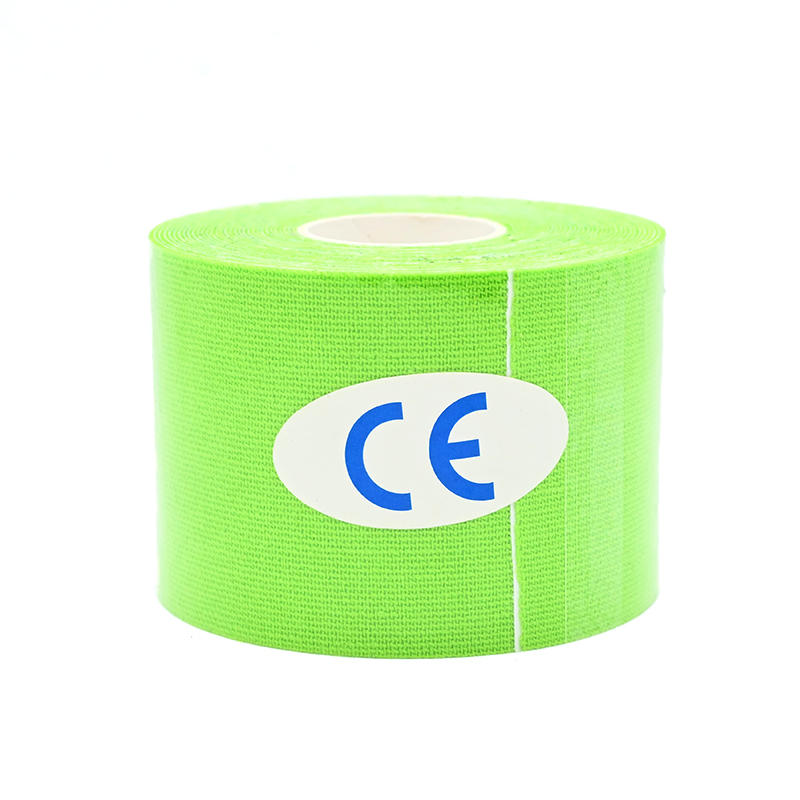
How to Kinesio Tape a Hamstring: Step-by-Step Guide
Content
- What Kinesio Tape Actually Does for the Hamstring
- What You Need Before You Start
- Step-by-Step: How to Kinesio Tape the Hamstring
- Tension Guidelines by Purpose
- Common Mistakes That Make Taping Ineffective
- Taping for Specific Hamstring Conditions
- How Long to Wear It and When to Remove
- When Kinesio Taping Is Not Enough
Kinesio taping the hamstring is a reliable method to support muscle recovery, reduce pain, and improve performance — whether you're dealing with a strain, tightness, or simply want extra support during activity. The most effective approach uses a Y-strip applied from the ischial tuberosity (sit bone) down to just above the back of the knee, with 15–25% tension along the muscle belly and zero tension at the anchors. Done correctly, it takes under five minutes and can provide 3–5 days of continuous support.
What Kinesio Tape Actually Does for the Hamstring
Kinesio tape works differently from rigid athletic tape. It's designed to mimic the elasticity of skin and muscle, stretching up to 140% of its original length. When applied correctly to the hamstring, it provides several evidence-backed benefits:
- Pain reduction: The lifting effect on the skin stimulates mechanoreceptors, which can inhibit pain signals — a mechanism supported by a 2017 meta-analysis in the Journal of Physical Therapy Science showing a small but significant reduction in pain scores.
- Edema and bruising management: The convolutions created under the tape increase lymphatic drainage channels, reducing swelling after an acute strain.
- Proprioceptive feedback: The tape provides continuous sensory input to the muscle, improving body awareness and reducing the risk of re-injury during activity.
- Postural support without restriction: Unlike rigid taping, kinesio tape allows full range of motion, making it ideal for athletes who want support without limiting performance.
It's important to set realistic expectations: kinesio tape is a supplemental tool, not a treatment in itself. A 2020 Cochrane review concluded that while it reduces pain, its effect on muscle strength and function is modest compared to other physiotherapy interventions.
What You Need Before You Start
Gather the following before taping:
- Kinesio tape: 5 cm (2-inch) wide roll. Brands like KT Tape, RockTape, or original Kinesio Tex Gold are commonly used. Choose a beige or black option for skin visibility.
- Scissors: Sharp, clean scissors for precise cutting.
- Clean, dry skin: Oils, lotions, and sweat dramatically reduce adhesion. If needed, wipe the area with an alcohol prep pad and let it dry fully.
- A helper (optional but recommended): Self-taping the hamstring is possible but maintaining correct tension is easier with assistance.
Step-by-Step: How to Kinesio Tape the Hamstring
The standard technique uses a Y-strip for muscle facilitation or inhibition, depending on your goal. Follow these steps carefully.
Step 1 — Cut Your Y-Strip
Cut a strip approximately 40–50 cm long (adjust for leg length). Starting about 5 cm from one end, cut the strip lengthwise down the middle, stopping 5 cm from the other end. This creates a Y-shape with two tails and one anchor at each end.
Round the corners of each tail with scissors. Square corners peel off faster — rounded corners extend the tape's life by 1–2 days.
Step 2 — Position the Leg
For proper stretch, the hamstring must be in a lengthened position. Stand and place the heel on a chair or bench with the knee slightly bent, OR lie face-down and have a helper hold the leg at roughly 30–40° of hip flexion. Avoid full knee extension at this stage, as excessive stretch during application can cause the tape to peel.
Step 3 — Apply the Base Anchor
Peel the backing from the uncut end (base anchor) and place it just below the ischial tuberosity (the bony prominence you sit on at the base of the glute). Apply with zero tension — simply lay it down without stretching. Press firmly for 10–15 seconds to activate the adhesive.
Step 4 — Apply the Two Tails
Peel back the paper backing as you go (don't remove it all at once). Apply each tail along the medial (inner) and lateral (outer) edges of the hamstring muscle group:
- Lateral tail: Run along the biceps femoris (outer hamstring) toward the lateral side of the back of the knee.
- Medial tail: Run along the semimembranosus and semitendinosus (inner hamstrings) toward the medial back of the knee.
Use 15–25% stretch along the tape body. A practical reference: if the tape's resting length is 10 cm, stretch it to about 11.5–12.5 cm before laying it down.
Step 5 — Apply the End Anchors
The final 3–5 cm of each tail should be laid down with zero tension, just above the back of the knee. Never end with tension — this causes skin irritation and premature peeling.
Step 6 — Activate the Adhesive
Rub the entire length of the tape briskly for 20–30 seconds. The friction generates heat, which activates the acrylic adhesive. Wait at least 30 minutes before sweating or swimming — this is the most commonly ignored step and the main reason tape falls off prematurely.
Tension Guidelines by Purpose
The amount of tension you apply changes the physiological effect. Use this reference table:
| Goal | Tension Level | Best For |
|---|---|---|
| Muscle inhibition (relax/calm) | 0–15% (paper-off tension) | Overuse, spasm, acute strain recovery |
| Muscle facilitation (activate/support) | 15–25% | Weakness, fatigue, return to sport |
| Edema/swelling reduction | 0% (fan/web cut technique) | Post-injury bruising, acute swelling |
| Structural / deload support | 50–75% | Tendon attachment pain (proximal) |
Important: High tension (50–75%) should only be applied under guidance from a physiotherapist, as incorrect placement with high tension can worsen pain or restrict blood flow.
Common Mistakes That Make Taping Ineffective
Most taping failures come down to a handful of consistent errors:
- Applying to oily or damp skin: This is the #1 reason tape falls off within hours. Always clean and fully dry the area first.
- Tension on the anchors: Both the starting and ending anchors must have zero stretch. Stretched anchors create edge-lift within the first few hours.
- Taping over a fully extended knee: If the hamstring is at maximum stretch during application, the tape will bunch up when you relax the leg, reducing its therapeutic effect.
- Using wrong tension for the goal: Applying facilitation tension (15–25%) to an acutely injured, inflamed hamstring can increase irritation — inhibition tension (0–15%) is safer in the first 48–72 hours.
- Skipping the rubbing step: The heat-activation step is non-negotiable. Tape applied without rubbing loses adhesion up to 40% faster.
- Leaving tape on too long: Most kinesio tapes are designed for 3–5 days maximum. Beyond this, adhesive residue builds up and can cause skin maceration, especially during exercise.
Taping for Specific Hamstring Conditions
Hamstring Strain (Grade I–II)
For a mild-to-moderate strain, prioritize inhibition taping with 0–15% tension applied in the direction of the muscle fibers (origin to insertion). In the first 72 hours, avoid significant stretch of the muscle during application. A fan cut technique over the area of bruising can help manage edema simultaneously.
Proximal Hamstring Tendinopathy
This condition, characterized by deep buttock pain during sitting or running, responds well to a deload technique: apply a strip with 50–75% tension directly over the proximal attachment point at the ischial tuberosity. This compresses the tendon against the bone, reducing mechanical load. Always combine this with a structured tendon rehab program — taping alone does not resolve tendinopathy.
General Tightness and Preventive Taping
For athletes who want preventive support during training — particularly sprinters, cyclists, and footballers — a standard facilitation Y-strip at 15–25% tension applied before activity provides proprioceptive feedback without restricting movement. Evidence from a 2019 study in the International Journal of Sports Physical Therapy showed improved hamstring flexibility scores in recreational athletes after kinesio tape application compared to a sham-tape control group.
How Long to Wear It and When to Remove
Kinesio tape is water-resistant and can be worn through showers and light swimming. Follow these practical guidelines:
- Standard wear time: 3–5 days per application.
- Remove immediately if you notice redness, blistering, itching, or worsening pain beneath the tape — this indicates a skin reaction to the adhesive.
- Removal tip: Wet the tape in the shower and peel it off slowly in the direction of hair growth. Pulling against hair growth is a major cause of skin irritation.
- Skin rest: Allow at least 24 hours between applications to let the skin breathe and recover adhesive tolerance.
When Kinesio Taping Is Not Enough
Kinesio taping is a supportive tool, not a standalone treatment. Seek assessment from a physiotherapist or sports medicine professional if:
- You suspect a Grade III strain (complete rupture) — characterized by sudden, severe pain, significant swelling, and inability to walk without a limp.
- Pain persists beyond 2–3 weeks with conservative management.
- You have recurring hamstring injuries — this often indicates underlying biomechanical issues (hip weakness, pelvic instability) that tape cannot address.
- Pain radiates down the leg, suggesting possible sciatic nerve involvement.
In these cases, kinesio tape can complement treatment but should not replace proper diagnosis, imaging, or a structured rehabilitation program.
Share:
RECOMMENDED PRODUCTS
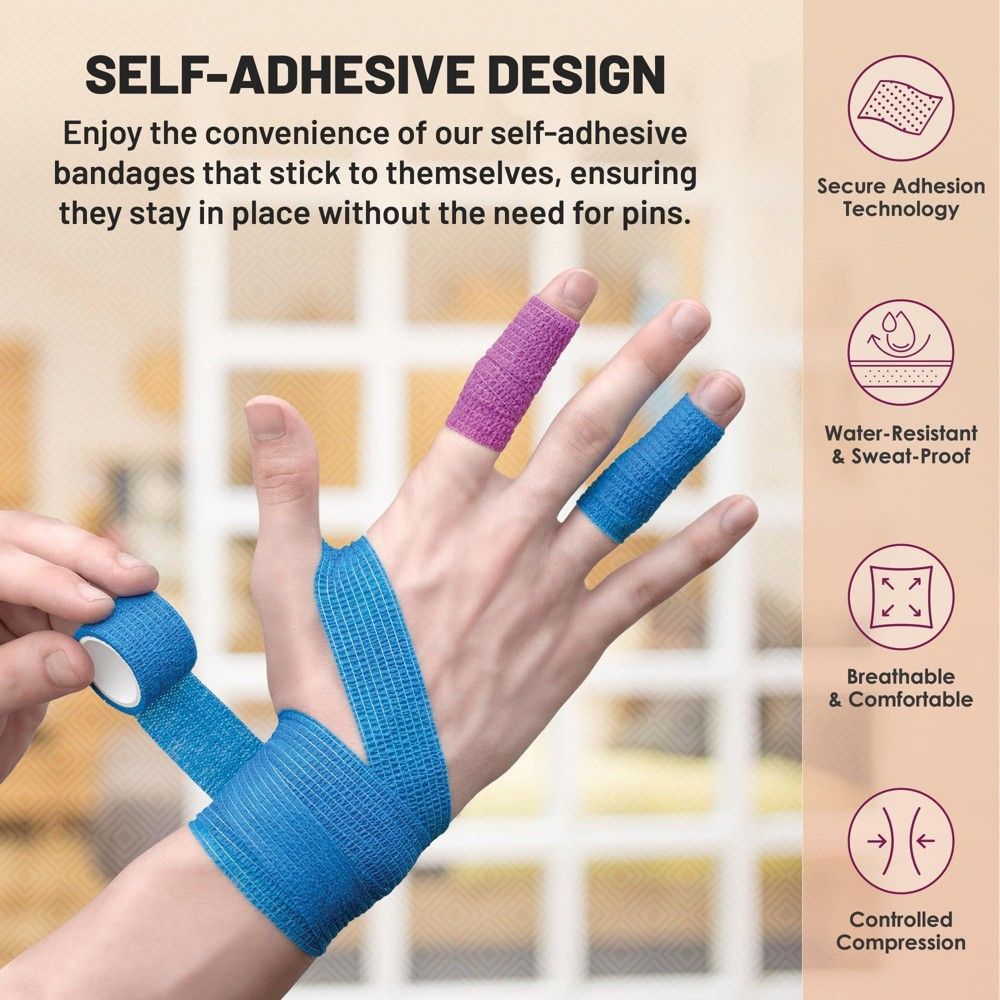


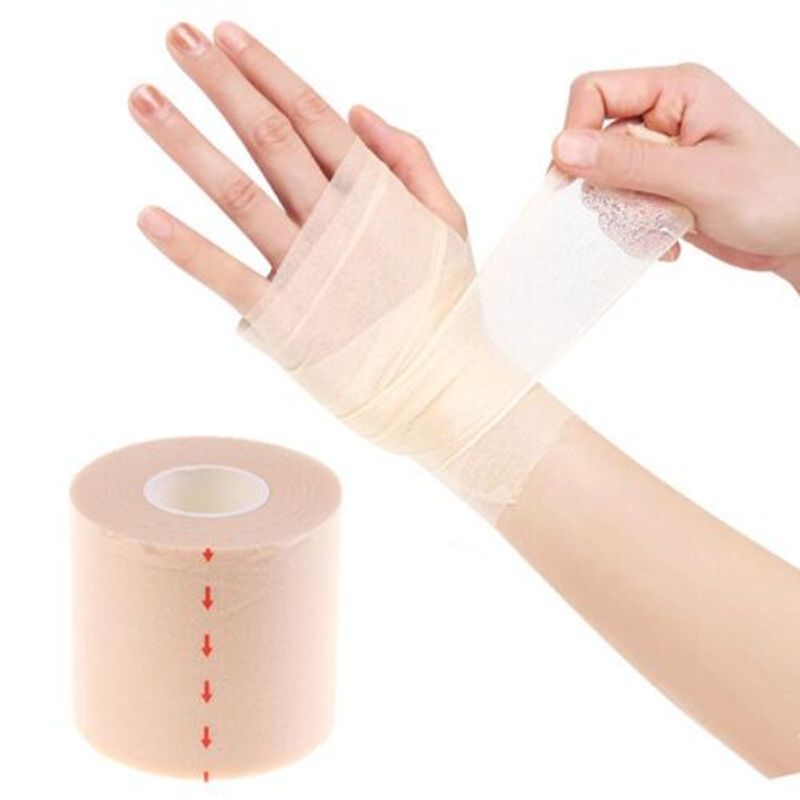

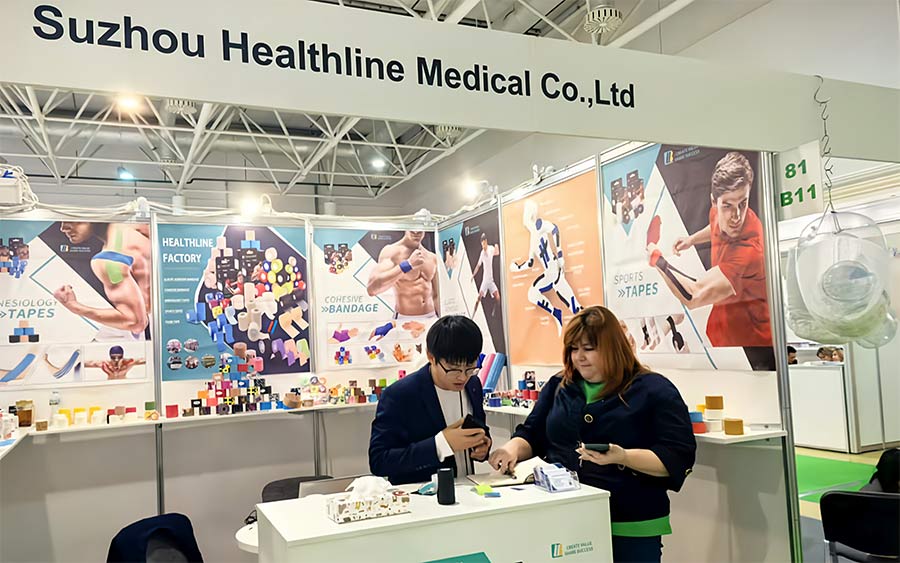
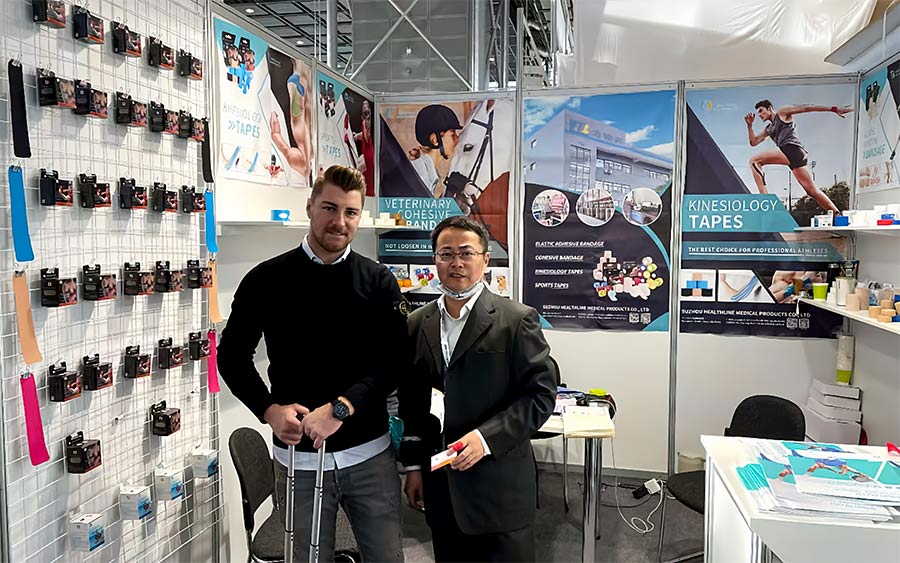
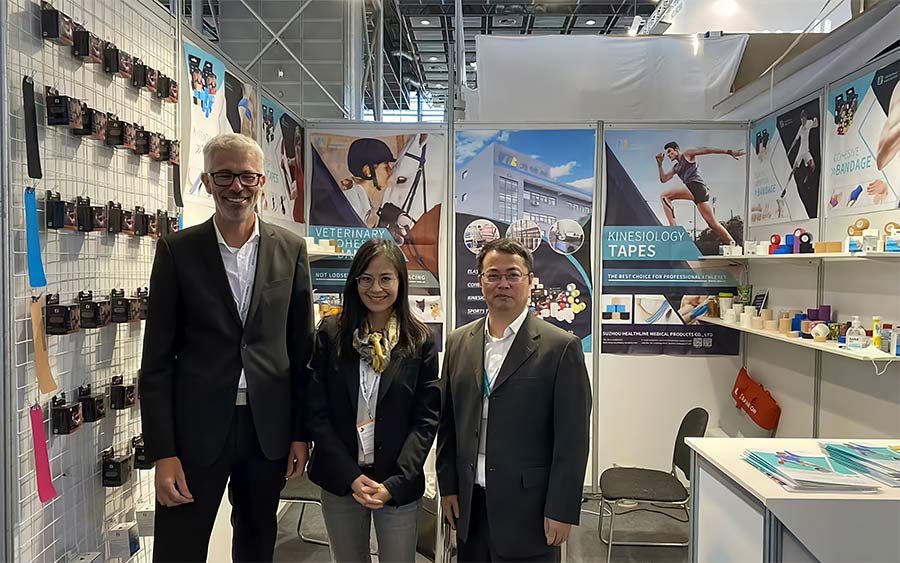
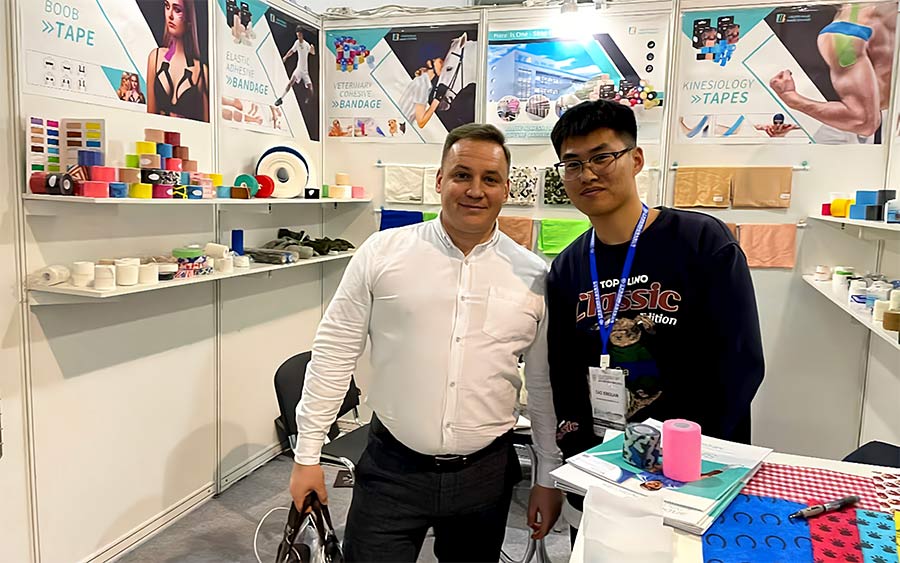
Driven by uncompromising quality, competitive value, and customer-centric service, Healthline’s products are now present in over 50 countries and regions across the globe. As a dedicated OEM/ODM manufacturer of medical cohesive bandages and sports tape, we serve a diverse client portfolio—including hospitals and clinics,veterinary,authorized distributors, government procurement agencies, national pharmacy chains, and retail supermarkets,on-line Amazon,Lotte & Tiktok e-commerce industry .
We are proud to be the long-term OEM/ODM partner for globally recognized names such as Target, CVS, Aldi, Lidl, Carrefour,Tesco, Alliance Boots,Deathlon,Covetrus and Kruuse. Our annual sales volume has maintained a steady year-over-year growth of 15% for consecutive years—a testament to the trust our partners place in us.
In today’s competitive global market, we believe sustainable success comes from continuously delivering superior products and responsive service at a fair price. This philosophy has guided Healthline for three decades, and we are committed to repaying your trust with solutions that help your business grow.




























- Ethan Zhang
- Tel:+86-512-6289 3223
- Mob:+86-19822909189
- Email:ethanzhang@healthline-medical.com
- Whatsapp / Wechat:+86-19822909189
- Skype:+86-19822909189
- Asher.cao
- Tel:+86-512-6289 3223
- Mob:+86-17625487782
-
Email:ethanzhang@healthline-medical.com
Asher.cao@healthline-medical.com
- Whatsapp / Wechat:+86-17625487782
- Skype:+86-176 2548 7782
- Jason Zhang
- Tel:+86-512-6289 3223
- Mob:+86-13152123359
- Email:jason@healthline-medical.com
- Whatsapp / Wechat:+86-13152123359
Copyright © 2025 SUZHOU HEALTHLINE MEDICAL PRODUCTS CO., LTD
All Rights Reserved.
 Sports Tape Manufacturers Cohesive Bandages Suppliers
The information provided on this website is intended for use only in countries and jurisdictions outside of the People's Republic of China.


