
 English
 Español
 русский
 عربى
عربى

- Cotton Kinesiology Tape
- Synthetic Kinesiology Tape
- Nylon Kinesiology Tape
- 4-Way Stretch Elastic Kinesiology Tape
- Standard Kinesiology Tape Roll
- Pre-Cut Kinesiology Tape Strips
- Printed / Pattern Kinesiology Tape
- Perforated Kinesiology Tape (Ventilated)
- Special Shape Kinesiology Tape
- Water-Resistant Kinesiology Tape
- Pregnancy Support Tape
- Face Lift Kinesiology Tape
- Gentle / Beauty Kinesiology Tape
- Veterinary Kinesiology Tape
- Breast Lift Tape
- Customized Kinesiology Tape
- Pre-cut I Strip Kinesiology Tape
- Pre-cut Y Strip Kinesiology Tape
- Pre-cut X Strip Kinesiology Tape
- Knee Kinesiology Tape
- Leg Kinesiology Tape
- Shoulder Kinesiology Tape
- Back Kinesiology Tape
- Waist Kinesiology Tape
- Ankle Kinesiology Tape
- Pregnancy Belly Tape
- Beauty Face Tape
- Solid Color Cohesive Bandage Roll
- Printed & Pattern Cohesive Bandage
- Non-Woven Self-Adhesive Bandage
- Cotton Self-Adhesive Bandage
- PBT Gauze Cohesive Bandage Rolls
- Pet Vet Wrap
- Horse and Cattle Self-Adhesive Bandage
- Veterinary Cohesive Bandage
- Camo Cohesive Wrap Tape
- Military and Tactical Cohesive Bandage
- Tattoo Grip Tape
- Latex Cohesive Bandage
- Latex-Free Cohesive Bandage
- Pet Laminated Self-Adhesive Bandage
- High-Tensile Cohesive Bandage
- Football Sock Wrap Self-Adhesive Bandage
- Sterile Cohesive Bandage
- Special Function Cohesive Bandage
- OEM / Bulk Cohesive Bandage Roll
- Rigid Strapping Tape
- Athletic Tape
- Zinc Oxide Sports Tape
- Rayon Rigid Sports Tape
- Sports Strapping Tape
- Finger Bob Bandages
- Boxing Tape
- Heavyweight Elastic Adhesive Bandage (EAB)
- 93 Cotton Heavyweight Elastic Adhesive Bandages(EAB)
- Athletic Heavyweight Elastic Adhesive Bandage (EAB)
- Lightweight Elastic Adhesive Bandage (EAB)
- Athletic Lightweight Elastic Adhesive Bandage (EAB)
- American Style Elastic Adhesive Bandage (EAB)
- Japanese Style Elastic Adhesive Bandage (EAB)
- Elastic Adhesive Compression Bandage
- Veterinary Elastic Adhesive Bandage (EAB)
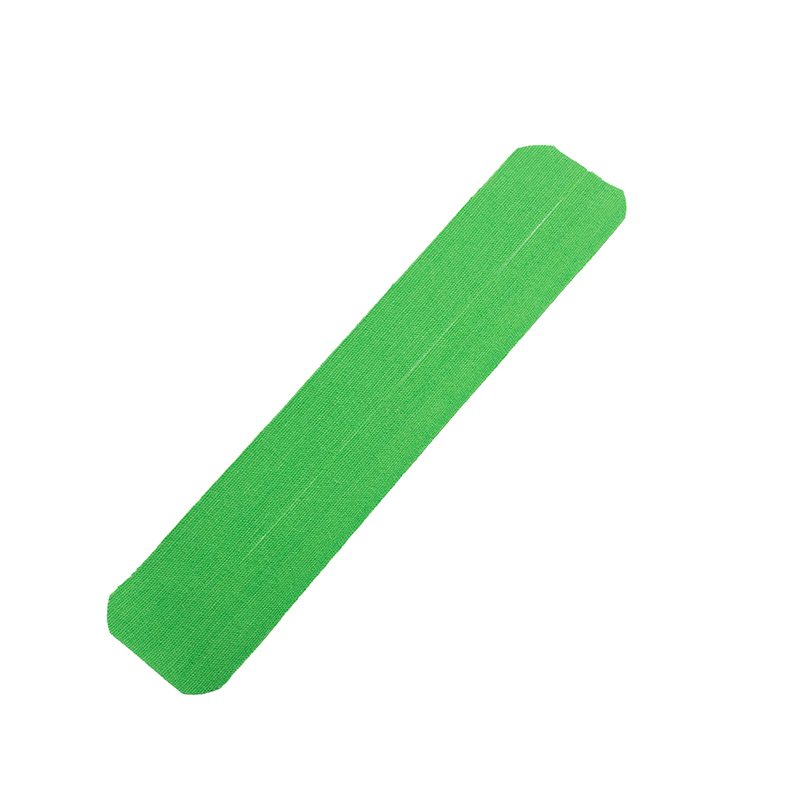
How to Apply Kinesiology Tape for Plantar Fasciitis
Content
- How to Apply Kinesiology Tape for Plantar Fasciitis
- What You Need Before You Start
- Step-by-Step Application Guide
- Tension Guide at a Glance
- How Long Does the Tape Last?
- Common Mistakes That Reduce Effectiveness
- When Taping Works Best — and When It Has Limits
- Kinesiology Tape vs. Athletic (Zinc Oxide) Tape for Plantar Fasciitis
How to Apply Kinesiology Tape for Plantar Fasciitis
To apply kinesiology tape for plantar fasciitis, start at the base of the toes, run one strip with 50–75% tension along the arch toward the heel, then add a second anchor strip across the heel with no tension. This two-strip technique lifts the fascia, reduces strain on the plantar ligament, and can provide immediate pain relief during walking or standing — often within the first few steps.
A 2012 study published in the Journal of Orthopaedic & Sports Physical Therapy found that kinesiology taping combined with stretching reduced plantar fasciitis pain significantly more than stretching alone over a four-week period. The tape doesn't cure the condition, but it can meaningfully manage symptoms while your foot heals.
What You Need Before You Start
Getting the application right starts with preparation. Rushing this step is one of the most common reasons the tape peels off early or fails to provide support.
- A roll of kinesiology tape (Kinesio Tape, Rock Tape, or similar) — pre-cut strips or a roll you cut to size
- Clean, dry, oil-free skin — wash and thoroughly dry your foot first; lotions will prevent adhesion
- Scissors if using a roll
- A rounded-corner trim on tape ends to prevent peeling at the edges
- Optional: skin-prep spray or wipe to boost adhesion, especially if your skin is sensitive or oily
Allow at least 30–45 minutes after showering before applying tape. Body heat and moisture activate the adhesive — rubbing the tape firmly after application (over the backing paper) for 20–30 seconds also helps it bond.
Step-by-Step Application Guide
This is the standard two-strip method used by physical therapists. It targets the plantar fascia directly and provides arch support without restricting ankle movement.
Step 1 — Position Your Foot
Sit down and flex your foot so your toes point upward (dorsiflexion). This puts the plantar fascia under mild stretch, which is the correct position for taping. Do not tape with a relaxed or pointed foot — the tape won't provide support when you stand.
Step 2 — Cut the First Strip (Arch Strip)
Cut a strip long enough to run from the ball of your foot (just behind the toes) to the back of your heel — typically 25–35 cm (10–14 inches) depending on foot size. Round the corners.
Step 3 — Apply the Arch Strip
- Peel the backing from one end and anchor the tape at the ball of the foot with no tension (about 2–3 cm of anchor).
- Apply the middle section along the arch with 50–75% stretch — pull firmly but not to the tape's maximum.
- Lay the final 2–3 cm anchor at the heel with no tension.
- Rub over the entire strip firmly to activate the adhesive.
Step 4 — Cut and Apply the Heel Strip
Cut a shorter strip (roughly 15–20 cm / 6–8 inches) to form a horizontal anchor across the heel. Apply this strip with no stretch, crossing over the end of your arch strip. This prevents the arch tape from lifting at the heel and reinforces the calcaneal attachment of the fascia.
Step 5 — Optional Third Strip for Severe Pain
For significant heel pain, add a third short strip directly over the heel pad, applied as an X or fan over the most painful point with 25% tension. This adds decompression to the calcaneal insertion — the spot where up to 83% of plantar fasciitis cases generate their sharpest pain.
Tension Guide at a Glance
| Strip | Location | Tension | Purpose |
|---|---|---|---|
| Arch strip (middle) | Ball of foot to heel | 50–75% | Lifts fascia, reduces tension load |
| Anchor ends | First and last 2–3 cm | 0% | Prevents edge peeling |
| Heel cross strip | Horizontal across heel | 0% | Anchors arch strip |
| Heel pad strip (optional) | Over calcaneal insertion | 25% | Decompresses heel pain point |
How Long Does the Tape Last?
Quality kinesiology tape is water-resistant and designed to stay on for 3–5 days with normal activity, including showering. However, for the foot — a high-sweat, high-friction area — plan to replace it every 2–3 days in warm conditions.
Signs it's time to reapply:
- Edges are peeling or curling
- The tape feels loose or bunched
- Pain returns to pre-taping levels
- Skin irritation or redness develops under the tape
To remove: peel slowly from the edges, pulling the tape back on itself (not straight up), ideally after moistening with oil or in a warm shower. Never rip the tape off quickly — especially on thinner or sensitive skin.
Common Mistakes That Reduce Effectiveness
Even people who've taped before often make errors that undermine the support. Here are the most frequent ones:
Taping on a Relaxed Foot
If your toes aren't pulled back when you apply the tape, the fascia is slack — the tape will be too loose to provide support once you bear weight and the fascia stretches.
Stretching the Anchor Ends
Applying tension at the very beginning and end of the strip creates a "tourniquet" effect and almost always leads to skin blistering or edge peeling within hours. Always lay anchors flat with zero tension.
Using Too Much Tension
Maxing out the stretch doesn't mean more support — it means the tape restricts circulation and causes discomfort. 50–75% is the effective therapeutic range for plantar fasciitis applications.
Applying to Damp or Moisturized Skin
This is the single biggest reason tape fails early. Even a thin layer of lotion or residual moisture from washing prevents the adhesive from bonding. Allow skin to air-dry completely.
Skipping the Friction-Rub After Application
Rubbing the tape firmly after applying (still through the backing) generates heat that activates the adhesive. Studies by Kinesio Tape's clinical team found this step alone can extend tape life by 30–40%.
When Taping Works Best — and When It Has Limits
Kinesiology tape is most effective for mild to moderate plantar fasciitis — particularly the sharp morning heel pain that improves after a few minutes of walking. It's commonly used by runners, nurses, and teachers who must stay on their feet despite the condition.
However, taping is a symptom-management tool, not a treatment. It works best alongside:
- Calf and plantar fascia stretching (particularly first thing in the morning)
- Supportive footwear with adequate arch support
- Activity modification to reduce overloading
- Night splints for severe morning stiffness
If pain is severe, worsening, or you notice swelling, numbness, or heel pain that doesn't improve with rest, consult a podiatrist or sports medicine physician. Chronic plantar fasciitis lasting over 6 months may require shockwave therapy, orthotics, or other interventions beyond taping.
Kinesiology Tape vs. Athletic (Zinc Oxide) Tape for Plantar Fasciitis
Both types of tape are used for plantar fasciitis, but they work differently and suit different situations.
| Feature | Kinesiology Tape | Rigid Athletic Tape |
|---|---|---|
| Flexibility | High — mimics skin movement | Low — immobilizes the arch |
| Wear duration | 2–5 days | Single session / 1 day |
| Best for | Ongoing daily management | Acute pain, sports events |
| Mechanism | Lifts skin, reduces fascia load | Mechanically restricts motion |
| Skin irritation risk | Lower | Higher with extended wear |
| Ease of self-application | High | Moderate to difficult |
For most people managing plantar fasciitis day-to-day, kinesiology tape is the more practical option. Rigid taping is typically reserved for clinical settings or competition days when maximum support is needed.
Share:
RECOMMENDED PRODUCTS

















- Asher.cao
- Tel:+86-512-6289 3223
- Mob:+86-176 2548 7782
- Email:Asher.cao@healthline-medical.com
- Whatsapp / Wechat:+86-176 2548 7782
- Skype:+86-176 2548 7782
- Ethan Zhang
- Tel:+86-512-6289 3223
- Mob:+86-19822909189
- Email:ethanzhang@healthline-medical.com
- Whatsapp / Wechat:+86-19822909189
- Skype:+86-19822909189
- Jason Zhang
- Tel:+86-512-6289 3223
- Mob:+86-13152123359
- Email:jason@healthline-medical.com
- Whatsapp / Wechat:+86-13152123359
Copyright © 2025 SUZHOU HEALTHLINE MEDICAL PRODUCTS CO., LTD
All Rights Reserved.
 Sports Tape Manufacturers Cohesive Bandages Suppliers
The information provided on this website is intended for use only in countries and jurisdictions outside of the People's Republic of China.


