
 English
 Español
 русский
 عربى
عربى

- Cotton Kinesiology Tape
- Synthetic Kinesiology Tape
- Nylon Kinesiology Tape
- 4-Way Stretch Elastic Kinesiology Tape
- Standard Kinesiology Tape Roll
- Pre-Cut Kinesiology Tape Strips
- Printed / Pattern Kinesiology Tape
- Perforated Kinesiology Tape (Ventilated)
- Special Shape Kinesiology Tape
- Water-Resistant Kinesiology Tape
- Pregnancy Support Tape
- Face Lift Kinesiology Tape
- Gentle / Beauty Kinesiology Tape
- Veterinary Kinesiology Tape
- Breast Lift Tape
- Customized Kinesiology Tape
- Pre-cut I Strip Kinesiology Tape
- Pre-cut Y Strip Kinesiology Tape
- Pre-cut X Strip Kinesiology Tape
- Knee Kinesiology Tape
- Leg Kinesiology Tape
- Shoulder Kinesiology Tape
- Back Kinesiology Tape
- Waist Kinesiology Tape
- Ankle Kinesiology Tape
- Pregnancy Belly Tape
- Beauty Face Tape
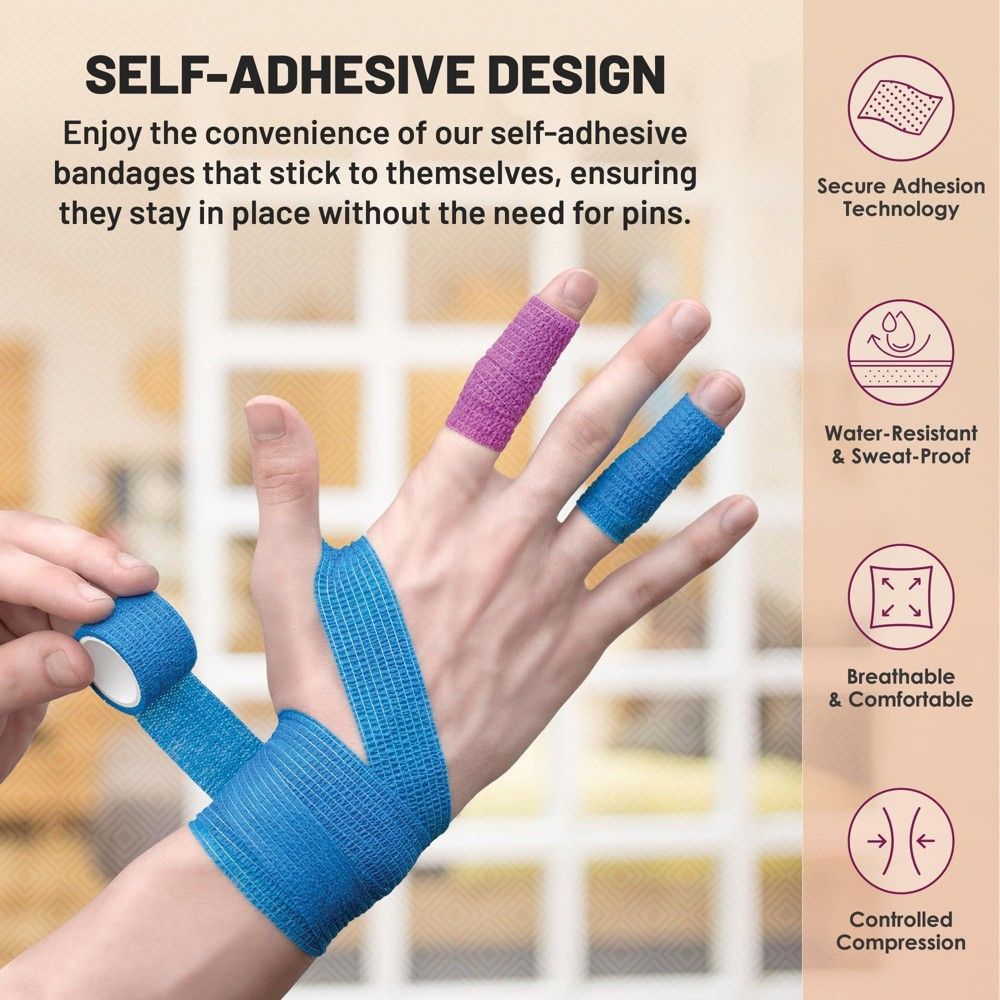
- Solid Color Cohesive Bandage Roll
- Printed & Pattern Cohesive Bandage
- Non-Woven Self-Adhesive Bandage
- Cotton Self-Adhesive Bandage
- PBT Gauze Cohesive Bandage Rolls
- Pet Vet Wrap
- Horse and Cattle Self-Adhesive Bandage
- Veterinary Cohesive Bandage
- Camo Cohesive Wrap Tape
- Military and Tactical Cohesive Bandage
- Tattoo Grip Tape
- Latex Cohesive Bandage
- Latex-Free Cohesive Bandage
- Pet Laminated Self-Adhesive Bandage
- High-Tensile Cohesive Bandage
- Football Sock Wrap Self-Adhesive Bandage
- Sterile Cohesive Bandage
- Special Function Cohesive Bandage
- OEM / Bulk Cohesive Bandage Roll
- Rigid Strapping Tape
- Athletic Tape
- Zinc Oxide Sports Tape
- Rayon Rigid Sports Tape
- Sports Strapping Tape
- Finger Bob Bandages
- Boxing Tape
- Heavyweight Elastic Adhesive Bandage (EAB)
- 93 Cotton Heavyweight Elastic Adhesive Bandages(EAB)
- Athletic Heavyweight Elastic Adhesive Bandage (EAB)
- Lightweight Elastic Adhesive Bandage (EAB)
- Athletic Lightweight Elastic Adhesive Bandage (EAB)
- American Style Elastic Adhesive Bandage (EAB)
- Japanese Style Elastic Adhesive Bandage (EAB)
- Elastic Adhesive Compression Bandage
- Veterinary Elastic Adhesive Bandage (EAB)
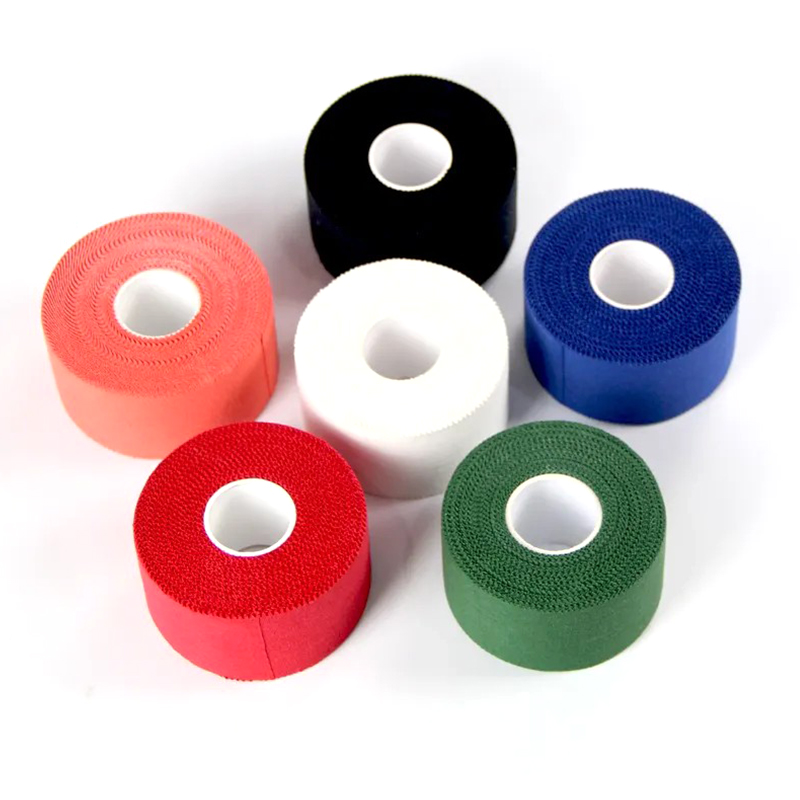
Kinesio Tape vs Sports Tape: Which One Do You Actually Need?
Content
Kinesio tape and sports tape serve fundamentally different purposes. Kinesio tape is designed to support muscles and joints while allowing full range of motion, making it ideal for recovery and performance enhancement. Sports tape (also called athletic tape) is rigid and restricts movement, making it the go-to choice for stabilizing injured joints and preventing further damage. Choosing the wrong one won't just be ineffective — it could actually slow your recovery.
What Is Kinesio Tape?
Kinesio tape (often called KT tape or kinesiology tape) was developed in the 1970s by Japanese chiropractor Dr. Kenzo Kase. It's a thin, elastic, cotton-based tape designed to mimic the flexibility of human skin. It stretches up to 140% of its original length, allowing it to move with your body rather than against it.
The tape is typically applied in specific patterns over muscles, tendons, and fascia. According to proponents, it works by:
- Lifting the skin microscopically to improve circulation and lymphatic drainage
- Reducing pressure on pain receptors under the skin
- Providing proprioceptive feedback to help muscles fire more efficiently
- Supporting fatigued or injured muscles without restricting movement
A 2012 review in the Journal of Orthopaedic & Sports Physical Therapy found that kinesio taping had a small but significant effect on pain reduction compared to no tape, though effects were less clear compared to other interventions. It remains widely used at the professional level — you've likely seen athletes at the Olympics wearing it across their shoulders, knees, and backs.
What Is Sports Tape?
Sports tape — also known as athletic tape or zinc oxide tape — is a stiff, non-elastic tape used to immobilize and support joints. Unlike kinesio tape, it does not stretch. Its rigidity is exactly the point: by limiting movement in a joint, it prevents the kinds of motions that cause injury or aggravate existing damage.
Sports tape has been used in athletic training for over a century. Common applications include:
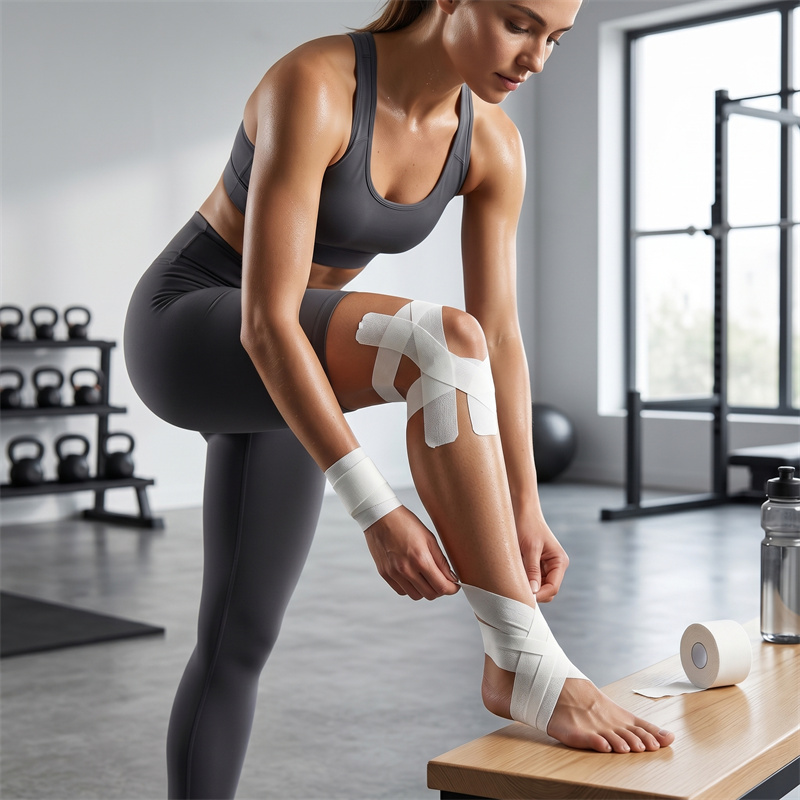
- Strapping sprained ankles to prevent inversion or eversion
- Taping wrists for boxing, gymnastics, or weightlifting
- Supporting the AC joint (shoulder) after separation
- Protecting fingers after ligament injuries in court or field sports
Research supports its effectiveness for joint stabilization. A study in the American Journal of Sports Medicine found that ankle taping reduced the recurrence of ankle sprains by up to 69% in athletes with a prior history of sprains. It's particularly valuable for high-speed, high-impact sports where joint stability is critical.
Key Differences at a Glance
| Feature | Kinesio Tape | Sports Tape |
|---|---|---|
| Elasticity | Highly elastic (up to 140%) | Non-elastic / rigid |
| Primary Purpose | Muscle support, pain relief, recovery | Joint restriction, injury prevention |
| Range of Motion | Preserved | Deliberately restricted |
| Wear Duration | 3–5 days (water-resistant) | During activity only |
| Material | Elastic cotton / synthetic | Rigid cotton / zinc oxide |
| Skin Breathability | High | Low |
| Best For | Overuse injuries, swelling, posture | Sprains, contact sports, instability |
| Application Skill Needed | Moderate | Moderate to high |
When to Use Kinesio Tape
Kinesio tape excels in situations where you need support without sacrificing mobility. It's particularly effective for:
Muscle Fatigue and Overuse Injuries
Conditions like patellar tendinopathy, IT band syndrome, and plantar fasciitis respond well to kinesio taping. For example, a runner dealing with IT band tightness can apply kinesio tape along the lateral thigh to offload tension during long runs — without the tape interfering with the natural gait cycle.
Swelling and Lymphatic Drainage
The "fan" or "web" application technique is commonly used by physical therapists to reduce post-surgical or post-injury edema. Studies show a meaningful reduction in limb circumference (a proxy for swelling) when kinesio tape is applied using lymphatic drainage patterns, making it useful in the early stages of soft tissue recovery.
Postural Support and Neuromuscular Re-education
Kinesio tape applied across the upper trapezius and rhomboids can serve as a tactile cue to remind athletes to retract their shoulder blades and improve posture — especially useful during desk work or long training sessions.
Sports That Require Full Range of Motion
Swimmers, gymnasts, volleyball players, and cyclists benefit from kinesio tape because it offers support without limiting the fluid, wide-ranging movements their sports demand.
When to Use Sports Tape
Sports tape is the better option whenever joint stability is the primary concern. Use it when:
You Have an Acute Joint Sprain
A Grade I or II ankle sprain needs restriction, not just support. Athletic tape can reduce ankle inversion by up to 50%, which is exactly what you need to protect healing ligaments during the return-to-play period.
You Play Contact or High-Impact Sports
Rugby, football, basketball, and wrestling all involve sudden direction changes and physical collisions. In these sports, sports tape acts as an external ligament — particularly for the ankle and wrist — reducing the risk of reinjury during unpredictable movements.
You Need to Protect a Previously Injured Joint
Athletes with a history of ankle instability are significantly more likely to re-sprain without external support. Prophylactic taping with sports tape before each training session is a well-established strategy in athletic training rooms worldwide.
Finger and Hand Protection in Court Sports
In basketball, volleyball, and rock climbing, buddy-taping fingers with sports tape is standard practice to protect against hyperextension and collateral ligament sprains — something kinesio tape simply cannot provide due to its elasticity.
Can You Use Both Together?
Yes — and experienced athletic trainers often do. A common combination for ankle rehabilitation involves sports tape as the structural base to control joint movement, with kinesio tape layered around the calf and Achilles to reduce swelling and support the surrounding musculature. This approach gives you both restriction where you need it and functional support where you don't.
However, if you're applying tape yourself without formal training, it's better to choose one type based on your primary goal rather than attempting a complex dual application.
Practical Tips for Getting the Most from Either Tape
- Clean and dry skin is essential — oils, sweat, and lotion all reduce adhesion and cause premature peeling.
- For kinesio tape, round the corners with scissors to extend wear life and prevent edges from catching on clothing.
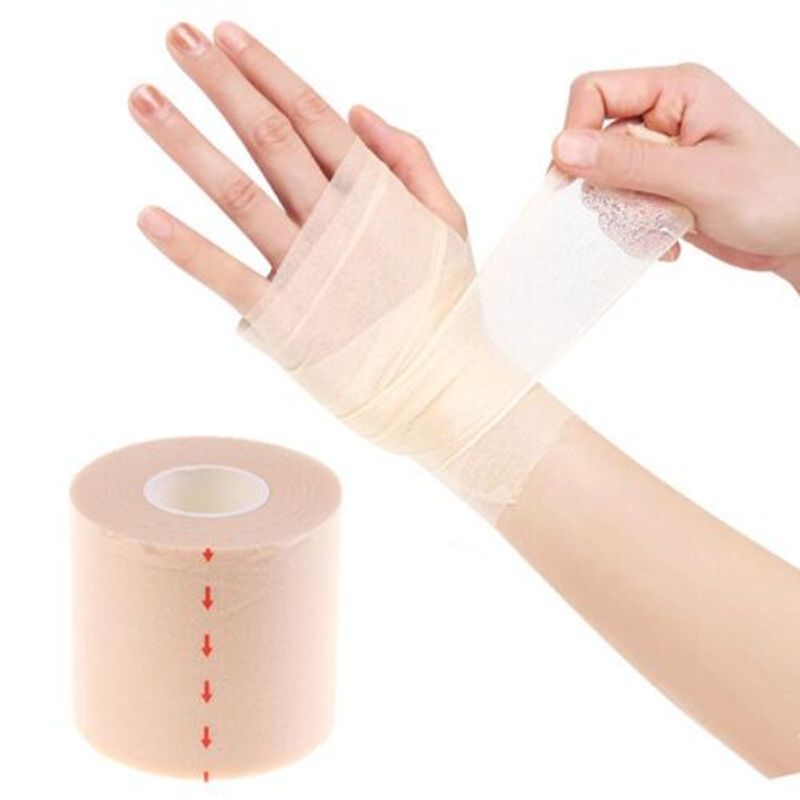
- Sports tape requires pre-wrap (foam underwrap) if applied directly to skin for extended periods, to prevent blistering and skin irritation.
- If you're new to taping, consult a physiotherapist or certified athletic trainer at least once — application technique significantly affects outcomes.
- Never apply sports tape too tightly — check for tingling, numbness, or color changes, which indicate compromised circulation.
- Kinesio tape can typically be worn through showers and light swimming, but pat dry gently rather than rubbing to preserve adhesion.
The Bottom Line
Choose kinesio tape when your goal is to support movement, reduce pain, or manage swelling while staying active. Choose sports tape when you need to restrict a joint, protect a sprain, or stabilize an unstable area during high-impact activity. The tapes aren't interchangeable — each has a distinct mechanical purpose, and using the right one makes a real difference in how well it works.
If you're unsure which fits your situation, a single session with a sports physiotherapist can clarify both the diagnosis and the best taping strategy — saving you time, discomfort, and potentially a worsened injury down the line.
Share:
RECOMMENDED PRODUCTS




















- Asher.cao
- Tel:+86-512-6289 3223
- Mob:+86-176 2548 7782
- Email:Asher.cao@healthline-medical.com
- Whatsapp / Wechat:+86-176 2548 7782
- Skype:+86-176 2548 7782
- Ethan Zhang
- Tel:+86-512-6289 3223
- Mob:+86-19822909189
- Email:ethanzhang@healthline-medical.com
- Whatsapp / Wechat:+86-19822909189
- Skype:+86-19822909189
- Jason Zhang
- Tel:+86-512-6289 3223
- Mob:+86-13152123359
- Email:jason@healthline-medical.com
- Whatsapp / Wechat:+86-13152123359
Copyright © 2025 SUZHOU HEALTHLINE MEDICAL PRODUCTS CO., LTD
All Rights Reserved.
 Sports Tape Manufacturers Cohesive Bandages Suppliers
The information provided on this website is intended for use only in countries and jurisdictions outside of the People's Republic of China.


