
 English
 Español
 русский
 عربى
عربى

- Cotton Kinesiology Tape
- Synthetic Kinesiology Tape
- Nylon Kinesiology Tape
- 4-Way Stretch Elastic Kinesiology Tape
- Standard Kinesiology Tape Roll
- Pre-Cut Kinesiology Tape Strips
- Printed / Pattern Kinesiology Tape
- Perforated Kinesiology Tape (Ventilated)
- Special Shape Kinesiology Tape
- Water-Resistant Kinesiology Tape
- Pregnancy Support Tape
- Face Lift Kinesiology Tape
- Gentle / Beauty Kinesiology Tape
- Veterinary Kinesiology Tape
- Breast Lift Tape
- Customized Kinesiology Tape
- Pre-cut I Strip Kinesiology Tape
- Pre-cut Y Strip Kinesiology Tape
- Pre-cut X Strip Kinesiology Tape
- Knee Kinesiology Tape
- Leg Kinesiology Tape
- Shoulder Kinesiology Tape
- Back Kinesiology Tape
- Waist Kinesiology Tape
- Ankle Kinesiology Tape
- Pregnancy Belly Tape
- Beauty Face Tape
- Solid Color Cohesive Bandage Roll
- Printed & Pattern Cohesive Bandage
- Non-Woven Self-Adhesive Bandage
- Cotton Self-Adhesive Bandage
- PBT Gauze Cohesive Bandage Rolls
- Pet Vet Wrap
- Horse and Cattle Self-Adhesive Bandage
- Veterinary Cohesive Bandage
- Camo Cohesive Wrap Tape
- Military and Tactical Cohesive Bandage
- Tattoo Grip Tape
- Latex Cohesive Bandage
- Latex-Free Cohesive Bandage
- Pet Laminated Self-Adhesive Bandage
- High-Tensile Cohesive Bandage
- Football Sock Wrap Self-Adhesive Bandage
- Sterile Cohesive Bandage
- Special Function Cohesive Bandage
- OEM / Bulk Cohesive Bandage Roll
- Rigid Strapping Tape
- Athletic Tape
- Zinc Oxide Sports Tape
- Rayon Rigid Sports Tape
- Sports Strapping Tape
- Finger Bob Bandages
- Boxing Tape
- Heavyweight Elastic Adhesive Bandage (EAB)
- 93 Cotton Heavyweight Elastic Adhesive Bandages(EAB)
- Athletic Heavyweight Elastic Adhesive Bandage (EAB)
- Lightweight Elastic Adhesive Bandage (EAB)
- Athletic Lightweight Elastic Adhesive Bandage (EAB)
- American Style Elastic Adhesive Bandage (EAB)
- Japanese Style Elastic Adhesive Bandage (EAB)
- Elastic Adhesive Compression Bandage
- Veterinary Elastic Adhesive Bandage (EAB)
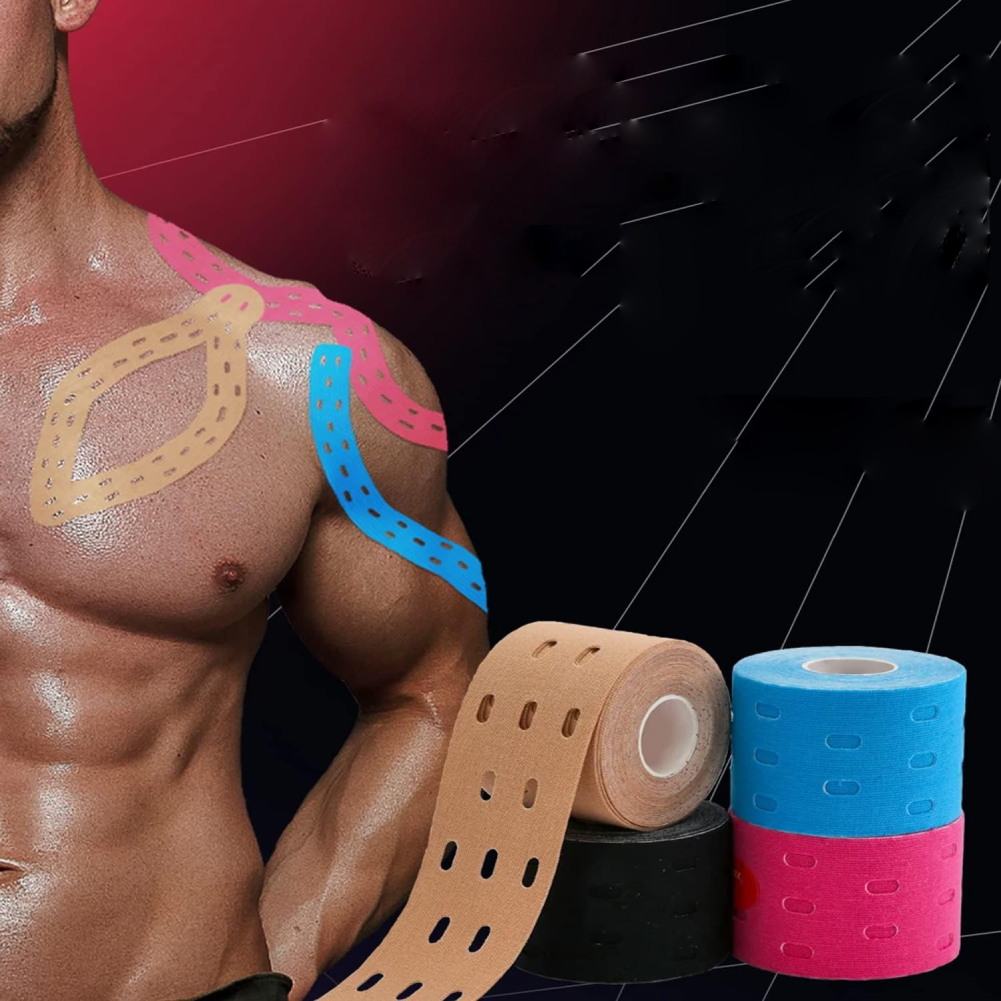
Kinesiology Tape: Benefits, Applications & Muscle Recovery Support
Content
What Is Kinesiology Tape and How Does It Work?
Kinesiology tape is an elastic therapeutic tape designed to mimic the thickness and elasticity of human skin. Unlike rigid athletic tape, it stretches up to 140–160% of its original length, allowing full range of motion while providing targeted support to muscles, joints, and fascia.
When applied correctly, the tape gently lifts the skin away from the underlying tissue. This decompression effect creates more space between the dermis and the muscle, which is believed to:
- Reduce pressure on pain receptors beneath the skin
- Improve lymphatic drainage and reduce localized swelling
- Enhance proprioception — the body's awareness of limb position and movement
- Support muscle contraction without restricting blood flow
The tape's acrylic adhesive is heat-activated, meaning it bonds more securely at skin temperature. Most formulations are water-resistant and latex-free, designed to remain effective for 3 to 5 days even through bathing and light swimming.
Key Benefits Backed by Research
Clinical evidence for kinesiology tape has grown significantly over the past decade. While results vary by condition and application technique, several benefits have been consistently reported across peer-reviewed studies.
Pain Reduction
A 2012 meta-analysis published in the Journal of Physiotherapy found that kinesiology tape provided clinically meaningful pain relief immediately after application compared to sham taping. The gate control theory of pain helps explain this: the tape's mechanical stimulation of skin receptors may interfere with pain signal transmission to the brain.
Edema and Swelling Control
By lifting the skin and reducing interstitial pressure, kinesiology tape facilitates the flow of lymphatic fluid — the body's natural waste-removal system. Studies involving post-surgical patients and sports injury cases have demonstrated measurable reductions in circumference measurements (a proxy for swelling) within 72 hours of application.
Improved Muscle Performance and Endurance
Research in sports medicine suggests that kinesiology tape can delay the onset of muscle fatigue by providing continuous proprioceptive feedback. Athletes report improved movement efficiency, particularly in endurance events where cumulative muscular strain is a concern. A study in the Journal of Strength and Conditioning Research observed up to 6% improvement in isokinetic strength in taped muscle groups during controlled testing.
Postural Correction and Joint Stability
Applied in specific orientations, kinesiology tape can gently cue the body toward better alignment — particularly beneficial for conditions like forward head posture, scapular dyskinesis, and patellar tracking disorders. Unlike bracing, it achieves this without immobilizing the joint, preserving functional movement during rehabilitation.
Common Applications Across Sports and Rehabilitation
Kinesiology tape is used across a wide range of clinical and athletic contexts. Below is a breakdown of the most well-established applications:
| Condition / Area | Primary Goal | Typical Taping Direction |
|---|---|---|
| Knee (Patellofemoral Pain) | Patellar tracking correction | Muscle origin to insertion |
| Shoulder (Rotator Cuff) | Stabilization and pain relief | Insertion to origin (inhibitory) |
| Lower Back | Muscle support and decompression | Origin to insertion (facilitory) |
| Ankle (Lateral Sprain) | Proprioception and edema control | Lymphatic fan technique |
| Calf / Achilles | Reduce strain during push-off | Origin to insertion |
| Neck / Cervical Area | Postural re-education | Inhibitory application |
Beyond sports injuries, kinesiology tape is also used in pediatric therapy for motor development support, in oncology rehabilitation for lymphedema management, and in pregnancy-related lower back support — reflecting its versatility across patient populations.
How Kinesiology Tape Supports Muscle Recovery
Recovery is where kinesiology tape delivers some of its most compelling value — particularly for athletes managing training loads or individuals navigating post-injury rehabilitation protocols.
Accelerating Clearance of Metabolic Waste
During intense exercise, metabolic byproducts such as lactic acid and inflammatory cytokines accumulate in muscle tissue. The subcutaneous space created by kinesiology tape supports lymphatic flow, which helps the body clear these byproducts more efficiently. Faster clearance translates into reduced post-exercise soreness and shorter recovery windows.
Maintaining Active Recovery Between Sessions
One underappreciated advantage of kinesiology tape is that it works continuously — even during rest and sleep. Unlike ice or compression wraps that require deliberate application, tape maintains its therapeutic effect over multiple days. Athletes can train with it on, sleep with it on, and shower without removing it, making it ideal for continuous low-level muscle support during dense training periods.
Reducing Delayed Onset Muscle Soreness (DOMS)
A randomized controlled trial published in the Journal of Sports Science & Medicine found that subjects who applied kinesiology tape to the quadriceps immediately after eccentric exercise reported significantly lower DOMS scores at 24 and 48 hours post-exercise compared to controls. Pressure reduction on nociceptors (pain-sensitive nerve endings) is the proposed mechanism.
Supporting Return-to-Play Timelines
Physical therapists frequently incorporate kinesiology tape into progressive return-to-sport programs. By providing enough sensory and structural feedback to allow safe early movement — without creating dependence on rigid support — athletes can begin functional reloading of injured tissue sooner than traditional immobilization protocols would permit.
Choosing the Right Kinesiology Tape: What Specifications Matter
Not all kinesiology tapes perform equally. Material composition, adhesive quality, and elasticity characteristics directly impact clinical outcomes. Key factors to evaluate include:
- Fabric composition: 100% cotton is standard; cotton-nylon blends offer enhanced durability for high-sweat applications
- Elasticity: Optimal tapes stretch to 140–160% of original length — beyond this, the lifting mechanism becomes less effective
- Adhesive type: Medical-grade acrylic adhesives balance skin-friendliness with adhesion longevity; avoid zinc oxide-based formulations for elastic tape
- Water resistance: Look for tapes rated for 3–5 days of wear with exposure to water and sweat
- Width options: Standard 5cm (2 inches) suits most body regions; 7.5cm is preferred for broader muscle groups like the lower back
- Pre-cut vs. roll: Rolls offer versatility for clinicians; pre-cut strips improve consistency for end-user applications
For clinical procurement and bulk supply, verifying that the tape meets ISO 13485 quality management standards ensures consistent manufacturing quality across batches — a critical consideration for hospitals and physical therapy clinics sourcing at volume.
Application Best Practices for Maximum Effectiveness
Correct application technique is as important as tape quality. Common errors reduce efficacy and may cause skin irritation. Follow these guidelines:
- Clean and dry the skin thoroughly before application — oils and lotions significantly reduce adhesion
- Round the corners of cut strips to prevent early peeling at the edges
- Apply the anchor ends (first and last 2–3 cm) with zero tension to prevent skin irritation at the tape edges
- Position the target muscle in a stretched state before applying the tape body for facilitory techniques; in a relaxed state for inhibitory techniques
- Rub the tape briskly after application to activate the heat-sensitive adhesive
- Wait at least 30–60 minutes before exposure to water to allow full adhesive bonding
- Remove gently by pressing the skin away from the tape edge rather than pulling the tape away from the skin
For clinicians new to kinesiology taping, structured training through certifying bodies such as the Kinesio Taping Association International (KTAI) or RockTape's FMT certification program ensures application protocols are evidence-based and standardized.
Share:
RECOMMENDED PRODUCTS






















- Asher.cao
- Tel:+86-512-6289 3223
- Mob:+86-176 2548 7782
- Email:Asher.cao@healthline-medical.com
- Whatsapp / Wechat:+86-176 2548 7782
- Skype:+86-176 2548 7782
- Ethan Zhang
- Tel:+86-512-6289 3223
- Mob:+86-19822909189
- Email:ethanzhang@healthline-medical.com
- Whatsapp / Wechat:+86-19822909189
- Skype:+86-19822909189
- Jason Zhang
- Tel:+86-512-6289 3223
- Mob:+86-13152123359
- Email:jason@healthline-medical.com
- Whatsapp / Wechat:+86-13152123359
Copyright © 2025 SUZHOU HEALTHLINE MEDICAL PRODUCTS CO., LTD
All Rights Reserved.
 Sports Tape Manufacturers Cohesive Bandages Suppliers
The information provided on this website is intended for use only in countries and jurisdictions outside of the People's Republic of China.


