
 English
 Español
 русский
 عربى
عربى

- Cotton Kinesiology Tape
- Synthetic Kinesiology Tape
- Nylon Kinesiology Tape
- 4-Way Stretch Elastic Kinesiology Tape
- Standard Kinesiology Tape Roll
- Pre-Cut Kinesiology Tape Strips
- Printed / Pattern Kinesiology Tape
- Perforated Kinesiology Tape (Ventilated)
- Special Shape Kinesiology Tape
- Water-Resistant Kinesiology Tape
- Pregnancy Support Tape
- Face Lift Kinesiology Tape
- Gentle / Beauty Kinesiology Tape
- Veterinary Kinesiology Tape
- Breast Lift Tape
- Customized Kinesiology Tape
- Pre-cut I Strip Kinesiology Tape
- Pre-cut Y Strip Kinesiology Tape
- Pre-cut X Strip Kinesiology Tape
- Knee Kinesiology Tape
- Leg Kinesiology Tape
- Shoulder Kinesiology Tape
- Back Kinesiology Tape
- Waist Kinesiology Tape
- Ankle Kinesiology Tape
- Pregnancy Belly Tape
- Beauty Face Tape
- Solid Color Cohesive Bandage Roll
- Printed & Pattern Cohesive Bandage
- Non-Woven Self-Adhesive Bandage
- Cotton Self-Adhesive Bandage
- PBT Gauze Cohesive Bandage Rolls
- Pet Vet Wrap
- Horse and Cattle Self-Adhesive Bandage
- Veterinary Cohesive Bandage
- Camo Cohesive Wrap Tape
- Military and Tactical Cohesive Bandage
- Tattoo Grip Tape
- Latex Cohesive Bandage
- Latex-Free Cohesive Bandage
- Pet Laminated Self-Adhesive Bandage
- High-Tensile Cohesive Bandage
- Football Sock Wrap Self-Adhesive Bandage
- Sterile Cohesive Bandage
- Special Function Cohesive Bandage
- OEM / Bulk Cohesive Bandage Roll
- Rigid Strapping Tape
- Athletic Tape
- Zinc Oxide Sports Tape
- Rayon Rigid Sports Tape
- Sports Strapping Tape
- Finger Bob Bandages
- Boxing Tape
- Heavyweight Elastic Adhesive Bandage (EAB)
- 93 Cotton Heavyweight Elastic Adhesive Bandages(EAB)
- Athletic Heavyweight Elastic Adhesive Bandage (EAB)
- Lightweight Elastic Adhesive Bandage (EAB)
- Athletic Lightweight Elastic Adhesive Bandage (EAB)
- American Style Elastic Adhesive Bandage (EAB)
- Japanese Style Elastic Adhesive Bandage (EAB)
- Elastic Adhesive Compression Bandage
- Veterinary Elastic Adhesive Bandage (EAB)
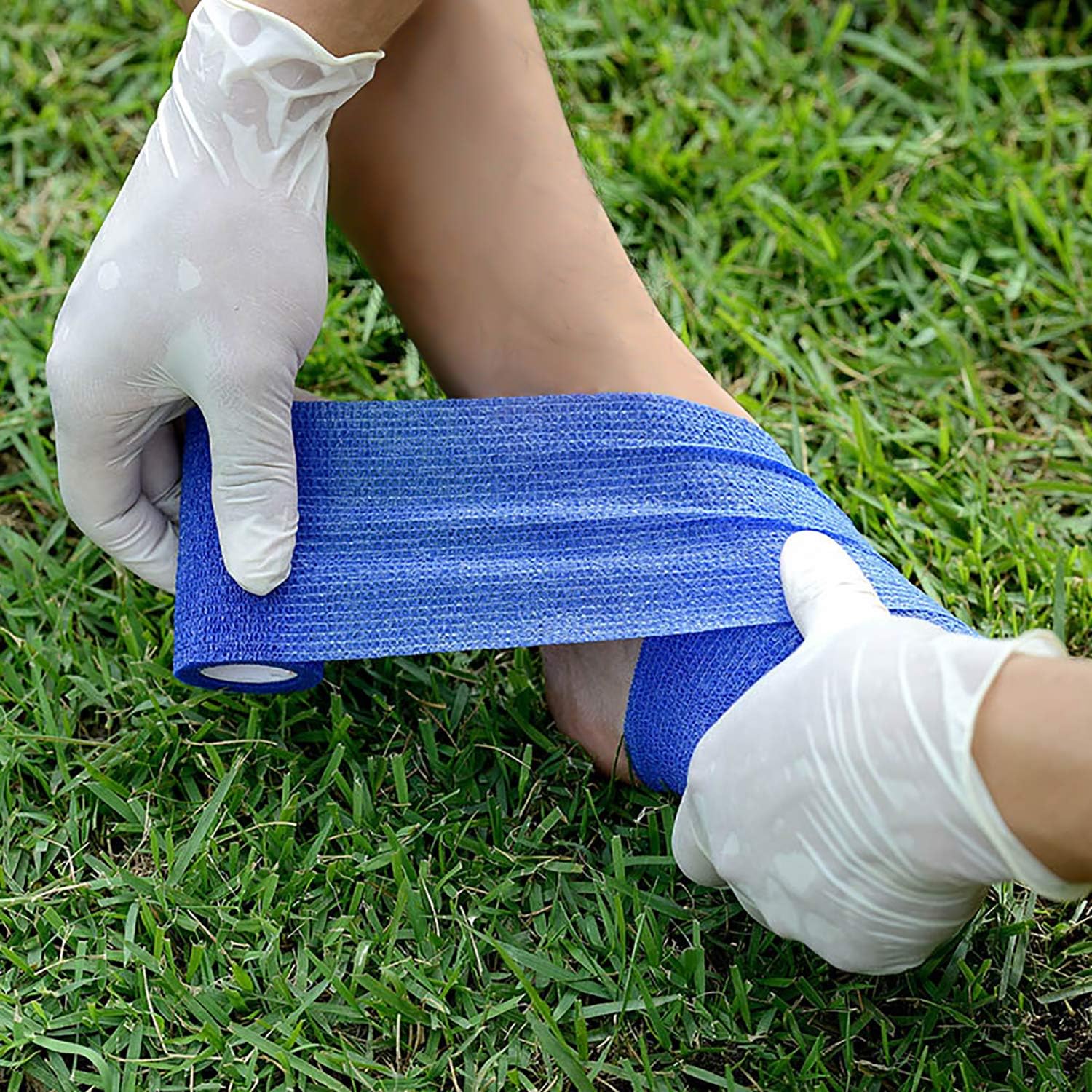
Why Self-Adhesive Bandages Are Essential for First Aid and Injury Management
Content
- The Problem with Traditional Bandages — and How Self-Adhesive Designs Solve It
- Key Benefits That Make Self-Adhesive Bandages a First Aid Standard
- Comparing Bandage Types: Where Self-Adhesive Wins
- Injury-Specific Applications: When to Reach for a Self-Adhesive Bandage
- How to Apply a Self-Adhesive Bandage Correctly
- Choosing the Right Self-Adhesive Bandage: Width, Material, and Latex Considerations
- What Every First Aid Kit Should Include — and Why Self-Adhesive Bandages Top the List
The Problem with Traditional Bandages — and How Self-Adhesive Designs Solve It
Conventional gauze bandages rely on metal clips, tape, or knots to stay in place — all of which have well-documented failure points. Clips loosen during movement, adhesive tape irritates skin with repeated use, and knots apply uneven pressure that can restrict circulation. Self-adhesive bandages bond only to themselves, not to skin or hair, which eliminates every one of these problems in a single design change.
In clinical settings, this matters enormously. A 2022 wound care review published in the Journal of Wound Care found that bandage displacement was among the top three causes of delayed healing in outpatient injury management. Self-adhesive (also called cohesive) bandages reduced displacement rates by up to 60% compared to standard gauze wraps when used on mobile joints such as knees and ankles.
For first aid applications — where the person applying the bandage may not be a medical professional — the self-securing mechanism also removes the skill barrier. There is no technique to learn. Wrap, press, done.
Key Benefits That Make Self-Adhesive Bandages a First Aid Standard
Self-adhesive bandages have become the preferred choice across sports medicine, emergency response, veterinary care, and home first aid kits. Their advantages span several practical dimensions:
- No adhesive on skin: The latex-based or latex-free cohesive layer bonds only fiber-to-fiber, making removal painless — a significant advantage over adhesive bandages on patients with sensitive or damaged skin.
- Conformable to complex anatomy: The elastic construction allows wrapping around fingers, wrists, elbows, and heels without bunching or gapping, maintaining consistent compression throughout.
- Water resistance: Most cohesive bandages maintain adhesion when exposed to light moisture, making them suitable for outdoor and field use where sweat or rain is a factor.
- Controlled compression: Applied with appropriate tension, self-adhesive bandages deliver therapeutic compression for sprains and edema without requiring specialized knowledge of pressure gradients.
- Lightweight and portable: A standard 5 cm × 4.5 m roll weighs under 40 grams, making it practical for travel first aid kits, sports bags, and emergency packs.
Comparing Bandage Types: Where Self-Adhesive Wins
Not every injury calls for the same bandage. The table below shows how self-adhesive bandages compare to the most common alternatives across criteria that matter in real first aid scenarios:
| Criteria | Self-Adhesive (Cohesive) | Standard Gauze | Elastic Adhesive |
|---|---|---|---|
| Skin irritation risk | Low | Low | Medium–High |
| Ease of application | High | Medium | High |
| Stays in place during movement | Excellent | Poor | Good |
| Suitable for hairy skin | Yes | Yes (with clips) | No |
| Reusable | No | Sometimes | No |
| Compression support | Good–Excellent | Minimal | Good |
Injury-Specific Applications: When to Reach for a Self-Adhesive Bandage
Self-adhesive bandages are not a universal solution for every wound type, but their range of appropriate applications is broader than many people assume. Understanding where they genuinely outperform alternatives helps ensure the right tool is used at the right time.
Sprains and Strains
Ankle and wrist sprains are among the most common sports and workplace injuries globally. The RICE protocol (Rest, Ice, Compression, Elevation) remains the first-line response, and compression is most effectively delivered via a cohesive bandage — it conforms to the swelling contours of the joint and maintains even pressure as the patient moves between rest and activity.
Wound Dressing Retention
Securing a primary dressing (gauze pad, hydrocolloid, or foam) over a laceration or abrasion is one of the most straightforward uses. Because the bandage does not contact the wound directly, it can be changed without disturbing the healing tissue underneath — reducing pain and minimizing the risk of reinjury during dressing changes.
Post-Injection and Venipuncture Sites
Medical facilities routinely use cohesive bandages to protect venipuncture sites after blood draws or IV removal. The short-term hold is sufficient to prevent bruising, and the painless removal is particularly valuable for pediatric and elderly patients whose skin cannot tolerate adhesive-based products.
Sports Taping and Injury Prevention
Athletic trainers use self-adhesive bandages as a finishing layer over pre-wrap and rigid tape to lock strapping in place during training and competition. The cohesive outer layer prevents the edges of rigid tape from peeling, extending the functional life of a support wrap through sweat and high-intensity movement.
How to Apply a Self-Adhesive Bandage Correctly
Incorrect application is the primary reason cohesive bandages cause harm — most often through excessive compression that restricts blood flow. Following a consistent technique eliminates this risk:
- Position the limb neutrally. For ankle wraps, hold the foot at 90°. For wrists, maintain a slight extension. Wrapping in a tensed position creates excessive pressure when the limb relaxes.
- Begin distally and move proximally. Start farthest from the heart (toes, fingers) and wrap toward the body. This prevents fluid pooling distal to the bandage.
- Overlap by 50%. Each pass should cover half the previous layer. This distributes tension evenly and eliminates pressure ridges that can cause tissue damage.
- Apply with consistent, moderate tension. Stretch the bandage to approximately 50–75% of its maximum elongation. Never apply at full stretch, which will almost certainly over-compress.
- Check circulation after application. Press a fingernail or toenail distal to the wrap and release — color should return within 2 seconds. If not, the bandage is too tight and must be removed immediately.
Numbness, tingling, increased pain, or skin discoloration beneath or distal to any bandage are signs of circulatory compromise. Remove the wrap immediately and reassess.
Choosing the Right Self-Adhesive Bandage: Width, Material, and Latex Considerations
Not all cohesive bandages are identical. Selecting the appropriate specification for the intended use significantly affects both performance and patient safety.
Width Selection
Width is the most immediately practical variable. Common widths and their primary applications:
- 2.5 cm (1 inch): Fingers, toes, small joint strapping
- 5 cm (2 inches): Wrists, hands, pediatric limbs
- 7.5 cm (3 inches): Standard adult ankle and forearm wraps
- 10 cm (4 inches): Knees, thighs, large-area wound dressing retention
Latex vs. Latex-Free
Traditional cohesive bandages use natural latex as the self-adhesive agent. Latex allergy affects approximately 1–6% of the general population and up to 17% of healthcare workers, according to the American Academy of Allergy, Asthma & Immunology. For any patient with unknown allergy status, or in settings where repeated exposure is likely, latex-free synthetic alternatives (typically polyurethane or silicone-based) are the safer default.
Porosity and Breathability
Extended wear (beyond 24–48 hours) requires a breathable construction to prevent maceration of the underlying skin. Look for bandages described as "porous" or "non-occlusive" if the wrap will remain in place for longer periods or in warm, humid environments.
What Every First Aid Kit Should Include — and Why Self-Adhesive Bandages Top the List
Regulatory bodies and occupational health organizations worldwide specify minimum first aid kit contents. The U.S. ANSI/ISEA Z308.1 standard, the UK's HSE guidance, and ISO 8317-compliant kits all include elastic or cohesive bandages as mandatory items — a consensus that reflects decades of clinical evidence on their utility.
For home and travel kits, the practical recommendation is to stock at least two rolls in different widths — one 5 cm roll for upper extremities and one 10 cm roll for lower extremities. This covers the majority of first aid scenarios without adding meaningful weight or bulk to the kit.
Unlike rigid tape or pre-cut plasters, a single roll of cohesive bandage can be torn to any length, adapted to any body part, and used simultaneously as a primary securing layer and a mild compression device. That versatility-to-weight ratio is unmatched by any other item in a standard first aid kit.
From roadside emergencies to workplace accidents to post-surgical home care, self-adhesive bandages consistently outperform the alternatives where it matters most: staying in place, protecting the injury, and being accessible to non-specialist users in stressful situations. Building a stock of them — in the right widths and with latex-free options where needed — is one of the highest-return preparedness investments available.
Share:
RECOMMENDED PRODUCTS


















- Asher.cao
- Tel:+86-512-6289 3223
- Mob:+86-176 2548 7782
- Email:Asher.cao@healthline-medical.com
- Whatsapp / Wechat:+86-176 2548 7782
- Skype:+86-176 2548 7782
- Ethan Zhang
- Tel:+86-512-6289 3223
- Mob:+86-19822909189
- Email:ethanzhang@healthline-medical.com
- Whatsapp / Wechat:+86-19822909189
- Skype:+86-19822909189
- Jason Zhang
- Tel:+86-512-6289 3223
- Mob:+86-13152123359
- Email:jason@healthline-medical.com
- Whatsapp / Wechat:+86-13152123359
Copyright © 2025 SUZHOU HEALTHLINE MEDICAL PRODUCTS CO., LTD
All Rights Reserved.
 Sports Tape Manufacturers Cohesive Bandages Suppliers
The information provided on this website is intended for use only in countries and jurisdictions outside of the People's Republic of China.


