
 English
 Español
 русский
 عربى
عربى

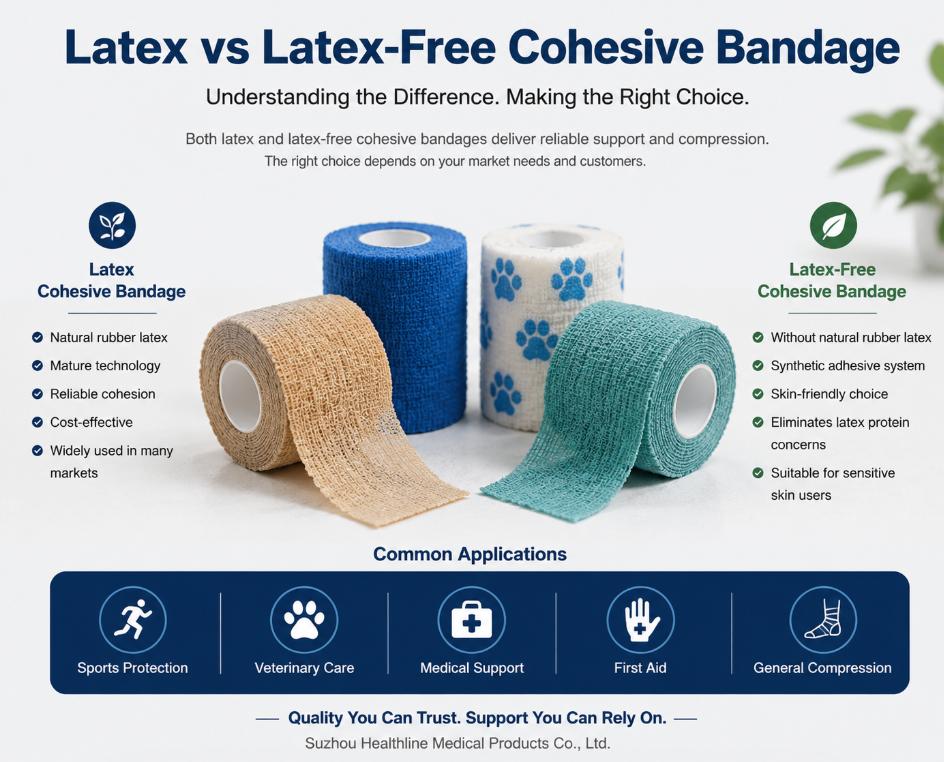
Latex or Latex-Free Cohesive Bandage: What Should Buyers Know Before Production?
Content
- Formula Should Be Confirmed Before Packaging Design
- Latex and Latex-Free Cohesive Bandages: What Is the Difference?
- Latex and Latex-Free Options in Real Applications
- Sample Checks That Matter Before Bulk Production
- Choosing Cohesive Bandage for Different Markets
- Packaging Should Match the Actual Product Formula
- Information Needed for Quotation
- Conclusion
Formula Should Be Confirmed Before Packaging Design
When developing a cohesive bandage product, many buyers start with packaging design, colors, and branding. However, one of the most important details to confirm at an early stage is the product formula.
Whether a cohesive bandage is latex or latex-free can affect product labeling, sample approval, market positioning, and customer requirements. Changing carton artwork is usually manageable, but changing the formula after samples or packaging have been finalized may require additional adjustments.
For this reason, experienced buyers normally confirm the formula before moving into the final packaging stage.
Latex and Latex-Free Cohesive Bandages: What Is the Difference?
Both latex and latex-free cohesive bandages are designed to provide the same basic functions, including:
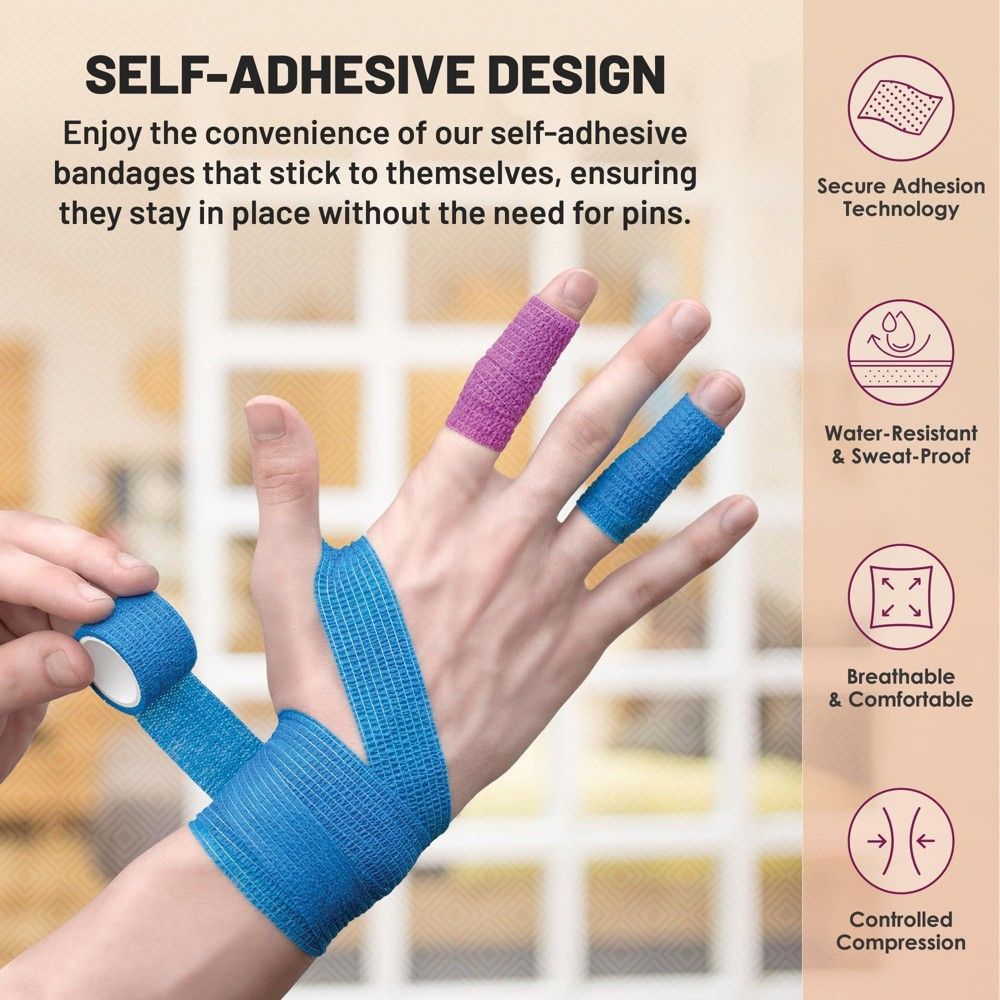
- Self-adherence without additional fixation
- Elastic support and compression
- Easy application and removal
- Comfortable wrapping around different body areas
The main difference between these two options is the adhesive used during production.
Latex Cohesive Bandage
Traditional cohesive bandages may use natural rubber latex in the cohesive adhesive system. Latex has been widely used in medical and sports products for many years due to its reliable bonding performance and elasticity.
It remains a common choice in many markets because of its mature production technology and cost efficiency.
Latex-Free Cohesive Bandage
Latex-free cohesive bandages are manufactured without natural rubber latex components. Instead, synthetic adhesive systems are used to achieve similar cohesive performance.
The main reason buyers choose latex-free options is related to skin sensitivity considerations. Natural rubber latex contains proteins that may cause sensitivity concerns for some users, while latex-free products eliminate these latex proteins from the formulation.
In terms of daily use, latex and latex-free cohesive bandages provide similar performance, including:
- Secure self-adhesion
- Flexible compression
- Easy wrapping
- Comfortable wear
The choice between latex and latex-free is mainly based on customer requirements, market preference, and product positioning rather than different applications.
Latex and Latex-Free Options in Real Applications
For most cohesive bandage applications, latex and latex-free versions provide similar performance, including self-adhesion, elasticity, and compression support.
The choice is usually not based on different usage scenarios, but on material preference, market requirements, and customer expectations.
| Option | Typical Market Requirements | Buyer Considerations |
|---|---|---|
| Latex cohesive bandage | Widely used in sports protection, veterinary care, medical support, and general compression applications | A mature and cost-effective solution with reliable cohesive performance. Buyers should confirm labeling requirements according to their target market. |
| Latex-free cohesive bandage | Used across the same applications when customers prefer products without natural rubber latex components | Suitable for markets focusing on skin-friendly solutions or where latex sensitivity concerns need to be considered. |
| Customized printed cohesive bandage | Popular for retail brands, pet care products, sports brands, and private label projects | Color, printing design, material selection, and packaging should be confirmed together before bulk production. |
Sample Checks That Matter Before Bulk Production
When evaluating cohesive bandage samples, buyers should focus on actual product performance.
Self-Adhesion
Wrap the bandage around a hand or equipment handle and check whether it holds securely to itself without excessive sticking.
Elastic Recovery
Stretch the bandage and release it to check whether the material returns properly and maintains consistent support.
Hand Tear Performance
For first aid and sports applications, easy hand tearing can improve user experience. Different widths and fabric structures may influence tearing performance.
Printing and Appearance
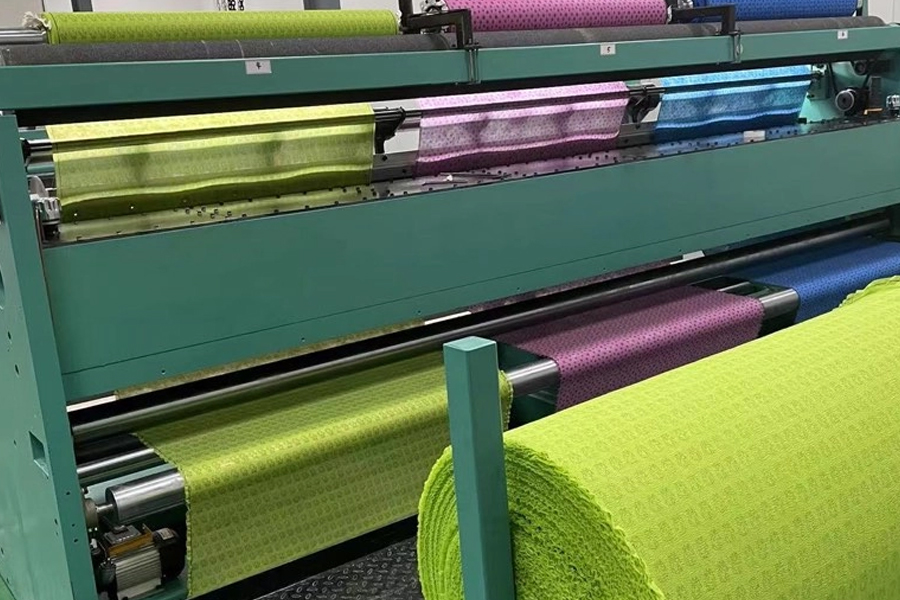
For customized printed cohesive bandages, check whether patterns remain clear after stretching and whether the roll maintains a neat appearance inside the package.
Choosing Cohesive Bandage for Different Markets
Different sales channels may focus on different product features.
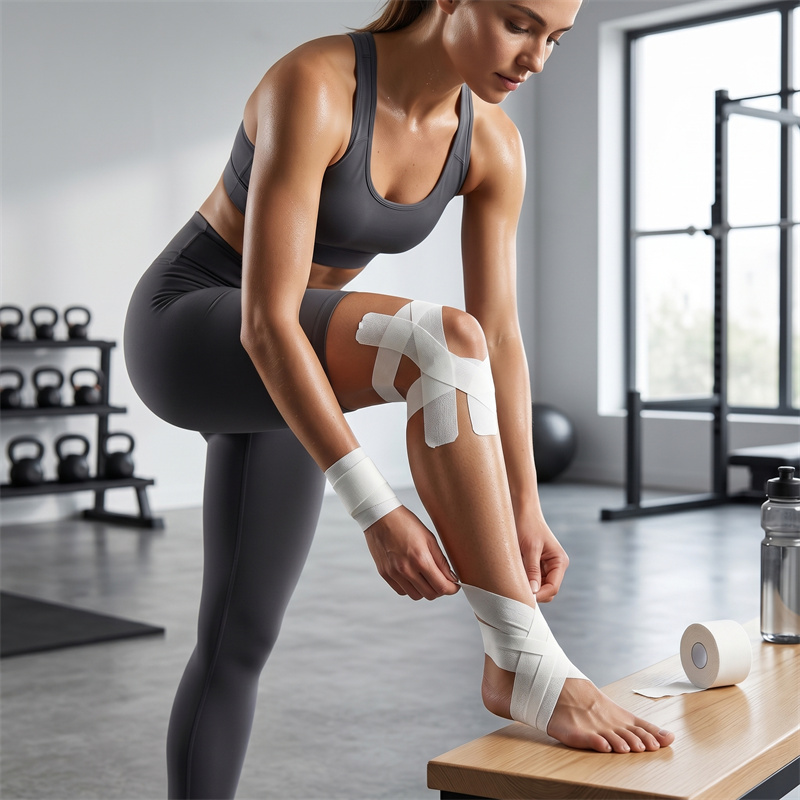
Sports Market
Sports customers often pay attention to:
- Grip performance
- Color options
- Comfort during movement
- Packaging appearance
Veterinary Market
Animal care products commonly require:
- Different width options
- Bright colors for identification
- Reliable wrapping performance
Retail and First Aid Market
Retail products usually focus more on:
- Clear product information
- Consumer-friendly packaging
- Latex-free options when required by the market
Understanding the end-use market helps buyers select the right formula and product specifications.
Packaging Should Match the Actual Product Formula
Packaging is an important part of product communication.
For latex-free products, the latex-free information should be displayed clearly according to market requirements.
For latex products, buyers should ensure that product descriptions and labels accurately reflect the actual material composition.
The product formula, packaging wording, and technical documents should always remain consistent to avoid confusion during distribution.
Information Needed for Quotation
To provide an accurate quotation, buyers should confirm:
- Product width and length
- Latex or latex-free requirement
- Color options
- Printing requirements
- Packaging style
- Order quantity
- Destination market
If the formula has not been decided, comparing latex and latex-free samples before mass production is usually the most practical approach.
Conclusion
Latex and latex-free cohesive bandages are both widely used solutions in medical, sports, and veterinary markets. Their basic functions are similar, while the main difference is the elastic material composition.
Latex cohesive bandages remain a proven and cost-effective option, while latex-free cohesive bandages provide an alternative choice for customers who want to avoid natural rubber latex proteins.
For brands and distributors, confirming the right formula at the beginning of the project can help ensure smoother sampling, packaging, and production processes.
Suzhou Healthline Medical provides OEM and private label cohesive bandage solutions, including latex and latex-free options, with customized specifications and packaging support.
Share:
RECOMMENDED PRODUCTS













- Asher.cao
- Tel:+86-512-6289 3223
- Mob:+86-176 2548 7782
- Email:Asher.cao@healthline-medical.com
- Whatsapp / Wechat:+86-176 2548 7782
- Skype:+86-176 2548 7782
- Ethan Zhang
- Tel:+86-512-6289 3223
- Mob:+86-19822909189
- Email:ethanzhang@healthline-medical.com
- Whatsapp / Wechat:+86-19822909189
- Skype:+86-19822909189
- Jason Zhang
- Tel:+86-512-6289 3223
- Mob:+86-13152123359
- Email:jason@healthline-medical.com
- Whatsapp / Wechat:+86-13152123359
Copyright © 2025 SUZHOU HEALTHLINE MEDICAL PRODUCTS CO., LTD
All Rights Reserved.
 Sports Tape Manufacturers Cohesive Bandages Suppliers
The information provided on this website is intended for use only in countries and jurisdictions outside of the People's Republic of China.


