
 English
 Español
 русский
 عربى
عربى

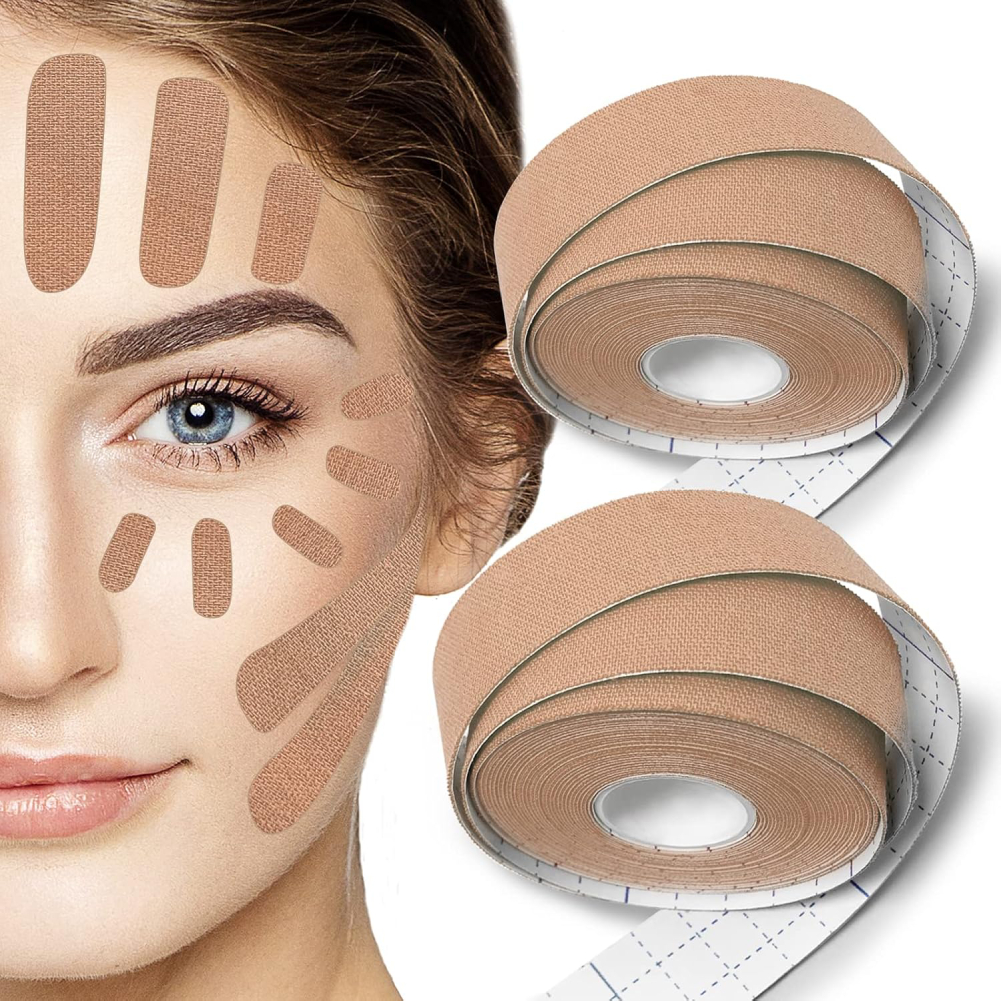
The One Process That Determines Whether Your Kinesiology Tape Performs or Fails
Content
If you have used kinesiology tape for any length of time, you have probably encountered this: one roll goes on smoothly, stays in place through a full workout, and peels off cleanly. The next roll—same brand, same specifications—starts lifting at the edges within twenty minutes, leaves adhesive residue on your skin, or feels inconsistent from one strip to the next.
Most people blame the tape. The real culprit is usually something that happened weeks earlier, on a factory floor thousands of miles away: the coating process.
Why Coating Is the Make-or-Break Step
Kinesiology tape looks simple. A strip of cotton-spandex fabric, a layer of acrylic adhesive, a piece of release paper. But the step that turns those three components into a reliable product is deceptively difficult.
The adhesive layer on kinesiology tape is extraordinarily thin—measured in grams per square meter, not millimeters. Getting that layer right means applying it evenly across the entire width of the fabric, at a consistent thickness, without gaps, without pooling, without variation from the start of the roll to the end.
If the coating is too thick, the adhesive can bleed through the fabric, stick to the release liner too aggressively, or increase the risk of skin irritation. If it is too thin, the tape will not hold during dynamic movement. If it is uneven—thick in some spots, thin in others—the user gets the worst of both worlds: sections that grip too hard and sections that peel away.
This is not a problem that can be solved by using better raw materials alone. It is a process problem. And in kinesiology tape manufacturing, the coating process is where the gap between professional-grade products and everything else becomes visible.
How Most Factories Approach Coating
In many facilities, coating is treated as a straightforward production step: get the adhesive onto the fabric, move it along. The equipment may be older, the tolerances wider, the inspection minimal. As long as the roll looks acceptable coming off the line, it ships.
The problem is that coating defects are not always immediately visible. A roll with slightly uneven adhesive distribution may look fine when it leaves the factory. But after weeks in a shipping container, or days in a humid gym bag, or hours on an athlete's skin, those invisible inconsistencies reveal themselves. Edges lift. Adhesive transfers to the skin. One strip performs beautifully while the next, from the same roll, fails.
How We Approach Coating at Healthline Medical
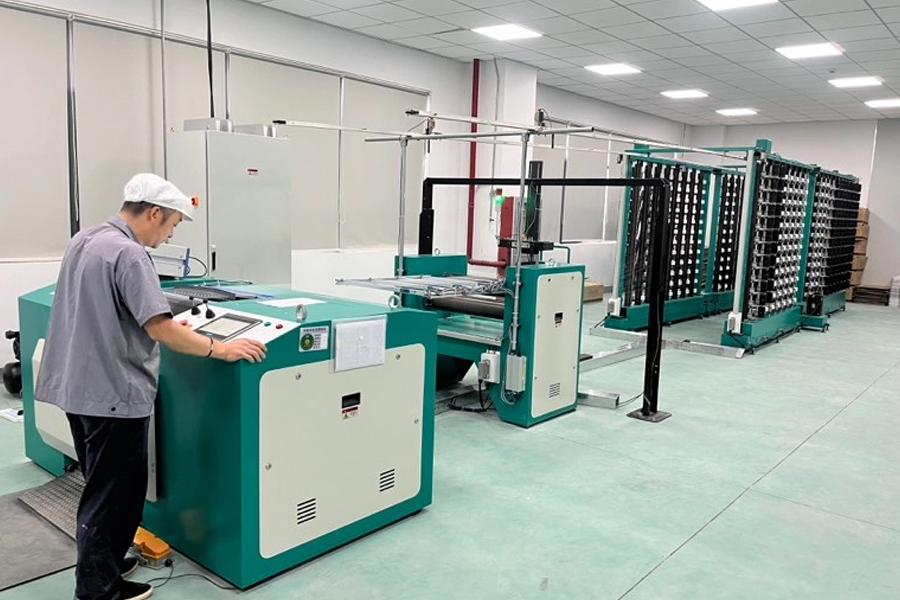
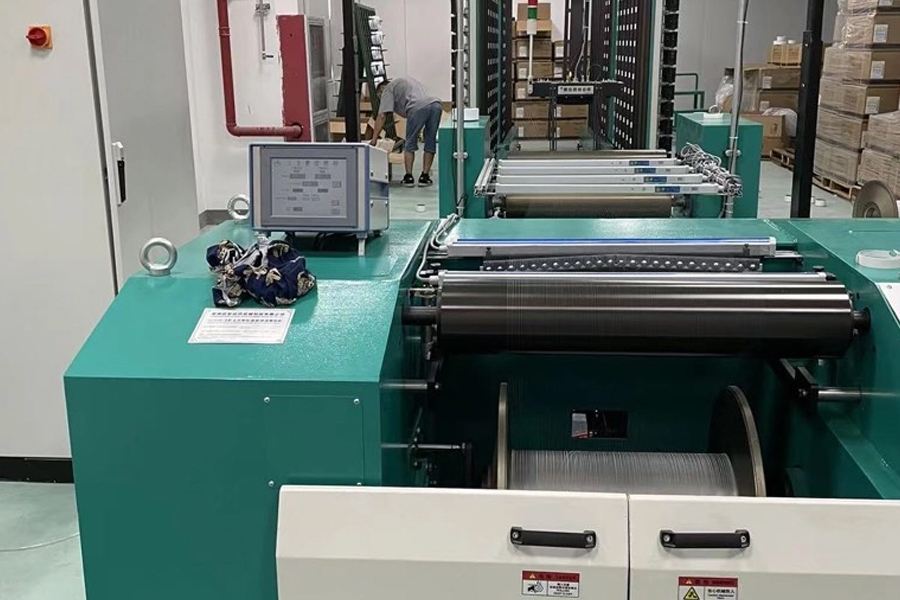
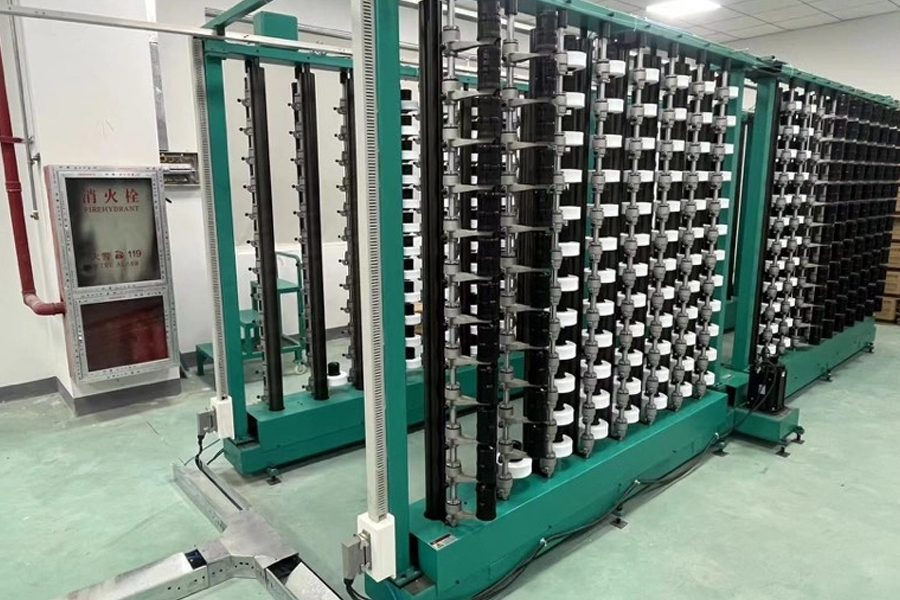
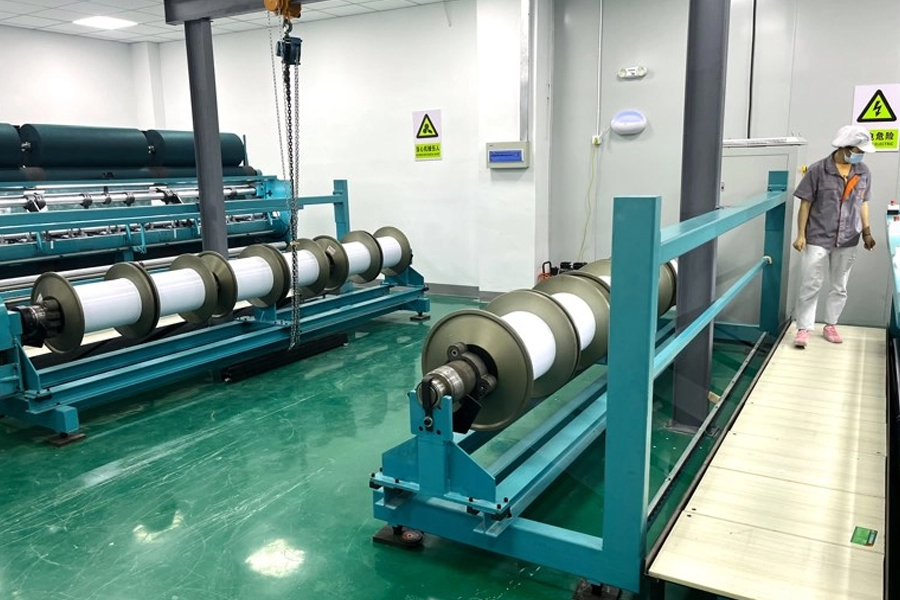
Our coating line is automated, running at a controlled speed of 10.5 meters per minute. The adhesive is applied through a knife-over-roll coating method—a precision technique that spreads the acrylic adhesive across the fabric at a tightly controlled thickness.
Our standard coating weight is held between 50 and 55 grams per square meter. That range is not arbitrary. Through years of production experience, we have found that this window delivers the optimal balance of adhesion, comfort, and clean removal. Go below 50 grams, and the tape struggles to hold during intense activity. Go above 55, and the risk of adhesive bleed-through and skin irritation increases.
During coating, we run real-time monitoring of adhesive application weight. If the coating falls outside our specified range, the line is adjusted immediately. This is not a sampling check done after the fact—it is continuous oversight while the tape is being made.
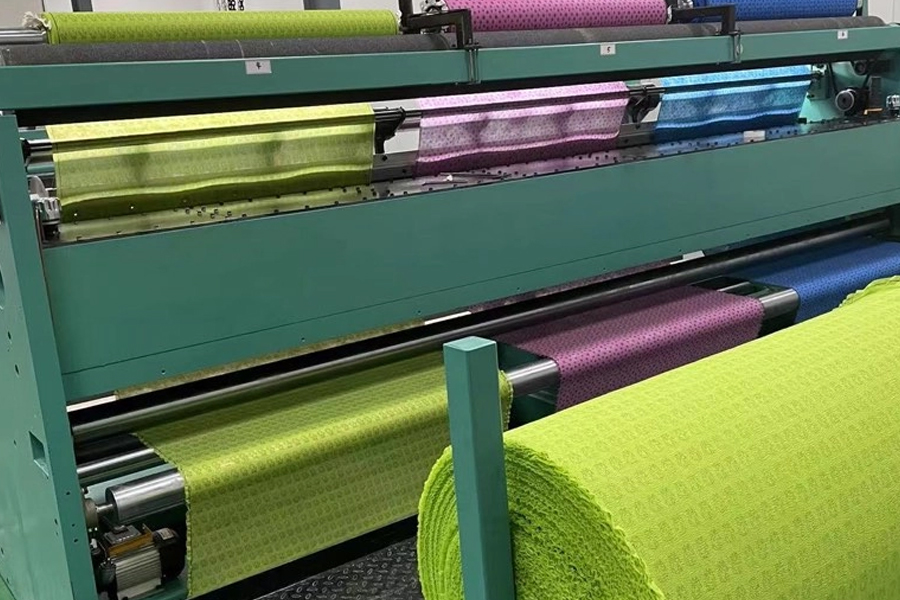
After coating, the tape enters a controlled curing stage. We do not rush product out of the factory the moment it comes off the line. The adhesive needs time to stabilize, to settle into the fabric, to reach its designed performance characteristics. This curing step is a quiet investment—it takes time, it takes space, and it adds nothing visible to the final product. But without it, even a perfectly coated roll will not perform as intended over its full shelf life.
Once curing is complete, every batch is sampled for routine testing: initial tack, peel strength, holding power, and tensile strength. The specific testing standards are aligned with customer requirements. If a batch does not meet the specified criteria, that material is not used for finished products. We do not ship questionable adhesive.
Two Adhesive Options, One Important Distinction
We offer two adhesive formulations, both latex-free. Both use medical-grade acrylic chemistry. Both are applied through the same coating line, at the same precision, with the same quality control.
The first uses a German Henkel adhesive. This option carries full ISO 10993 biocompatibility testing—cytotoxicity, sensitization, and irritation—completed according to the standard protocol. For brands that need complete regulatory documentation for CE marking, FDA submissions, or retail partner compliance, this is the option that provides the most comprehensive paper trail.
The second uses a domestic medical-grade acrylic adhesive. In terms of everyday performance—adhesion, holding power, clean removal—our production data shows no meaningful difference from the Henkel formulation. The distinction is in the documentation. The domestic adhesive may not carry a full ISO 10993 panel. For brands operating in markets with less stringent documentation requirements, or for those who are willing to manage biocompatibility testing independently, this option provides equivalent product quality with cost advantages.
We do not push one option over the other. We explain the difference, and we let you decide what your market requires.
What This Means for Your Brand
Coating precision is not something your end users will ever think about. They will never ask what coating method was used, or what gram weight the adhesive was applied at, or whether the batch passed its peel strength test.
But they will notice if the tape fails. They will notice if it lifts during a match. They will notice if it leaves a sticky residue that takes three showers to remove. They will notice if the third strip in a pack performs differently from the first.
And when they notice those things, they will blame your brand—not the factory.
Every roll that leaves our facility has been through a coating process designed to prevent those failures. Not by hoping for the best, but by controlling the variables that matter: application weight, line speed, curing time, and post-production testing.
If you are building a kinesiology tape brand—or if you have been let down by inconsistent quality in the past—we would be happy to talk. We can walk you through our production process in more detail, share our quality control documentation, and send samples so you can feel the difference that a properly coated roll makes.
Share:
RECOMMENDED PRODUCTS











- Asher.cao
- Tel:+86-512-6289 3223
- Mob:+86-176 2548 7782
- Email:Asher.cao@healthline-medical.com
- Whatsapp / Wechat:+86-176 2548 7782
- Skype:+86-176 2548 7782
- Ethan Zhang
- Tel:+86-512-6289 3223
- Mob:+86-19822909189
- Email:ethanzhang@healthline-medical.com
- Whatsapp / Wechat:+86-19822909189
- Skype:+86-19822909189
- Jason Zhang
- Tel:+86-512-6289 3223
- Mob:+86-13152123359
- Email:jason@healthline-medical.com
- Whatsapp / Wechat:+86-13152123359
Copyright © 2025 SUZHOU HEALTHLINE MEDICAL PRODUCTS CO., LTD
All Rights Reserved.
 Sports Tape Manufacturers Cohesive Bandages Suppliers
The information provided on this website is intended for use only in countries and jurisdictions outside of the People's Republic of China.


