
 English
 Español
 русский
 عربى
عربى

- Cotton Kinesiology Tape
- Synthetic Kinesiology Tape
- Nylon Kinesiology Tape
- 4-Way Stretch Elastic Kinesiology Tape
- Standard Kinesiology Tape Roll
- Pre-Cut Kinesiology Tape Strips
- Printed / Pattern Kinesiology Tape
- Perforated Kinesiology Tape (Ventilated)
- Special Shape Kinesiology Tape
- Water-Resistant Kinesiology Tape
- Pregnancy Support Tape
- Face Lift Kinesiology Tape
- Gentle / Beauty Kinesiology Tape
- Veterinary Kinesiology Tape
- Breast Lift Tape
- Customized Kinesiology Tape
- Pre-cut I Strip Kinesiology Tape
- Pre-cut Y Strip Kinesiology Tape
- Pre-cut X Strip Kinesiology Tape
- Knee Kinesiology Tape
- Leg Kinesiology Tape
- Shoulder Kinesiology Tape
- Back Kinesiology Tape
- Waist Kinesiology Tape
- Ankle Kinesiology Tape
- Pregnancy Belly Tape
- Beauty Face Tape
- Solid Color Cohesive Bandage Roll
- Printed & Pattern Cohesive Bandage
- Non-Woven Self-Adhesive Bandage
- Cotton Self-Adhesive Bandage
- PBT Gauze Cohesive Bandage Rolls
- Pet Vet Wrap
- Horse and Cattle Self-Adhesive Bandage
- Veterinary Cohesive Bandage
- Camo Cohesive Wrap Tape
- Military and Tactical Cohesive Bandage
- Tattoo Grip Tape
- Latex Cohesive Bandage
- Latex-Free Cohesive Bandage
- Pet Laminated Self-Adhesive Bandage
- High-Tensile Cohesive Bandage
- Football Sock Wrap Self-Adhesive Bandage
- Sterile Cohesive Bandage
- Special Function Cohesive Bandage
- OEM / Bulk Cohesive Bandage Roll
- Rigid Strapping Tape
- Athletic Tape
- Zinc Oxide Sports Tape
- Rayon Rigid Sports Tape
- Sports Strapping Tape
- Finger Bob Bandages
- Boxing Tape
- Heavyweight Elastic Adhesive Bandage (EAB)
- 93 Cotton Heavyweight Elastic Adhesive Bandages(EAB)
- Athletic Heavyweight Elastic Adhesive Bandage (EAB)
- Lightweight Elastic Adhesive Bandage (EAB)
- Athletic Lightweight Elastic Adhesive Bandage (EAB)
- American Style Elastic Adhesive Bandage (EAB)
- Japanese Style Elastic Adhesive Bandage (EAB)
- Elastic Adhesive Compression Bandage
- Veterinary Elastic Adhesive Bandage (EAB)
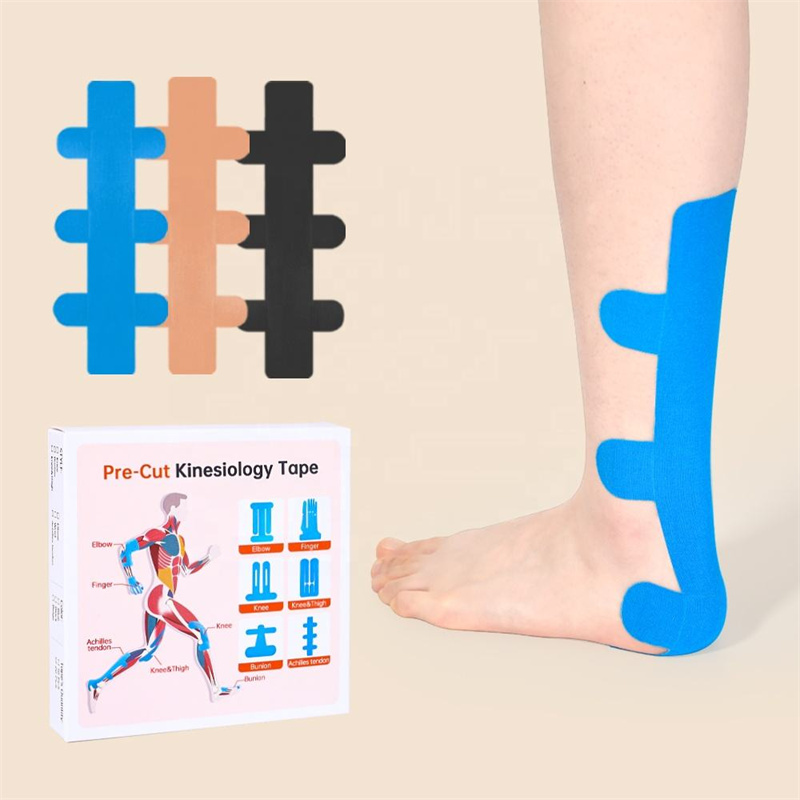
Achilles Tendinitis KT Tape: Application Guide and Practical Limits for Relief
Content
Those first steps out of bed in the morning are the worst part. The back of your heel is stiff, the calf feels short, and every step for the first few minutes is a reminder that the Achilles tendon is unhappy. For most runners and active people with Achilles tendinitis, kinesiology tape, commonly called KT tape, is one of the first tools they try. It is also one of the most misunderstood.
KT tape can help with Achilles tendinitis, but it is support, not a cure. It does not repair the tendon, and it will not replace strengthening or gradual loading. What it does well is reduce the discomfort that makes daily movement difficult, improve your awareness of the calf-heel chain, and give you symptom relief while you address the underlying problem. How you apply it, which shape you use, and how much tension you choose decide whether it works.
What KT Tape Can and Cannot Do for the Achilles Tendon
KT tape works through three mechanisms that matter specifically at the Achilles tendon. First, the middle section of a strip applied with moderate stretch lifts the skin slightly away from the tissue underneath. That subtle lift increases the space between skin and tendon, which reduces friction when you walk and may improve local circulation during the early inflammatory phase. Second, the tape provides continuous sensory input through the skin. It does not change the tendon itself, but it changes how your nervous system registers tension in the area, which is why people often say the tendon feels quieter during activity. Third, the elastic recoil of the tape produces a directional pull that can assist the calf muscles during push-off, taking a small amount of stress off the attachment point at the heel.
The limits matter just as much. KT tape is elastic, so it does not provide the rigid mechanical restriction of zinc oxide sports tape or a brace. If your Achilles is acutely swollen or painful under light load, taping alone will not protect you. Research on kinesiology tape for tendinopathy is mixed; several studies show short-term pain reduction and improved function during walking and hopping, but most clinicians agree the effect comes from pain modulation rather than tissue healing. The tendon still needs progressive loading, calf strengthening, and a gradual return to impact.
How to Apply KT Tape to the Achilles Tendon
The standard Achilles application uses an I-strip, and the foot position is the most important variable. Tape with the foot in a relaxed 90-degree position, which is dorsiflexion, so the tape is at its most effective length when you walk. If you tape with the foot pointed down, the tape goes slack on every step and provides almost no benefit.
- Shave the calf and heel if hair is heavy, then clean the skin with alcohol or soap and dry it completely. Do not apply over lotion, oil, or moisturizer.
- Cut or tear a strip long enough to reach from the upper calf, roughly two hand widths above the heel, to just below the Achilles attachment. Round the corners so the ends do not catch on socks or clothing.
- Peel the backing from the center of the strip. Place the middle section over the body of the tendon with the foot at 90 degrees, and stretch the center 25 to 50 percent as you lay it down.
- Apply the final 2 to 3 cm at each end with no stretch. Rub the entire strip with your palm for about 30 seconds to activate the adhesive.
That I-strip is the workhorse, but other shapes have their place depending on the symptom pattern. The table below compares the options you will meet.
| Tape shape | Primary use | Tension | Best for |
|---|---|---|---|
| I-strip | Along the tendon from calf to heel | 25-50% over the middle section | General pain and morning stiffness |
| Y-strip | Two tails wrap around the heel pad | 25-50% on each tail | Pain at the insertion near the heel |
| Precut calf or ankle patch | Fixed shape for the calf-Achilles junction | Set by the die-cut pattern | Solo application with consistent results |
| Achilles-specific precut patch | Profile matches the tendon and heel curve | Set by the die-cut pattern | Repeatable support for daily training |
For people who reapply tape several times a week, precut Achilles support patches remove the main source of inconsistency, which is measuring and cutting. The pattern is already shaped to follow the tendon down to the heel, so you get the same coverage every time.
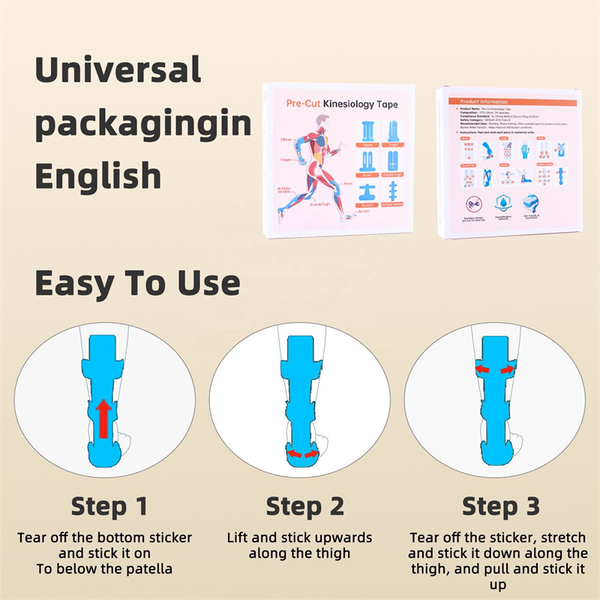 Pre-Cut Achilles Tendon Support Patches for Consistent TapingThese anatomically shaped patches eliminate measuring and cutting, providing consistent coverage for the Achilles tendon and calf. A practical choice for those who reapply tape frequently and want reliable, professional-grade support.View Product →
If you prefer to cut your own I-strips, a classic cotton roll gives you full control over length and width. A step-by-step walkthrough of both kinesiology and rigid taping for this injury is available in our guide to Achilles tendinitis taping.
Choosing the Right KT Tape for Your Calf and Heel
Not all kinesiology tape behaves the same on the lower leg. Cotton-based tape has a natural fabric feel, tears cleanly by hand, and suits daily wear on the calf. Synthetic and blended tapes, such as nylon or rayon constructions, are thinner, more elastic, and hold up better in water and sweat, which matters when taping through summer training or pool sessions. The fabric choice changes how the tape feels on a long run: cotton breathes well but can lose adhesion faster in heavy sweat, while synthetics hold tension longer in humid conditions. The material decision comes first.
Our comparison of cotton, rayon, and nylon kinesiology tapes explains how each fabric behaves in sweat, humidity, and repeated stretching. The second decision is format. A 5 cm roll gives you flexibility to cut I-strips of custom length, which is useful when one leg needs a slightly longer lever than the other. Precut strips and anatomical patches trade that flexibility for convenience: you open the pouch, place the patch, and rub it down.
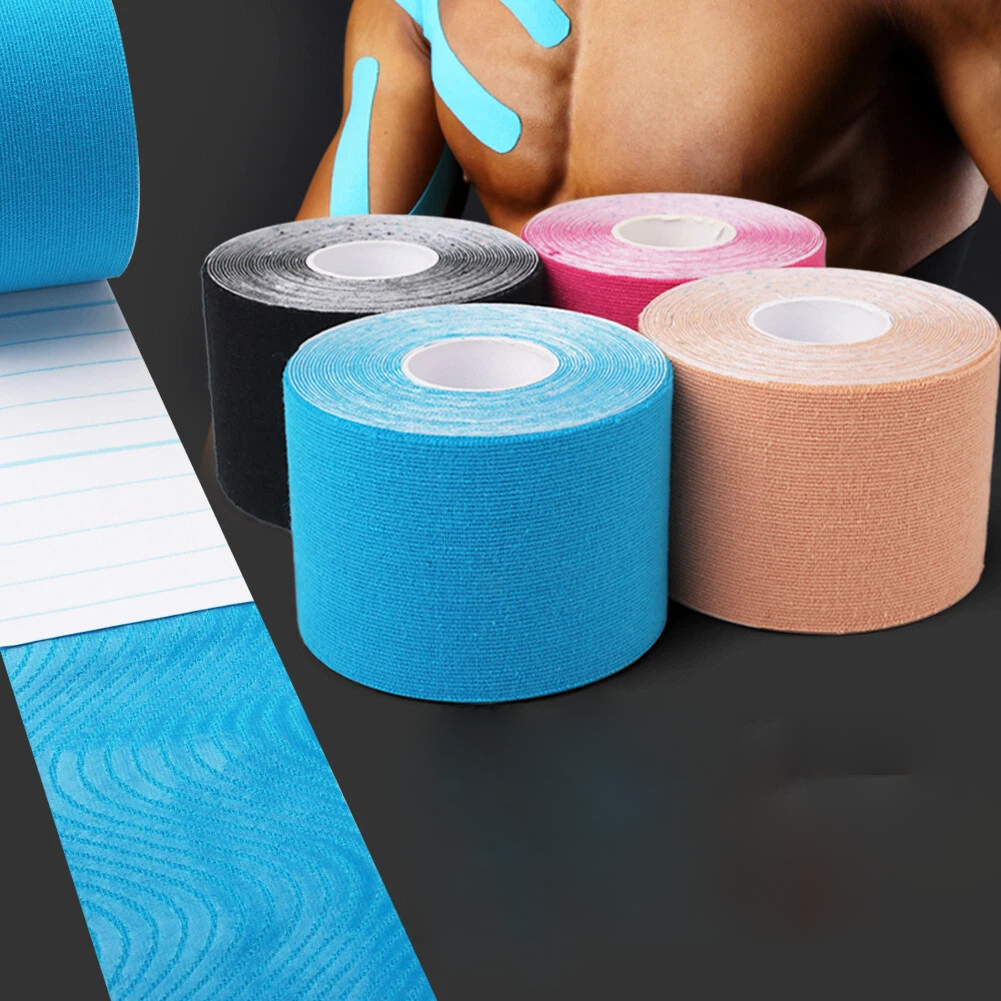 Classic Kinesiology Tape Roll for Custom Athletic SupportThis 5 cm cotton roll allows you to cut I-strips to your preferred length, offering flexibility for adjusting taping to each leg. It balances breathability and adhesion, making it a reliable starting point for Achilles taping.View Product →
A standard cotton roll at 5 cm width is the safest starting point for Achilles taping because it balances breathability, adhesion, and conformity around the heel curve.
Five Mistakes That Make Achilles Taping Less Effective
Most taping problems come from application and removal, not from the tape itself. The table below lists the failures we see most often, the reason behind each one, and the correction that makes the tape hold longer and perform better.
| Mistake | Why it fails | Correct approach |
|---|---|---|
| Applying on damp or freshly lotioned skin | Adhesive cannot bond; tape lifts within hours | Clean with alcohol and dry thoroughly before taping |
| No stretch on the middle section | No lift or offload effect on the tendon | Use 25-50% stretch over the body of the tendon |
| Stretching the anchor ends | Peeling edges and skin irritation within the first day | Leave the first and last 2-3 cm unstretched |
| Taping with the foot pointed down | Tape goes slack on every step | Hold the foot at 90 degrees during application |
| Removing the tape fast and dry | Micro-tears in the skin and adhesive residue | After 2-4 days, saturate with oil and peel back slowly |
One additional point that does not fit into a table: KT tape is the wrong tool when you need genuine mechanical restriction. If you suspect a partial tear, or if the tendon is swollen, hot, or painful under light manual pressure, elastic tape is not a brace. Rigid sports tape, a heel lift, or professional bracing are different solutions, and a clinician should make that call.
When KT Tape Alone Is Not Enough
Achilles tendinitis responds to loading, not to passive support alone, and the same principle applies to taping. KT tape works best inside a routine that includes eccentric heel drops, calf strengthening, and a gradual return to impact. Taping the calf, not only the tendon, is a strategy many physiotherapists use because the gastrocnemius and soleus form the Achilles complex, and tension in those muscles places direct load on the tendon. A calf patch applied with the foot in dorsiflexion can reduce the feeling of tightness while you work through heel-drop progressions.
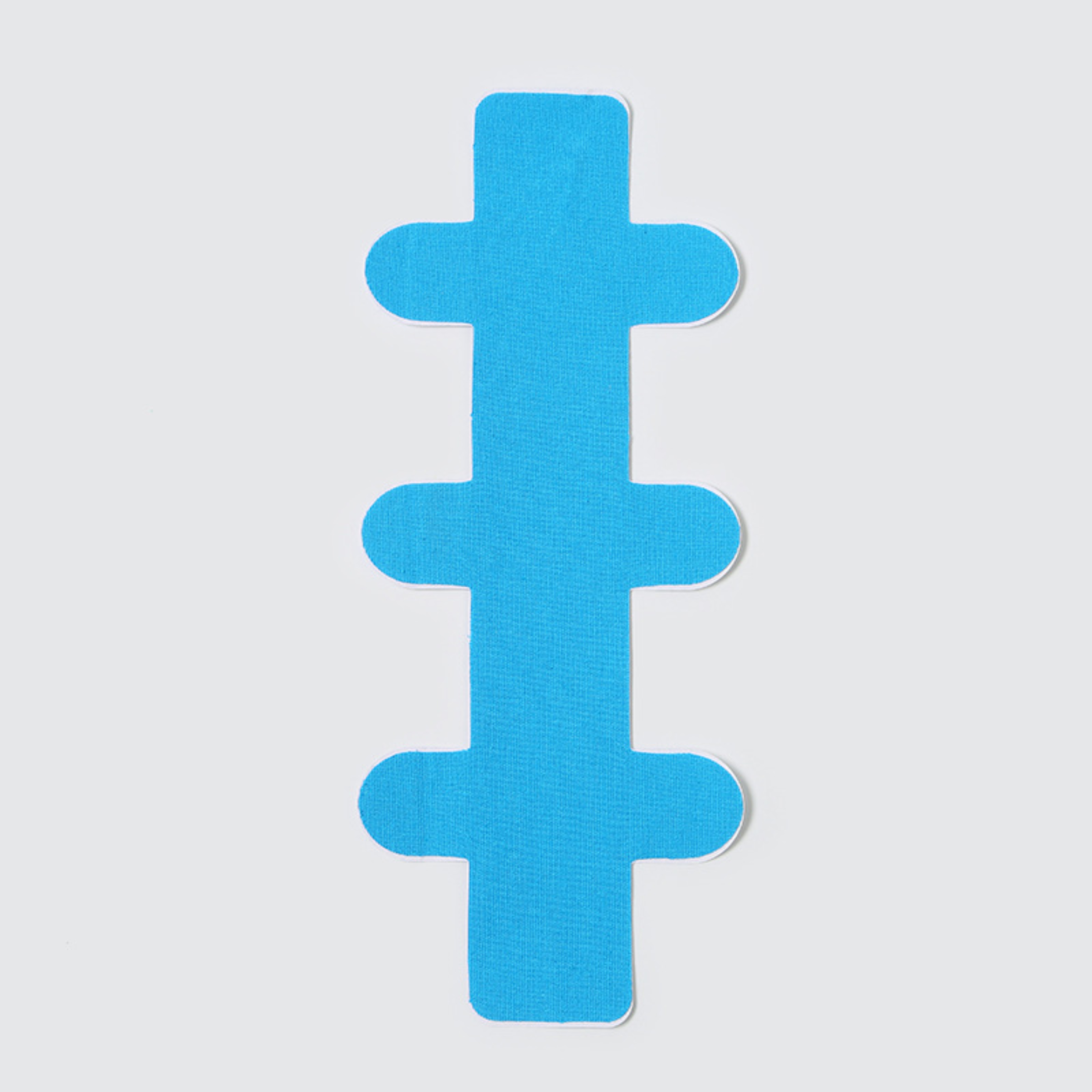 Pre-Cut Calf Muscle Therapy Patch for Full CoverageDesigned to cover the entire calf without cutting, this large patch supports muscle stabilization and recovery during heel-drop exercises. Useful for addressing calf tension that contributes to Achilles tendinitis.View Product →
If pain persists for several weeks despite taping and modified activity, see a physiotherapist. Red flags include pain at rest, a visible gap or bump in the tendon, weakness when pushing off, or difficulty walking normally. None of those respond to tape, and delaying a structural diagnosis makes the recovery window longer.
What to Look for When Buying Achilles Tape in Bulk
For buyers who source tape for a clinic, gym chain, or retail shelf, the technical points that matter for Achilles tendinitis are the same ones that drive repeat purchases. Check the elongation range: most cotton kinesiology tapes stretch to roughly 140 to 180 percent of resting length, and the fabric should recover without losing adhesion. Check the adhesive pattern; full-coverage adhesive holds the tendon area better than edge-only coating. Confirm that the roll tears cleanly, the edges are smooth, and the product is latex-free if your end users include sensitive skin. For private-label buyers, the die-cut shape and packaging of precut Achilles patches matter as much as the tape itself, because poor packaging reduces perceived quality before the tape reaches skin. A manufacturer that can produce consistent precut shapes and custom packaging is worth more than one that only offers plain rolls.
Share:
RECOMMENDED PRODUCTS


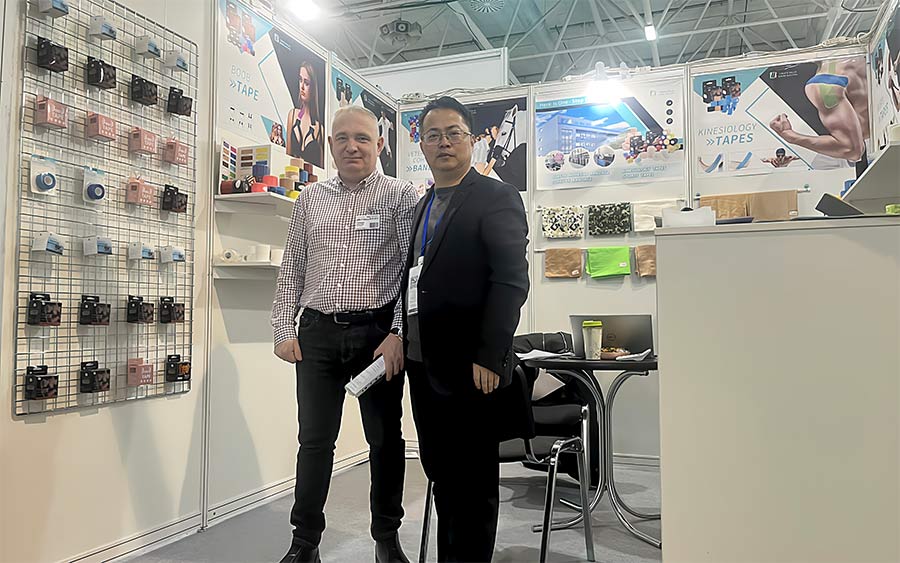
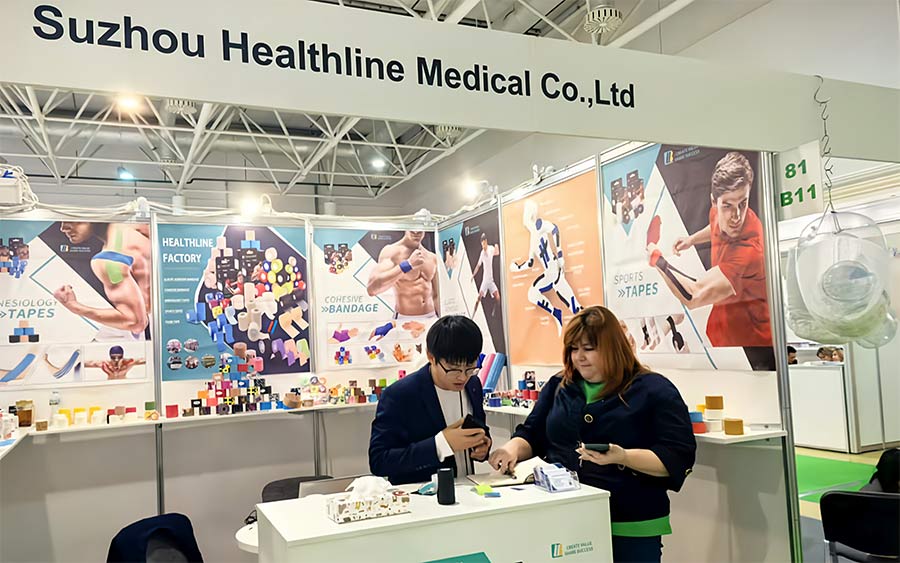
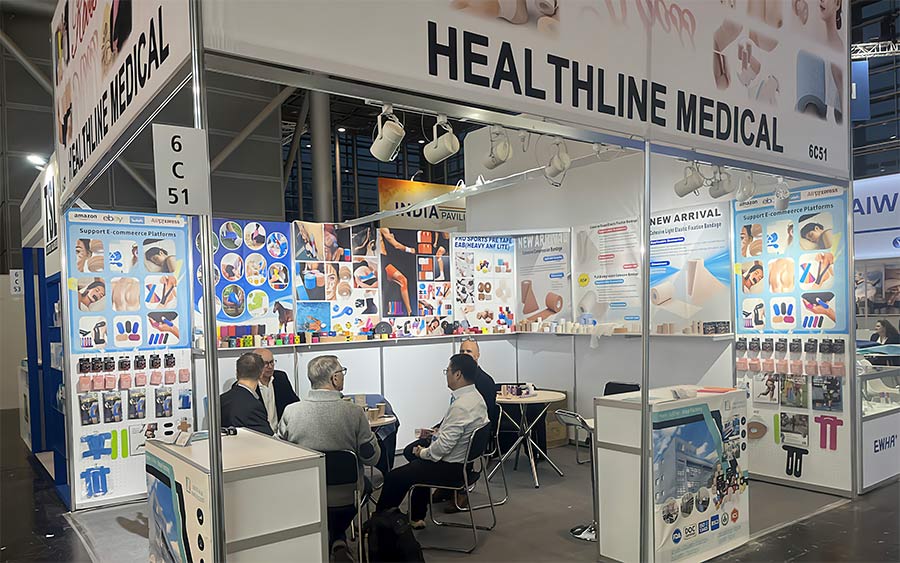
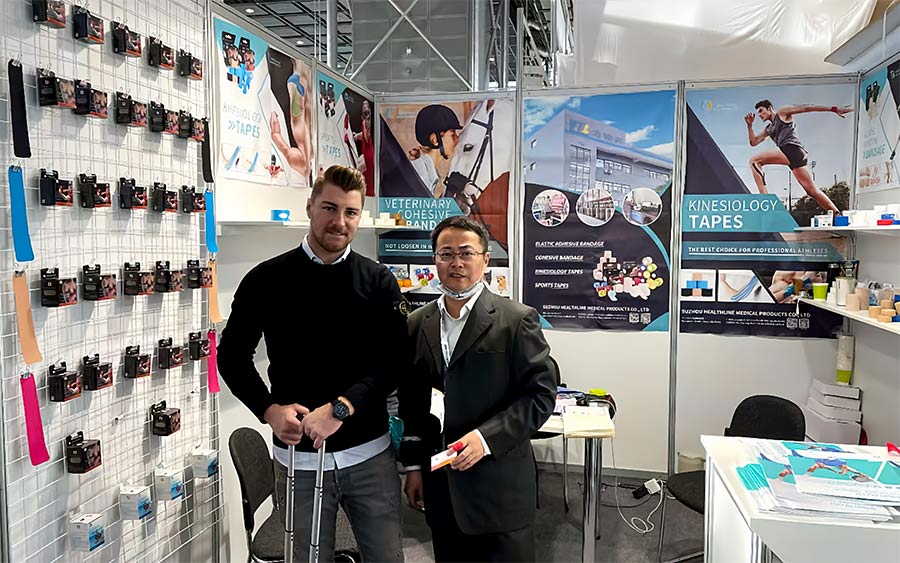
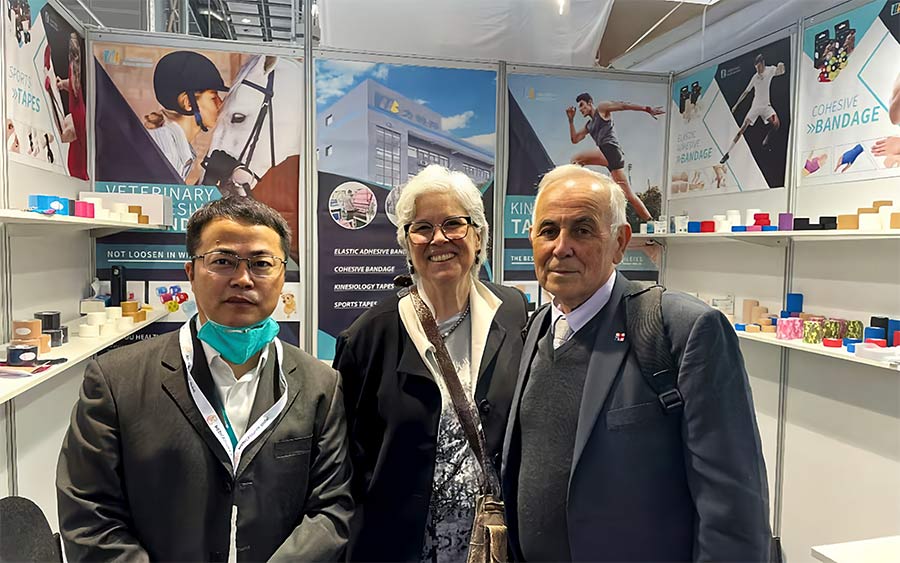
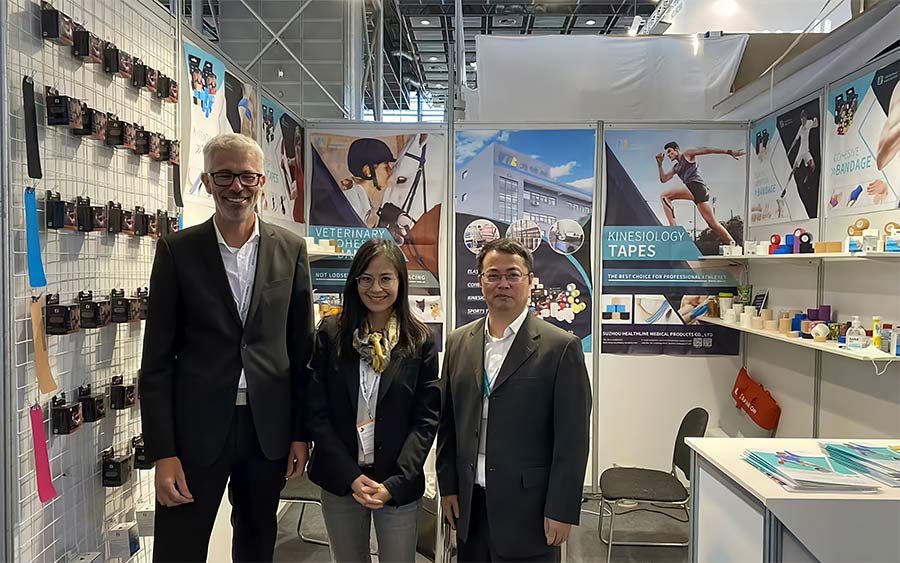
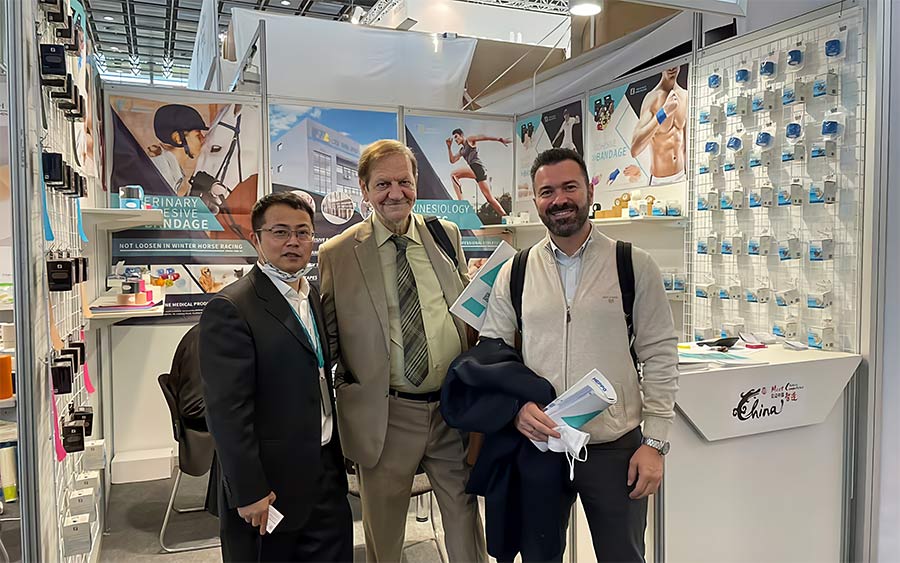
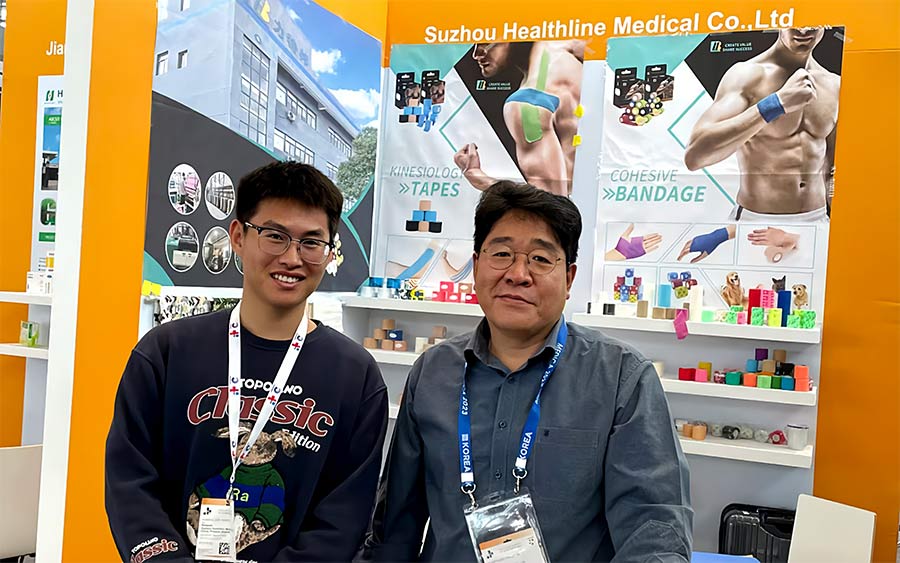
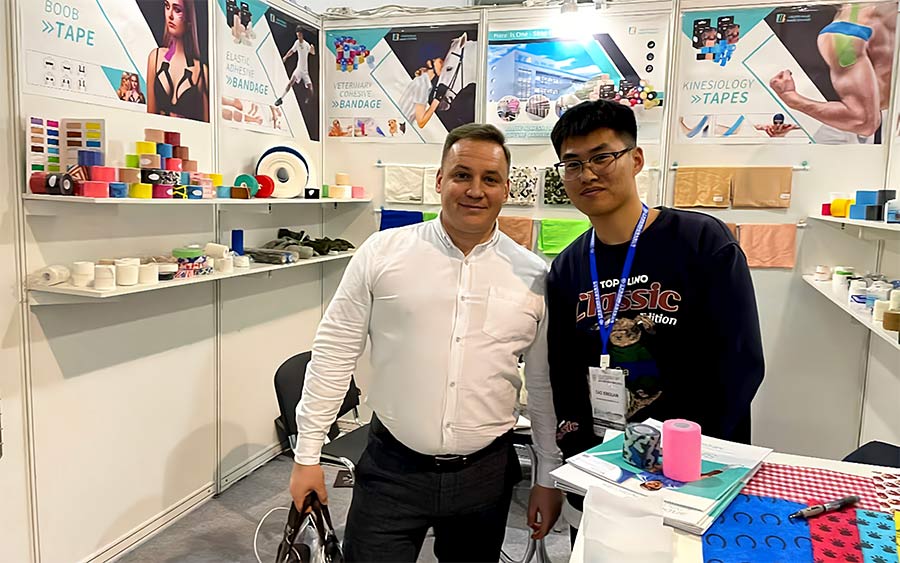
Driven by uncompromising quality, competitive value, and customer-centric service, Healthline’s products are now present in over 50 countries and regions across the globe. As a dedicated OEM/ODM manufacturer of medical cohesive bandages and sports tape, we serve a diverse client portfolio—including hospitals and clinics,veterinary,authorized distributors, government procurement agencies, national pharmacy chains, and retail supermarkets,on-line Amazon,Lotte & Tiktok e-commerce industry .
We are proud to be the long-term OEM/ODM partner for globally recognized names such as Target, CVS, Aldi, Lidl, Carrefour,Tesco, Alliance Boots,Deathlon,Covetrus and Kruuse. Our annual sales volume has maintained a steady year-over-year growth of 15% for consecutive years—a testament to the trust our partners place in us.
In today’s competitive global market, we believe sustainable success comes from continuously delivering superior products and responsive service at a fair price. This philosophy has guided Healthline for three decades, and we are committed to repaying your trust with solutions that help your business grow.

















- Ethan Zhang
- Tel:+86-512-6289 3223
- Mob:+86-19822909189
- Email:ethanzhang@healthline-medical.com
- Whatsapp / Wechat:+86-19822909189
- Skype:+86-19822909189
- Asher.cao
- Tel:+86-512-6289 3223
- Mob:+86-17625487782
-
Email:ethanzhang@healthline-medical.com
Asher.cao@healthline-medical.com
- Whatsapp / Wechat:+86-17625487782
- Skype:+86-176 2548 7782
- Jason Zhang
- Tel:+86-512-6289 3223
- Mob:+86-13152123359
- Email:jason@healthline-medical.com
- Whatsapp / Wechat:+86-13152123359
Copyright © 2025 SUZHOU HEALTHLINE MEDICAL PRODUCTS CO., LTD
All Rights Reserved.
 Sports Tape Manufacturers Cohesive Bandages Suppliers
The information provided on this website is intended for use only in countries and jurisdictions outside of the People's Republic of China.


