
 English
 Español
 русский
 عربى
عربى

- Cotton Kinesiology Tape
- Synthetic Kinesiology Tape
- Nylon Kinesiology Tape
- 4-Way Stretch Elastic Kinesiology Tape
- Standard Kinesiology Tape Roll
- Pre-Cut Kinesiology Tape Strips
- Printed / Pattern Kinesiology Tape
- Perforated Kinesiology Tape (Ventilated)
- Special Shape Kinesiology Tape
- Water-Resistant Kinesiology Tape
- Pregnancy Support Tape
- Face Lift Kinesiology Tape
- Gentle / Beauty Kinesiology Tape
- Veterinary Kinesiology Tape
- Breast Lift Tape
- Customized Kinesiology Tape
- Pre-cut I Strip Kinesiology Tape
- Pre-cut Y Strip Kinesiology Tape
- Pre-cut X Strip Kinesiology Tape
- Knee Kinesiology Tape
- Leg Kinesiology Tape
- Shoulder Kinesiology Tape
- Back Kinesiology Tape
- Waist Kinesiology Tape
- Ankle Kinesiology Tape
- Pregnancy Belly Tape
- Beauty Face Tape
- Solid Color Cohesive Bandage Roll
- Printed & Pattern Cohesive Bandage
- Non-Woven Self-Adhesive Bandage
- Cotton Self-Adhesive Bandage
- PBT Gauze Cohesive Bandage Rolls
- Pet Vet Wrap
- Horse and Cattle Self-Adhesive Bandage
- Veterinary Cohesive Bandage
- Camo Cohesive Wrap Tape
- Military and Tactical Cohesive Bandage
- Tattoo Grip Tape
- Latex Cohesive Bandage
- Latex-Free Cohesive Bandage
- Pet Laminated Self-Adhesive Bandage
- High-Tensile Cohesive Bandage
- Football Sock Wrap Self-Adhesive Bandage
- Sterile Cohesive Bandage
- Special Function Cohesive Bandage
- OEM / Bulk Cohesive Bandage Roll
- Rigid Strapping Tape
- Athletic Tape
- Zinc Oxide Sports Tape
- Rayon Rigid Sports Tape
- Sports Strapping Tape
- Finger Bob Bandages
- Boxing Tape
- Heavyweight Elastic Adhesive Bandage (EAB)
- 93 Cotton Heavyweight Elastic Adhesive Bandages(EAB)
- Athletic Heavyweight Elastic Adhesive Bandage (EAB)
- Lightweight Elastic Adhesive Bandage (EAB)
- Athletic Lightweight Elastic Adhesive Bandage (EAB)
- American Style Elastic Adhesive Bandage (EAB)
- Japanese Style Elastic Adhesive Bandage (EAB)
- Elastic Adhesive Compression Bandage
- Veterinary Elastic Adhesive Bandage (EAB)
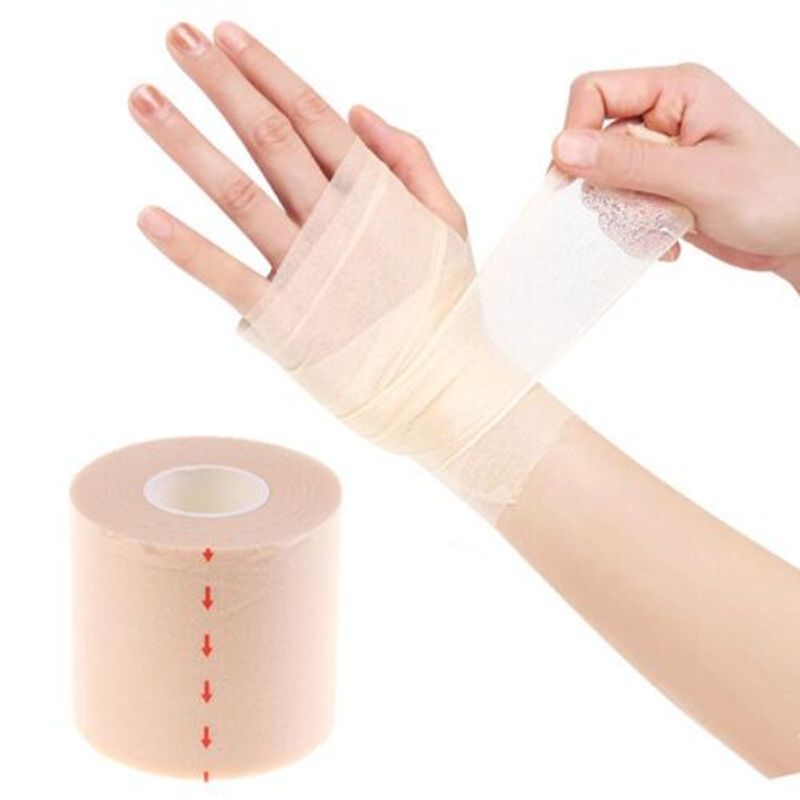
Ankle Tape for Football: Rigid, Cohesive and Kinesiology Options Compared
Content
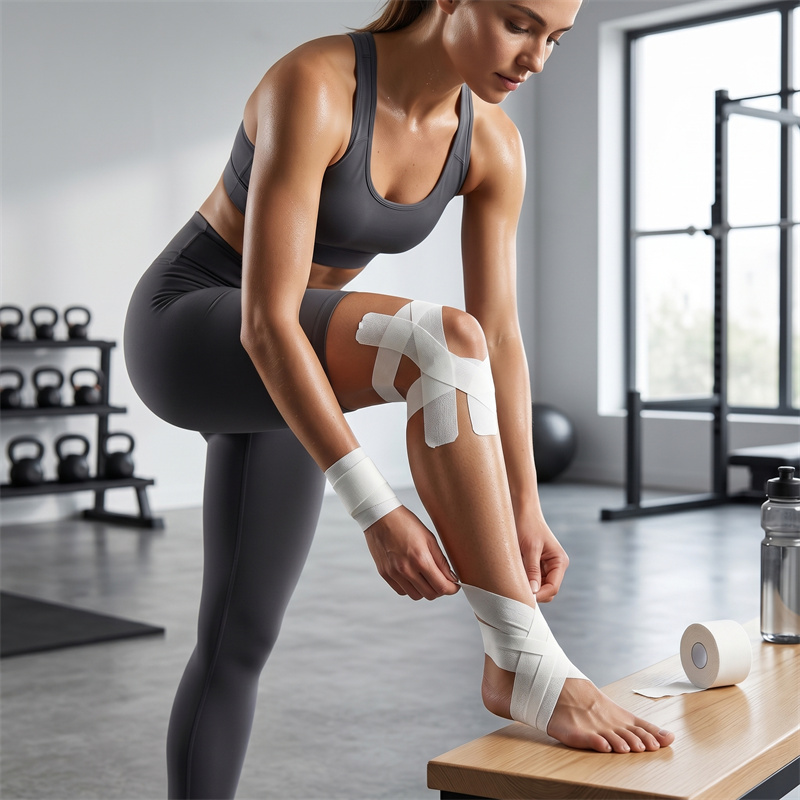
Football asks more of the ankle than nearly any other joint: repeated hard cuts, side-on tackles, studs catching in soft ground, and landings that load the joint at angles its ligaments were never designed to tolerate. Lateral ankle sprains remain among the most frequently reported injuries in the sport at every level. The fix most trainers reach for is tape, but the choice matters more than players assume. Rigid zinc oxide strapping tape is the standard for locking an unstable ankle on match day; cohesive self-adhesive wrap wins on speed and comfort for quick pre-match jobs; kinesiology tape and pre-cut ankle patches suit light support and recovery days. Which one you pick, and how well you apply it, decides whether the tape protects the joint or merely decorates it.
Why Football Players Tape Their Ankles
A dependable tape job does two things at once. First, it works as an external ligament: non-stretch strips laid across the joint limit excessive inversion, where the ankle rolls so the sole turns inward, and eversion, the two movement patterns behind most football sprains. Second, it feeds information back to the player. Athletes consistently report earlier reactions and greater confidence when cutting and landing on a taped ankle, which matters most for anyone returning after a previous sprain.
Neither effect makes the joint invulnerable. Taping lowers the risk and reduces the severity of a roll; it does not cancel it. Sound programs treat tape as one layer within wider sports protection measures, alongside conditioning, balance work and, for some players, bracing, rather than a substitute for any of them.
Choosing the Right Ankle Tape for Football
Rigid zinc oxide tape: the structural lock
When the goal is to restrict movement, whether that means returning to play after a sprain, protecting a chronically loose ankle, or strapping a goalkeeper who lands awkwardly on every cross, rigid tape is the tool. Zinc oxide strapping tape has virtually no stretch and high tensile strength, so stirrup and heel-lock strips genuinely hold the joint when it is loaded. Its aggressive adhesive is also the most sweat-tolerant of the common options, which a full 90 minutes demands. The trade-offs are real: it bonds directly to skin, takes practice to apply at speed, and careless removal takes hair and surface skin with it.
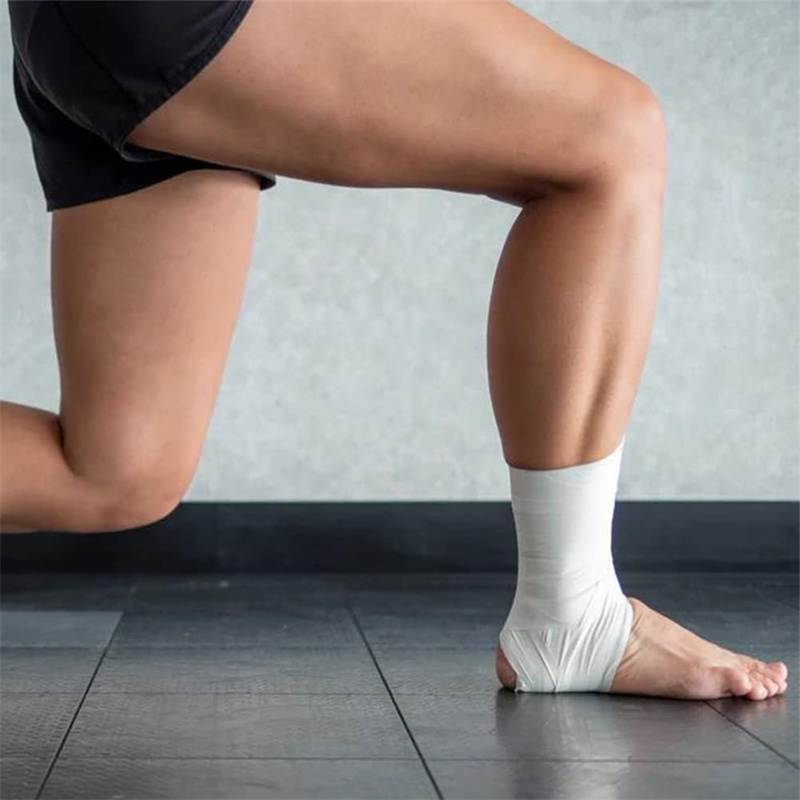 Rigid Zinc Oxide Athletic Tape for Ankle, Wrist and Finger SupportNon-elastic cotton tape with a strong zinc oxide adhesive that restricts joint motion and holds through sweat, making it the right choice for stabilizing sprained or loose ankles during play.View Product →
Cohesive self-adhesive wrap: speed and comfort
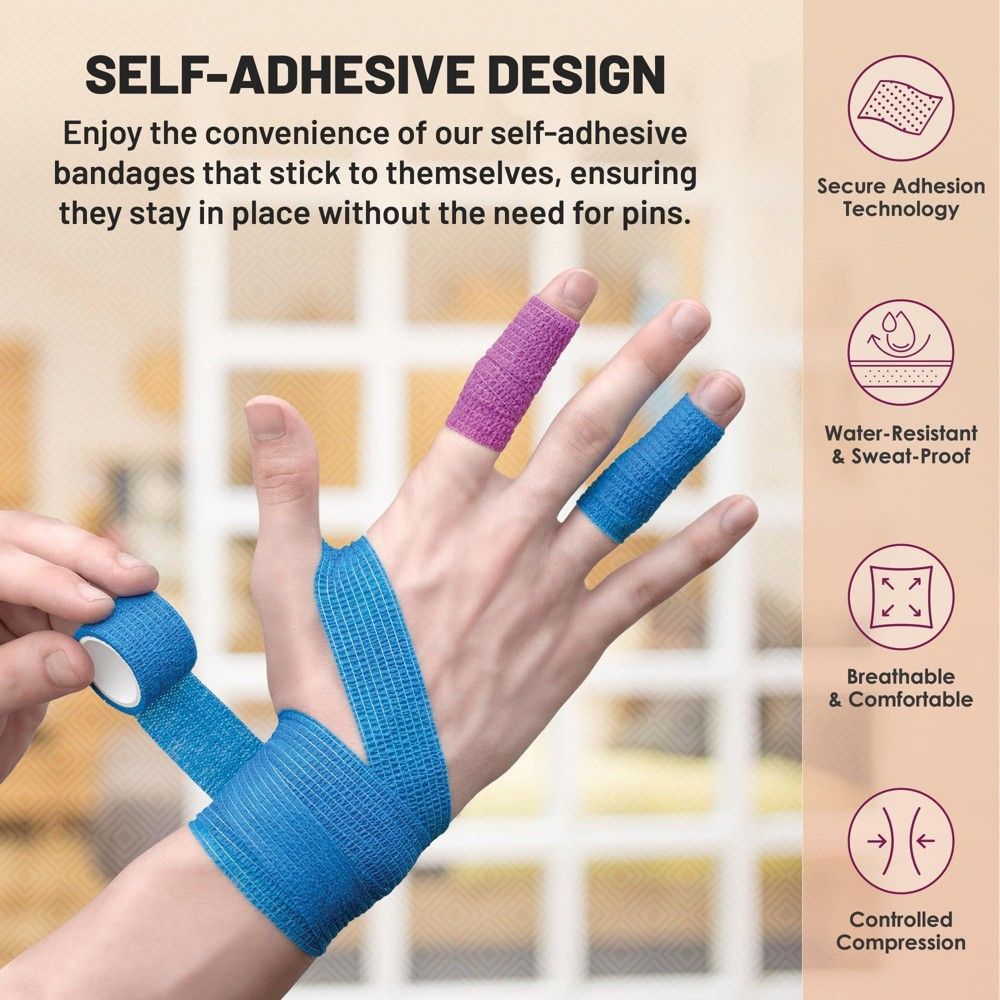
Cohesive bandage sticks only to itself, never to skin or socks. That single property changes the daily routine: it tears by hand with no scissors needed pitchside, applies in under a minute, allows adjustable compression, and peels off without the soak-and-wait removal ritual of rigid tape. A lighter-stretch version designed as football sock cohesive tape wraps neatly around the ankle over the sock line and stays put through sweat without chewing into skin. The compromise is structural: because the wrap is elastic, it supports and compresses but cannot truly stop the joint from rolling. It is the right call for mild support, securing padding, and layering over rigid strips, and the wrong call as the sole restraint for a recently sprained ankle.
Kinesiology tape and pre-cut ankle patches
Kinesiology tape stretches, typically to around 140-180% of its resting length, and that elasticity defines its role. It lightly lifts the skin, which many players find eases post-match swelling and soreness, and it offers a sensory cue rather than a hard mechanical stop. For footballers training most days of the week, pre-cut ankle patches remove measuring and cutting entirely: one shaped piece, applied in seconds. Be clear about what it is not, though. Kinesiology tape will not structurally stabilize an acutely sprained joint; rigid tape owns that job.
Underwrap foam: the comfort layer
Underwrap is a thin polyurethane foam applied beneath rigid tape. It shields skin from adhesive trauma and makes removal far less painful, which matters over a season of two or three taping sessions a week. Every experienced trainer learns the trade-off: a full foam layer slightly reduces grip, so heavily strapped players often lay anchor strips directly on skin and use foam everywhere else.
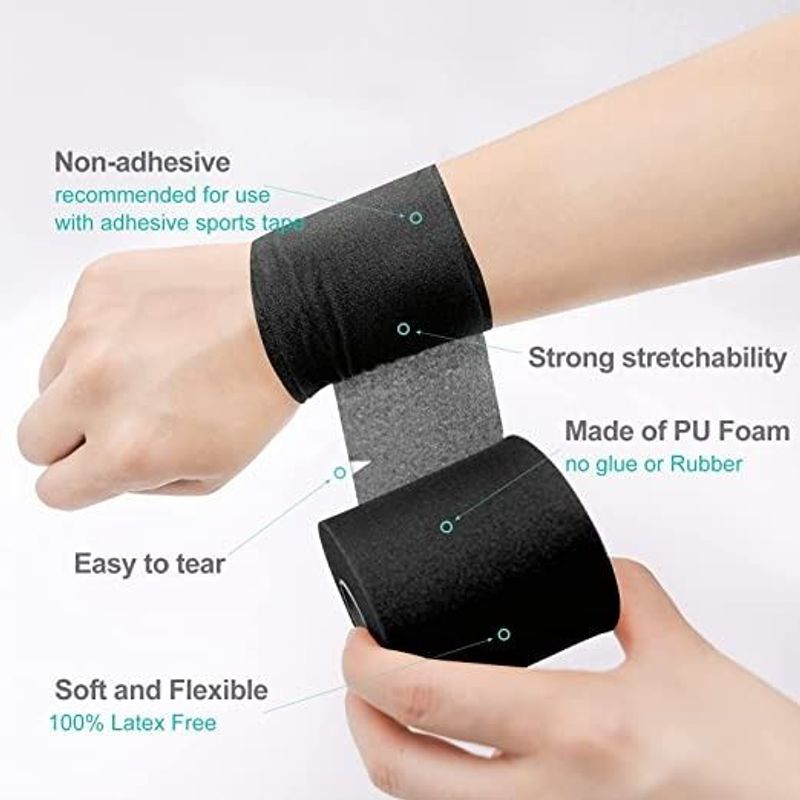 Latex-Free Foam Underwrap Pre-Tape for Sports TapingA thin, non-adhesive foam barrier worn under rigid tape to protect skin from adhesive irritation and ease removal, ideal for athletes who tape frequently while keeping anchor strips on skin.View Product →
Between the rigid and fully elastic extremes sits elastic adhesive bandage (EAB): a moderately stretchy cotton tape with a strong adhesive coat, traditionally used as the compression and finishing layer over rigid strips. The table below sums up how the four options divide the work.
| Tape type | Stretch | Best football use | Main limitation |
|---|---|---|---|
| Rigid zinc oxide strapping tape | None | Match-day restraint, post-sprain return to play, stirrups and heel locks | Painful removal without care; usually paired with underwrap |
| Elastic adhesive bandage (EAB) | Moderate | Compression and finishing layer over rigid strips | Adhesive softens when soaked in sweat |
| Cohesive self-adhesive wrap | Moderate to high | Fast pre-match wraps, sock-line coverage, pitchside re-taping | Elastic; cannot structurally restrain the joint |
| Kinesiology tape and pre-cut patches | High | Light support, swelling control, recovery days | No mechanical lock; unsuitable for acute sprains |
How to Tape an Ankle for Football: Step by Step
Sequence matters more than speed. A dependable ankle job runs as follows:
- Set the ankle at 90 degrees with the foot neutral; taping a pointed foot locks in the wrong resting angle for running.
- Prepare the skin: wipe away sweat and old adhesive, shave if the player accepts it, and apply underwrap where comfort matters. The full layering method is set out in this underwrap and taping guide.
- Lay two anchor strips around the lower shin, just above where the ankle bones widen.
- Add stirrups: strips running from the inner anchor, under the heel, up to the outer anchor, pulling in the direction that resists inversion.
- Build a figure-eight: a strip crossing the front of the ankle, looping under the arch and finishing back on the anchors.
- Finish with two heel locks, alternating diagonal strips that pin the heel bone itself. These strips do most of the real work.
- Close with two more horizontal anchors, then check: toes stay warm and pink, and the player feels firm support without tingling.
Apply tape 30-45 minutes before kickoff rather than in the final minutes in the changing room; adhesive bonds best on warm, dry skin. If the job is soaked at halftime, a fresh cohesive layer on top restores compression far faster than starting again.
How Long Ankle Tape Lasts and When Not to Rely on It
Tape has a working life inside a match. Expect measurable loosening after 45-60 minutes of hard play, which is exactly why professional staff re-tape at halftime. More importantly, tape never replaces assessment. A suspected fracture, a joint that balloons within minutes, numbness or any inability to bear weight calls for a clinician, not a tighter wrap. A sprain recent enough to still be swollen should be taped only under professional guidance. For squad members with sensitive skin, latex-free versions of both rigid and cohesive tape are widely available, worth confirming before committing to season-long use.
Buying Ankle Tape for a Squad or Program
Scale changes the calculation. One player might use a roll or two a month; a club taping several teams three times a week measures consumption in cases. At the professional extreme, an NFL team has been reported to go through more than 80 miles of athletic tape in a single year. Football at any level is a volume business for tape, so procurement details matter more than shelf appearance:
- Consistency: unwind tension and adhesive coating should be uniform from roll to roll, or every taping job feels different.
- Tearability: serrated or zigzag edges on rigid tape let a trainer rip strips one-handed at pitchside.
- Width: 38 mm (1.5 in) is the workhorse size for ankles; narrower rolls cover fingers and toes.
- Skin tolerance: latex-free and hypoallergenic adhesives keep contact dermatitis from thinning a squad over a long season.
- Climate: adhesives formulated for hot, humid pitches hold noticeably better than generic ones.
For clubs, retailers and distributors buying at volume, working directly with a manufacturer also opens options retail packs cannot match: custom sizes, private-label branding and packaging built around a team's kit-room routine. Healthline Medical, a Suzhou-based manufacturer with three decades in adhesive bandage and sports tape production, supplies cohesive wraps, zinc oxide strapping tape, underwrap foam and pre-cut kinesiology patches to buyers across North America, Europe, Asia and Africa, with OEM programs running from virtual sampling through to finished, packed product. That breadth matters for clinic chains, gyms and first-aid distributors who prefer one supplier holding consistent across several product lines.
The right ankle tape for football is decided by the day's job: rigid zinc oxide tape when the joint has to be locked, cohesive wrap when speed and comfort lead, kinesiology patches for the lighter days in between, and underwrap to keep skin sane across a season. Learn the sequence of anchors, stirrups, figure-eights and heel locks on a healthy ankle long before you need it under pressure, and buy tape with the consistency a squad actually requires. The joint will tell you quickly whether you got it right.
Share:
RECOMMENDED PRODUCTS
















- Asher.cao
- Tel:+86-512-6289 3223
- Mob:+86-176 2548 7782
- Email:Asher.cao@healthline-medical.com
- Whatsapp / Wechat:+86-176 2548 7782
- Skype:+86-176 2548 7782
- Ethan Zhang
- Tel:+86-512-6289 3223
- Mob:+86-19822909189
- Email:ethanzhang@healthline-medical.com
- Whatsapp / Wechat:+86-19822909189
- Skype:+86-19822909189
- Jason Zhang
- Tel:+86-512-6289 3223
- Mob:+86-13152123359
- Email:jason@healthline-medical.com
- Whatsapp / Wechat:+86-13152123359
Copyright © 2025 SUZHOU HEALTHLINE MEDICAL PRODUCTS CO., LTD
All Rights Reserved.
 Sports Tape Manufacturers Cohesive Bandages Suppliers
The information provided on this website is intended for use only in countries and jurisdictions outside of the People's Republic of China.


