
 English
 Español
 русский
 عربى
عربى

- Cotton Kinesiology Tape
- Synthetic Kinesiology Tape
- Nylon Kinesiology Tape
- 4-Way Stretch Elastic Kinesiology Tape
- Standard Kinesiology Tape Roll
- Pre-Cut Kinesiology Tape Strips
- Printed / Pattern Kinesiology Tape
- Perforated Kinesiology Tape (Ventilated)
- Special Shape Kinesiology Tape
- Water-Resistant Kinesiology Tape
- Pregnancy Support Tape
- Face Lift Kinesiology Tape
- Gentle / Beauty Kinesiology Tape
- Veterinary Kinesiology Tape
- Breast Lift Tape
- Customized Kinesiology Tape
- Pre-cut I Strip Kinesiology Tape
- Pre-cut Y Strip Kinesiology Tape
- Pre-cut X Strip Kinesiology Tape
- Knee Kinesiology Tape
- Leg Kinesiology Tape
- Shoulder Kinesiology Tape
- Back Kinesiology Tape
- Waist Kinesiology Tape
- Ankle Kinesiology Tape
- Pregnancy Belly Tape
- Beauty Face Tape
- Solid Color Cohesive Bandage Roll
- Printed & Pattern Cohesive Bandage
- Non-Woven Self-Adhesive Bandage
- Cotton Self-Adhesive Bandage
- PBT Gauze Cohesive Bandage Rolls
- Pet Vet Wrap
- Horse and Cattle Self-Adhesive Bandage
- Veterinary Cohesive Bandage
- Camo Cohesive Wrap Tape
- Military and Tactical Cohesive Bandage
- Tattoo Grip Tape
- Latex Cohesive Bandage
- Latex-Free Cohesive Bandage
- Pet Laminated Self-Adhesive Bandage
- High-Tensile Cohesive Bandage
- Football Sock Wrap Self-Adhesive Bandage
- Sterile Cohesive Bandage
- Special Function Cohesive Bandage
- OEM / Bulk Cohesive Bandage Roll
- Rigid Strapping Tape
- Athletic Tape
- Zinc Oxide Sports Tape
- Rayon Rigid Sports Tape
- Sports Strapping Tape
- Finger Bob Bandages
- Boxing Tape
- Heavyweight Elastic Adhesive Bandage (EAB)
- 93 Cotton Heavyweight Elastic Adhesive Bandages(EAB)
- Athletic Heavyweight Elastic Adhesive Bandage (EAB)
- Lightweight Elastic Adhesive Bandage (EAB)
- Athletic Lightweight Elastic Adhesive Bandage (EAB)
- American Style Elastic Adhesive Bandage (EAB)
- Japanese Style Elastic Adhesive Bandage (EAB)
- Elastic Adhesive Compression Bandage
- Veterinary Elastic Adhesive Bandage (EAB)
Ankle Pre Wrap Tape Explained: Skin Protection, Application Steps, and Buying Tips
Content
Twenty minutes before a Saturday match, a trainer kneels in the locker room with two rolls in hand: a thin sheet of foam and a roll of rigid athletic tape. The foam spirals around the player's ankle from arch to mid-calf first, and only then does the taping begin. That foam layer — ankle pre wrap tape — is one of the least expensive items in any taping kit, yet it largely decides whether an athlete finishes the season with healthy skin or with ankles that are raw, itchy, and blistered from adhesive.
The conclusion first: pre wrap is a thin, non-adhesive foam barrier worn underneath sports tape. It shields skin from aggressive adhesives, makes removal painless, and helps a taping job stay comfortable through an entire practice or match — but it adds no structural support. The tape layered over it does all of the stabilizing work. What follows covers how the material behaves, how to apply it before ankle taping, and which specifications matter whether you are buying a single roll or sourcing pallets for a team, clinic, or retail program.
What Ankle Pre Wrap Tape Actually Is
Pre wrap — listed in catalogs as underwrap, pretape wrap, or foam underwrap — is a lightweight polyurethane foam bandage, usually 2 to 3 inches wide, that contains no adhesive. It does not grip skin, and it does not cling to itself the way a cohesive bandage does. It stays where you put it for one reason only: the tape wrapped over the top compresses it against the leg. That is intentional. The foam's job is to sit between skin and tape, not to hold anything together.
Because the material is foam rather than coated fabric, it stretches, breathes, and tears cleanly off the roll by hand. Names vary between brands and regions, but the construction is the same: a soft sleeve that keeps zinc oxide adhesive and rigid cotton tape from ever touching skin directly. Anyone who has peeled rigid sports tape off bare skin — and taken hair and a layer of surface skin with it — already understands the problem this product solves.
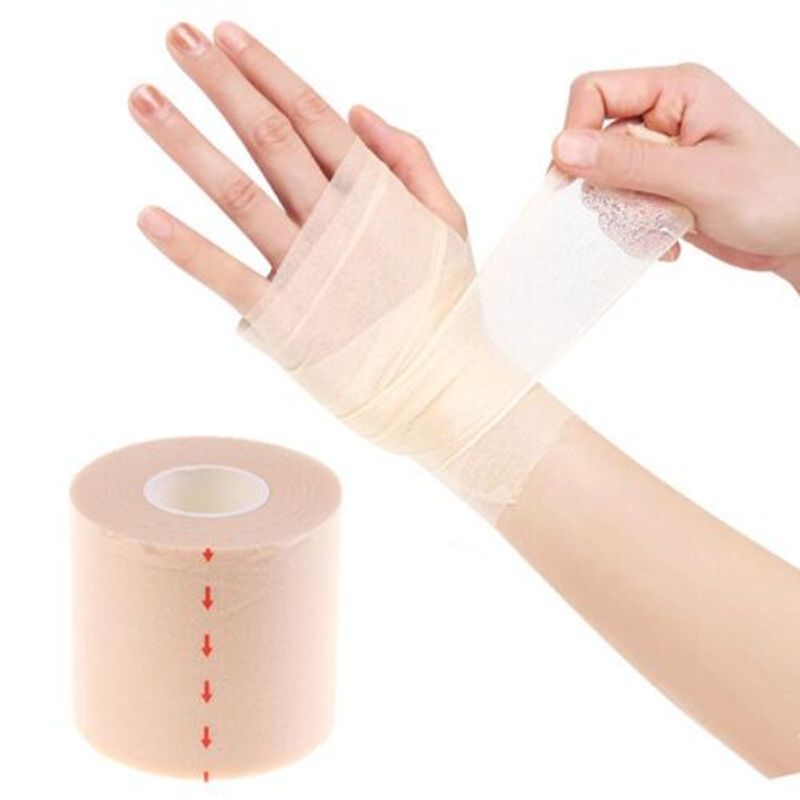
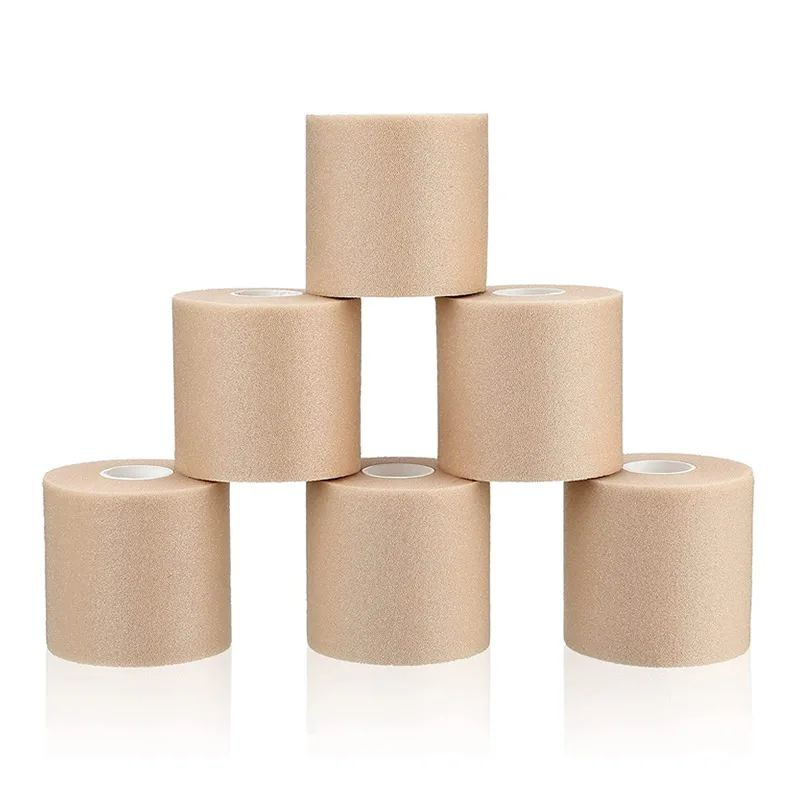 Foam Underwrap Pre-Wrap | Breathable Pre-Tape Wrap for Athletic Taping, Skin Protection, aFoam Underwrap is a lightweight pre-wrap designed to sit comfortably between your skin and athletic tape. It helps protect the skin, reduce friction, and make tape rem...View Product →
It is worth separating pre wrap from its neighbors in the tape aisle. A cohesive self-adherent wrap sticks to itself and can provide mild compression on its own. Kinesiology tape is an elastic adhesive designed to stay on skin for days. Pre wrap does neither: it is a disposable interface layer, meant to come off together with the tape at the end of the session.
Why a Foam Layer Matters Under Ankle Tape
Ankle taping is unusually demanding on skin. The joint moves constantly, socks and footwear rub over the tape, sweat accumulates, and the rigid tape used for stabilization carries some of the most aggressive adhesives in the sports medicine cabinet. Applied directly, that combination routinely causes redness, itching, blistering at the heel and ankle bones, and painful removal. A single layer of foam addresses most of it:
- Skin protection: the foam blocks direct contact between adhesive and skin through repeated taping cycles.
- Bony-area padding: a thin cushion over the malleoli and Achilles area reduces edge pressure where tape digs in hardest.
- Painless removal: tape peels off the foam, not off skin or hair.
- Sensitive-skin support: most foam underwraps are latex-free, which matters for athletes with rubber allergies.
- Hygiene: the foam absorbs some sweat and keeps adhesive from macerating skin over a long match.
There is a trade-off, and experienced tapers respect it. Every layer between tape and skin slightly reduces grip, and slick foam can let anchors migrate if the tape job is thin. The usual answer is one smooth layer of pre wrap plus two or three firm layers of tape over it — enough adhesion to lock the assembly in place without pressing adhesive into skin. For short applications where maximum grip matters more than comfort, some trainers still tape directly to skin; that is a judgment call, not a rule.
Pre wrap belongs to the broader family of products used in sports protection, where rigid strapping tape, cohesive wraps, and underwrap foam work together rather than interchangeably.
How to Apply Pre Wrap Before Taping an Ankle
Application is simple, but a few details separate a comfortable, secure job from one that bunches, slips, or restricts circulation. A standard sequence looks like this:
- Clean and dry the lower leg completely. Shave the area if needed, and check for cuts or abrasions — tape never goes over open wounds.
- Optionally apply tape adhesive spray over the ankle bones, or place thin protective pads there for sensitive skin.
- Start the pre wrap at the mid-foot or arch and make one full anchor turn around it.
- Spiral upward with roughly 50 percent overlap and light, even tension, smoothing every wrinkle — a crease under rigid tape becomes a pressure point within an hour.
- Extend the wrap a few inches beyond where the tape will finish, usually to the lower calf and down toward the arch, so no tape edge ever rests on bare skin.
- Tear the foam by hand, tuck the loose end under the last turn, then begin the actual taping: anchors, stirrups, figure-eight passes, heel locks, and closing strips laid over the foam.
After finishing, check the toes. If they turn pale, feel numb, or the athlete reports tingling, unwrap and start again with less tension — the fault is usually in the wrap layers, not the tape. For trainers building a complete routine, a detailed athletic taping guide that pairs underwrap foam with rigid tape walks through the overlay patterns step by step.
Choosing the Right Pre Wrap: Specs That Matter
At retail, pre wrap looks interchangeable. In bulk purchasing, the differences surface quickly in performance and returns. For ankles specifically, 2-inch width remains the default because it follows the joint contour with fewer wrinkles. These are the specifications worth checking before you order:
| Specification | Common Options | Why It Matters |
|---|---|---|
| Width | 2 in for ankles; 3 in for knees and faster leg coverage | 2 in fits the ankle contour with fewer wrinkles; 3 in covers a lower leg in fewer passes but adds bulk |
| Material | Polyurethane foam | Soft, breathable, sweat-resistant, and tearable by hand without scissors |
| Adhesive | None, or a light self-cling surface | Non-adhesive rolls remove cleanly; slight cling helps the foam hold position while taping |
| Latex content | Latex-free formulation | Reduces allergy risk across a whole roster and simplifies first-aid-kit compliance |
| Density | Standard versus high-density foam | Higher density resists bunching and keeps the surface smooth under tape layers |
| Packaging | Individual shrink film per roll | Keeps rolls clean inside kit bags and presents well for team-color retail lines |
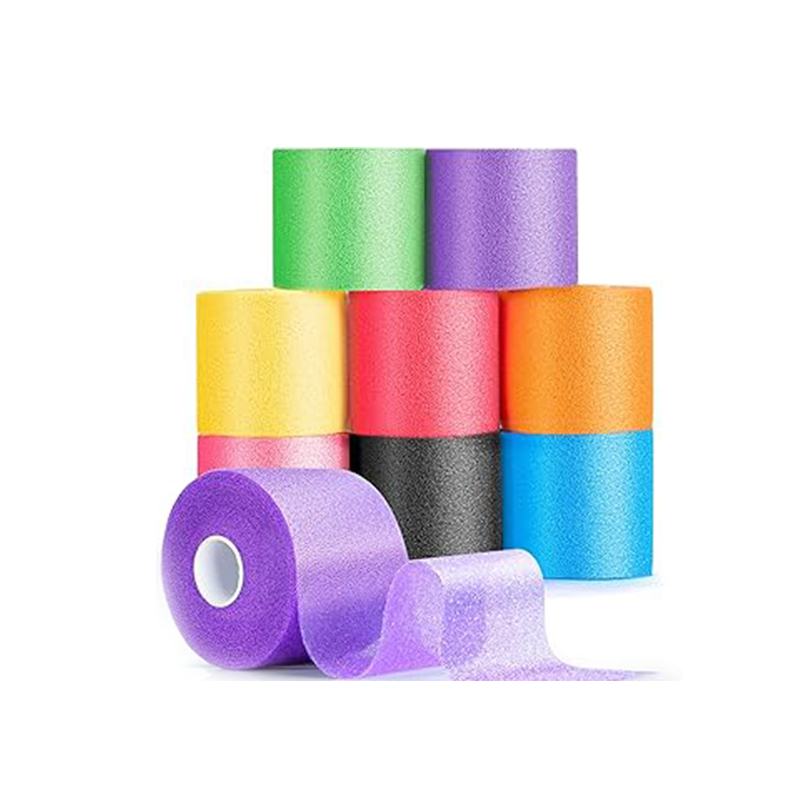
Color is more than decoration in this category. Solid team shades and mixed assortments are a genuine sales driver for school programs, gyms, and sporting-goods shelves, which is why many suppliers carry the same foam body in a dozen colors.
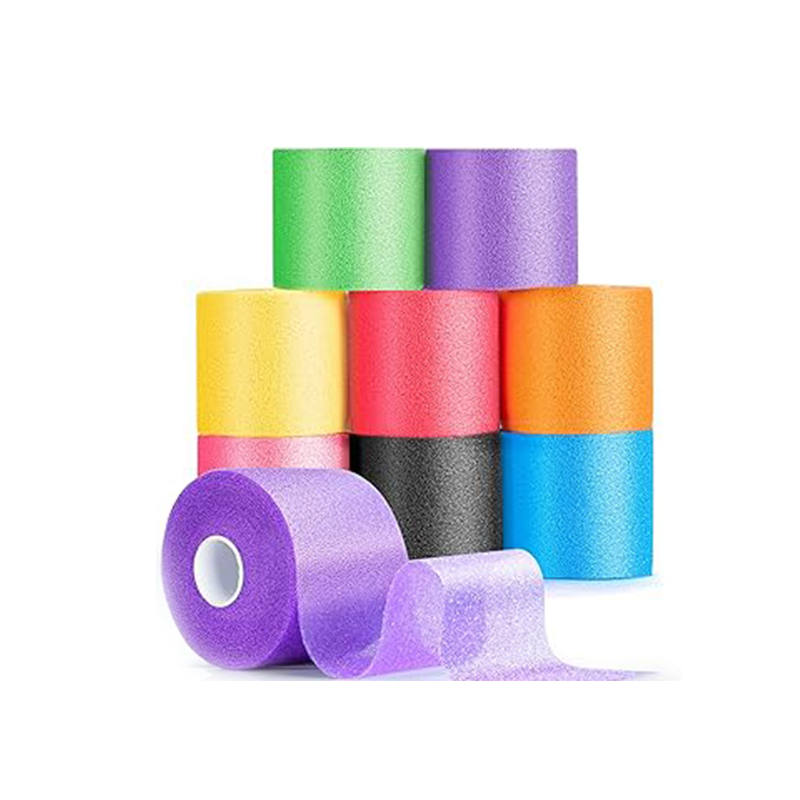 Mixed Color Sport Foam Prewrap Athletic Tape Soccer Sports Pre Wrap TapeThe Multi-Color Non-Adhesive Sport Foam Pre-Wrap Tape Shrink Film is a versatile and essential accessory designed to elevate the performance and comfort of athletes ac...View Product →
Five Mistakes That Undercut an Ankle Taping Job
Most complaints about pre wrap trace back to application errors rather than product quality:
- Wrapping too tightly. Foam feels harmless, but several overlapping turns under rigid tape can act like a tourniquet by the second half. Keep tension light and re-check circulation after taping.
- Leaving wrinkles. Creases transfer straight through the foam into the tape and create localized pressure over the ankle bones.
- Leaving skin exposed. If the top or bottom tape edge lands on bare skin, the adhesive pulls there and the foam loses its purpose.
- Treating pre wrap as support. Foam contributes no stability. An ankle wrapped in foam alone is an unprotected ankle — a common and costly misunderstanding among first-time users.
- Applying over lotion, sunscreen, or sweat. Foam holds position poorly on slick skin, and the whole assembly migrates within minutes.
Sourcing Pre Wrap for Teams, Clinics, and Retail Programs
For B2B buyers — team suppliers, clinic chains, first-aid kit assemblers, and sporting-goods brands — the evaluation shifts from feel to consistency. Foam thickness should be identical from the first meter of a roll to the last and from one batch to the next; unwind should be smooth without stretching; the non-adhesive surface must stay non-adhesive even in summer warehouse heat; and latex-free claims should be backed by material documentation. Packaging is part of the purchase too: individual shrink film, barcode-ready labels, and private-logo printing are standard expectations rather than extras.
This is where a manufacturer with in-house coating and converting capability differs from a trading company. Healthline Medical has produced underwrap foam alongside cohesive bandages, kinesiology tape, and rigid sports tapes since 1993, supplying medical, sports, and veterinary markets across North America, Europe, and Asia. OEM and ODM programs run from idea to virtual proof to physical sample, and because raw materials for multiple orders are purchased in consolidated batches, small and mid-size runs land at unit costs close to large-volume pricing. An in-house packaging plant handles custom retail boxes and shrink wrap, which shortens the path from specification to shelf.
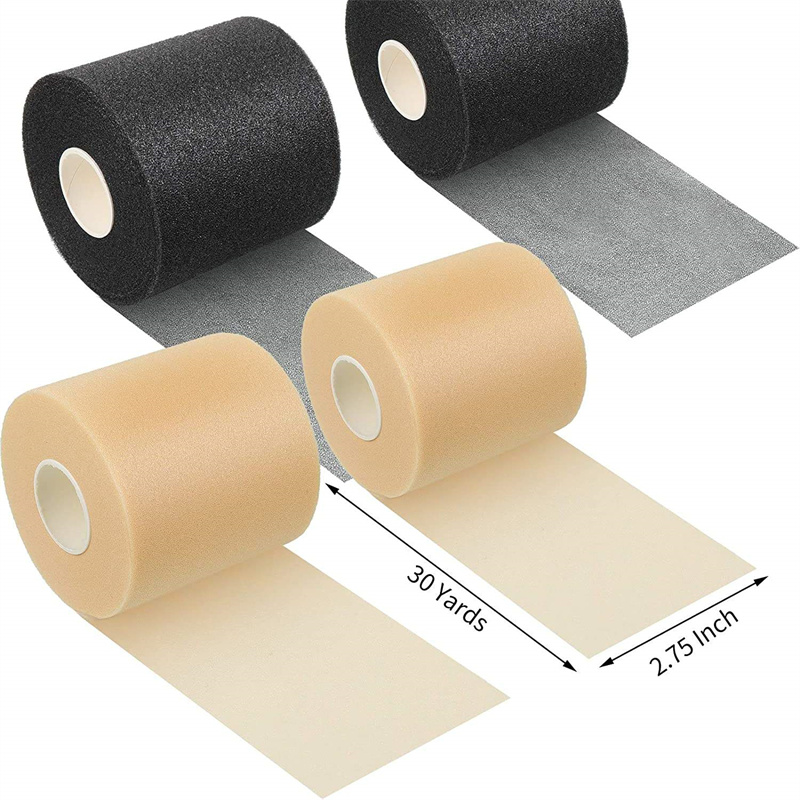 Premium High-Density Underwrap Foam for Sports Protection and Injury PreventionOur Professional-Grade Underwrap Foam is an advanced, soft padding specifically engineered to serve as a protective, comfortable barrier between the skin and athletic ...View Product →
For buyers building a full ankle-care assortment, pre wrap pairs naturally with rigid zinc oxide strapping tape on the taping side and with pre-cut ankle support patches for athletes who want lighter, tool-free support on training days. Confirming all three from one supplier also keeps material and adhesive specifications aligned across the kit.
The takeaway is short: ankle pre wrap tape is cheap insurance for skin. One smooth, lightly tensioned layer of foam under two or three layers of rigid tape gives athletes the stability of a proper tape job without the irritation, and gives trainers fast, painless removal at the end of every session. Check the foam's width, density, and latex-free status before you buy, apply it without wrinkles, and let the tape above it do the structural work it was designed for.
Share:
RECOMMENDED PRODUCTS





















- Asher.cao
- Tel:+86-512-6289 3223
- Mob:+86-176 2548 7782
- Email:Asher.cao@healthline-medical.com
- Whatsapp / Wechat:+86-176 2548 7782
- Skype:+86-176 2548 7782
- Ethan Zhang
- Tel:+86-512-6289 3223
- Mob:+86-19822909189
- Email:ethanzhang@healthline-medical.com
- Whatsapp / Wechat:+86-19822909189
- Skype:+86-19822909189
- Jason Zhang
- Tel:+86-512-6289 3223
- Mob:+86-13152123359
- Email:jason@healthline-medical.com
- Whatsapp / Wechat:+86-13152123359
Copyright © 2025 SUZHOU HEALTHLINE MEDICAL PRODUCTS CO., LTD
All Rights Reserved.
 Sports Tape Manufacturers Cohesive Bandages Suppliers
The information provided on this website is intended for use only in countries and jurisdictions outside of the People's Republic of China.


