
 English
 Español
 русский
 عربى
عربى

- Cotton Kinesiology Tape
- Synthetic Kinesiology Tape
- Nylon Kinesiology Tape
- 4-Way Stretch Elastic Kinesiology Tape
- Standard Kinesiology Tape Roll
- Pre-Cut Kinesiology Tape Strips
- Printed / Pattern Kinesiology Tape
- Perforated Kinesiology Tape (Ventilated)
- Special Shape Kinesiology Tape
- Water-Resistant Kinesiology Tape
- Pregnancy Support Tape
- Face Lift Kinesiology Tape
- Gentle / Beauty Kinesiology Tape
- Veterinary Kinesiology Tape
- Breast Lift Tape
- Customized Kinesiology Tape
- Pre-cut I Strip Kinesiology Tape
- Pre-cut Y Strip Kinesiology Tape
- Pre-cut X Strip Kinesiology Tape
- Knee Kinesiology Tape
- Leg Kinesiology Tape
- Shoulder Kinesiology Tape
- Back Kinesiology Tape
- Waist Kinesiology Tape
- Ankle Kinesiology Tape
- Pregnancy Belly Tape
- Beauty Face Tape
- Solid Color Cohesive Bandage Roll
- Printed & Pattern Cohesive Bandage
- Non-Woven Self-Adhesive Bandage
- Cotton Self-Adhesive Bandage
- PBT Gauze Cohesive Bandage Rolls
- Pet Vet Wrap
- Horse and Cattle Self-Adhesive Bandage
- Veterinary Cohesive Bandage
- Camo Cohesive Wrap Tape
- Military and Tactical Cohesive Bandage
- Tattoo Grip Tape
- Latex Cohesive Bandage
- Latex-Free Cohesive Bandage
- Pet Laminated Self-Adhesive Bandage
- High-Tensile Cohesive Bandage
- Football Sock Wrap Self-Adhesive Bandage
- Sterile Cohesive Bandage
- Special Function Cohesive Bandage
- OEM / Bulk Cohesive Bandage Roll
- Rigid Strapping Tape
- Athletic Tape
- Zinc Oxide Sports Tape
- Rayon Rigid Sports Tape
- Sports Strapping Tape
- Finger Bob Bandages
- Boxing Tape
- Heavyweight Elastic Adhesive Bandage (EAB)
- 93 Cotton Heavyweight Elastic Adhesive Bandages(EAB)
- Athletic Heavyweight Elastic Adhesive Bandage (EAB)
- Lightweight Elastic Adhesive Bandage (EAB)
- Athletic Lightweight Elastic Adhesive Bandage (EAB)
- American Style Elastic Adhesive Bandage (EAB)
- Japanese Style Elastic Adhesive Bandage (EAB)
- Elastic Adhesive Compression Bandage
- Veterinary Elastic Adhesive Bandage (EAB)
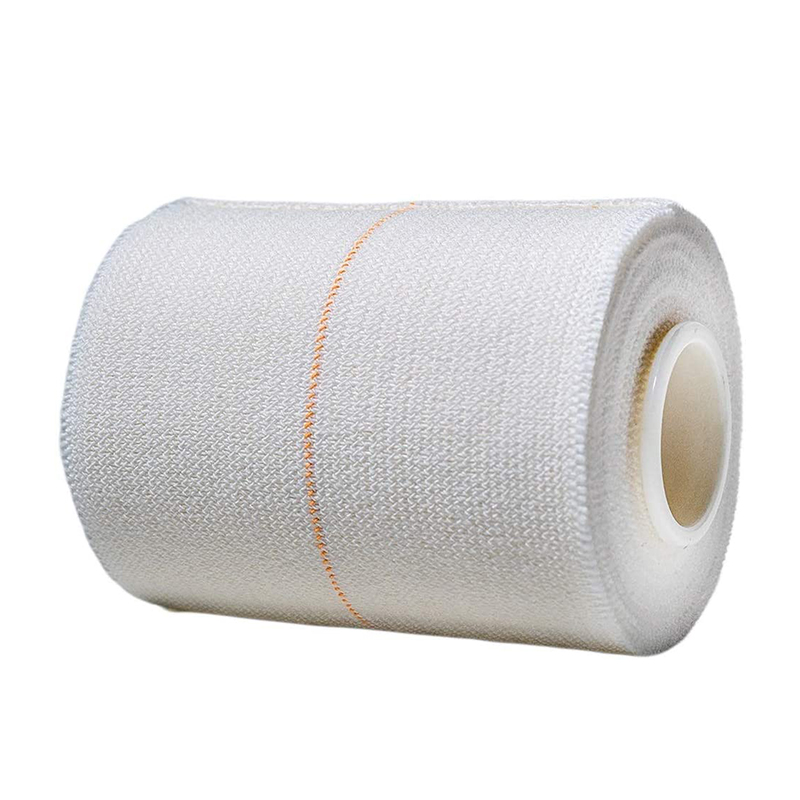
Elastic Adhesive Bandage (EAB Tape): What It Does and How to Use It Right
Content
Ankle sprains account for 10–15% of all sports injuries, and research consistently shows that adhesive bandaging is one of the most effective tools to prevent them from recurring. Yet most athletes grab whatever roll is in the kit without knowing the difference between a heavy EAB and a light tearable version — and that mismatch costs support, comfort, and recovery time.
This guide cuts straight to what matters: what elastic adhesive bandage actually does, which type fits your situation, and how to apply it correctly.
What Is Elastic Adhesive Bandage?
Elastic adhesive bandage — commonly called EAB tape or elastic adhesive tape — is a stretchy, fabric-based tape with a strong adhesive backing that bonds directly to skin. Unlike rigid zinc oxide tape that locks a joint completely, EAB provides firm compression and support while still allowing controlled movement. That balance makes it the go-to choice across sports medicine, physiotherapy, and first aid.
The fabric base is typically a cotton or cotton-elastic blend, breathable and conforming to body contours. The adhesive is traditionally zinc oxide-based, though many modern options — including those offered by Healthline Medical's full elastic adhesive bandage range — use acrylic or latex-free formulations to reduce skin reactions.
Heavy EAB vs. Light EAB: Which One Do You Need?
These two formats look similar on the shelf but behave very differently in use. Choosing the wrong one is the most common EAB mistake.
| Feature | Heavy EAB | Light (Tearable) EAB |
|---|---|---|
| Construction | Woven cotton, denser weave | Lighter fabric, crinkle texture |
| Stretch level | Moderate — firm support | High — more flexible |
| Application | Requires scissors | Hand-tearable, pitch-side ready |
| Best for | Knees, shoulders, post-injury strapping | Ankles, wrists, quick taping in game |
| Typical widths | 2.5 cm / 5 cm / 7.5 cm / 10 cm | 2.5 cm / 5 cm / 7.5 cm |
For large-joint strapping — knees, thighs, shoulders — the heavy elastic adhesive bandage with its porous cotton structure delivers the firm, sustained compression that heavier coverage demands. For fast-moving environments where a physio or coach needs to re-tape mid-session, a light tearable EAB is the practical choice.
4 Core Uses of EAB Tape
1. Joint support and sprain prevention. Studies published in peer-reviewed sports medicine research confirm that ankle taping improves joint position sense during fatigue — exactly when sprains are most likely to happen. EAB wrapped around ankles, wrists, or knees limits the extreme range of motion that causes ligament damage, without eliminating the movement athletes need to perform.
2. Compression for acute swelling. EAB can stretch up to 170% of its resting length, so the level of compression is controllable. Applied immediately after a knock or sprain, it reduces fluid accumulation in the tissue and helps manage pain during the critical first hours of an injury.
3. Soft tissue injury strapping. In rugby, football, and contact sports, EAB is the standard tape for wrapping thighs, calves, and upper arms after muscle strains. The adhesive bonds to skin without pins, so it stays in place through the sweat and movement of a full match.
4. Protective ear and head taping. Rugby forwards routinely use EAB to tape ears, adding a layer of protection to cartilage that would otherwise be exposed to impact. The same logic applies to protecting existing wound dressings over cuts and abrasions during play.
How to Apply EAB Tape Correctly
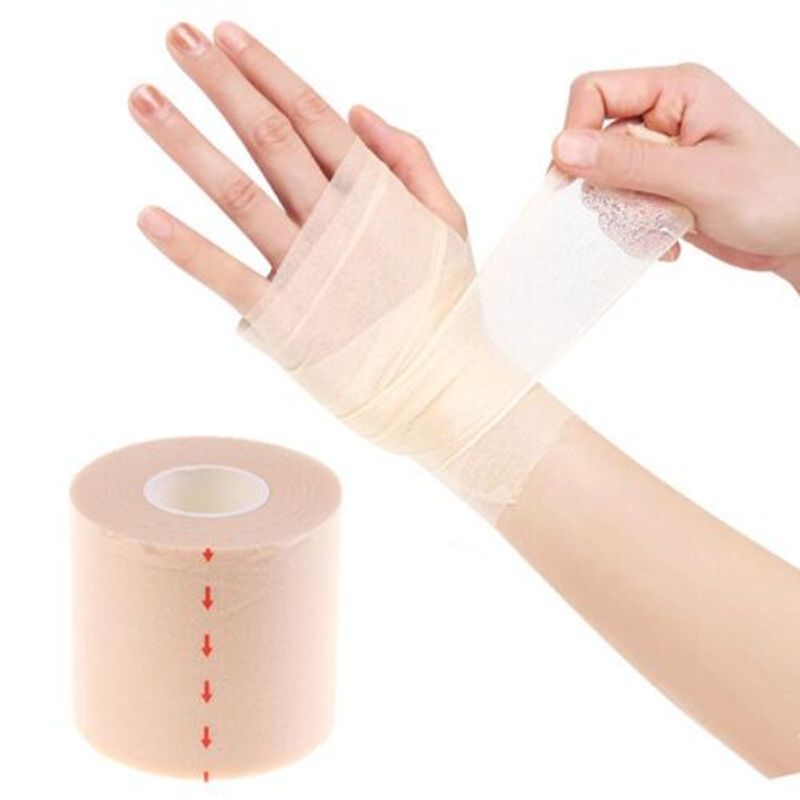
- Prepare the skin. Clean and dry the area thoroughly. Remove any lotion, oil, or sweat — adhesion depends on a dry surface. If applying over hairy skin and removal pain is a concern, consider placing a layer of foam underwrap pre-wrap between skin and tape first.
- Choose the right width. 2.5 cm works for fingers and toes; 5 cm for wrists and ankles; 7.5–10 cm for knees, thighs, and shoulders. EAB is difficult to split lengthwise, so start with the correct width.
- Apply with consistent tension. Start with anchor strips above and below the joint, then layer overlapping passes — each strip covering about half the previous one. Avoid creasing, which creates pressure points. Never cut off circulation: you should be able to slip a finger under the wrap.
- Secure the ends. Fold the final strip back on itself or press it flat. EAB's adhesive holds well, but the end strips are the first to lift during activity.
- Remove carefully. Always cut or unwind EAB in the direction of hair growth. Pulling against the grain, especially on legs, is what causes the sharp skin tearing that gives EAB a bad reputation.
EAB Tape vs. Other Sports Tapes: When to Use What
EAB sits in the middle of the sports taping spectrum — more flexible than rigid zinc oxide, firmer than kinesiology tape. That positioning matters when selecting the right tool.
Use rigid sports tape when you need maximum joint immobilization — acute ankle fracture management, post-surgery stabilization, or high-impact contact sport strapping where zero joint movement is the goal. Use kinesiology tape when the priority is muscle support and circulation enhancement without restricting range of motion — rehabilitation, posture correction, or light training loads. Use EAB when you need the middle ground: firm compression that moves with the athlete but still limits the extremes that cause injury.
Picking the Right EAB for Your Sport or Setting
For club physios and medical staff managing multiple athletes, the tearable light EAB is almost always the right call — speed of application under pressure is non-negotiable. For clinical and rehabilitation settings where precision matters more than speed, the firmer heavy EAB delivers superior and more sustained compression.
Width selection follows body part, not personal preference. For finger taping in climbing or martial arts, 2.5 cm is the only practical option. For knee strapping in football or rugby, anything narrower than 7.5 cm means too many overlapping passes and uneven pressure distribution.
Latex sensitivity is an underappreciated issue. If a player has had skin reactions to traditional EAB, switching to an acrylic-adhesive or latex-free formulation resolves most contact dermatitis cases without sacrificing adhesion quality.
Share:
RECOMMENDED PRODUCTS













- Asher.cao
- Tel:+86-512-6289 3223
- Mob:+86-176 2548 7782
- Email:Asher.cao@healthline-medical.com
- Whatsapp / Wechat:+86-176 2548 7782
- Skype:+86-176 2548 7782
- Ethan Zhang
- Tel:+86-512-6289 3223
- Mob:+86-19822909189
- Email:ethanzhang@healthline-medical.com
- Whatsapp / Wechat:+86-19822909189
- Skype:+86-19822909189
- Jason Zhang
- Tel:+86-512-6289 3223
- Mob:+86-13152123359
- Email:jason@healthline-medical.com
- Whatsapp / Wechat:+86-13152123359
Copyright © 2025 SUZHOU HEALTHLINE MEDICAL PRODUCTS CO., LTD
All Rights Reserved.
 Sports Tape Manufacturers Cohesive Bandages Suppliers
The information provided on this website is intended for use only in countries and jurisdictions outside of the People's Republic of China.


