
 English
 Español
 русский
 عربى
عربى

- Cotton Kinesiology Tape
- Synthetic Kinesiology Tape
- Nylon Kinesiology Tape
- 4-Way Stretch Elastic Kinesiology Tape
- Standard Kinesiology Tape Roll
- Pre-Cut Kinesiology Tape Strips
- Printed / Pattern Kinesiology Tape
- Perforated Kinesiology Tape (Ventilated)
- Special Shape Kinesiology Tape
- Water-Resistant Kinesiology Tape
- Pregnancy Support Tape
- Face Lift Kinesiology Tape
- Gentle / Beauty Kinesiology Tape
- Veterinary Kinesiology Tape
- Breast Lift Tape
- Customized Kinesiology Tape
- Pre-cut I Strip Kinesiology Tape
- Pre-cut Y Strip Kinesiology Tape
- Pre-cut X Strip Kinesiology Tape
- Knee Kinesiology Tape
- Leg Kinesiology Tape
- Shoulder Kinesiology Tape
- Back Kinesiology Tape
- Waist Kinesiology Tape
- Ankle Kinesiology Tape
- Pregnancy Belly Tape
- Beauty Face Tape
- Solid Color Cohesive Bandage Roll
- Printed & Pattern Cohesive Bandage
- Non-Woven Self-Adhesive Bandage
- Cotton Self-Adhesive Bandage
- PBT Gauze Cohesive Bandage Rolls
- Pet Vet Wrap
- Horse and Cattle Self-Adhesive Bandage
- Veterinary Cohesive Bandage
- Camo Cohesive Wrap Tape
- Military and Tactical Cohesive Bandage
- Tattoo Grip Tape
- Latex Cohesive Bandage
- Latex-Free Cohesive Bandage
- Pet Laminated Self-Adhesive Bandage
- High-Tensile Cohesive Bandage
- Football Sock Wrap Self-Adhesive Bandage
- Sterile Cohesive Bandage
- Special Function Cohesive Bandage
- OEM / Bulk Cohesive Bandage Roll
- Rigid Strapping Tape
- Athletic Tape
- Zinc Oxide Sports Tape
- Rayon Rigid Sports Tape
- Sports Strapping Tape
- Finger Bob Bandages
- Boxing Tape
- Heavyweight Elastic Adhesive Bandage (EAB)
- 93 Cotton Heavyweight Elastic Adhesive Bandages(EAB)
- Athletic Heavyweight Elastic Adhesive Bandage (EAB)
- Lightweight Elastic Adhesive Bandage (EAB)
- Athletic Lightweight Elastic Adhesive Bandage (EAB)
- American Style Elastic Adhesive Bandage (EAB)
- Japanese Style Elastic Adhesive Bandage (EAB)
- Elastic Adhesive Compression Bandage
- Veterinary Elastic Adhesive Bandage (EAB)
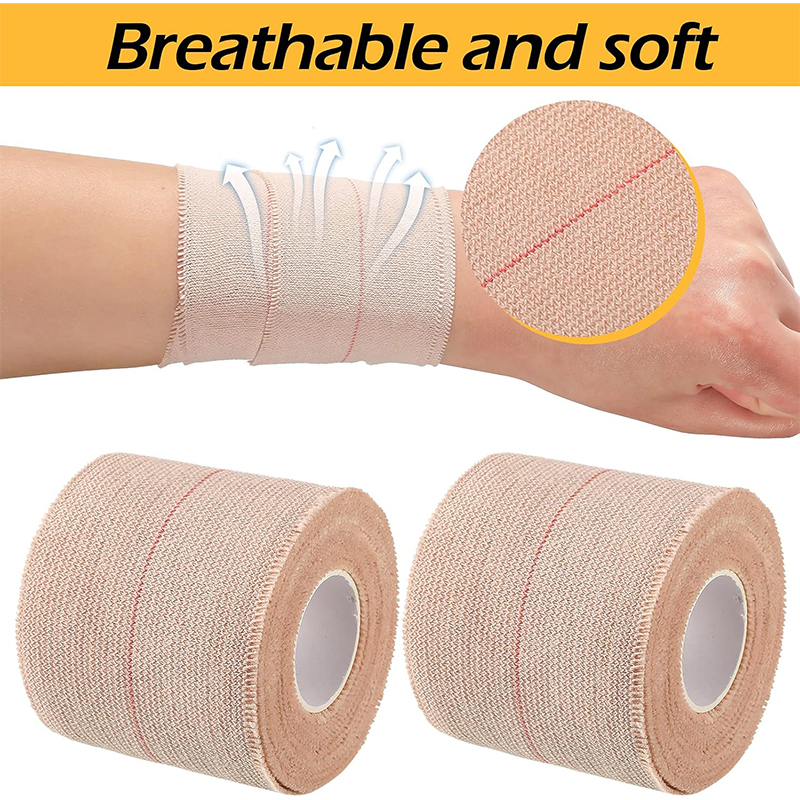
Elastic Adhesive Bandage Applications: Practical Guide for Sports, Medical, and Daily Support
Content
- Understanding Elastic Adhesive Bandage and Its Core Function
- Combining Elastic Adhesive Bandage with Compression Therapy
- Using Elastic Adhesive Bandage with Wound Dressings
- Elastic Adhesive Bandage in Sports and Athletic Support
- Medical and Home Care Applications
- How to Apply Elastic Adhesive Bandage Correctly
- Choosing the Right Elastic Adhesive Bandage
- Practical Maintenance and Safety Considerations
- Conclusion: Maximizing Benefits with Elastic Adhesive Bandage
Understanding Elastic Adhesive Bandage and Its Core Function
Elastic adhesive bandage is a widely used medical and sports support material designed to provide flexible compression, secure fixation, and mild immobilization. Unlike traditional gauze wraps, it combines elasticity with an adhesive surface, allowing it to adhere to itself or the skin without additional clips or fasteners. This makes it especially useful for joint support, muscle stabilization, and wound protection where movement is required.
When combined with proper application techniques, elastic adhesive bandage can enhance circulation, reduce swelling, and protect injured areas during recovery or physical activity. Its versatility makes it suitable for both clinical environments and home use.
Combining Elastic Adhesive Bandage with Compression Therapy
Compression therapy is one of the most common uses of elastic adhesive bandage. When applied with controlled tension, the bandage supports veins and muscles while helping manage edema and inflammation. This combination is frequently recommended for sprains, strains, and post-operative care.
Key Benefits of Compression Support
- Reduces swelling by promoting fluid movement
- Enhances muscle stability during movement
- Improves comfort compared to rigid wraps
Elastic adhesive bandage is often preferred over non-elastic options because it adapts to natural body movement without loosening or slipping.
Using Elastic Adhesive Bandage with Wound Dressings
In wound management, elastic adhesive bandage is commonly combined with sterile pads or non-adherent dressings. Its role is not to directly contact the wound, but to hold primary dressings securely in place while allowing airflow and flexibility.
Best Practices for Wound Support
- Apply a sterile dressing directly to the wound first
- Wrap elastic adhesive bandage with light, even tension
- Avoid excessive tightness to maintain blood circulation
This combination is particularly useful for joints such as ankles, wrists, and knees where movement can displace standard bandages.
Elastic Adhesive Bandage in Sports and Athletic Support
Athletes frequently rely on elastic adhesive bandage as an alternative to athletic tape. It provides dynamic support without limiting range of motion, making it suitable for training, competition, and injury prevention.
Common Athletic Applications
- Ankle and knee stabilization during running
- Wrist and elbow support for weightlifting
- Muscle compression to reduce fatigue
When combined with proper warm-up routines, elastic adhesive bandage helps reduce the risk of repetitive strain injuries.
Medical and Home Care Applications
Beyond sports and injuries, elastic adhesive bandage plays a practical role in daily medical care. It is often used in clinics, rehabilitation centers, and home first-aid kits due to its ease of use and adaptability.
| Application Area | Purpose |
| Post-surgical care | Secures dressings and reduces swelling |
| Elderly care | Supports fragile joints and skin |
| First aid | Quick fixation of pads and splints |
How to Apply Elastic Adhesive Bandage Correctly
Proper application is essential to gain full benefit from elastic adhesive bandage. Incorrect wrapping may reduce effectiveness or cause discomfort.
Step-by-Step Application Guidance
- Clean and dry the area before application
- Start wrapping from the narrowest part of the limb
- Overlap each layer by about half the bandage width
- Finish without excessive tension to avoid circulation issues
Choosing the Right Elastic Adhesive Bandage
Elastic adhesive bandages are available in different widths, materials, and adhesive strengths. Selecting the right type depends on the intended use, skin sensitivity, and required level of support.
For sports and frequent movement, breathable and latex-free options are recommended. For medical support, higher compression levels may be appropriate under professional guidance.
Practical Maintenance and Safety Considerations
While elastic adhesive bandage is designed for short-term use, proper handling improves comfort and safety. Always monitor the wrapped area for signs of numbness, discoloration, or irritation.
Remove the bandage gently and replace it if elasticity weakens or adhesive strength decreases. Reusable variants should be cleaned according to manufacturer instructions.
Conclusion: Maximizing Benefits with Elastic Adhesive Bandage
When combined with correct techniques and complementary care methods, elastic adhesive bandage serves as a reliable solution for support, protection, and recovery. Its adaptability across sports, medical, and home settings makes it an essential component of modern bandaging practices.
Share:
RECOMMENDED PRODUCTS

















- Asher.cao
- Tel:+86-512-6289 3223
- Mob:+86-176 2548 7782
- Email:Asher.cao@healthline-medical.com
- Whatsapp / Wechat:+86-176 2548 7782
- Skype:+86-176 2548 7782
- Ethan Zhang
- Tel:+86-512-6289 3223
- Mob:+86-19822909189
- Email:ethanzhang@healthline-medical.com
- Whatsapp / Wechat:+86-19822909189
- Skype:+86-19822909189
- Jason Zhang
- Tel:+86-512-6289 3223
- Mob:+86-13152123359
- Email:jason@healthline-medical.com
- Whatsapp / Wechat:+86-13152123359
Copyright © 2025 SUZHOU HEALTHLINE MEDICAL PRODUCTS CO., LTD
All Rights Reserved.
 Sports Tape Manufacturers Cohesive Bandages Suppliers
The information provided on this website is intended for use only in countries and jurisdictions outside of the People's Republic of China.


